
You’ve secured a quote for marine angle steel, but how can you be absolutely sure the material meets the promised specifications? Trust in international steel trade doesn’t happen by accident; it is built on verifiable proof. Let me share a story from my work with a client in Saudi Arabia, where meticulous documentation review prevented a costly project delay.
The key to verifying marine angle steel documentation is to cross-check every certificate—especially the Mill Test Certificate (MTC) and Certificate of Analysis (COA)—against your order’s chemical and mechanical requirements, and then physically confirm those details match the material markings on the delivered steel itself. This process transforms paperwork from a mere formality into your primary quality assurance tool.
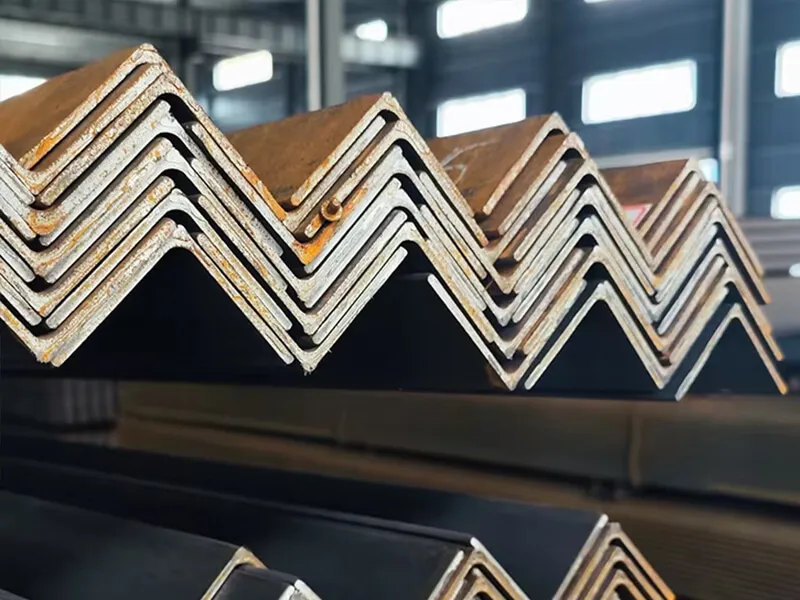
For many of our clients, like fabricators and shipbuilders, receiving the steel is only half the battle. The real work begins with validating what you’ve received. A missing or incorrect certificate can halt production, cause compliance failures, and erode trust. This guide will walk you through the exact steps my team and I use to verify all critical documents, ensuring you get exactly the steel you paid for. Let’s dive into the specifics, starting with the foundational step of physical measurement.
How to measure a steel angle?
Imagine receiving a shipment of angle steel, only to find the legs are a few millimeters shorter than specified. This small error can throw off an entire fabrication plan. This happened to one of our distributors in Thailand, and the resulting rework ate into their profit margin. Accurate measurement is your first line of defense against such issues.
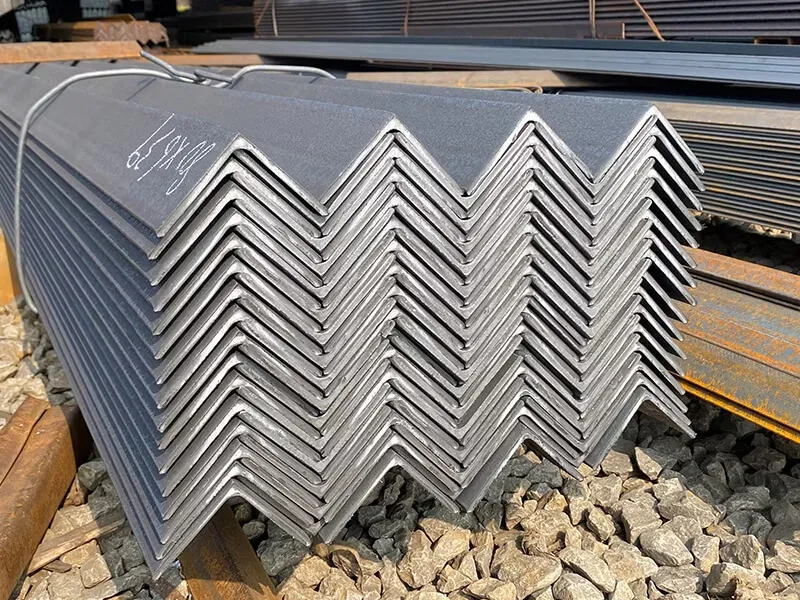
To measure a steel angle, you need to check three key dimensions: the leg lengths (A & B)1, the thickness (t)2, and the length. Use a calibrated caliper for thickness and a precise tape measure or ruler for the leg lengths and overall length, ensuring all values match the ordered size, such as L100x100x10mm. Always measure at multiple points along the steel to check for consistency.
The Critical Dimensions and Tolerances
Simply taking a single measurement is not enough. Marine-grade angle steel, used in critical structures like ship frames and offshore platforms, must adhere to strict dimensional tolerances3. These tolerances are defined by international standards such as EN 10056-14, ASTM A6, or JIS G3192. Here’s a breakdown of what you must verify:
- Leg Length (A & B): This is the most visible dimension. For an equal angle like L100x100, both legs should be 100 mm. For an unequal angle like L150x90, you must verify each leg separately. Tolerances vary by size but are typically within ±2 to ±3 mm for standard sizes.
- Thickness (t): The thickness of the legs is crucial for strength. It must be measured away from the rounded toe (the edge) of the angle. A common mistake is measuring at the very edge, where the material is often thinner due to the rolling process. The acceptable thickness tolerance is usually within ±0.5 to ±1.0 mm, depending on the specification.
- Length: The overall length of the bar or piece must be as ordered. Standard lengths are 6m, 9m, or 12m, with tolerances typically around +100mm / -0mm.
I always advise our clients to create a simple checklist for their QC team. For example, if you ordered 20 tons of L120x120x12mm x 12m, your on-site check should look like this:
| Dimension to Check | Tool Required | Acceptable Range (Example per EN 10056) | Action if Out of Spec |
|---|---|---|---|
| Leg Length (A) | Steel Tape / Caliper | 120mm ± 3mm | Isolate piece, notify supplier |
| Leg Length (B) | Steel Tape / Caliper | 120mm ± 3mm | Isolate piece, notify supplier |
| Thickness (t) | Digital Caliper | 12mm ± 0.6mm | Isolate piece, notify supplier |
| Straightness | Visual & Straight Edge | Check for visible bow or camber | Photograph as evidence |
Why does this matter so much? In shipbuilding, angles are often nested together or welded to plates. A leg that is even slightly undersized can create a gap, weakening the weld joint. An inconsistent thickness can lead to stress concentrations. By methodically measuring, you are not just checking a number; you are validating the structural integrity5 of your project. At our warehouse in Liaocheng, we perform these checks before shipment because we know our clients, from Qatar to Mexico, rely on this precision for their demanding marine applications.
What is the HS code for steel angle1?
Dealing with customs can be a major headache. I’ve seen shipments get held up for days because of an incorrect HS code, leading to demurrage charges2 and frustrated clients. Using the right code is not a suggestion; it’s a requirement for smooth international trade. It defines the duty, the restrictions, and the paperwork needed.
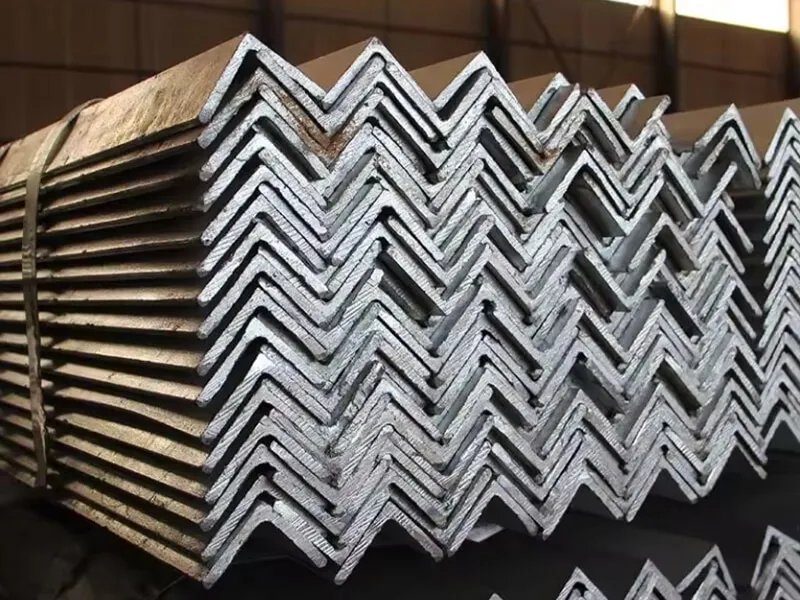
The HS code for steel angle1 is typically 7216.10, 7216.21, 7216.31, or 7216.50, depending on the alloy, coating, and specific dimensions. The most common code for hot-rolled, non-alloy steel angles is 7216.10. However, you must always confirm the exact code with your local customs authority or freight forwarder3, as interpretations can vary by country.
Navigating the HS Code System for Steel
The Harmonized System (HS) is a global product classification system. For steel angles, the chapter is 72 (Iron and Steel). The heading gets more specific. Getting the code wrong can mean paying the wrong tariff or having your shipment rejected. Let’s break down what these numbers mean:
- 7216: This heading covers "Angles, shapes and sections of iron or non-alloy steel."
- The next two digits provide further detail:
- 7216.10: This usually denotes angles that are "not further worked than hot-rolled, hot-drawn or extruded." This is the most common code for standard hot-rolled marine angle steel.
- 7216.21 / 7216.31: These often apply to other sections like "U, I, or H" shapes, not standard L-angles.
- 7216.50: This can refer to "other angles, shapes, and sections," which might include cold-formed products.
Here is a practical guide to help you identify the likely code:
| Your Steel Angle Description | Likely HS Code (Heading 7216) | Key Reason |
|---|---|---|
| Hot-rolled, non-alloy, unpainted (e.g., Grade A36, S235JR) | 7216.10 | The standard process for most structural angles. |
| Hot-rolled, alloy steel (e.g., with added elements like Chromium) | 7228.30 (Chapter 72, Alloy Steel) | Alloy steel falls under a different heading (7228). |
| Galvanized or otherwise coated | 7216.10 may still apply, but coating might affect classification. | The base material is still hot-rolled. Always declare the coating separately. |
| Cold-formed or cold-finished | Likely 7216.50 or a different heading. | The "cold" working process changes the classification. |
My strong recommendation is this: Never guess the HS code. We provide a suggested code on our commercial invoice4, but we always tell our buyers, like the fabricator we work with in the Philippines, to double-check with their import agent. The responsibility for correct declaration ultimately lies with the importer. Providing accurate details—like the exact grade, dimensions, and manufacturing process (hot-rolled)—to your customs broker is the best way to ensure the correct HS code is applied and your marine angle steel clears customs in Vietnam, Saudi Arabia, or anywhere else without expensive delays.
What are the grades of marine steel plates?
Choosing the wrong steel grade for a ship’s hull or an offshore platform is not an option. The consequences can be catastrophic. Marine environments are brutal, combining corrosive saltwater, high dynamic loads, and extreme weather. The grade of steel plate you select directly determines the safety, longevity, and compliance of the vessel or structure.
Common grades of marine steel plates include ABS Grades (A, B, AH36, DH36), LR Grades (A, D, E), BV Grades (A, D, E), and general structural grades like S235JR, S355JR, and S355NL. These grades define the yield strength, toughness (especially at low temperatures), and corrosion resistance. For example, AH36 has a minimum yield strength of 355 MPa and is designed for higher-strength ship hulls.
Understanding Grade Specifications and Selection
The alphabet soup of steel grades can be confusing. However, each letter and number has a specific meaning, usually tied to a classification society like ABS (American Bureau of Shipping), LR (Lloyd’s Register), or DNV (Det Norske Veritas). These societies set the rules that ensure ships are built safely. Let’s decode the most common ones you’ll encounter in marine projects.
1. Standard Strength Grades (A, B, D, E):
- Grade A: This is the basic grade for non-critical parts of ship hulls. It has standard impact toughness at room temperature.
- Grade B: Slightly better toughness than Grade A. A very commonly used grade for many hull structures.
- Grade D: Offers improved notch toughness at lower temperatures (down to -20°C). Used in more demanding environments.
- Grade E: Provides the highest toughness at even lower temperatures (down to -40°C). Used for critical components in ice-class vessels or offshore structures in cold regions.
2. High Strength Grades (AH32/36, DH32/36, EH32/36):
- The "H" stands for High Strength. The number (32 or 36) indicates the minimum yield strength in kgf/mm² (e.g., 32 = 315 MPa, 36 = 355 MPa).
- AH36/DH36/EH36: These are workhorses for modern shipbuilding. They allow for thinner, lighter hull plates without sacrificing strength, which increases cargo capacity. The A/D/E prefix still indicates the temperature toughness level.
3. European Norm (EN) Grades:
- S235JR, S355JR: The "S" denotes structural steel. The number is the minimum yield strength in MPa (e.g., 355). The suffixes "JR" and "J0" indicate impact energy at +20°C and 0°C, respectively. "NL" (like S355NL) is for normalized rolling with low-temperature toughness.
- These grades are widely used in European shipyards and for general marine construction.
To make an informed decision, you must match the grade to the application. Here is a simple selection guide:
| Application on Ship/Structure | Recommended Grade(s) | Primary Reason |
|---|---|---|
| Inner bottom plates, non-critical bulkheads | ABS Grade A, S235JR | Cost-effective for areas with lower stress. |
| Main hull plating (midship) | ABS Grade B, AH32, S355JR | Balances strength, toughness, and cost for most vessels. |
| Hull plating in forward sections (ice-going vessels) | ABS Grade D/E, DH36/EH36, S355NL | High toughness to resist brittle fracture in cold, impact-prone zones. |
| Offshore platform legs, nodes | DH36, EH36, S355NL | Combines high strength with exceptional low-temperature toughness for critical, highly stressed joints. |
When we supply plates to a shipyard in Romania or for an oil tanker project, we don’t just ship "steel." We ensure the MTC clearly states the certified grade (e.g., ABS AH36), the heat number, and that the impact test results meet the required temperature. This traceability is what gives our clients, the large project contractors, the confidence to build structures that last for decades at sea.
What is the angle of steel structure?
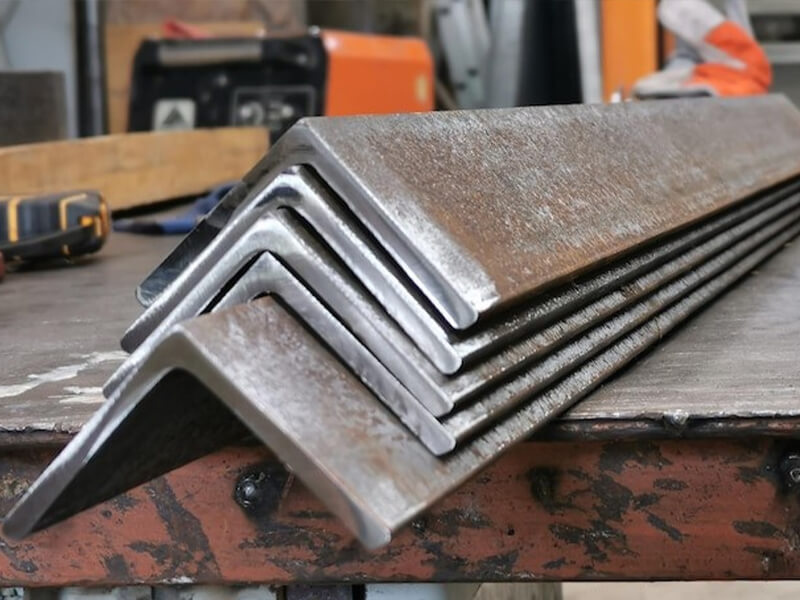
This question often causes confusion. When we talk about "angle" in steel structures, we are not referring to a geometric degree like 45 or 90. In structural engineering and fabrication, "angle" primarily refers to the specific shape of the steel profile—the L-shaped cross-section. This shape is fundamentally important because of how it handles forces.
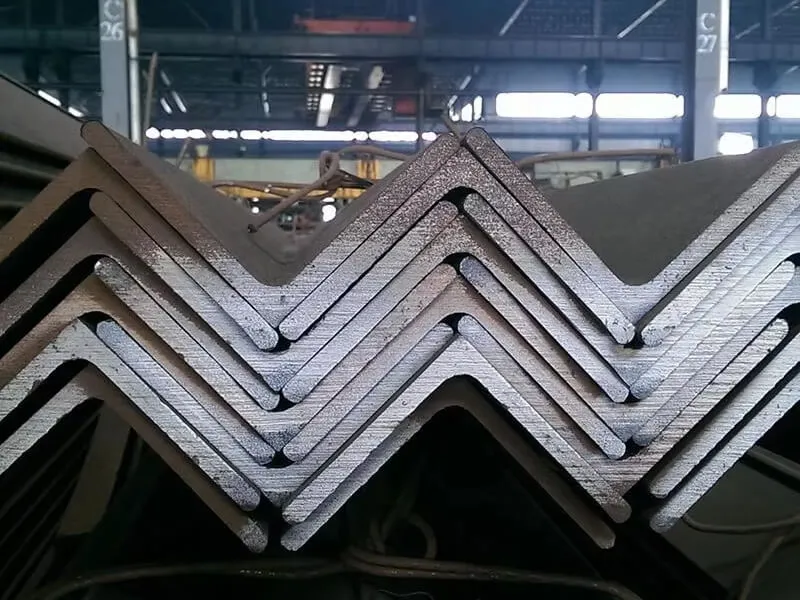
In steel structures, an "angle" (or angle iron) is a long steel product with an L-shaped cross-section, formed by two legs meeting at a 90-degree angle. It is a basic but vital component used for bracing, framing, supports, and brackets, providing strength and stability by efficiently transferring loads. Its versatility makes it indispensable in everything from ship frames to warehouse shelves.
The Functional Role of Angle Steel in Design
Why is this simple L-shape so ubiquitous? The answer lies in its excellent strength-to-weight ratio and multifunctionality. Unlike a flat bar that easily bends, the 90-degree angle creates inherent stiffness in two perpendicular directions. Let’s explore its key structural roles:
1. As a Primary Member:
- Bracing: This is the most critical function. Angles are used as diagonal braces in trusses, towers, and ship hulls. They prevent the structure from racking (deforming into a parallelogram) under lateral loads like wind or waves. A ship’s hull relies on a network of angled braces to maintain its shape in rough seas.
- Framing: Angles form the edges and supports for panels, decks, and walls. They create a rigid frame onto which plates or sheets are welded or fastened.
2. As a Secondary Member or Connection:
- Stiffeners: Smaller angles are often welded perpendicular to a large steel plate (like a bulkhead or deck) to prevent it from vibrating or buckling under pressure. This is everywhere in ship construction.
- Brackets and Gussets: Angles are cut and used as connection plates to join other beams or columns, reinforcing the joint.
- Purlins and Girts: In building construction, angles support roof and wall cladding.
The engineering principle at work is the "moment of inertia." The L-shape places material away from the center of the profile, which dramatically increases its resistance to bending compared to a flat bar of the same weight. Engineers can select different leg sizes and thicknesses to achieve the exact strength needed.
Consider these common structural applications:
| Structural Application | How Angle Steel is Used | Benefit |
|---|---|---|
| Ship’s Frame & Bulkheads | Vertical and horizontal stiffeners welded to the hull and bulkhead plates. | Adds rigidity, divides the hull into watertight compartments, resists hydrostatic pressure. |
| Transmission Tower | Forms the main lattice members and diagonal braces. | Creates a lightweight, high-strength truss structure that withstands wind loads. |
| Industrial Mezzanine Floor | Used as edge beams and support joists. | Provides a strong, easy-to-weld framework for the decking. |
| Machinery Base Frame | Fabricated into a rectangular frame to support heavy equipment. | Easy to level and secure to the floor, damps vibration. |
For our client in Saudi Arabia, Gulf Metal Solutions, who fabricates structures for oil & gas projects, angle steel is a staple material. They need it to be readily available, precisely sized, and with reliable certifications. We ensure our marine angle steel from certified mills meets these needs, so their fabrication process—whether for a ship part or a land-based module—is built on a foundation of quality and predictability.
Conclusion
Verifying marine steel—from its physical dimensions and paperwork to its proper classification and application—is a systematic process that safeguards your project’s budget, timeline, and safety. By mastering these checks, you transform from a passive buyer into an informed partner in the supply chain.
-
Understanding the HS code for steel angles is crucial for smooth international trade and avoiding delays. ↩ ↩ ↩
-
Learn about demurrage charges to avoid unexpected costs during shipping and ensure timely deliveries. ↩ ↩
-
Understanding the role of freight forwarders can help streamline your shipping process and avoid errors. ↩ ↩
-
A commercial invoice is vital for customs clearance; knowing its details can prevent shipping delays. ↩ ↩
-
Learn about the significance of structural integrity to ensure safety and reliability in construction. ↩