You receive your first container of Chinese steel. The Mill Test Certificate looks perfect, but the plates have deep surface pitting and the dimensions are wrong. Your project is now on hold. Stories like this give Chinese steel a bad name, but they are often preventable.
You verify quality by implementing a three-layer check: 1) Pre-order vetting of the supplier and their mill’s certifications, 2) Requiring genuine Mill Test Certificates (MTCs) for traceability, and 3) Mandating a third-party pre-shipment inspection (like SGS/BV) to physically verify the material matches the specs and documents before it leaves China.
Trust is built on evidence, not promises. The process of verifying quality is systematic and objective. Let’s move beyond hearsay and build a concrete verification framework you can use for your next order.
Can I trust stainless steel from China?
You need 316L stainless1 for critical marine fittings. A Chinese supplier offers it at half the price of European mills. The price seems too good to be true. Is it a scam, or a real opportunity? The answer depends entirely on your verification process.
Yes, you can trust stainless steel from China, but you must verify the supplier’s source mill and the material’s certification. China produces both low-cost generic stainless and world-class, certified alloy steel. The key is to confirm the material grade (e.g., 316L) through a certified Mill Test Report2 and often a third-party chemical analysis to prove the critical Molybdenum content3.
The word "trust" is dangerous in international trade. You should replace it with "verify." The risk is not that all Chinese stainless is bad; the risk is that you might receive a different, cheaper grade than you paid for. Let’s examine the specific risks and how to mitigate them.
From Trust to Verification: A Framework for Chinese Stainless Steel
Chinese stainless steel exists on a wide spectrum. At one end are small, uncertified producers making "market grade" material. At the other end are giant, sophisticated mills like TISCO4 (Taiyuan Iron and Steel) or Tsingshan, which supply global giants. Your job is to ensure your supplier sources from the right end of that spectrum.
The Primary Risk: Grade Substitution
The most common issue is receiving 304 stainless steel when you ordered and paid for 316. The visual difference is zero, but the performance gap in seawater is massive. This happens when a supplier buys cheap, unmarked 304 and presents fake 316 certificates.
- How to Catch It: Demand a Material Test Report5 (MTR) / Mill Test Certificate (MTC) that is traceable to the specific batch (heat number). Then, conduct a PMI test.
The Verification Toolkit:
- Certification Traceability: A genuine MTC from a reputable mill will list the steelmaker’s name, the heat number, the melting process, and full chemical and mechanical test results. You can sometimes verify this certificate by contacting the mill’s export department, though this can be difficult.
- Positive Material Identification6 (PMI): This is the most powerful tool. A portable X-ray fluorescence (XRF) analyzer can provide an instant, non-destructive chemical analysis of the metal. A trained inspector can test random samples from your batch on-site.
- What to look for: For 316/L, the key is Molybdenum (Mo) content. It must be between 2.0% and 3.0%. If the PMI shows ~0% Mo, you have 304. If it shows the correct Mo, you have a strong indication of genuine 316.
- Third-Party Inspection: Hire a global inspection company (SGS, Bureau Veritas, Intertek) to perform the PMI and other checks. Their report is an independent guarantee.
Practical Sourcing Strategy:
When inquiring, ask direct questions and judge the response:
- Weak Supplier Response: "Yes, we have 316. Trust us, it’s good quality." (Red flag)
- Strong Supplier Response: "We source 316L from Tsingshan Group (or another major mill). We provide full MTCs and support third-party PMI inspection before shipment. The cost for PMI is $X." (Green flag)
Here is a comparison of verification levels:
| Verification Level | Action | Cost | Effectiveness | Recommended For |
|---|---|---|---|---|
| Basic (High Risk) | Rely on supplier-provided MTC only. | $0 | Very Low. Easy to falsify. | Never for critical marine components. |
| Standard (Medium Risk) | Request MTC + check supplier reputation (Alibaba audits, site visits). | Low | Moderate. Better, but still relies on document authenticity. | Non-critical items, repeat orders from trusted partners. |
| Advanced (Low Risk) | MTC + Third-party Pre-Shipment Inspection with PMI. | Medium (0.5-1.5% of order value) | High. Independent physical verification. | All first-time orders, all critical marine applications (fasteners, fittings, shafts). |
| Maximum (Very Low Risk) | Order a small sample first for full lab testing (chemistry, mechanicals, corrosion). | High | Very High, but only tests the sample batch. | For huge, high-value projects where even a small failure risk is unacceptable. |
For our clients, we proactively offer SGS inspection7. We know that for a buyer in Qatar or Saudi Arabia, the extra confidence from a PMI report is worth far more than its cost. It transforms the transaction from a gamble into a verified, technical purchase.
How to verify Chinese suppliers?
You get 10 quotes from Alibaba. They all look similar. Which supplier will deliver quality steel on time, and which will disappear after payment? Verifying a supplier is more than checking a business license; it’s about assessing their operational capability and integrity.
You verify Chinese suppliers by combining online checks (business license, website, Alibaba audits) with direct communication tests (requesting specific certifications, asking detailed technical questions). The most effective verification is a video site visit or a small sample order before committing to a large purchase.
The internet is full of trading companies posing as factories. Your goal is to filter out the middlemen who lack control over quality and find the true specialists. Let’s build a practical due diligence checklist.
The Supplier Vetting Checklist: Beyond the Alibaba Profile
A credible supplier for marine steel is more than a legal entity. They are a conduit to certified mills and a manager of complex logistics. You need to assess them on multiple dimensions.
Step 1: Initial Online Due Diligence
- Business License1: Ask for a copy. Use a translation service or a Chinese-speaking contact to check the registered capital and business scope. Does it include "manufacturing" or just "trading"?
- Website & Online Presence: A professional website with clear product information, technical details, and contact information is a good sign. Check their LinkedIn company page. Read their blog articles (like this one) for expertise.
- Platform Audits: On Alibaba, check for "Verified Supplier" status, "Gold Supplier" years, and transaction history. Read negative reviews carefully.
Step 2: Technical and Operational Assessment (The Communication Test)
This is where you separate the professionals from the order-takers.
- Ask for Mill Certifications: A real specialist will immediately provide copies of the mill’s approval certificates2 from classification societies (ABS, LR, DNV, BV, etc.) for the grades they sell. They should know the mill’s name and location.
- Ask Detailed Technical Questions3: For example: "For ABS AH36 plate, what is the typical carbon equivalent (C.E.) your mill guarantees for 50mm thickness?" or "What is the standard impact test temperature for your DH32 steel?" A trading company will hesitate or give a generic answer. A technical salesperson will answer directly.
- Request a Product Catalog with Specs: A serious supplier has detailed, professional documentation, not just photos.
Step 3: Capability Verification
- Request Photos/Videos: Ask for recent photos of the specific product you need, ideally in their warehouse or during loading. Request a video call or a recorded video tour of their warehouse showing the material and packing process.
- Check Logistics Capability4: Ask about their standard shipping terms, main export ports, and experience shipping to your country. Can they handle breakbulk? Do they have a freight forwarder partner?
- Sample Order5: For a new supplier, place a small, paid sample order. Evaluate the product quality, packaging, documentation, and communication speed. This is the best real-world test.
Step 4: Red Flags and Green Flags6
Compile your observations into a simple table:
| Assessment Area | Red Flag (Avoid) | Green Flag (Proceed) |
|---|---|---|
| Responsiveness | Slow, generic replies. Only contacts you via WhatsApp/WeChat with no official email. | Fast, detailed replies via professional email. Asks clarifying questions about your project. |
| Technical Knowledge | Cannot answer specific questions about grades, standards, or testing. Says "trust me." | Provides technical data, discusses standards, explains differences between grades. |
| Documentation | Reluctant to provide certifications. Sends blurry or generic MTC images. | Proactively offers mill certs, company license. MTCs look official and are traceable. |
| Transparency7 | Vague about mill source. Avoids video calls or site visits. | Names their partner mills. Open to video calls to show material. |
| Service Offering | Only offers FOB price, no support with inspection or logistics. | Offers CIF/DAP terms, suggests third-party inspection, provides shipping options. |
Our business model is designed to pass this checklist. We state upfront that we cooperate with certified mills (not a factory). We assign a dedicated, English-speaking sales rep for clear communication. We offer SGS inspection support. We provide detailed quotes with product specs. This transparency is what rational buyers like Gulf Metal Solutions look for and why they gave us positive feedback on response speed and stable quality.
Is Chinese steel1 high quality?
The global market is flooded with Chinese steel1. Some say it’s cheap and low quality. Others use it for critical infrastructure worldwide. The blanket statement "Chinese steel1 is low quality" is as inaccurate as saying "Chinese steel1 is high quality." The reality is nuanced.
Chinese steel1 quality spans a vast range. China produces the world’s largest volume of steel, from basic construction rebar to ultra-high-grade steel for submarines and aerospace. For marine applications, the quality depends entirely on the specific mill, its certifications, and the production controls in place for that batch.
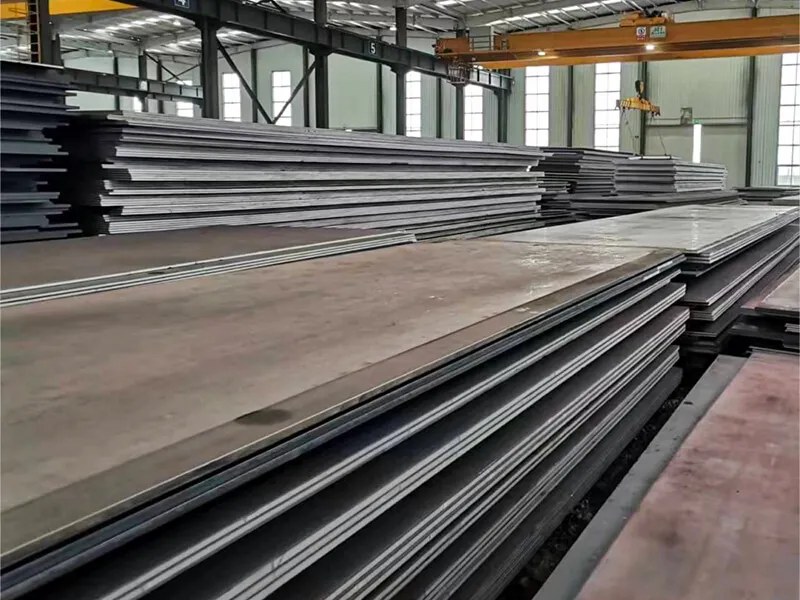
The question is wrong. You should not ask "Is Chinese steel1 high quality?" You should ask "Can my Chinese supplier provide steel of the quality I need, with verifiable proof?" Let’s explore the two-tier reality of China’s steel industry.
The Two Chinas of Steel: Commodity vs. Certified Quality
China’s steel industry is not a monolith. It has evolved into two distinct sectors with different target markets, technologies, and quality control systems.
Tier 1: The Commodity Steel Sector2
- Description: Thousands of small to medium-sized mills producing vast quantities of generic steel (rebar, basic hot-rolled coil, angle bars). Their goal is low cost and high volume.
- Quality Focus: Meets basic national standards (GB standards), which can be less stringent than international norms. Consistency can be an issue. Traceability is often limited.
- Typical Use: Domestic construction, non-critical applications, low-cost projects where price is the only driver.
- The Risk for Importers: If you buy "steel" without specifying an international standard, you may receive commodity-grade material unsuitable for marine use.
Tier 2: The Certified, High-Quality Steel Sector3
- Description: Large, modern, integrated mills like Baowu Group, Ansteel, Shagang, and Shougang. These are global players. They invest in advanced technology (like Thermo-Mechanical Controlled Processing4 – TMCP) and employ strict quality management systems (ISO 90015).
- Quality Focus: They produce steel to exacting international standards6 (ASTM, EN, JIS) and are certified by classification societies (ABS, DNV, LR, etc.) to produce marine and offshore grades. Their products are fully traceable and come with comprehensive test reports.
- Typical Use: Shipbuilding, offshore platforms, pressure vessels, high-rise buildings, pipelines—any application where failure is not an option.
- The Opportunity for Importers: You can access world-class steel at competitive prices, but you must source through suppliers connected to these Tier 2 mills.
How to Ensure You Get Tier 2 Quality:
- Specify the Standard: In your RFQ, never just say "steel plate." Say "ASTM A131 / ABS AH36 Steel Plate." This immediately filters out suppliers who cannot meet that spec.
- Demand Mill Certificates7: Require MTCs from a known, reputable mill. The certificate itself is a product of the mill’s quality system.
- Understand the Price: Tier 2 quality has a cost. If a quote is 30% below market average for AH36, it is likely for commodity steel misrepresented as marine grade.
Comparative Table: Commodity vs. Marine Grade from China
| Aspect | Commodity Steel (Tier 1) | Certified Marine Steel (Tier 2) |
|---|---|---|
| Production Standard | Chinese GB standard. | International Standard (e.g., ASTM, EN, JIS) + Class Society Rules (ABS, DNV). |
| Chemical Control | Looser tolerances for elements like Sulfur (S) and Phosphorus (P). | Very tight control. Low S and P to ensure toughness and weldability. |
| Mechanical Testing | Basic tensile test. May not include impact testing. | Full suite: Tensile, Yield, Elongation, Charpy V-Notch Impact8 at low temperature. |
| Traceability | Batch or heat number may not be strictly tracked. | Full traceability to the specific heat (melt) number. Each plate/section is individually marked. |
| Primary Market | Domestic, low-cost export markets. | Global shipyards, international offshore projects, high-value engineering. |
We operate exclusively in Tier 2. Our long-term cooperation is with mills that have these international certifications. When a buyer from Romania or Thailand asks us for AH36, they receive material from this certified system, with all the supporting documentation. The quality is high because the system enforces it.
Which country makes the highest quality steel?
You want the best for your project. Is it Japanese steel? German? Or American? This question assumes a single winner, but "highest quality" is defined by the application. The best steel for a surgical scalpel is not the best for a ship’s hull.
There is no single "highest quality" steel-producing country. Different countries excel in different niches. Japan and Germany are renowned for ultra-clean, high-precision specialty steels. South Korea excels in advanced shipbuilding steel1s. The USA and Europe lead in certain high-alloy and aerospace grades. For marine-grade carbon steel2, China, South Korea, and Japan are all top-tier producers.
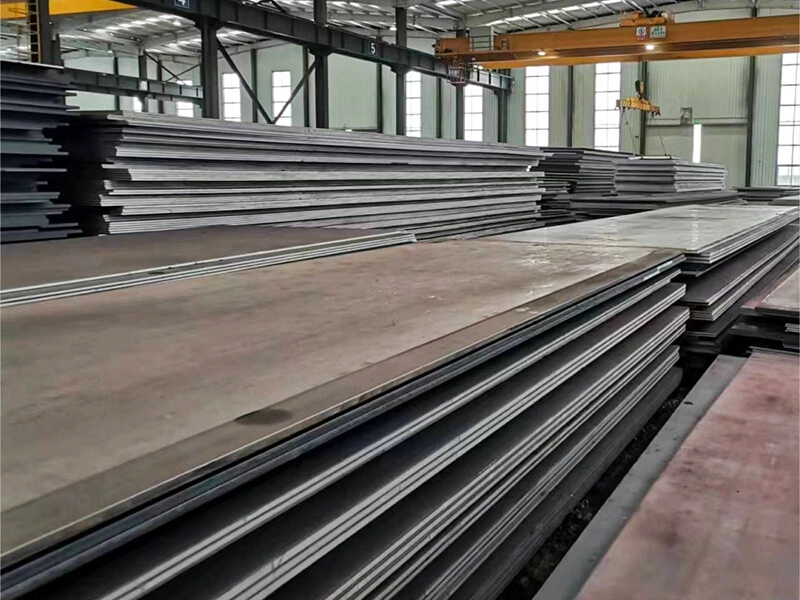
The search for a "best" country is a distraction. The real question is: Which mill, in which country, can consistently produce the specific steel my project requires, and can I verify it? Let’s compare national strengths from a marine buyer’s perspective.
A Buyer’s Guide to National Steel Strengths
Every major steel-producing nation has developed its industry with certain competitive advantages. Your choice should be guided by the technical requirements of your project and the total cost of ownership3, not just nationality.
1. Japan (e.g., Nippon Steel, JFE)
- Reputation: Synonymous with exceptional quality and consistency. Pioneers in advanced steelmaking technologies.
- Marine Strengths: Produce some of the world’s best high-tensile steel for shipbuilding4 and special corrosion-resistant steels5 for tanks. Their quality control is legendary.
- Consideration: The price premium is significant. Often specified for the most critical components on high-value vessels (LNG carriers, naval ships).
2. South Korea (e.g., POSCO, Hyundai Steel)
- Reputation: A powerhouse in shipbuilding steel1. POSCO is a global leader in advanced plate products.
- Marine Strengths: They produce vast quantities of high-quality, cost-competitive AH/DH/EH grades that feed the world’s largest shipyards (many of which are also Korean). Excellent balance of quality and price for marine applications.
- Consideration: A direct competitor to top-tier Chinese mills in the ship plate market.
3. Germany and Western Europe (e.g., Dillinger, Salzgitter, ArcelorMittal EU)
- Reputation: Leaders in high-tech engineering steels6, heavy plate for offshore wind, and specialty alloys7.
- Marine Strengths: Excellent for offshore wind monopiles8, thick plates for nodes with guaranteed through-thickness properties (Z-quality). Their standards (EN 10225) are rigorous.
- Consideration: High cost, but often the default choice for demanding European offshore projects.
4. China (e.g., Baowu, Ansteel, Shagang)
- Reputation: Mass producer, but with a top tier capable of world-class quality.
- Marine Strengths: Unbeatable scale and cost-competitiveness9 for standard marine grades (AH32, AH36). Increasing capability in high-end offshore grades (API 2W, 2H). Fast production and delivery times.
- Consideration: The buyer’s due diligence burden is higher to filter out commodity mills and find the certified producers10. Verification (MTCs, inspection) is non-negotiable.
5. United States
- Reputation: Strong in specialty steels, aerospace, and oil country tubular goods (OCTG).
- Marine Strengths: Certain plate mills produce good quality to ASTM standards. Often used in domestic shipbuilding (e.g., naval, inland barges).
- Consideration: Less focused on the international commercial shipbuilding plate market compared to Asia.
The Practical Procurement Decision:
For a shipbuilder in Vietnam or a fabricator in Saudi Arabia, the decision matrix often looks like this:
| Priority | Likely Choice | Reason |
|---|---|---|
| Absolute Best Technical Performance (No Budget Limit) | Japan or premium European mills. | Unmatched reputation for consistency and advanced grades. |
| Best Balance of Quality and Price for Commercial Shipbuilding | Top-tier Chinese mills or South Korean mills. | They produce the exact grades (ABS, LR) the industry uses, at a competitive price. |
| Compliance with Specific Regional Standards (e.g., EN for an EU project) | European mills. | Simplifies approval and documentation. |
| Lowest Possible Price (Non-Critical Application) | Lower-tier commodity mills in various countries, including China. | High risk for marine use. Not recommended. |
The trend is clear: for mainstream marine steel (AH/DH/EH grades), China and South Korea are the dominant, quality-competitive suppliers. The key is accessing their certified production. As a supplier based in Shandong, China, our role is to be that reliable access point to Tier 1 Chinese mills for international buyers, providing the verification and documentation that bridges the quality perception gap.
Conclusion
Verifying marine steel quality from China is a proactive process of supplier vetting, demanding certified documentation, and insisting on independent physical inspection before shipment.
-
Discover the different types of shipbuilding steel and their specific uses in the industry. ↩ ↩ ↩ ↩ ↩ ↩ ↩ ↩ ↩ ↩
-
Explore the characteristics and applications of marine-grade carbon steel in shipbuilding. ↩ ↩ ↩ ↩
-
Understand the concept of total cost of ownership and its importance in procurement decisions. ↩ ↩ ↩ ↩
-
Explore this link to understand the benefits and applications of high-tensile steel in shipbuilding. ↩ ↩ ↩ ↩
-
Learn about corrosion-resistant steels and their importance in various industries, especially marine applications. ↩ ↩ ↩ ↩
-
Find out how high-tech engineering steels are revolutionizing various engineering applications. ↩ ↩ ↩ ↩
-
Learn about specialty alloys and how they are used in high-performance applications. ↩ ↩ ↩ ↩
-
Understand the role of offshore wind monopiles in renewable energy and their engineering requirements. ↩ ↩
-
Discover the factors that contribute to cost-competitiveness in steel production and its impact on the market. ↩
-
Find out how to identify certified steel producers to ensure quality and compliance in your projects. ↩