
leading paragraph:
You spend weeks on a design. But one missed detail in steel selection can lead to costly delays or even failure at sea.
snippet paragraph:
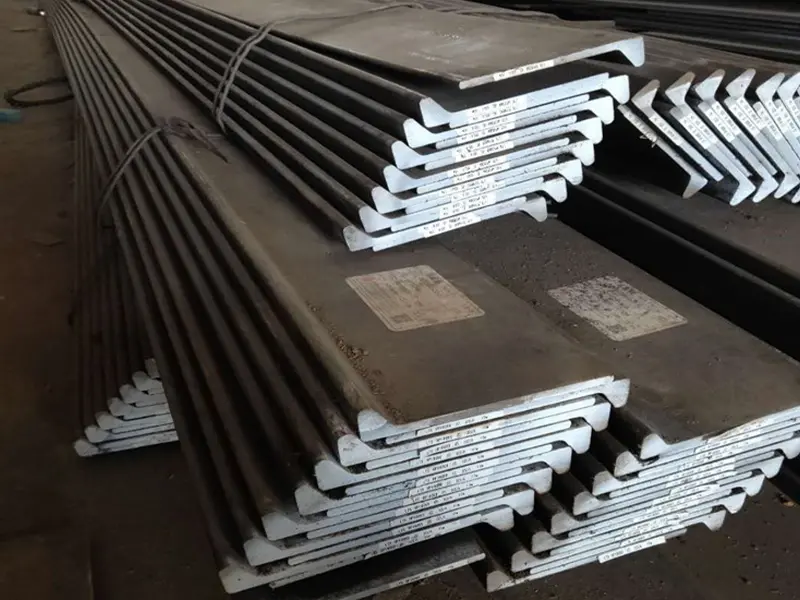
Designing with bulb flat steel is not just about picking a profile. You need to match its material properties, connection details, and corrosion protection to the actual load and environment it will face.
Transition Paragraph:
Many engineers focus on the primary structure. But the real challenges often hide in the details. Let’s break down the key engineering decisions that make a difference between a design that works on paper and one that performs in the water.
Material Properties and Section Classification?
leading paragraph:
You pick a steel grade. But do you know how its properties change the way your structure behaves under stress?
snippet paragraph:
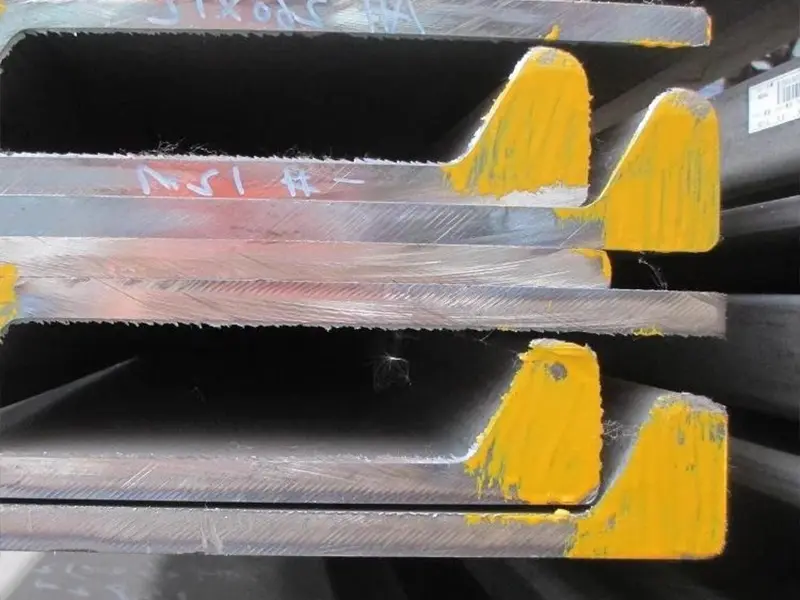
Material properties define how bulb flat steel handles load. Section classification tells you if your profile will fail by yielding or by buckling. You cannot separate these two factors.
Dive deeper Paragraph:
When I first started sourcing bulb flat steel for a tanker project, I learned this lesson the hard way. The client asked for a specific profile. But they did not check the yield strength1 against the design code2. The result was a reorder that delayed the project by three weeks.
So what matters here?
First, you have yield strength. This is the point where the steel starts to bend permanently. For marine applications, you often see grades like A, B, D, or E. Higher grades give you more strength. But they also change how the section behaves.
Second, you have section classification3. This is a concept from Eurocode 3 and other standards. It tells you if the profile can develop its full plastic moment or if local buckling stops it first.
Class 1 sections are plastic. They can form hinges.
Class 2 sections are compact. They reach plastic moment but not full rotation.
Class 3 sections are semi-compact. They only reach yield stress before buckling.
Class 4 sections are slender. You need to reduce their effective section.
Here is a simple way to think about it:
| Section Class | Behavior | Typical Use Case |
|---|---|---|
| Class 1 (Plastic) | Full plastic moment and rotation | Seismic areas, plastic design |
| Class 2 (Compact) | Full plastic moment | General ship framing |
| Class 3 (Semi-compact) | Elastic design only | Secondary structures |
| Class 4 (Slender) | Effective section required | Non-structural or stiffeners |
For bulb flat steel, many profiles fall into Class 3 or 4. That means you cannot assume full plastic behavior. You must check the width-to-thickness ratios.
Another point is toughness4. Marine environments are cold. Ships operate in different zones. If your steel lacks low-temperature toughness, a small crack can grow fast. That is why grades with impact testing (like E grade) are common for critical areas.
In my experience, the best approach is to start with the design code. For shipbuilding, that is often IACS UR S or the rules from classification societies like DNV, LR, or ABS. These rules give you the material grade and the section class limits. Do not skip this step. It is the foundation of your entire design.
Structural Behavior Under Combined Loading?
leading paragraph:
A beam in a ship never sees just one load. It sees bending, shear, and torsion all at once. How does your bulb flat steel1 handle that?
snippet paragraph:
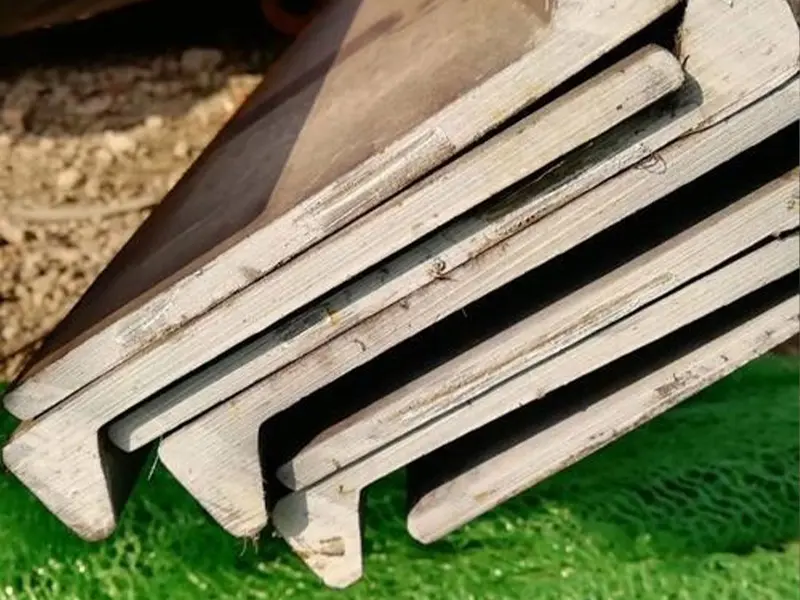
Bulb flat steel is efficient under bending. But under combined loading, the interaction between shear, bending, and lateral-torsional buckling2 can reduce capacity by up to 30 percent if not accounted for.
Dive deeper Paragraph:
I remember a conversation with a project manager in Saudi Arabia. He was frustrated. Their previous supplier gave them bulb flat profiles that matched the bending requirement. But after welding, the beams twisted under deck loads. The problem was lateral-torsional buckling.
Let’s break this down into three parts.
Bending and Shear Interaction
When a beam bends, the flanges carry the moment. The web carries the shear. In bulb flat steel, the “bulb” acts as the flange. The web is the flat part. When shear is high, it reduces the moment capacity. Most codes use a simple interaction formula:
(Applied Moment / Moment Capacity)^2 + (Applied Shear / Shear Capacity)^2 ≤ 1.0
If you ignore this, you might overestimate the strength.
Lateral-Torsional Buckling
This is a big one for bulb flat steel. The profile is asymmetric. The bulb is on one side. Under bending, the compression part can buckle sideways. The longer the unsupported length, the higher the risk.
I always check the slenderness ratio3 against the design code. For a ship frame, the web stiffeners reduce this risk. But for long spans, you may need additional bracing.
Torsion
Bulb flat steel is weak in torsion. The open cross-section means it twists easily. In a ship, this matters when loads are eccentric. For example, a deck crane or a heavy equipment point. If you do not account for torsion, the profile may twist and cause local stresses at connections.
Here is a simple checklist I use with my clients:
- Identify the load combination: Dead load, live load, wave load, and dynamic loads.
- Calculate the bending moment and shear at critical sections.
- Check lateral-torsional buckling for unsupported segments.
- Check torsion effects, especially at connections and supports.
- Verify interaction with the design code interaction formula.
The takeaway is simple. Do not treat each load separately. Combined loading is the reality. And ignoring it is one of the fastest ways to get a call from a client asking why their frames are twisting.
Connection Details and Welding Considerations?
leading paragraph:
A strong profile is useless if the connection fails. So why do so many engineers treat welding as an afterthought?
snippet paragraph:
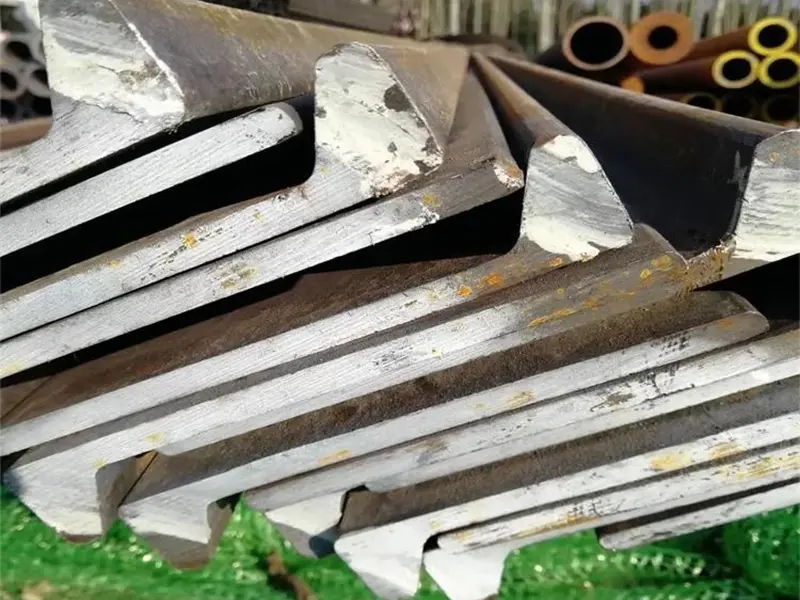
Connection details are the weakest link in a steel structure. For bulb flat steel1, welding needs special attention because of its asymmetric shape and the risk of distortion.
Dive deeper Paragraph:
A few years ago, we supplied bulb flat steel to a manufacturer in Vietnam. They used a standard fillet weld on all connections. But after painting, they saw cracks at the weld toes. The issue was not the steel. It was the detail. The weld was too small, and the profile’s geometry created a stress concentration.
Here is how to approach this systematically.
Weld Type and Size
For bulb flat steel, you typically use fillet welds or partial penetration welds. The size must match the load. But more importantly, you need to consider the throat thickness. For asymmetric profiles, the weld on the bulb side and the web side may need different sizes to balance the load.
Distortion Control
Because bulb flat steel is asymmetric, welding heat pulls it unevenly. This causes distortion. I have seen frames that looked like bananas after welding. The solution is:
- Use balanced welding sequences: Weld in short segments. Skip around to distribute heat.
- Pre-set the profile: Sometimes you need to bend it slightly opposite to the expected distortion.
- Control heat input: Lower amperage and smaller weld passes help.
Fatigue
Ships face millions of load cycles. Welded connections are fatigue-sensitive2. The detail category from the classification society matters. For example, a weld at the toe of a bulb flat stiffener might fall into a lower category. That means a smaller allowable stress range.
I always remind clients to follow the welding procedure specification (WPS)3. It is not just paperwork. It ensures the welder uses the right parameters. Also, third-party inspection (like SGS) before coating can catch problems early.
Here is a comparison of common connection issues:
| Issue | Cause | Prevention |
|---|---|---|
| Undercut | High heat, wrong angle | Use correct welding parameters |
| Lack of fusion | Poor preparation | Clean surfaces, proper bevel |
| Distortion | Unbalanced heat | Balanced welding sequence |
| Cracking | Hydrogen, restraint | Pre-heat, low-hydrogen electrodes |
In my work with project contractors, I see that the ones who succeed are the ones who treat welding as a design activity. They specify the weld size, the sequence, and the inspection level. They do not leave it to the fabricator to figure out.
Corrosion Protection and Durability Strategies?
leading paragraph:
Steel corrodes. It is a fact. But can you design your bulb flat steel details to last longer with less maintenance?
snippet paragraph:
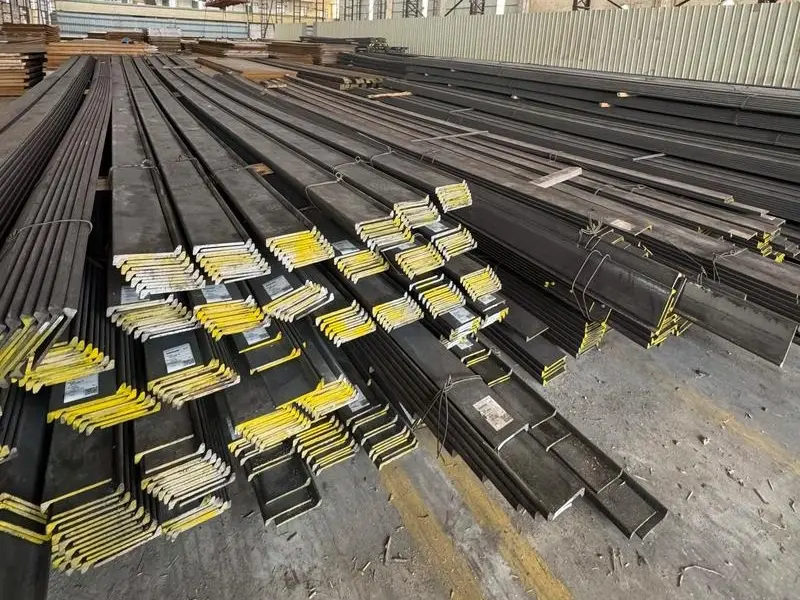
Corrosion protection1 starts with the detail design. Sharp corners, crevices, and inaccessible areas fail first. A good coating system and proper profile shape are your first line of defense.
Dive deeper Paragraph:
One of our clients from the Philippines shared a pain point with me. Their previous supplier delivered bulb flat steel with sharp edges. The coating failed at those edges within a year. Rust crept in. They spent more on recoating than on the steel itself.
So how do we avoid this?
Profile Geometry2 and Coating
The shape of bulb flat steel is actually an advantage. The smooth bulb shape helps coating flow evenly. But the edges still need attention. I recommend edge rounding. A small radius of 2 mm at the corners can make a huge difference in coating adhesion.
Coating Systems3
For marine environments, you need a multi-layer system. Typically:
- Primer: Shop primer to protect during fabrication.
- Intermediate coat: Builds thickness.
- Top coat: Provides UV and chemical resistance.
The coating standard ISO 12944 or NORSOK M-501 gives guidance. For shipbuilding, IACS rules specify coating for ballast tanks and other areas.
Cathodic Protection4
In ballast tanks or on hulls, you combine coating with cathodic protection. This uses sacrificial anodes or impressed current to protect the steel where coating fails. But the design must ensure that the bulb flat profile is electrically continuous.
Inspection and Maintenance
You cannot just coat and forget. I always advise clients to plan for inspection. Areas behind stiffeners or in corners are hard to coat and hard to inspect. Using double coating in those areas or specifying higher film thickness helps.
From a sourcing perspective, we ensure that the mill delivers steel with a proper mill scale removal. If the surface is not clean to SA 2.5 or higher, the coating will not stick. We also support SGS inspection to verify coating thickness before shipment.
Here is a summary of corrosion strategies:
| Strategy | Action | Benefit |
|---|---|---|
| Profile design | Round edges, smooth transitions | Better coating adhesion |
| Coating system | High-build epoxy, multi-layer | Longer service life |
| Cathodic protection | Anodes in ballast tanks | Backup protection |
| Inspection | Third-party coating inspection | Quality assurance |
The bottom line is that corrosion is a cost. Good design and proper protection reduce that cost. And for a ship, that means less downtime and a longer operational life.
Conclusion
Designing with bulb flat steel is about connecting material, load, connection, and protection. Get these details right, and your structure will perform. Get them wrong, and you will face delays and failures.
-
Explore effective corrosion protection methods to enhance the durability of steel structures. ↩ ↩ ↩ ↩
-
Learn how profile geometry can significantly improve coating adhesion and longevity. ↩ ↩ ↩ ↩
-
Discover the most effective coating systems designed specifically for marine applications. ↩ ↩ ↩ ↩
-
Understand cathodic protection techniques to safeguard steel structures from corrosion. ↩ ↩