
Leading paragraph:
You have a massive tanker to build. You pick bulb flats like you did for smaller ships. That could be a costly mistake.
Snippet paragraph:
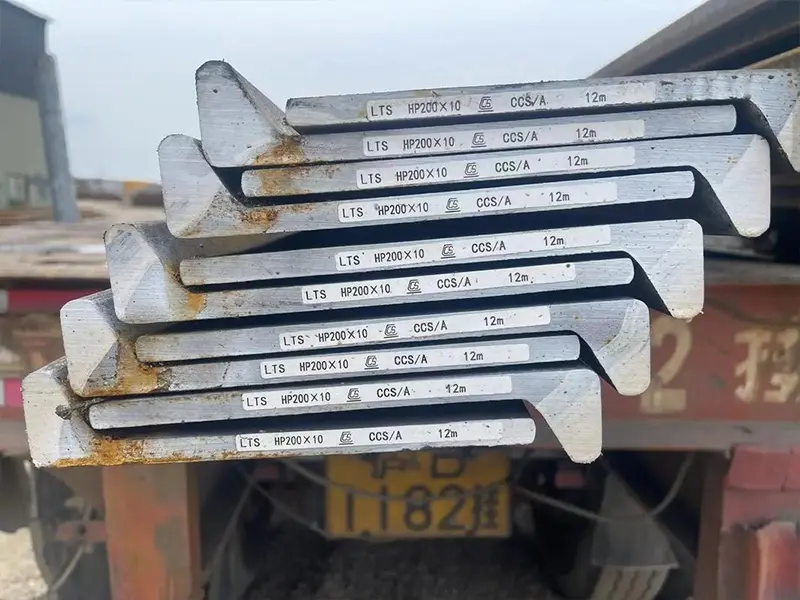
Large vessels need a different approach to bulb flat steel. The forces on a 300,000-ton tanker are not the same as on a small cargo ship. You must rethink your material grades, sizes, and placement to handle the increased stress and scale.
Transition Paragraph:
I have spent years supplying steel for these giant structures. I see the same issues again and again. Let me walk you through how to change your strategy for large vessels, so you avoid the problems that cost time and money.
Scale Matters: How Vessel Size Demands Rethink of Bulb Flat Selection?
Leading paragraph:
Most buyers just multiply the old quantities. They order the same bulb flat profiles1 for a VLCC that they used for a 50,000-ton bulker.
Snippet paragraph:
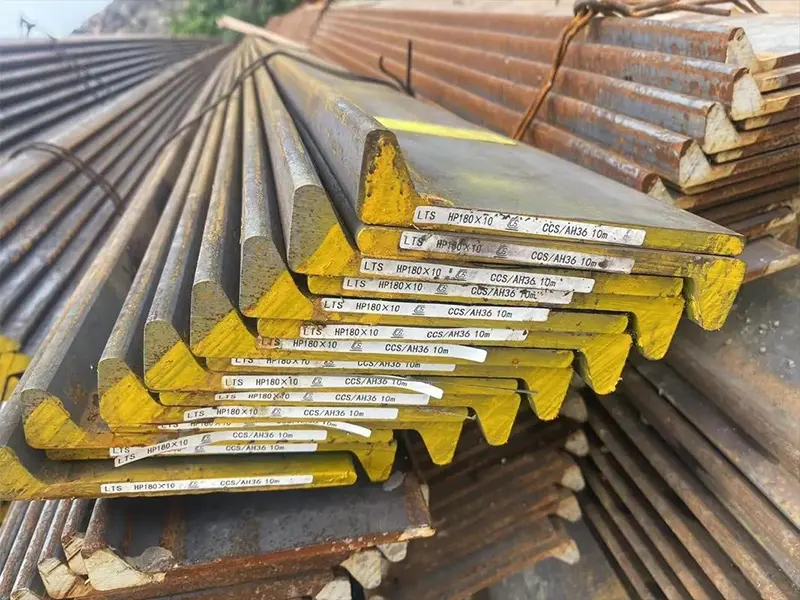
You cannot just scale up the quantity. You must change the size and grade. A larger hull creates higher localized stress2. You need bigger sections and often higher strength steel to keep the weight under control.
Dive deeper Paragraph:
When I talk to project contractors, especially those building for the first time at this scale, the question of "what size?" is the first hurdle. The physics of a 200-meter vessel are very different from a 300-meter vessel. The deflection, the torsion, the sheer weight of the structure itself changes everything. You are not just building a longer boat. You are building a structure that must resist forces that try to bend and twist it in ways smaller ships never experience.
Why Size Really Matters
To make this clear, let’s look at how the requirements shift. It is not just about picking a random size from a chart. It is a strategic choice that affects the entire build.
| Vessel Type | Typical Length | Primary Concern | Bulb Flat Strategy |
|---|---|---|---|
| Small Vessel (e.g., Tug) | 300 m | Global hull girder strength, fatigue, buckling | Large sizes (300mm to 430mm and above). Heavy reliance on high-strength grades3 (A32, A36, D32, D36) [citation:3]. |
You see the jump? For a large vessel, the game changes. You move into what some suppliers call "jumbo" bulb flats [citation:7]. These are not always stock items. I had a client from Qatar, a big contractor, who initially specified a mix of small and medium sizes for a series of tankers. We sat down and looked at the class society rules together. By moving to a larger, single profile in high-strength steel, we reduced the number of stiffeners needed and cut their welding time significantly. That is the kind of rethinking scale demands.
Strategic Positioning: Optimizing Bulb Flat Distribution in Critical Stress Zones?
Leading paragraph:
Putting strong steel everywhere is easy. It is also expensive and heavy. Smart placement is the real skill.
Snippet paragraph:
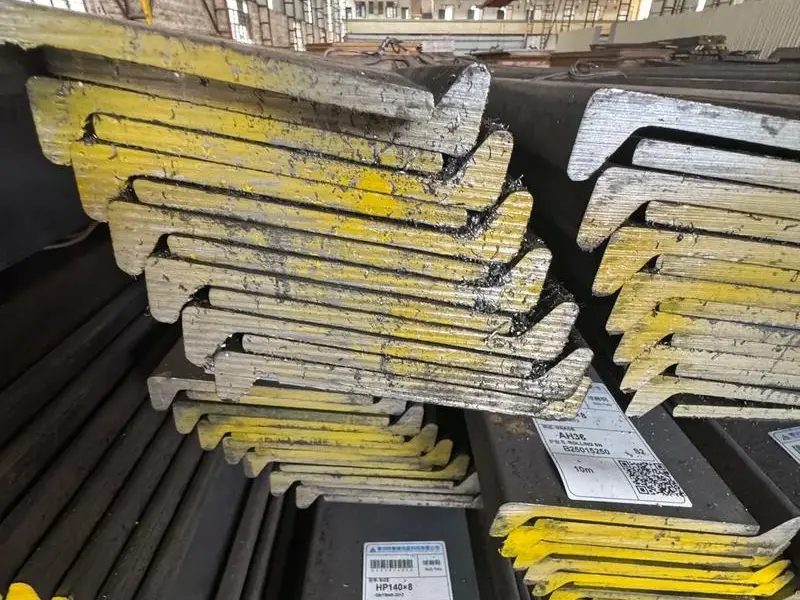
You do not need the same steel in every zone. The highest stress areas, like the bilge strake and the deck stringer, need the largest and strongest profiles. Lower stress areas can use smaller, standard sections.
Dive deeper Paragraph:
I remember a shipment to a shipyard in the Philippines. They had a consistent problem with warping in the hull during construction. When we discussed their material list, I saw they used the same bulb flat size and grade1 for the entire side shell. That was the issue. The stress on a hull is not uniform. Near the bottom, where the water pressure is highest, and near the top, where the deck supports the most weight, the stress is at its peak [citation:2].
Three Critical Zones to Watch
You have to think of the ship as a beam. The top and bottom of that beam experience the most tension and compression. The middle, near the neutral axis, experiences much less. Here is how I advise my clients to position their steel:
- The Bilge and Bottom Structure: This area faces huge hydrostatic pressure2. It also takes the first hit in any grounding. Here, you need your heaviest bulb flats. Think big sections, 300mm and up. Using high-strength steel here gives you a major safety margin without adding massive weight.
- The Deck and Longitudinal Framing: The deck must resist compression when the ship bows. It also handles tension when the ship sags. Bulb flats here act as stiffeners for the deck plates. They must be robust and precisely placed to prevent buckling. This is where consistency in the steel’s profile is critical. A slight deviation in the bulb shape can create a weak point.
- The Side Shell and Bulkheads: These areas see dynamic, changing stresses3. They need good fatigue resistance4. The placement here is more about pattern and spacing than just raw size. You are using the bulb flats to create a grid that distributes the load evenly.
I always tell buyers, "Don’t just buy steel. Buy a solution for each part of the ship." Your bulb flat strategy must be a map of where the forces are, not a blanket application.
Lightweighting at Scale: Weight Reduction Strategies Without Compromising Strength?
Leading paragraph:
Weight is the enemy of fuel efficiency and payload. But cut too much steel, and you risk the whole structure.
Snippet paragraph:
The secret is the shape itself. A bulb flat1 gives you more strength per kilogram than a flat bar [citation:2]. By using higher strength grades2, you can reduce the thickness of the web, saving significant weight across the entire vessel.
[^3] of bulb flat versus angle bar](https://cnmarinesteel.com/wp-content/uploads/2026/01/Flat-steel-ball119.webp)
Dive deeper Paragraph:
My customers in Vietnam and Malaysia are always pushing for lower costs. But fuel efficiency is just as important to them. The lighter the ship, the less fuel it burns. This is where the design of the bulb flat shines. The bulb shape at the edge is pure genius. It adds stiffness exactly where it is needed, like a flange on an angle bar, but it uses less material [citation:3].
How We Save Weight on Big Projects
I worked with a fabricator in Romania who was building a series of bulk carriers. They were used to using standard angle bars for stiffening. We showed them how switching to bulb flats could save them tons of weight. Here is the breakdown of how we do it:
- Replace Angles and Flat Bars: The first step is the simplest. A bulb flat is inherently more efficient. It provides better buckling resistance4 than a flat bar of the same weight [citation:2]. This is an immediate win.
- Go Up in Grade, Down in Size: This is the real strategy. If the design calls for a large S355 profile, we sometimes suggest moving to a slightly smaller profile in a higher strength grade, like a specialized high-strength steel. The yield strength goes up, so you need less steel to carry the same load. You have to check this with the classification society, but it is a proven way to save weight [citation:1].
- Optimize the Welding: Less steel also means less welding. The rounded edges of a bulb flat mean you do not need to grind edges before painting, which saves shop time and money [citation:3]. But more importantly, with fewer and lighter profiles, the total weld length and the amount of filler metal goes down. That is weight saved in the welds themselves.
It is a chain reaction. Smart material selection leads to a lighter structure, which leads to a more efficient ship, which makes the owner happy. That is the goal.
Production Integration: Adapting Bulb Flat Strategies to Modern Block Construction Methods?
Leading paragraph:
You have the right steel. You put it in the right places. But if it does not fit your building process, you have a problem.
Snippet paragraph:
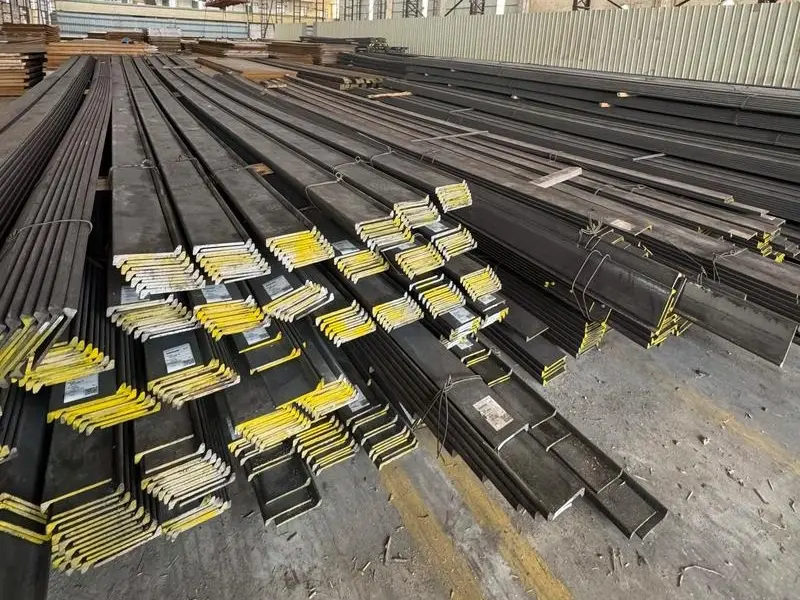
Modern shipyards build in blocks. Your bulb flat strategy must support this. Standardized profiles with tight tolerances ensure that stiffeners from different batches fit perfectly when blocks are joined.
Dive deeper Paragraph:
Shipbuilding today is like making a giant 3D puzzle. You build a section of the ship, a block, in a shop. Then you move it to the dry dock and weld it to another block. If the parts do not line up perfectly, you are stuck doing costly rework. I learned this from a client in Mexico. They had a batch of bulb flats from another supplier that had poor dimensional tolerances1. The height of the bulb (the "h" dimension) varied too much. When they tried to fit the pre-fabricated panels together, the stiffeners did not align. They had to cut and shim them, which took weeks.
Making the Steel Fit the Process
To avoid this nightmare, you need a supply strategy that fits the block method. Here is what I focus on with my regular clients, like those in Saudi Arabia who build in massive, modern yards.
- Tolerances Are Everything: The assembly process, especially with automated welding, needs precision. The Chinese standard GB/T 9945-2012, which our mills follow, sets strict limits on curvature and dimensional deviation [citation:8]. We make sure these are met. If a bulb flat is bent more than a few millimeters per meter, it can throw off the entire block alignment [citation:4].
- Consistent Lengths for Pre-Fabrication: Block building relies on just-in-time delivery2. You order steel for Block 5A. It must arrive cut to the exact lengths specified. No surprises. We work with the mills to ensure that the lengths are precise. This allows the fitters to lay out the grid on the steel plate, place the bulb flats, and tack them into position quickly [citation:4].
- Surface Prep Saves Time: When you get steel for a block, you want it ready to go. That is why we offer shot blasting and shop priming. The primer protects the steel during construction. Because the bulb flat has rounded edges, there is no sharp corner where the primer fails to cover, which means no touch-up grinding before painting the final block [citation:3].
By treating the steel order as a part of the construction process, not just a raw material purchase, you keep the production line moving. That is how you deliver a ship on time.
Conclusion
Stop treating bulb flats like a simple commodity. For large vessels, they are a critical design and production tool. Rethink your size, placement, and sourcing to build stronger, lighter ships faster.
-
Learn how precise dimensional tolerances can prevent costly mistakes in construction projects. ↩ ↩ ↩ ↩
-
Explore how just-in-time delivery can streamline your production process and improve efficiency. ↩ ↩ ↩ ↩
-
Discover the concept of weight efficiency in shipbuilding and its impact on fuel consumption and performance. ↩ ↩
-
Understand the importance of buckling resistance in structural design and how it influences material choices. ↩ ↩