
I remember a phone call from a client in Malaysia a few months back. He was stressed. His project needed a mix of angle steel grades for different sections of a bulk carrier. He had one order but was worried about mixing them up. His main fear was that one wrong grade could delay the entire shipbuilding schedule.
Yes, you can manage different grades of marine angle steel in one order. It is not just possible. It is a standard practice in shipbuilding. You just need a clear plan for specification management, marking, and storage. A reliable supplier helps you do this without mistakes.
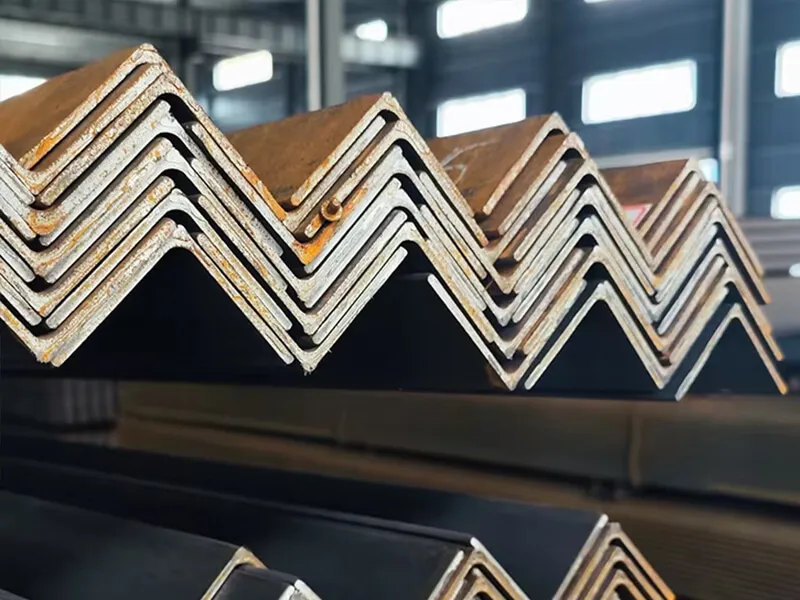
Managing a single order with multiple steel grades is like running a complex logistics operation. It requires clear communication and strict process control. If you do it right, you save on shipping costs. You also streamline your inventory. But if you do it wrong, you risk using the wrong steel in the wrong part of the ship. That is a risk no one wants to take.
What are the different grades of steel angles?
When I talk to new clients, they often ask if all steel angles are the same. The simple answer is no. For marine applications1, the grade tells you everything about the steel’s strength and toughness.
Steel angles come in different grades that define their mechanical properties. The most common marine grades are classified by ship classification societies like ABS, LR, and DNV. These grades fall into categories like general strength (Grade A, B, D, E) and higher strength (AH32, AH36, DH32, DH36).
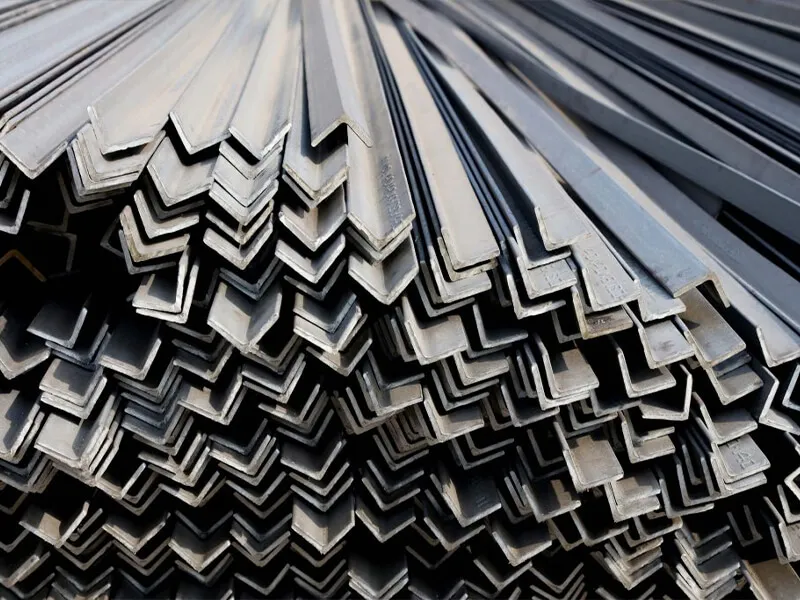
The Difference Between General Strength and Higher Strength
Let us break this down. Think of general strength steel as your standard, reliable material. It works well for less critical parts of the ship. Higher strength steel is the upgraded version. It provides more strength with less weight.
Here is a simple table to show you the difference:
| Grade Type | Grade Examples | Minimum Yield Strength (MPa) | Typical Use |
|---|---|---|---|
| General Strength | A, B, D, E | 235 | Superstructures, decks, non-critical frames |
| Higher Strength | AH32, DH32, AH36, DH36 | 315 – 355 | Hull structures, keels, critical load-bearing areas |
The choice between these grades is not just about strength. It is also about the temperature. Grade D and E steel are designed for low-temperature toughness. If your vessel operates in cold climates, you need these grades. I have seen projects in Northern Europe fail inspection because the supplier sent Grade A steel for a hull section that required Grade D. The steel was strong, but it was not tough enough for the cold water. That mistake cost the buyer three weeks and a lot of money.
What is A36 grade angle1?
A client from Qatar once asked me why we do not supply A36 for his ship repair job. He was used to A36 from his land-based construction projects. I had to explain that while A36 is a great material, it is not a standard marine grade for new shipbuilding.
A36 grade angle is a structural steel angle defined by the ASTM standard. It has a minimum yield strength of 250 MPa. It is widely used in building construction, bridges, and general industrial applications.
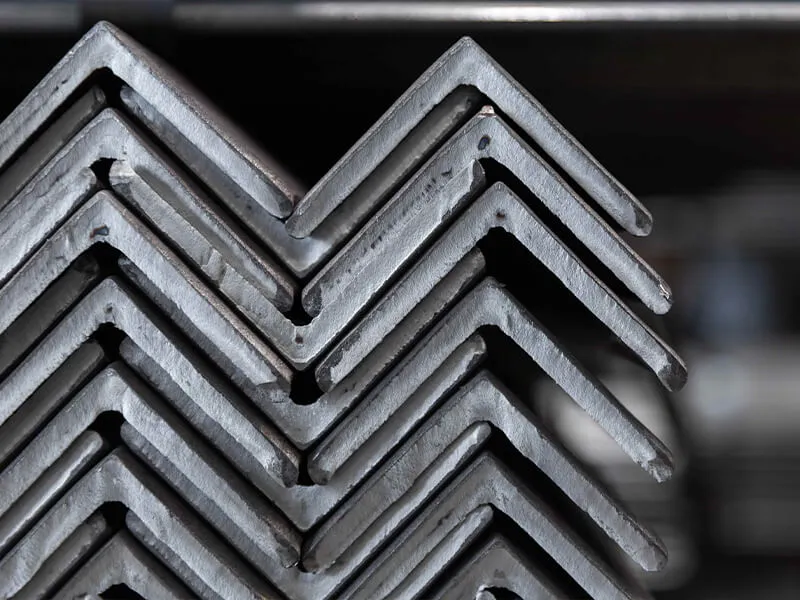
Why A36 is Rarely Used for Marine Hulls
This is a point of confusion for many buyers. A36 is a good, tough steel. But it is not classified by the major ship classification societies (like ABS, LR, or DNV). In shipbuilding, every piece of steel used in the hull must come with a mill certificate2 that shows it meets a specific class rule.
Let me give you a real-world comparison. If you are building a dock or a warehouse, A36 is perfect. If you are building a ship that needs to pass a surveyor’s inspection, you need marine-grade steel3.
Here is a quick comparison:
| Feature | A36 Angle | Marine Angle (e.g., AH36) |
|---|---|---|
| Standard | ASTM A36 | Classification Society Rules (ABS, LR, DNV) |
| Yield Strength | 250 MPa | 355 MPa |
| Certification | Mill Certificate | Mill Certificate + Classification Society Stamp |
| Common Use | Buildings, bridges, industrial platforms | Ship hulls, offshore platforms |
I once worked with a contractor in the Philippines. He ordered A36 angles for a barge. The barge was not classed, so it was fine. But later, he got a contract to build a small tugboat for a client who required ABS certification. He tried to use the same A36 steel. The surveyor rejected it immediately. We had to supply him with ABS Grade A angles. The lesson here is simple: know the final certification requirement before you place the order.
What’s the weight of a 40x40x5 steel angle1?
This is a question I get from procurement teams all the time. They are calculating freight costs. They are trying to fit a certain number of pieces in a container. Knowing the exact weight is crucial for logistics planning.
The weight of a 40x40x5 steel angle is approximately 2.98 kg per meter. This is based on the standard density of steel at 7.85 g/cm³.
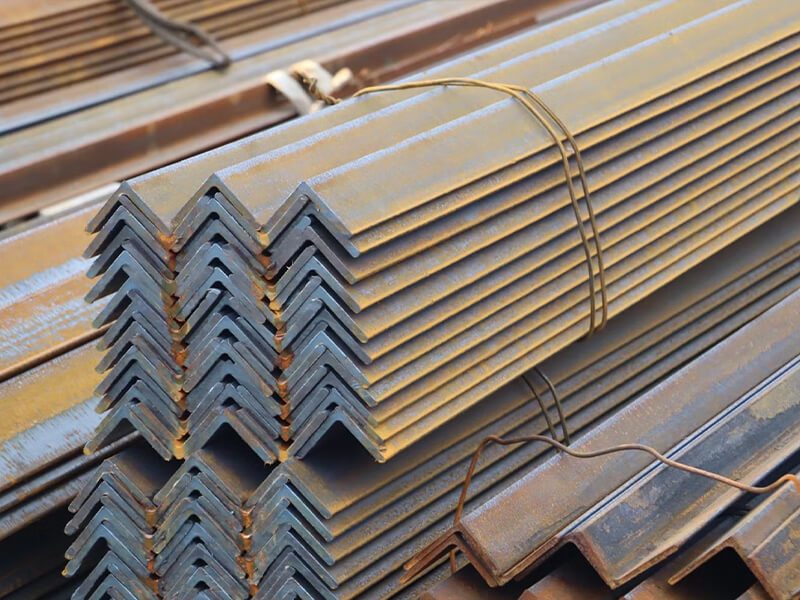
How to Calculate the Weight Yourself
You do not need to be a mathematician to figure this out. I train my sales team to always calculate this for clients. It helps them plan better. There is a simple formula you can use.
The weight per meter2 is calculated as: (Width + Width – Thickness) x Thickness x 0.00785
Let us apply that to a 40x40x5 angle:
- Add the two legs: 40 mm + 40 mm = 80 mm
- Subtract the thickness: 80 mm – 5 mm = 75 mm
- Multiply by thickness: 75 mm x 5 mm = 375
- Multiply by the density constant: 375 x 0.00785 = 2.94375 kg/m
So, a 6-meter length of this angle would weigh about 17.66 kg. A 12-meter length would weigh about 35.33 kg.
This calculation is very important for managing one order with multiple grades. Different grades have different mechanical properties, but their density is nearly the same. The weight is purely based on dimensions. So when I help a client consolidate an order, I use these numbers to calculate total tonnage. This ensures we maximize container load without going over the weight limit.
What is the ASTM standard for angles?
I was at a trade show in Houston last year. A potential buyer from a large oil and gas company walked up to our booth. He handed me a spec sheet. It listed a requirement for "ASTM A36 Angles." He was surprised when I asked him if the project required classification society approval1.
The ASTM standard for angles is ASTM A36 / A36M2. This is the standard specification for carbon structural steel. It covers the general requirements for shapes, plates, and bars used in construction and general structural applications.
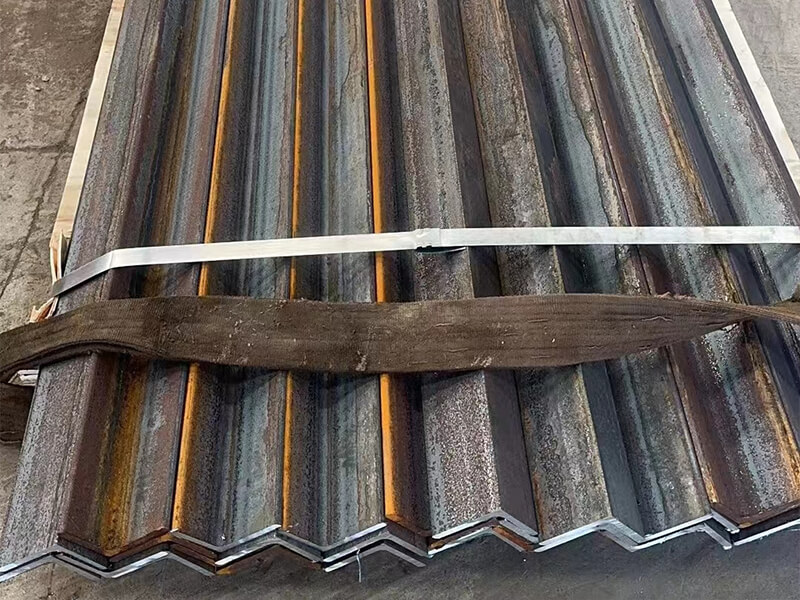
ASTM vs. Marine Grades: A Critical Distinction
This is where I see the most confusion in the market. ASTM standards are from the American Society for Testing and Materials. They are a set of material specifications. Marine grades are from classification societies like ABS (American Bureau of Shipping).
They are not the same thing. Here is why this matters for your order:
- Scope of Use: ASTM A36 is for structural use on land. Marine grades are for structures that float. The stress and corrosion conditions are different.
- Testing Requirements: Marine grades require more rigorous testing. They need to pass impact tests at specific low temperatures. ASTM A36 does not have the same strict low-temperature toughness requirements.
- Certification Chain: When you buy marine steel, you need a mill certificate3 that references the classification society rules. For ASTM A36, the certificate is simpler.
I remember a case with a client in Vietnam. He was building a floating dock. The client’s engineer specified ASTM A36. Our client ordered it. But when the final inspection came, the port authority demanded to see classification society certificates. The steel was good, but the paperwork was wrong. We had to help him get a third-party inspection to verify the material properties. It was an extra cost and a delay he did not plan for.
Conclusion
Managing different grades in one order is about planning. Know your grades. Know the certification you need. Work with a supplier who understands the difference.
-
Discover the significance of classification society approval in ensuring material safety and compliance in marine projects. ↩ ↩ ↩ ↩
-
Understanding ASTM A36 is crucial for compliance in construction projects. Explore this link for detailed specifications. ↩ ↩ ↩
-
A mill certificate verifies material quality. Understanding its importance can save you from costly project delays. ↩ ↩