
You have 5,000 tons of marine steel plate to order for a new vessel. One mistake. The whole schedule collapses.
Break the total quantity into phases. Match each phase to hull construction milestones. Pick a supplier with mill capacity for large orders. Use a buffer stock to cover delays.
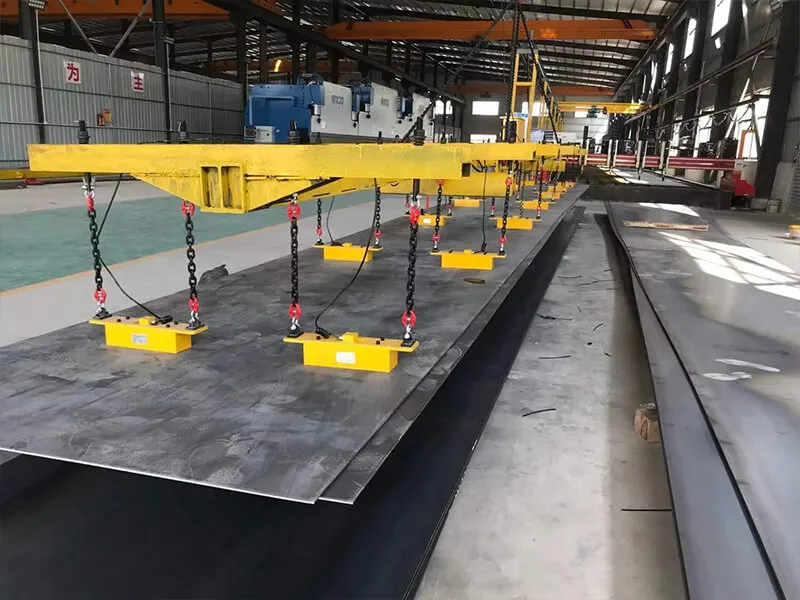
Ordering for a whole ship is not like buying steel for a small repair. I have helped yards handle tens of thousands of tons. Let me share what works.
How to Forecast and Consolidate Plate Requirements Across Multiple Vessel Blocks?
You have drawings for Block 1, Block 2, and Block 3. Each block needs different plate sizes. You add them up. But you miss something.
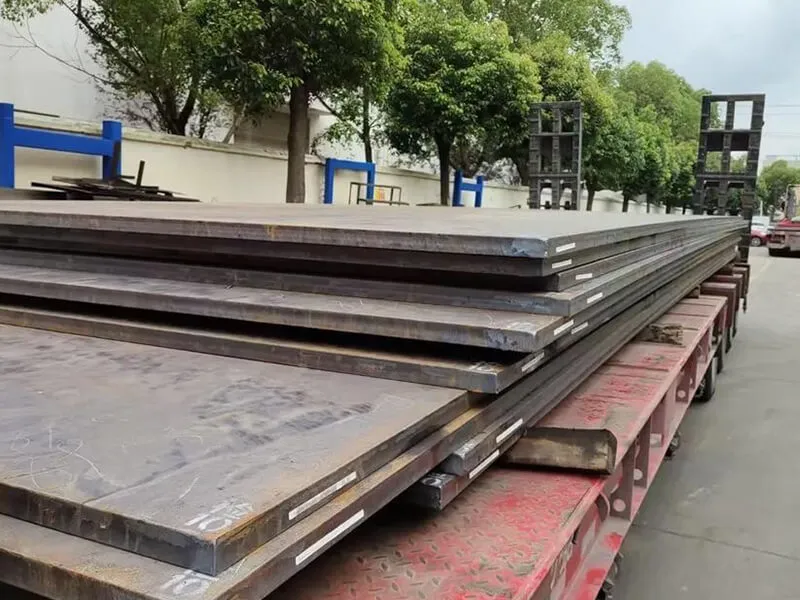
Group plates by thickness, grade, and width. Then add a 5–7% waste factor. Do not just add block by block. Consolidate into size families.
Why Do Simple Addition Fail?
I have seen a buyer add the steel take‑off from each block. He got 4,200 tons. He ordered 4,200 tons exactly. Then the yard cut the plates. Waste was 8%. They ran out of steel. He had to order an extra 350 tons urgently. Express freight cost him $25,000.
The problem is that each block drawing has its own cut plan. When you cut plates from standard mill sizes, you always get waste. So you need to add a waste factor.
Here is how to forecast properly.
| Step | Action | Example |
|---|---|---|
| 1 | Collect steel take‑off for each block (net weight) | Block 1: 800t, Block 2: 1,200t, Block 3: 900t, Total net: 2,900t |
| 2 | Add waste factor based on block complexity | Simple blocks: 5%, Complex blocks: 8‑10% |
| 3 | Add a project reserve (2‑3%) for last‑minute changes | 2% of net |
| 4 | Calculate gross order quantity | Net 2, |
How to Consolidate into Size Families?
Do not order 20 different thicknesses. Group similar thicknesses together.
| Thickness range | Common uses | Order as one family |
|---|---|---|
| 6‑10mm | Superstructure, bulkheads | Group as “light plates” |
| 12‑16mm | Inner bottom, decks | Group as “medium plates” |
| 18‑25mm | Outer hull, bottom | Group as “heavy plates” |
| 30mm+ | Keel, special areas | Separate order |
Also group by grade. If you need both Grade A and AH36 for similar thicknesses, consider upgrading the Grade A to AH36. That simplifies inventory. The cost increase is small (about 10‑15%). But you save on handling and reduce the risk of mixing up grades.
I had a client in Thailand who ordered 12 different thicknesses and three grades. That was 36 line items. His supplier constantly mixed up certificates. After we helped him consolidate to 6 thicknesses and 2 grades, his error rate dropped by 80%.
So forecast with waste. Consolidate into families. Your ordering becomes much simpler.
What Supplier Selection and Mill Capacity Criteria Ensure Reliable Large‑Volume Delivery?
You find a supplier. They say “yes, we can deliver 5,000 tons.” Then they miss the first 1,000 tons. You have no backup.
Choose a supplier that holds long‑term mill contracts, not just spot buying. Ask for their monthly rolling capacity dedicated to export. Also check if they have a second mill as backup.
What Capacity Questions Should You Ask?
Many traders will promise anything. Then they scramble to find mill slots. You need to verify capacity before you commit.
Here is a checklist I recommend.
| Question | Why it matters | Red flag answer |
|---|---|---|
| “How many tons of marine plate do you ship per month on average?” | Shows real capacity | “We can do anything” without a number |
| “Which mills do you work with? Can you name three?” | Shows depth of relationship | Names only one obscure mill |
| “What is your mill’s monthly production for export marine plate?” | Shows maximum possible | Mill does not publish or unknown |
| “If your main mill has a breakdown, what is your backup?” | Shows risk management | “That never happens” |
What Is a Realistic Mill Capacity for Large Orders?
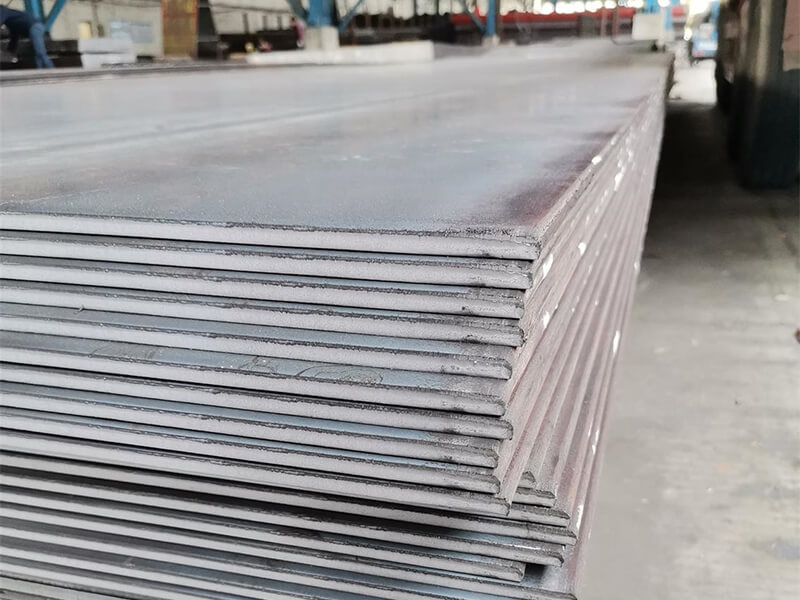
A single plate mill might produce 100,000 tons per month total. But only 10‑20% is marine grade. And only a fraction is for export. So a supplier with one mill can realistically deliver 2,000‑3,000 tons per month of marine plate.
For a 5,000‑ton order, you need a supplier with either:
- Two mills in different locations, or
- A mill that can allocate 4‑6 weeks of production to your order.
We work with mills in Liaocheng and also have relationships in Hebei. That gives us two sources. For a client in Qatar who ordered 6,000 tons over 4 months, we used one mill for 70% and another for 30%. No single point of failure.
How to Test a Supplier’s Capacity Before Ordering?
Run a small trial order first. Ask for 200‑300 tons. See if they deliver on time. If they cannot handle a small trial, they will fail on a large order.
Also ask for a production schedule. A serious supplier will give you a week‑by‑week plan.
| Week | Mill allocation (tons) | Plate thickness | Rolling date | Inspection date |
|---|---|---|---|---|
| 1‑2 | 800 | 12mm, 15mm | Week 1‑2 | Week 3 |
| 3‑4 | 900 | 20mm, 25mm | Week 3‑4 | Week 5 |
| 5‑6 | 800 | 10mm, 18mm | Week 5‑6 | Week 7 |
If the supplier cannot produce a plan like this, walk away.
I learned this from a client in Pakistan. He chose a supplier without checking mill capacity. The supplier took his deposit of $200,000. Then they could not secure mill slots for six weeks. He lost two months. After that, he always asks for a mill allocation letter before paying a deposit.
So vet your supplier’s capacity. Do not take their word. Ask for proof.
How to Split Large Orders into Phased Releases That Match Hull Construction Milestones?
You place one purchase order for 5,000 tons. The supplier delivers everything in two shipments. Your yard cannot handle that.
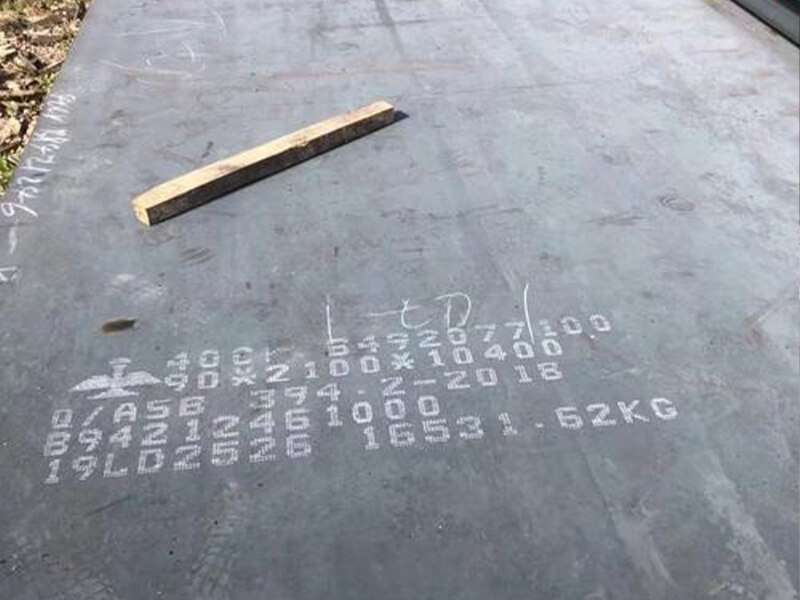
Split the large order into 4–6 phased releases. Each release matches a group of hull blocks. Only release the next phase after the previous one is delivered and inspected.
How to Define the Phases?
Look at your hull construction sequence. Most ships are built in 4‑6 mega‑blocks.
| Phase | Hull section | Typical steel tonnage | Plate thicknesses | Timing (months from start) |
|---|---|---|---|---|
| 1 | Stern block | 800‑1,200t | 12‑20mm | Month 1‑2 |
| 2 | Mid block 1 (engine room) | 1,000‑1,500t | 15‑25mm | Month 3‑4 |
| 3 | Mid block 2 (cargo hold) | 1,200‑1,800t | 10‑18mm | Month 5‑7 |
| 4 | Bow block | 800‑1,200t | 12‑22mm | Month 8‑10 |
| 5 | Superstructure | 300‑500t | 6‑12mm | Month 11‑12 |
Each phase becomes a separate delivery release under the same master order.
What Are the Benefits of Phased Releases?
| Benefit | Explanation |
|---|---|
| Reduced storage | You only keep 2‑4 weeks of steel on site. |
| Better cash flow | You pay for each phase as it ships, not all at once. |
| Easier quality control | You inspect 1,000 tons at a time, not 5,000. |
| Flexibility to change | If a block design changes, you adjust the next phase. |
| Lower risk | A problem in one phase does not stop the whole project. |
How to Write a Phased Release Contract?
Your purchase order should include a release schedule. Do not just say “phased delivery.” Be specific.
Example clause:
“Seller shall deliver the total quantity of 5,000 tons in five phased releases. Buyer shall provide a release notice at least 4 weeks before each required delivery date. Seller shall ship within 6 weeks of receiving the release notice.”
That gives you control. You do not commit to fixed dates too early. You also give the supplier enough lead time.
I use this with a client in Malaysia. They send a release notice every month. We deliver 6 weeks later. Their yard never runs out of steel. And they never have too much.
So always split large orders into phases. It protects both you and the supplier.
What Logistics and Inventory Strategies Prevent Bottlenecks When Handling Thousands of Tons of Plates?
You have 2,000 tons of plate arriving at the same time. Your port can only unload 500 tons per day. Trucks queue. Your yard fills up.
Arrange direct delivery to a nearby warehouse or a separate port. Use a consignment stock model. Stage plates in the supplier’s yard and pull in small batches.
What Happens When You Do Not Plan Logistics?
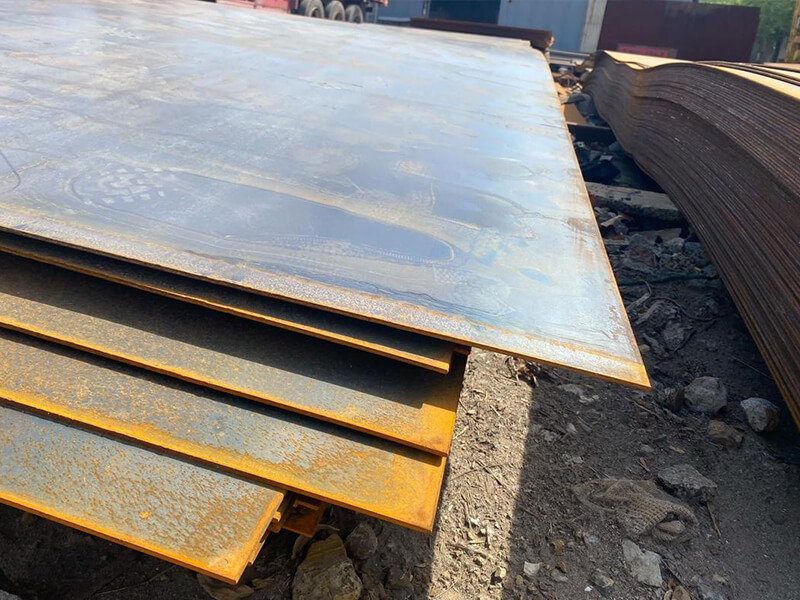
I saw a yard in the Philippines order 3,000 tons of plate. All three vessels arrived in one week. The port had two cranes. Unloading took 12 days. Demurrage cost $15,000. Then trucks could not find space. The yard ran out of storage racks. Plates stacked on the ground. Rust and damage followed.
Here is a comparison of bad vs good logistics.
| Factor | Bad (one big shipment) | Good (phased + warehouse) |
|---|---|---|
| Unloading time at port | 12 days | 2‑3 days per shipment |
| Yard storage needed | 3,000 tons capacity | 500‑800 tons capacity |
| Demurrage risk | High | Low |
| Plate damage from stacking | High | Low |
| Administrative effort | One big headache | Spread out |
What Is Consignment Stock?
Consignment stock means the supplier keeps your steel in their warehouse. You pay only when you take it. The supplier still owns the steel until release.
Benefits for you:
- No upfront payment for buffer stock.
- No storage space at your yard.
- Fast release – you get steel in 2‑3 days, not weeks.
Benefits for the supplier:
- Guaranteed future demand.
- Better mill planning.
We offer consignment stock to clients in Vietnam and Thailand. One client keeps 500 tons at our warehouse. They send a release request on Monday. We deliver to their yard by Thursday. No port congestion. No demurrage.
How to Set Up a Simple Port and Trucking Plan?
For large orders, do not rely on one port. Use multiple ports if possible. From Shandong, we can ship from Qingdao, Tianjin, or Shanghai. Each port has different congestion levels.
Also, book trucks in advance. A typical flatbed truck carries 20‑25 tons of steel plate. For 1,000 tons, you need 40‑50 trucks. Do not try to find them same day.
Here is a simple checklist.
| Logistics step | Advanced planning | Last‑minute cost |
|---|---|---|
| Port selection | Check congestion data 2 weeks before | Not possible |
| Vessel booking | Book 3‑4 weeks ahead | +20‑30% freight |
| Truck booking | Reserve 1 week ahead | +50‑100% for urgent |
| Yard space | Plan 2 weeks ahead | Overtime + storage fees |
A Real Example
A client in Romania ordered 1,800 tons of marine plate. We split into three shipments of 600 tons. For each shipment, we sent 2 weeks ahead: vessel name, estimated arrival, and trucking plan. The client had a small yard. They could handle 600 tons easily. No space crisis. No demurrage.
After the project, the logistics manager told me: “This was the smoothest large delivery we ever had.”
So plan your logistics as carefully as you plan your steel order. The best steel is useless if it sits on a ship or on the ground.
Conclusion
Forecast with waste. Choose a mill‑backed supplier. Phase releases by hull blocks. Use consignment stock and smart logistics. Large orders become manageable.