
leading paragraph:
Your ship design calls for 15 different L-shaped steel sizes. You order them all. Then chaos begins.
snippet paragraph:
Standardize your sizes where possible. Create a master size list before ordering. Group similar sizes for bulk buying. Label everything clearly at the warehouse. These steps save time and money.
Transition Paragraph:
I am Zora Guo from cnmarinesteel.com. I supply L-shaped section steel to shipyards in Saudi Arabia, Vietnam, and the Philippines. I have seen projects slow down because of size confusion. Let me show you how to manage multiple sizes smoothly.
Why Standardizing1 L-Shaped Steel Sizes Can Reduce Project Complexity?
leading paragraph:
Your engineer specifies 12mm, 13mm, 14mm, and 15mm leg lengths. Do you really need all of them? Probably not.
snippet paragraph:
Standardizing means using fewer sizes. You choose 10mm, 12mm, 15mm, and 20mm instead of every number in between. Fewer sizes mean fewer orders, less tracking, and lower costs.

Dive deeper Paragraph:
Let me explain why too many sizes hurt your project. Ship designers often specify exact sizes for every single frame. That gives 10 or 15 different leg lengths and thicknesses. But many of those sizes are close to each other. A 12mm leg and a 13mm leg are almost the same. You could replace both with 12mm or 13mm without changing the strength much.
The cost of too many sizes2
Each different size is a separate order line. The mill must change their rollers. That takes time. The mill charges more for small batches. You also have to store each size separately. Your warehouse gets crowded. Workers waste time looking for the right piece. They pick the wrong size by mistake. Then you have to cut and re-weld. That costs labor and time.
How to standardize
First, look at your size list. Group sizes that are within 2mm of each other. For example, 50mm, 52mm, and 54mm legs can become 52mm only. Second, check the classification rules. They allow small variations. Third, talk to your naval architect3. Ask: “Can we use 10mm instead of 9mm here?” Most times, they say yes.
Standardization example
| Original sizes | Standardized size | Reason |
|---|---|---|
| 50mm, 52mm, 54mm | 52mm | Middle size works for all |
| 65mm, 70mm | 65mm | Use the smaller one, add a small stiffener if needed |
| 8mm, 9mm, 10mm thickness | 10mm | Thicker is safer, cost difference is small |
| 75mm, 80mm, 85mm | 80mm | Round to nearest standard mill size |
A real example
A customer in Vietnam was building a small cargo ship. His design had 18 different L-shaped steel sizes. I asked him to standardize. We reduced to 9 sizes. He saved $4,000 in mill changeover fees. His warehouse storage4 became much simpler. Workers did not mix up sizes anymore. The project finished 3 weeks faster.
My advice
Do not let engineers over-specify. Ask them to justify every size. If two sizes are within 10% of each other, pick one and use it for both places. Standardization is free. It only requires a conversation. The savings are real.
How to Create a Master Size List Before Ordering from Mills?
leading paragraph:
You call the mill. They ask for your size list1. You realize you do not have one. You start searching through drawings. Delays begin.
snippet paragraph:
A master size list2 is one document that lists every L-shaped steel3 size, grade, length, and quantity for your project. Make it before you talk to any mill. Update it as the design changes.
Dive deeper Paragraph:
I cannot stress this enough. A master size list is your most important tool. Without it, you will make mistakes. You will order the wrong sizes. You will forget some sizes. You will order too much of one size and too little of another.
What goes into a master size list
Your list needs five columns:
- Leg length (mm) – like 65mm, 75mm, 100mm
- Thickness (mm) – like 6mm, 8mm, 10mm
- Grade (A36, AH36, etc.)
- Length of each piece (usually 6m or 12m)
- Total quantity (number of pieces) and total tons
Also add a column for where the size is used (like “Frame 12” or “Deck beam”). That helps later when you track delivery.
How to create the list
Step 1: Get all your design drawings together. Do not miss any.
Step 2: Go through each drawing. Write down every L-shaped steel size you see.
Step 3: Add the quantities. Count how many pieces of each size.
Step 4: Calculate the total length. Multiply piece length by quantity.
Step 5: Calculate the weight. Use the formula: weight (kg) = (leg1 + leg2 – thickness) x thickness x 0.00785 x length (mm). Or just ask your supplier to do it.
Step 6: Put everything in a spreadsheet. Save it as PDF and Excel.
Master size list template
| Leg length (mm) | Thickness (mm) | Grade | Piece length (m) | Quantity (pieces) | Total meters | Total tons | Used in |
|---|---|---|---|---|---|---|---|
| 65 | 6 | A36 | 6 | 120 | 720 | 2.1 | Frames 1-20 |
| 75 | 8 | A36 | 6 | 80 | 480 | 2.3 | Frames 21-35 |
| 100 | 10 | AH36 | 12 | 45 | 540 | 4.0 | Bottom stiffeners |
| 120 | 12 | AH36 | 12 | 30 | 360 | 3.8 | Web frames |
What happens without a master list
I had a customer in Malaysia. He ordered L-shaped steel from three different suppliers. He did not have a master list. Each supplier sent what they had. When the steel arrived, he had too many 75mm pieces and not enough 100mm pieces. He had to order more 100mm. That took 6 extra weeks. His project was late. He lost his bonus from the ship owner.
My advice
Create your master list before you send any inquiry to suppliers. Keep it in the cloud (Google Sheets or OneDrive). Share it with your team. Update it when the design changes. A good master list saves you from ordering mistakes. I send my customers a blank template. Just email me if you want it.
Grouping Similar Sizes for Bulk Ordering and Cost Savings?
leading paragraph:
You need 5 tons of 65mm L-steel and 3 tons of 75mm. You order them separately. The mill charges you two setup fee1s.
snippet paragraph:
Group similar sizes together. The mill can roll different sizes in one production run2. You pay one setup fee. You also get better pricing for larger total volume3.
Dive deeper Paragraph:
Mills do not like small orders. A small order of 5 tons costs them almost as much as a large order of 50 tons. They have to stop the production line. They change the rollers. That takes time. They charge you a setup fee for each size.
How grouping works
You take your master size list. You group sizes that are close. For example, 65mm and 75mm are not the same. But the mill can roll 65mm first. Then they adjust the rollers slightly to roll 75mm. The changeover takes 30 minutes instead of 2 hours. They charge you one setup fee instead of two.
Also, you can combine the quantities. Instead of ordering 5 tons of 65mm and 3 tons of 75mm separately, you order 8 tons total. The mill gives you a better price per ton for 8 tons than for 5 tons.
Grouping rules of thumb
| Size difference | Can group? | Setup fee saving |
|---|---|---|
| Same leg length, different thickness | Yes, easily | 50-70% |
| Leg length within 20mm | Yes, with small adjustment | 30-50% |
| Leg length within 50mm | Maybe, depends on mill | 10-30% |
| Leg length over 50mm apart | No, separate runs | 0% |
How to present grouped sizes to the mill
Tell the mill: “I need a production run of 20 tons total. In this run, please roll 5 tons of 65x6mm, then 8 tons of 75x8mm, then 7 tons of 90x10mm.” The mill will quote you one price for the whole run. That price is lower than three separate quotes.
A real example
A shipyard in Thailand needed 12 different L-shaped steel sizes. The total was 45 tons. I grouped the sizes into 3 production runs. Run 1: sizes 50-70mm (15 tons). Run 2: sizes 75-100mm (18 tons). Run 3: sizes 110-150mm (12 tons). The mill charged $80 per ton for the grouped order. Separate orders would have been $110 per ton. The customer saved $1,350.
My advice
Always ask your supplier: “Can you group my sizes to save setup costs?” A good supplier will say yes. At cnmarinesteel.com, I always group sizes for my customers. I also combine L-shaped steel with marine angle steel and bulb flat steel in the same mill run. That saves even more. Send me your master list. I will show you the best grouping.
Tracking and Labeling Different Sizes at the Warehouse?
leading paragraph:
The steel arrives. 15 different sizes. They all look the same. Your workers pick the wrong piece. The frame is wrong. You cut and re-weld.
snippet paragraph:
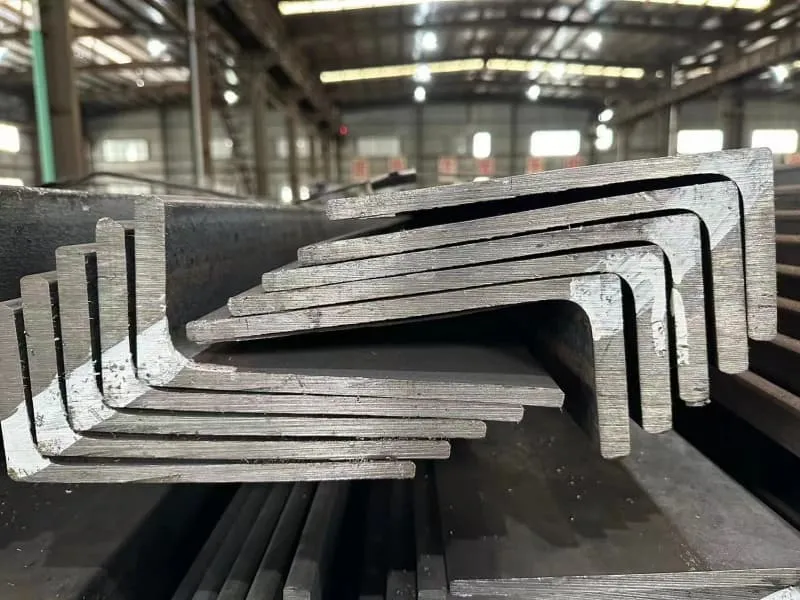
Label every bundle with size, grade, and quantity. Use color-coded tags1 or paint marks2. Store each size in a separate bay. Train workers to check labels before cutting.
Dive deeper Paragraph:
You ordered the right sizes. The mill delivered them. But now the steel sits in your warehouse. Without good tracking, it becomes a mess. Workers grab whatever is on top. They cut first and ask questions later. That leads to waste and rework.
The cost of bad tracking
I visited a shipyard in the Philippines. They had 20 tons of L-shaped steel scattered across the yard. No labels. No organization. Workers spent 30% of their time looking for the right piece. They cut the wrong size twice in one week. That cost $2,000 in wasted steel and labor.
Simple tracking methods that work
Method 1: Paint marks
Use spray paint. Each size gets a different color. For example:
- 65mm = red stripe
- 75mm = blue stripe
- 90mm = green stripe
- 100mm = yellow stripe
Paint the stripe on both ends of each piece. Workers see the color from far away. They grab the right bundle.
Method 2: Hang tags
Use waterproof paper tags. Tie them to the steel with wire. Write on the tag: size, grade, length, quantity, and project name. Replace tags if they fall off. This method is good for indoor storage.
Method 3: Digital tracking
Scan barcodes or QR codes on each bundle. Use a smartphone or scanner. The code links to your master list. You see the size, location, and quantity. This is best for large projects with many bundles.
Tracking method comparison
| Method | Cost per bundle | Setup time | Ease of use | Best for |
|---|---|---|---|---|
| Paint marks | $0.50 | Low | Very easy | Small to medium yards |
| Hang tags | $1.00 | Medium | Easy | Indoor storage |
| Digital (QR code) | $2.00 | High | Very easy | Large projects, tech-savvy teams |
| No tracking | $0 | None | Hard | Not recommended |
Warehouse layout tips
- Separate bays: Use different bays or racks for each size. Do not mix.
- Signage: Put a sign above each bay. Example: “65mm x 6mm L-steel – 120 pieces”
- First in, first out: Use the oldest steel first. It prevents rust and damage.
- Clear pathways: Leave space for forklifts. Do not block access.
A real example
Gulf Metal Solutions in Saudi Arabia used to have tracking problems. They told me: “We could not find the right sizes quickly.” I suggested paint marks. They painted red for 65mm, blue for 75mm, green for 90mm. Now their workers pick the right steel every time. They told me the warehouse is much faster. They plan to order L-shaped steel from us next quarter.
My advice
Do not skip tracking. It costs little but saves a lot. Pick a method that fits your team. Train your workers on the first day. And take photos of your labeled steel. Send the photos to your customer. They will trust you more. I send labeling photos to all my customers. They see that I care about their project.
Conclusion
Standardize sizes. Make a master list. Group for bulk orders. Label everything. These four steps keep your project on track and under budget.
-
Explore how color-coded tags can enhance organization and efficiency in your warehouse. ↩ ↩ ↩ ↩
-
Discover how paint marks can simplify size identification and reduce errors. ↩ ↩ ↩ ↩
-
Discover the economics behind bulk ordering and how it can significantly reduce your costs. ↩ ↩ ↩
-
Learn about optimizing warehouse storage to enhance efficiency and reduce errors in construction. ↩