
Leading paragraph:
Building a ship that lasts requires strong parts. Without the right steel, your deck and frame can fail early.
Snippet paragraph:
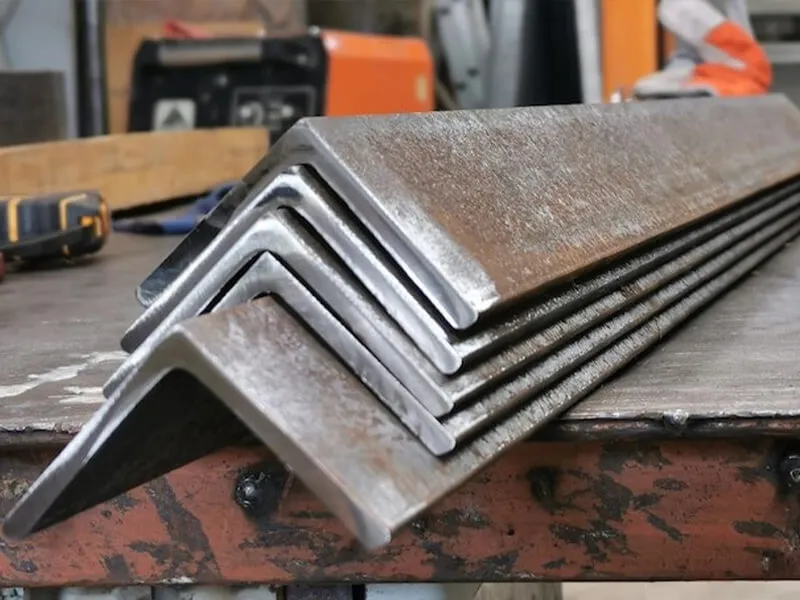
Marine angle steel is the top choice for deck stringers and transverse frames because it offers high strength, easy welding, and excellent corrosion resistance. It handles heavy loads and saltwater environments better than regular steel.
Transition paragraph:
You might think any steel angle works for shipbuilding. But marine grade is different. Let me walk you through why it matters for your projects. I will share what I have learned from working with clients like Gulf Metal Solutions.
Why Is Marine Angle Steel the Preferred Choice for Deck Stringers and Transverse Frames?
Leading paragraph:
Many builders face early cracks and rust in their deck structures. Regular steel just does not last in saltwater.
Snippet paragraph:
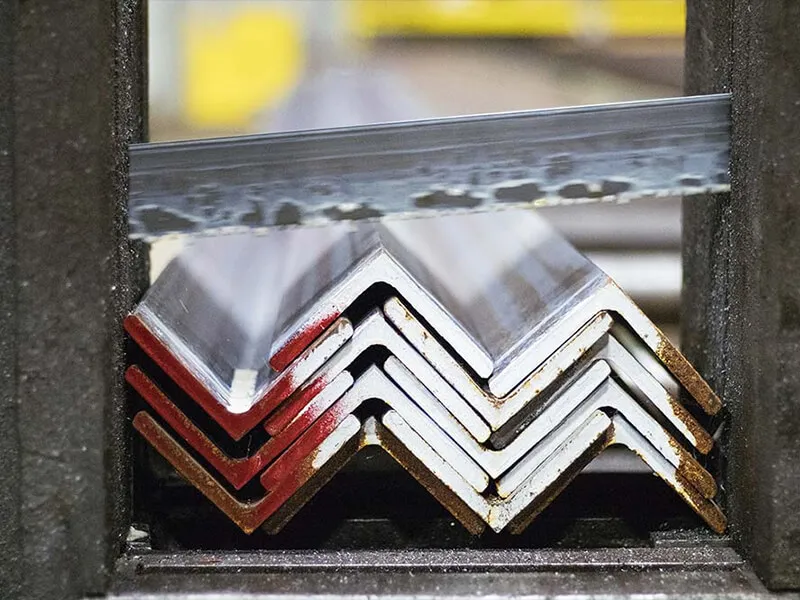
Marine angle steel1 is preferred because it has higher yield strength (at least 235 MPa) and better corrosion resistance2 due to controlled alloy content. It also meets classification society rules like ABS, LR, and DNV.
Dive deeper paragraph:
Let me break down why marine angle steel works so well for deck stringers3 and transverse frames4. First, think about what these parts do. Deck stringers run along the ship’s length. They support the deck plating. Transverse frames go across the ship. They give shape and strength to the hull. Together, they form a grid that takes all the weight from cargo, waves, and wind.
Most people ask me: why not use normal angle steel? The answer is simple. Normal steel has lower manganese and silicon content. That means it gets brittle in cold water. It also rusts faster. Marine angle steel uses a special mix. For example, grades like A36, DH32, or EH36 have extra manganese. This makes the steel tougher. It also resists pitting corrosion.
I remember talking to a buyer from Saudi Arabia. His name is Ahmed from Gulf Metal Solutions. He told me his old supplier sent regular angle steel. After six months, the deck stringers showed rust spots. Some welds even cracked. That cost him a lot of money. He switched to our marine angle steel. Now his frames last over five years without major issues.
Another point is the shape. Marine angle steel has rounded corners and smoother edges than building steel. Why does that matter? Because sharp corners create stress points. When the ship bends in waves, those stress points can start cracks. Rounded corners spread the force evenly. Also, the legs of the angle are often equal or unequal depending on the design. For deck stringers, unequal legs (like 150×90 mm) work well. The longer leg attaches to the deck plate. The shorter leg supports the frame.
Here is a quick comparison table:
| Property | Regular Angle Steel | Marine Angle Steel |
|---|---|---|
| Yield Strength | 200-220 MPa | 235-355 MPa |
| Corrosion Rate (salt spray) | High (0.5 mm/year) | Low (0.1 mm/year) |
| Weldability | Fair | Excellent (low carbon equivalent) |
| Certification | None or general | ABS, LR, DNV, CCS |
| Typical Lifespan in Deck | 2-3 years | 8-10 years |
So when you choose marine angle steel for stringers and frames, you get longer life and fewer repairs. That means lower total cost. And for wholesalers or contractors, that builds trust with your own customers.
How Does Marine Angle Steel Improve Structural Integrity in Ship Deck Construction?
Leading paragraph:
A weak deck can collapse under heavy loads. Ships face twisting forces every day. So integrity is not optional.
Snippet paragraph:
Marine angle steel1 improves structural integrity2 by distributing loads evenly across the deck grid. Its high stiffness reduces bending and twisting. This keeps the deck flat and strong even in rough seas.

Dive deeper paragraph:
Structural integrity sounds like a big phrase. But let me make it simple. Imagine your deck is a table top. The table legs are the frames. If the legs are weak, the table wobbles. If the legs are too thin, the top bends. Marine angle steel acts like strong, thick legs. It stops the wobble.
How exactly does it do that? First, marine angle steel has a high moment of inertia3. That is a technical term. In plain English, it means the shape resists bending. Think of a ruler. If you lay it flat, it bends easily. But if you turn it on its side, it is much harder to bend. An angle steel shape works the same way. The two legs create a natural L shape. That L shape gives strength in two directions: vertical and horizontal.
On a ship deck, forces come from many angles. Waves push up from below. Cargo pushes down from above. Wind pushes sideways. Marine angle steel handles all these at once. It connects the deck plate to the frames. It also connects the frames to the keel. This creates a closed box structure. That box structure is very hard to twist.
I have seen cheap steel fail in this job. A client from Vietnam once sent me photos. His deck stringers were made from mild steel angles. After one year, the deck had a visible dip in the middle. The angle steel had bent permanently. We replaced it with DH36 marine angle steel4. The dip went away. The deck stayed flat even with heavy containers.
Another factor is fatigue resistance5. Ships do not just sit still. They flex millions of times over their life. Each wave causes a small bend. Then the steel bends back. This is called cyclic loading6. Regular steel develops tiny cracks after many cycles. Marine angle steel has a finer grain structure. That means it can bend more times before cracking. Classification societies test this. They require a certain number of cycles at a certain stress level. Our marine angle steel passes those tests easily.
Let me give you a real example from our production. We work with a mill that makes marine angle steel to ABS standards. They control the cooling process after rolling. This creates a uniform grain size. The result is steel that bends without breaking. For a deck stringer that is 10 meters long, the deflection under full load is less than 5 mm. That is very small. For a normal steel angle, deflection could be 15 mm or more.
So when you use marine angle steel, your deck stays strong. It does not sag. It does not crack easily. And it handles the twisting forces that happen when a ship turns or hits rough water. That is structural integrity in plain words.
What Are the Key Welding and Connection Details for Marine Angle Steel in Frame Assemblies?
Leading paragraph:
Bad welds ruin good steel. I have seen entire frames fall apart because of poor connections. So details matter.
Snippet paragraph:
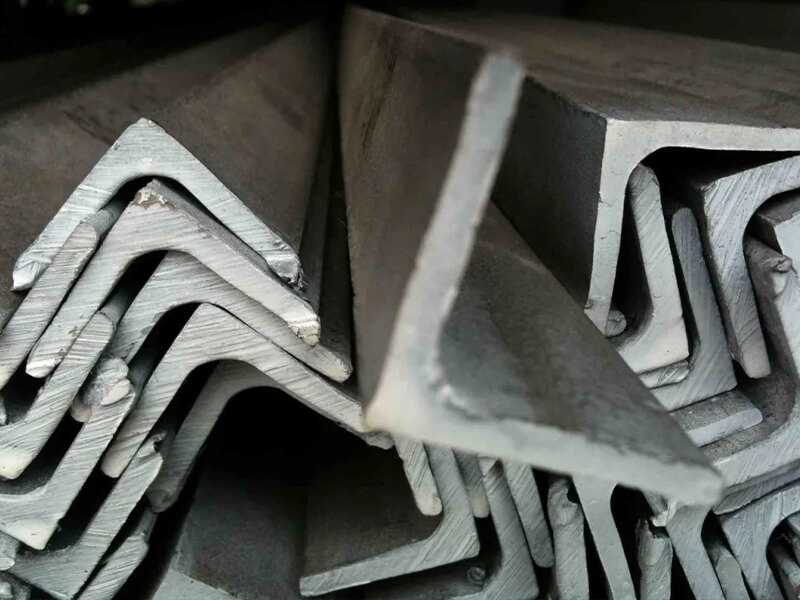
The key welding details include using low-hydrogen electrodes1, preheating to 50-100°C2 for thick sections, and making fillet welds at least 6 mm thick3. Connections need proper overlap and staggered joints to avoid weak spots.
Dive deeper paragraph:
Welding marine angle steel is different from welding building steel. You cannot just grab any rod and start. Let me explain what works and what fails.
First, choose the right electrode. For marine grade, use low-hydrogen electrodes like E7016 or E7018. Why low hydrogen? Because hydrogen causes cracking in high-strength steel. When you weld, moisture can get into the weld pool. That moisture turns into hydrogen gas. Then the hot steel cools down. The hydrogen gets trapped. It makes tiny bubbles. Those bubbles become cracks later. Low-hydrogen electrodes have a special coating that absorbs moisture. Keep them in a dry oven at 120°C before use.
Second, preheating is important for thick angle steel. If your angle leg is over 20 mm thick, preheat the area to 50-100°C. Use a temperature gun. Do not guess. Preheating slows down the cooling rate. That prevents hard spots from forming. Hard spots are brittle. They crack under stress. I learned this from a project in Qatar. The contractor did not preheat. His welds cracked after two weeks at sea. We had to send a team to re-weld everything. That cost him double.
Third, the weld size. For connecting marine angle steel to a deck plate or frame, use a fillet weld. The leg length of the weld should be at least 6 mm for most applications. But check the classification rules. For large ships, DNV might require 8 mm or more. Also, do not make the weld too big. Bigger is not better. Too much heat can warp the angle steel. Warped steel creates misalignment. Misalignment leads to uneven load distribution.
Now let us talk about connection details. How do you join two angle steel pieces? There are two main ways: butt joints and lap joints. For deck stringers, lap joints are more common. You overlap the two pieces by at least 4 times the thickness of the angle. Then weld both sides. Stagger the welds. Do not put all welds in one line. That creates a straight weak line. Instead, make short weld segments with gaps in between. This spreads out the stress.
For connecting angle steel to a transverse frame, you often use a gusset plate4. A gusset plate is a flat piece of steel. It sits at the corner. You weld the angle to the gusset. Then weld the gusset to the frame. This creates a stronger corner than welding directly. Why? Because the gusset gives more surface area for the weld. It also reduces stress concentration at the corner.
Here is a simple table for welding settings:
| Angle Leg Thickness | Electrode Diameter | Preheat Temperature | Fillet Weld Size |
|---|---|---|---|
| 6-10 mm | 3.2 mm | None needed | 5 mm |
| 11-20 mm | 4.0 mm | 50°C | 6 mm |
| 21-32 mm | 4.0 or 5.0 mm | 75°C | 8 mm |
| Over 32 mm | 5.0 mm | 100°C | 10 mm |
Do not forget about post-weld treatment5. After welding, let the steel cool slowly. Do not quench it with water. Quick cooling makes the steel hard and brittle. Also, clean off slag and spatter. Then apply a primer coat to the welded area. The primer protects against rust. Even marine angle steel can rust if you leave the weld bare.
I always tell my clients: spend time on welding details. It saves money later. A good weld lasts the life of the ship. A bad weld fails in months.
Which Load-Bearing and Corrosion Considerations Matter Most When Using Marine Angle Steel?
Leading paragraph:
Load and rust are the two biggest killers of ship frames. Ignore either one, and your structure fails early.
Snippet paragraph:
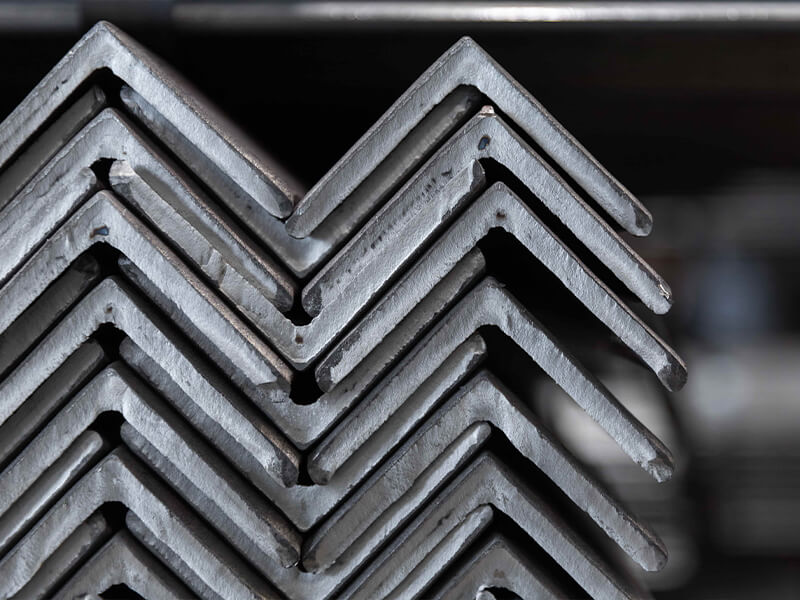
The most important load-bearing factors are yield strength1, buckling resistance2, and fatigue life3. For corrosion, focus on coating systems4, cathodic protection5, and avoiding crevices where saltwater sits.
Dive deeper paragraph:
Let me split this into two parts. First, load-bearing. Second, corrosion. Both are critical. But many buyers only think about one. That is a mistake.
Load-bearing considerations
When you put weight on a marine angle steel6 frame, three things happen. The steel compresses, bends, and twists. You need to check each one.
Yield strength is the first number to look at. It tells you how much stress the steel can take before it bends permanently. For marine angle steel, grades start at 235 MPa (Grade A). They go up to 355 MPa (Grade EH36). For most deck stringers, Grade A or D is fine. But if your ship carries heavy cargo like ore or containers, choose Grade DH32 or EH36. I had a client in the Philippines. He built a barge for heavy equipment. He used Grade A. The angle steel bent after six months. He switched to DH36. No bending after two years.
Buckling is another problem. Buckling happens when a long piece of steel bends sideways under compression. Think of a drinking straw. Push down on it from the top. At first it stands straight. Then it suddenly folds. That is buckling. To stop buckling, you need to limit the unsupported length. For a transverse frame, the distance between two supports should not be more than 40 times the leg thickness. For example, if your angle leg is 10 mm thick, space supports every 400 mm. That is a rule of thumb. Check your classification rules for exact numbers.
Fatigue life matters for ships that sail every day. Each wave cycle adds tiny damage to the steel. After enough cycles, a crack starts. Marine angle steel from a good mill has a fatigue limit. For Grade A, that is about 100 million cycles at 100 MPa stress. For higher grades, it is even better. But poor welding lowers fatigue life. So always combine good steel with good welding.
Corrosion considerations
Saltwater is aggressive. It eats steel quickly. Marine angle steel resists better than regular steel. But it is not immune. You need extra protection.
Coating is the first defense. Use a high-performance epoxy or zinc-rich primer. Apply it to clean, dry steel. The surface must be blast-cleaned to Sa 2.5 standard. That means no rust, no mill scale, just clean metal. Then apply two coats. Total dry film thickness should be at least 300 microns for deck areas. For submerged areas, use 400 microns or more.
Cathodic protection is the second defense. This works like a battery. You attach zinc or aluminum anodes to the steel. The anode corrodes instead of the angle steel. For frames inside a ballast tank, this is very effective. Change the anodes every few years. I supply anodes to some clients. They tell me it doubles the life of their steel.
Crevice corrosion is a hidden danger. It happens in tight spaces where saltwater sits and does not drain. For example, where the angle steel touches a deck plate. Water gets in between. Then it stays there. The oxygen level drops. That creates a battery effect. The steel corrodes fast. To prevent this, use seal welding along the contact edge. Or leave a gap of at least 2 mm so water can drain. Also add drainage holes at the lowest points.
Here is a checklist table:
| Consideration | What to Check | Acceptable Range or Action |
|---|---|---|
| Yield strength | Grade certificate | ≥235 MPa for deck |
| Buckling | Unsupported length / thickness | ≤40 |
| Fatigue | Number of cycles expected | Use higher grade if >10^7 cycles |
| Coating | Thickness and adhesion | ≥300 microns, Sa 2.5 blast |
| Cathodic protection | Anode weight and placement | Calculate based on surface area |
| Crevice corrosion | Gaps and joints | Seal weld or add drainage |
One more thing: inspect regularly. Even with all precautions, corrosion can start. Look for red rust spots. Tap the steel with a hammer. A solid sound means it is good. A dull sound means corrosion inside. If you find a problem, clean and recoat immediately. Do not wait.
I learned this from a customer in Malaysia. He did not inspect his frames for two years. When he finally looked, the bottom of the angle steel had lost 5 mm of thickness. He had to replace 30 meters of frame. That cost him thousands. Now he inspects every six months. No more surprises.
Conclusion
Marine angle steel gives you strong, lasting deck and frame structures. Choose the right grade, weld it carefully, and protect against corrosion. Your ships will thank you.
-
Understanding yield strength is crucial for ensuring your marine angle steel can withstand the required loads without permanent deformation. ↩ ↩ ↩ ↩
-
Preventing buckling is essential for maintaining the integrity of your marine structures; explore effective strategies to ensure safety. ↩ ↩ ↩ ↩
-
Learn about factors influencing fatigue life to enhance the durability and safety of your marine angle steel frames. ↩ ↩ ↩ ↩
-
Explore advanced coating systems that provide superior protection against corrosion, extending the lifespan of your steel structures. ↩ ↩ ↩ ↩
-
Discover how cathodic protection can significantly enhance the longevity of your marine angle steel by preventing corrosion. ↩ ↩ ↩
-
Gain insights into the unique properties of marine angle steel to make informed decisions for your construction projects. ↩ ↩