
leading paragraph:
You are building an offshore platform. The sea is harsh. Waves crash. Salt eats metal. You need strong steel.
snippet paragraph:
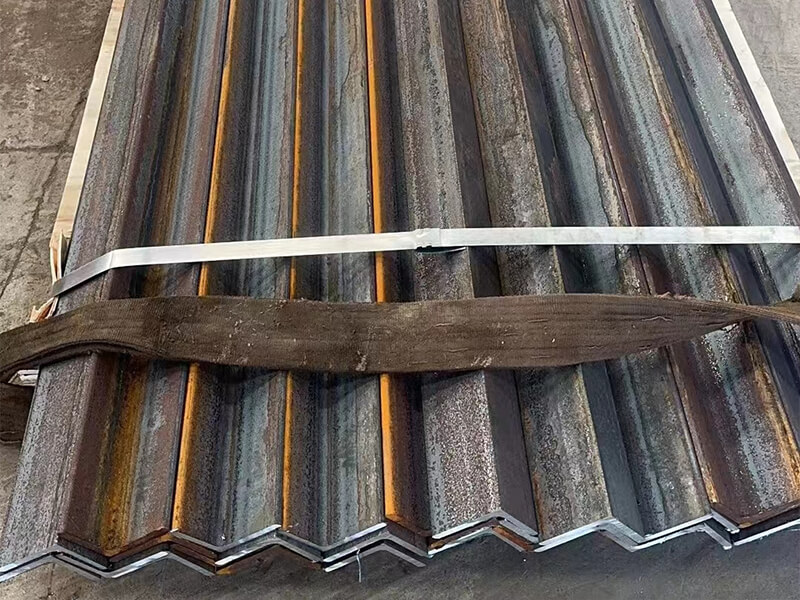
Marine angle steel is an L-shaped steel. It resists bending and twisting. It is perfect for platform legs, bracing, and decks. Its shape gives high strength with less material.

Transition Paragraph:
I am Zora Guo from cnmarinesteel.com. I supply marine angle steel to offshore projects in Saudi Arabia, Vietnam, and Malaysia. I have seen how this steel performs in saltwater. Let me show you why it is the right choice.
Why Marine Angle Steel Is Preferred for Offshore Platform Framing?
leading paragraph:
You need a steel that is strong but not too heavy. Easy to weld. Easy to find. Marine angle steel checks every box.
snippet paragraph:
The L-shape gives high strength in two directions. It is lighter than a solid bar of the same strength. It is cheaper than special shapes. Classification societies approve it for offshore use.
[^1] L-shape used in platform framing](https://cnmarinesteel.com/wp-content/uploads/2026/01/Marine-angle-steel-56.webp)
Dive deeper Paragraph:
Let me explain why marine angle steel is so popular for offshore platforms. An offshore platform sits in the ocean. It faces waves, wind, and currents. The forces come from every direction. Your steel must handle tension, compression, and bending all at once.
The L-shape advantage1
A flat bar is strong in one direction only. Bend it sideways, and it folds. A round bar is strong in all directions, but it is heavy and hard to weld. The L-shape sits in the middle. It is strong in two perpendicular directions. That matches how forces act on a platform. The waves push from the side. The weight pushes down. The L-shape resists both.
Weight savings
For the same strength, marine angle steel is lighter than a solid square bar. A 100mm x 100mm angle steel with 10mm thickness weighs about 15 kg per meter. A solid square bar of the same strength would weigh 78 kg per meter. That is 5 times heavier. In a large platform, the weight difference is hundreds of tons. Less weight means cheaper foundations and easier installation.
Approval from classification societies
DNV, ABS, and BV all have sections for angle steel in their offshore rules. You do not need special approval. Just pick a size from their tables. That saves engineering time. The rules also specify grades. A36 for normal areas. AH36 for high-stress areas. DH36 for cold waters.
Comparison with other shapes
| Steel shape | Strength in 2 directions | Weight per meter (100mm size) | Weldability | Cost index |
|---|---|---|---|---|
| Marine angle steel | High | 15 kg | Easy | 100% |
| Flat bar | Low | 8 kg | Easy | 80% |
| Square bar | Medium | 78 kg | Medium | 150% |
| Channel | Very high | 25 kg | Medium | 180% |
A real example
I supplied marine angle steel for a small offshore platform in the Philippines. The platform was a wellhead platform in 30 meters of water. The designer used angle steel for all the bracing. The platform was built in 6 months. It has survived three typhoons so far. No cracks. No failures.
My advice
If you are designing an offshore platform, start with marine angle steel for your framing. It is strong, light, and proven. Use larger sizes for the main legs. Use smaller sizes for secondary bracing. I can help you select the right sizes. Just send me your load requirements.
Key Load-Bearing Applications: Leg Bracing and Deck Stiffening?
leading paragraph:
The platform legs take the full weight. The deck takes the equipment load. Both need bracing. Angle steel is the answer.
snippet paragraph:
Marine angle steel is used for X-bracing2 between platform legs. It stops the legs from buckling. It also stiffens the deck. The angle shape spreads the load across the structure.
[^2] X-pattern](https://cnmarinesteel.com/wp-content/uploads/2026/01/Marine-angle-steel-54.webp)
Dive deeper Paragraph:
Let me break down the two main jobs of marine angle steel on an offshore platform. Every platform has legs that go down to the seabed. And every platform has a deck on top. Angle steel helps both.
Leg bracing
The legs of a platform are like tall skinny columns. They are strong when you push straight down. But waves push from the side. That makes the legs want to bend. Bracing stops that bending.
The most common bracing pattern is the X-brace. Two angle steel pieces cross each other. One takes tension. The other takes compression. Together they form a stiff triangle. The legs cannot bend.
Where do you put the bracing? Between the legs. From one leg to the next. At multiple levels. For a platform in 50 meters of water, you might have 5 to 8 levels of bracing. Each level uses tons of angle steel.
Deck stiffening
The deck of an offshore platform is like a big flat plate. It holds drilling equipment, living quarters, and cranes. The deck must be stiff. If it bends, equipment gets misaligned. Pipes crack.
You weld angle steel to the underside of the deck plate. The angle steel runs in two directions (a grid). This grid makes the deck much stiffer. You can use smaller deck plates. That saves weight.
Application table
| Application | Typical angle size | Grade | Spacing | Load type |
|---|---|---|---|---|
| Main leg X-bracing (large platform) | 150x150x15mm | AH36 | 4-6 meters | High compression/tension |
| Secondary bracing | 100x100x10mm | A36 | 6-8 meters | Medium load |
| Deck stiffeners (primary) | 120x120x12mm | A36 | 1 meter | Bending |
| Deck stiffeners (secondary) | 75x75x8mm | A36 | 1.5 meters | Light bending |
| Handrail posts | 50x50x6mm | A36 | 2 meters | Very light |
A real example from the North Sea
I do not supply the North Sea. But I know a customer who does. He told me that platforms there use massive angle steel for bracing. Sizes up to 200x200x20mm. The bracing is everywhere. Without it, the platform would collapse in the first storm.
My advice
Do not skip bracing. I have seen small platforms with too little bracing. They sway in the waves. Workers get seasick. Equipment moves. Eventually, the legs crack. Add more bracing than you think you need. The extra steel cost is small compared to the risk of failure.
Corrosion Protection Methods for Angle Steel in Saltwater Environments?
leading paragraph:
Saltwater eats steel. Your angle steel will rust. If you do nothing, it fails in 5 years. You need protection.
snippet paragraph:
Three main methods: coatings, cathodic protection, and corrosion allowance2. Coatings like epoxy paint block saltwater. Cathodic protection uses sacrificial anodes1. Corrosion allowance adds extra thickness that can rust away safely.
[^3] and sacrificial anodes attached](https://cnmarinesteel.com/wp-content/uploads/2026/01/Marine-angle-steel-47.jpg)
Dive deeper Paragraph:
The ocean is brutal. Salt, oxygen, and waves work together to destroy steel. The corrosion rate for unprotected steel in seawater is 0.5 to 1.0 mm per year. A 10mm thick angle steel would last only 10 to 20 years. That is not enough for an offshore platform designed for 30+ years.
Method 1: Coatings
Coatings are the first line of defense. You apply paint or a special layer to the steel. The coating blocks saltwater from touching the metal.
The best coating for offshore is epoxy or polyurethane. Apply it in layers. First, clean the steel to bare metal (sandblasting). Second, apply a zinc-rich primer. Third, apply the epoxy middle coat. Fourth, apply the top coat. Total thickness should be 300 to 500 microns.
Coatings work well. But they can get scratched during installation. A small scratch becomes a rust spot. The rust spreads under the coating. That is called undercutting. So you must inspect and repair coatings regularly.
Method 2: Cathodic protection
This is a clever method. You attach a more active metal to the steel. The active metal corrodes instead of the steel. The active metal is called a sacrificial anode. Common anodes are zinc or aluminum.
You weld or bolt the anodes to the angle steel. The anodes last 5 to 10 years. Then you replace them. For offshore platforms, anodes are placed on the legs and bracing below the water line. Above water, coatings are enough.
Method 3: Corrosion allowance
This is the simplest method. You make the steel thicker than needed. The extra thickness can rust away without weakening the structure.
For example, a design calls for 10mm thickness. You order 12mm instead. The extra 2mm is the corrosion allowance. Over 30 years, 1mm of rust is acceptable. You still have 1mm safety margin.
Corrosion protection comparison
| Method | Cost | Lifespan | Maintenance | Best for |
|---|---|---|---|---|
| Epoxy coating | Medium | 10-15 years | Inspect every 2 years | Above water |
| Sacrificial anodes | Low | 5-10 years | Replace anodes | Below water |
| Corrosion allowance | Low (one-time) | Life of structure | None | Anywhere |
| Combined (all three) | High | 30+ years | Low | Critical structures |
A real example
A customer in Saudi Arabia built a small platform in the Arabian Gulf. The water is very salty. They used all three methods. Epoxy coating on all angle steel. Zinc anodes below water. And they added 2mm corrosion allowance. After 10 years, they inspected the platform. The steel was like new. The anodes were half consumed. The coating had no failures.
My advice
Do not rely on one method. Use coatings for above water. Use anodes for below water. Add corrosion allowance everywhere. The cost of protection is small compared to the cost of replacing a failed platform. I always ask my customers: “Do you want the steel to last 10 years or 30 years?” Then I recommend the right protection.
How to Choose the Right Grade and Size for Different Platform Zones?
leading paragraph:
The top of the platform is cold. The bottom is wet. The middle takes the most force. One size does not fit all.
snippet paragraph:
Use higher grades (AH36, DH36)2 in high-stress zones like leg connections. Use basic grades (A36) in low-stress zones like handrails. Match thickness to water depth1. Deeper water needs thicker steel.
Dive deeper Paragraph:
An offshore platform is not one uniform structure. Different parts face different conditions. You should choose steel grades and sizes based on the zone.
Zone 1: Splash zone
This is the area where waves hit. The water level goes up and down. This zone has the highest corrosion. It also has high wave impact forces. Use thicker steel here. Also use higher grade (AH36 or DH36). Add extra corrosion allowance (3mm instead of 2mm). Typical thickness: 15-25mm.
Zone 2: Underwater zone
Below the splash zone3, the steel is always wet. Corrosion is still high. But wave forces are lower. Use medium thickness. Use AH36 grade. Add sacrificial anodes4. Typical thickness: 12-20mm.
Zone 3: Above water (low stress)
This is the deck and upper bracing. No saltwater splash. Only rain and humidity. Lower corrosion. Use A36 grade. Use standard thickness. Typical thickness: 8-12mm.
Zone 4: High-stress connections
Where legs meet bracing. Where deck meets legs. These points concentrate force. Use higher grade (AH36 or DH36). Use thicker steel than the surrounding area. Also add extra weld reinforcement.
Grade selection by zone
| Platform zone | Recommended grade | Minimum yield strength | Why |
|---|---|---|---|
| Splash zone (impact) | DH36 | 355 MPa | High strength + good toughness |
| Underwater (general) | AH36 | 355 MPa | High strength, standard toughness |
| Above water (main structure) | A36 | 250 MPa | Good enough, cheaper |
| Above water (handrails, small braces) | A36 | 250 MPa | Low stress |
| Cold water (below 10°C) | DH36 or EH36 | 355 MPa | Impact resistance |
How water depth changes thickness
The deeper the water, the higher the pressure. Also, deeper water means longer legs. Longer legs need thicker steel to resist buckling.
For a platform in 20 meters of water, leg thickness might be 15mm. For 50 meters, 25mm. For 100 meters, 40mm or more. Your naval architect will calculate exactly.
A real example
Gulf Metal Solutions in Saudi Arabia builds platform sections for the Arabian Gulf. Water depth there is 30-50 meters. They use AH36 for all main bracing. A36 for deck stiffeners. They told me: “We used to use A36 everywhere. But the platforms swayed too much. Switching to AH36 made them stiffer without adding thickness.”
My advice
Talk to a structural engineer5. Give them your platform location (water depth, wave height, temperature). They will tell you the required grades and thicknesses. Then send that list to me. I will supply the exact steel you need. I also offer SGS inspection6 to verify grade and thickness before shipment.
Conclusion
Marine angle steel is strong, light, and perfect for offshore platforms. Use it for leg bracing and deck stiffening. Protect it from saltwater. Choose grades by zone.
-
Discover the relationship between water depth and steel thickness to ensure structural integrity. ↩ ↩ ↩
-
Explore the advantages of using higher grades in high-stress zones to ensure safety and durability. ↩ ↩ ↩
-
Understanding the splash zone’s conditions can help in selecting the right materials for maximum protection. ↩
-
Learn how sacrificial anodes can extend the life of underwater steel structures by preventing corrosion. ↩
-
Consulting a structural engineer ensures that your platform is designed to withstand environmental challenges. ↩
-
Find out how SGS inspection guarantees the quality and compliance of steel before it is used in construction. ↩