
Offshore platforms face the ocean’s full anger. Hurricanes, saltwater, and constant stress test every part. Choosing the wrong steel is not a cost issue. It is a safety disaster waiting to happen.
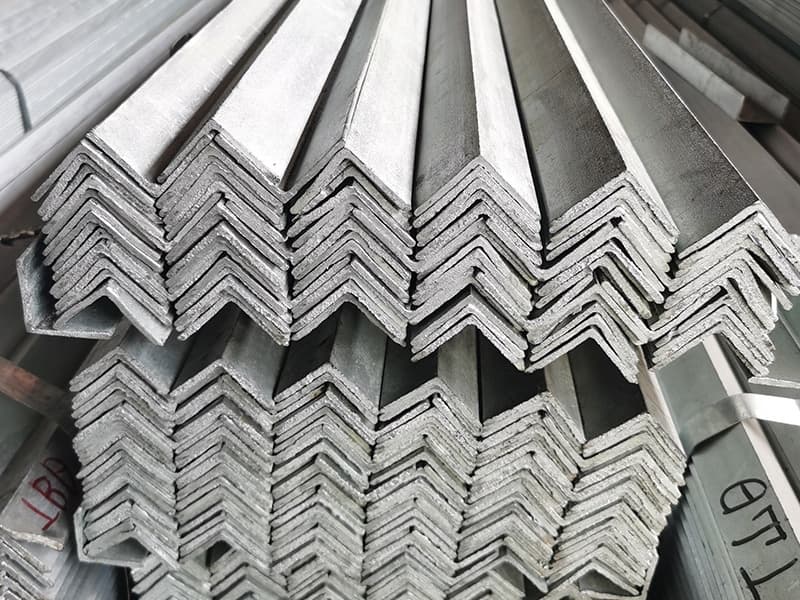
Marine angle steel is a key material for offshore platform construction. It is used for bracing, secondary structures, and supports. This steel must have high strength, excellent weldability, and superior corrosion resistance. It must meet strict classification society standards like API 2H or ASTM A709.
The right material choice decides if a platform lasts for decades or fails early. Let’s look at why marine angle steel is so important and how to use it correctly.
What material is used for offshore structures?
Imagine building a skyscraper in the middle of the ocean. You would need the strongest possible materials. Offshore engineers face this challenge every day. They cannot use ordinary construction steel.
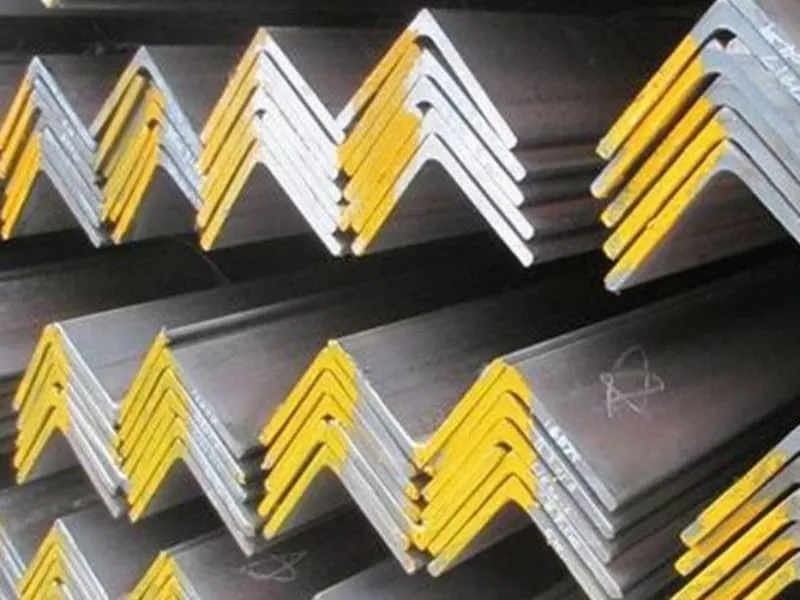
The primary material for offshore structures is high-strength, low-alloy (HSLA) steel1. This includes steel plates, wide-flange beams, tubular sections, and marine angle steel2. The steel must have special grades for toughness at low temperatures and high resistance to corrosion in seawater.
Beyond Basic Steel: The Demanding World of Offshore Grades
Offshore steel is not a single product. It is a family of specialized materials designed for a brutal environment. The sea applies many forces at once. These forces include high winds, giant waves, and corrosive salt spray.
The most critical properties for offshore steel are Toughness3, Strength, and Corrosion Resistance4.
Toughness3 means the steel can absorb energy without cracking. This is vital in cold waters. Standard steel can become brittle and fail suddenly. Offshore steels use chemical compositions that stay tough at very low temperatures. This is measured by Charpy V-Notch impact tests at temperatures like -20°C or even -40°C.
Strength allows structures to be lighter. High-strength steel can carry the same load with less material. This reduces the weight of the entire platform. Common yield strength grades are 355 MPa, 420 MPa, and 460 MPa. We supply these as S355, S420, and S460 grades.
Corrosion Resistance4 is a constant battle. Offshore steels often have added elements like copper, chromium, and nickel. These elements help form a protective layer. For the worst areas, like the splash zone, engineers might specify even more resistant steel or add special protective coatings.
Here are the main product forms and their typical uses on a platform:
| Product Form | Common Offshore Grades | Primary Use in Platform |
|---|---|---|
| Heavy Steel Plate | API 2W, API 2H, ASTM A709 | Main legs, deck sections, node joints (the thickest, most critical parts) |
| Tubular Sections (Pipes) | API 5L X-series, ASTM A500 | Jacket legs, braces, piles (hollow sections are efficient for compression) |
| Wide-Flange Beams (H-beams, I-beams) | ASTM A992, S355J2 | Primary deck beams, girders (for carrying major loads across the deck) |
| Marine Angle Steel | S355JR, AH36, ABS/EH36 | Secondary bracing, walkway supports, equipment frames, ladder stringers |
Our clients, like fabricators in the Middle East, often need a mix of these. They might order heavy plate for nodes and marine angle steel2 for all the secondary framing. They need one reliable source for all these certified materials. We provide that by working with mills approved by major classification societies like DNV, ABS, and Lloyds.
What is stronger, C channel or angle iron?
You need to add a support beam. You look at a C-channel1 and an angle iron. They look similar. But their strength is very different depending on the direction of the force. Choosing the wrong one weakens your whole design.
Neither is universally stronger. It depends on the load direction. A C-channel1 is generally stronger against bending in one direction (along its web). An angle iron has more balanced strength but is less efficient for pure bending. The choice depends on the specific structural force it must resist.
Analyzing Structural Performance: A Matter of Geometry
Strength in steel sections comes from their shape and how material is distributed. This distribution is called the section modulus2. A higher section modulus2 means greater bending strength3.
A C-channel1 (or U-channel) has a clear "strong axis." This is the axis perpendicular to its web (the back of the "C"). When a load pushes against the flanges (the tops of the "C"), the channel is very strong. This makes it excellent for uses like purlins on a roof or the frames of a truck bed. However, it is weak against twisting or loading from the side.
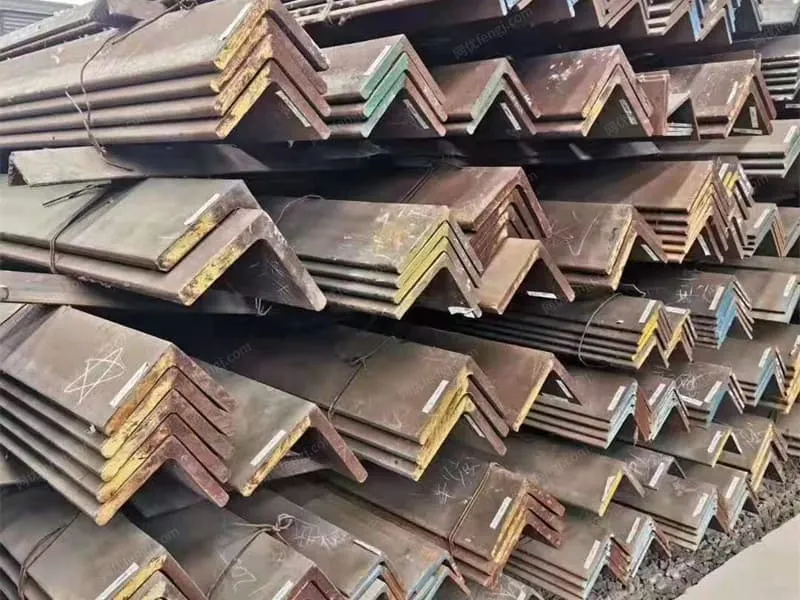
An Angle Iron4 (or L-angle) is symmetric along its legs. It does not have one obviously strong direction like a channel. Its strength is more equal in the two main directions. This makes it versatile. It is good for situations where loads might come from different directions, like diagonal bracing.
Let’s break down their best uses:
When to Choose C-Channel:
- For clear, single-direction bending: Supporting a floor or a shelf where weight pushes straight down on the flanges.
- When you need a flat surface: The web of a channel provides a flat back for easy attachment to walls or other beams.
- For light to medium framing: Machine frames, trailer chassis, and building frames often use channel.
When to Choose Angle Iron4:
- For bracing and triangulation5: This is its most common use in platforms. An angle can be easily bolted or welded to connect beams and columns, creating a rigid triangle that resists movement.
- For edge reinforcement: It is perfect for reinforcing the edges of platforms, walkways, and hatches.
- For constructing frames and racks: Angles are easy to join at corners to build simple 3D frames.
- For secondary structural supports: Supporting handrails, small equipment, and cable trays on an offshore platform.
In offshore construction, angle iron (marine angle steel6) is everywhere. You see it in walkway frames, small equipment supports, and as secondary bracing in the jacket structure. A C-channel1 might be used for a specific, heavy-duty horizontal beam on the deck. The engineer’s calculations will specify which one to use based on the expected forces. We supply both, but for offshore, the demand for certified marine-grade angles is much higher due to their versatility and vital role in creating rigid connections.
What is the price of 40x40x5 angle per kg?
Asking for a per-kg price seems simple. But for marine-grade steel, this question has many layers. The base steel cost is just the start. Certification, testing, and delivery add to the final price.
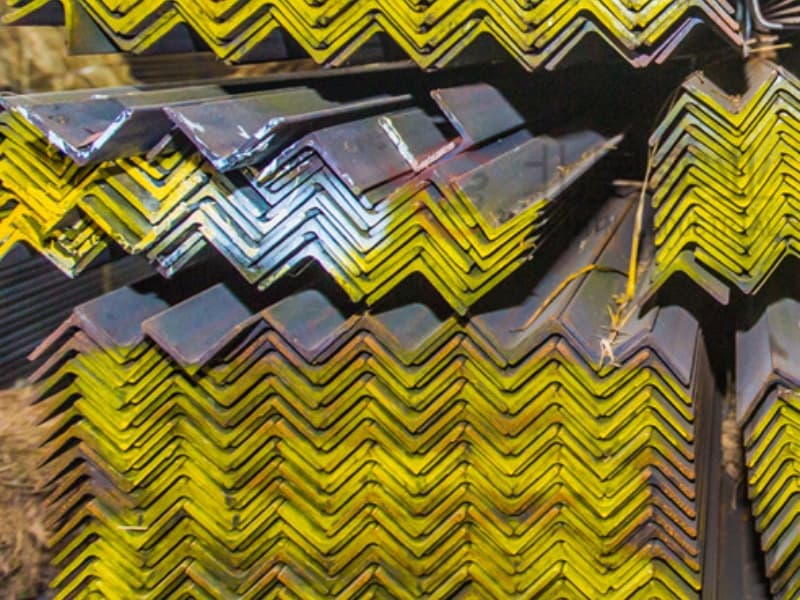
The price of 40x40x5 angle per kg varies widely. It depends on the steel grade, certification requirements, order quantity, and market conditions. For standard structural steel (like S235), the price might be lower. For certified marine-grade steel (like S355J2), the price is higher due to stricter production and testing.
Understanding the Real Cost of Marine-Grade Steel
When clients like Gulf Metal Solutions ask for a quote, they want a clear, final cost. They need to budget their project. Explaining the cost factors builds trust and avoids surprises later.
Here are the key factors that change the price per kilogram:
- Material Grade: This is the biggest factor. A general-purpose S235JR angle is cheaper to produce than an S355J2 offshore-grade angle. The higher grade needs more alloys (like manganese) and tighter process control.
- Certification: This is critical for offshore work. A standard commercial certificate is cheap. An official Mill Certificate with a Classification Society Stamp (ABS, DNV, etc.) costs more. The mill must do extra tests, and a surveyor may need to witness them. This adds cost but is non-negotiable for platform construction.
- Order Quantity (MOQ): Mills have minimum order quantities for specific grades and sizes. A small order (e.g., 5 tons) will have a much higher per-kg cost than a large order (e.g., 50 tons). We work with clients to find flexible MOQs, sometimes bundling different sizes to reach a better price.
- Market Raw Material Prices: The price of iron ore, scrap steel, and energy changes daily. This causes the base price from the mill to fluctuate. We monitor this closely.
- Processing: Does the client need the angles cut to specific lengths? Do they need pre-treatment like shot blasting? Each service adds cost.
Let’s look at a typical cost breakdown for a mid-sized order of certified marine angle steel:
| Cost Component | Description | Impact on Final Price |
|---|---|---|
| Base Material Price | The mill’s price for the specified grade (e.g., S355J2) and size (40x40x5). | This is the largest part of the cost. It changes with global steel markets. |
| Certification Surcharge | Extra fee for producing the steel under classification society rules and issuing their certificate. | Adds a fixed percentage or fee per ton. Essential for offshore use. |
| Processing Fee | Cost for cutting to length, drilling holes, or surface cleaning if requested. | Depends on the client’s specific requirements. |
| Packaging | Cost for seaworthy packing to prevent rust and damage during ocean transport. | A necessary cost we never skip. Good packaging saves money on claims later. |
| Inland Freight & Port Charges | Moving steel from the mill to the Chinese export port. | A fixed logistical cost. |
| International Shipping | Ocean freight cost to the destination port (e.g., Dammam, Saudi Arabia). | Varies greatly by route, ship availability, and fuel costs. We help arrange this. |
So, when you ask "What is the price of 40x40x5 angle per kg?", we need more information. We need to know the project requirements. Then we can give an accurate, all-inclusive quote. This transparency is what our clients appreciate. They know the exact cost for a certified, ready-to-use product.
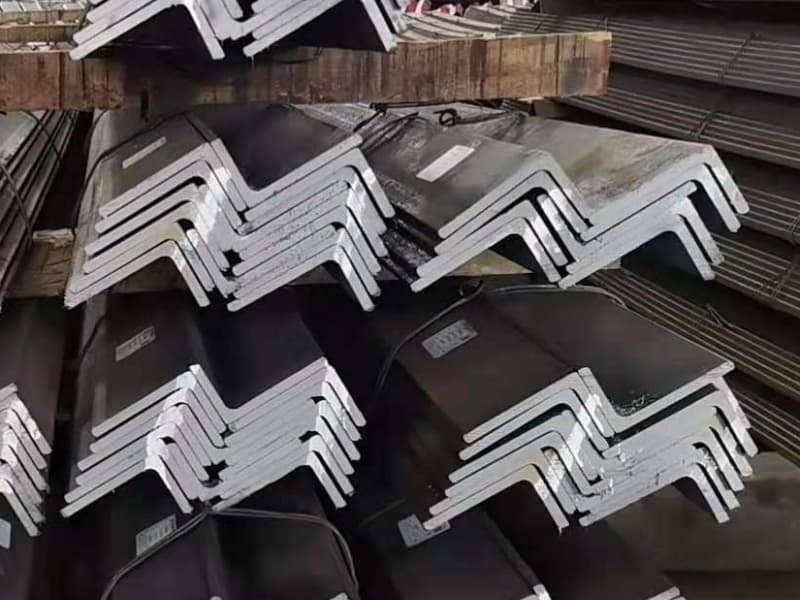
Can angle iron1 be used for construction?
People see angle iron1 in simple shelves and frames. They think it is just for light DIY projects. This is a big misunderstanding. In major construction, angle iron1 is a fundamental and powerful component.
Yes, angle iron1 is widely used in construction. It is a primary material for bracing2, framing, supports, and reinforcements. In marine and offshore construction, specifically designed marine angle steel3 is essential. It meets higher standards for strength and corrosion resistance4.
The Versatile Workhorse of Structural Engineering
The simple L-shape of angle iron1 gives it incredible utility. In construction, its main jobs are connecting, bracing2, and supporting.
Connecting: Angles are the "connectors" of the steel world. They are easily welded or bolted to other members. For example, a steel column connects to a floor beam using angle brackets. The angles transfer the load securely.
Bracing: This is the most important function in tall or exposed structures. Diagonal angle bars are installed between columns. These create triangulation5. A triangle is a geometrically stable shape. It prevents the structure from racking (leaning over) under wind or seismic forces. On offshore platforms, bracing2 made of heavy marine angles is what keeps the jacket structure rigid against waves.
Supporting: Angles provide edges and ledges. They are used as:
- Ledges for supporting brickwork or cladding.
- Reinforcement around openings like doors and windows.
- Framing for stairs, walkways, and handrails.
- Supports for mechanical equipment, pipes, and cable trays.
In offshore platform construction, the use of angle iron1 is specialized. We call it marine angle steel3. The differences are crucial:
| Feature | Standard Construction Angle Iron | Marine Angle Steel for Offshore |
|---|---|---|
| Material Grade | Common grades like A36, S235. Focus on basic strength. | High-grade, low-alloy steel like S355, AH36. Focus on strength, toughness, and weldability. |
| Corrosion Resistance | May have minimal protection; often painted on-site. | Enhanced chemistry (Cu, Cr). Often supplied with primer or for use in coated systems. |
| Certification | General mill test certificate. | Must have certification6 from a classification society (ABS, DNV, etc.) for traceability and quality assurance. |
| Application | Buildings, warehouses, general infrastructure. | Offshore jacket bracing2, module framing, walkways, equipment supports in harsh marine environments. |
We recently supplied several containers of S355J2 marine angle steel3 to a fabricator in Qatar. They were building modules for a new gas platform. The angles were used for thousands of small supports and connections inside the modules. The project engineers insisted on certified materials for every piece. This ensures the platform’s long-term safety and reliability. For them, "angle iron1" was not a simple item; it was a critical, specified component with strict performance requirements.
Conclusion
Marine angle steel is a vital, versatile material for offshore platforms. Its strength, ease of use, and availability in certified grades make it indispensable for safe and durable marine construction.
-
Explore the diverse applications of angle iron in construction, from framing to bracing, and understand its importance. ↩ ↩ ↩ ↩ ↩ ↩ ↩ ↩ ↩ ↩ ↩ ↩
-
Discover how bracing with angle iron enhances structural stability and safety in tall buildings and exposed structures. ↩ ↩ ↩ ↩ ↩ ↩ ↩ ↩
-
Learn about marine angle steel’s unique properties and its critical role in offshore construction projects. ↩ ↩ ↩ ↩ ↩ ↩
-
Find out why corrosion resistance is vital for materials used in marine environments to ensure longevity and safety. ↩ ↩ ↩ ↩ ↩
-
Understand the significance of triangulation in construction and how it prevents structural failure under stress. ↩ ↩
-
Explore the necessary certifications for marine construction materials to ensure quality and compliance in harsh environments. ↩ ↩