
Choosing the wrong marine angle steel grade can lead to catastrophic failures in ocean environments. Many project managers discover this too late, when corrosion has already compromised their structures. Understanding steel grades prevents these expensive mistakes.
Marine angle steel follows strict international standards and comes in specific grades designed for saltwater exposure. Common grades include ABS EH36, LR AH32, DNV GL A32, and specialized stainless steels like 316L. Each grade offers different strength, corrosion resistance, and welding properties for various marine applications.
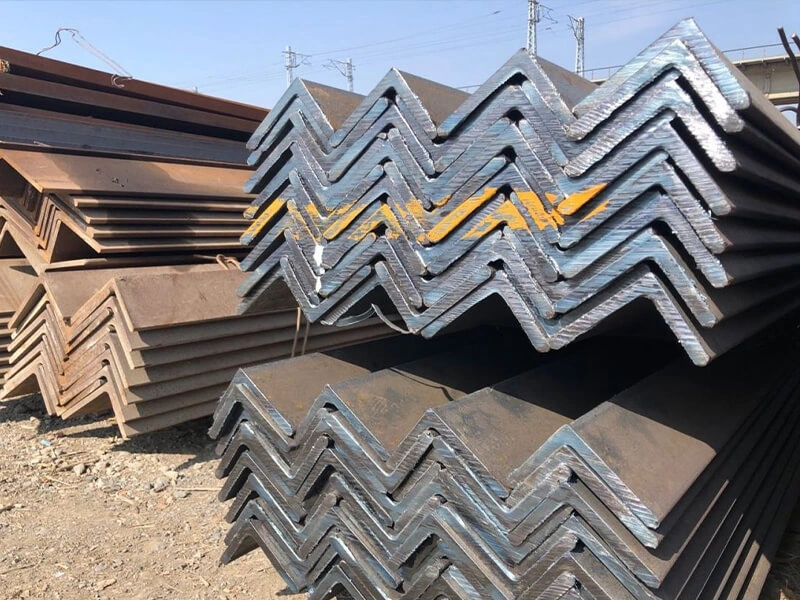
In my experience supplying marine steel to international clients, I’ve seen how proper grade selection makes the difference between successful projects and costly failures. The following sections break down the complex world of marine steel grades into practical information you can use immediately.
What are the grades of steel angle?
Many buyers get confused by the numerous steel angle grades1 available in the market. This confusion often leads to purchasing materials unsuitable for marine applications, resulting in premature corrosion and structural issues.
Steel angle grades are categorized by their mechanical properties and chemical composition. Common grades include ASTM A362, A572 Grade 50, A588, and stainless steel series like 304 and 316. Marine-specific angles follow classification society standards like ABS, LR, DNV GL, and BV with specific designations for different strength levels.
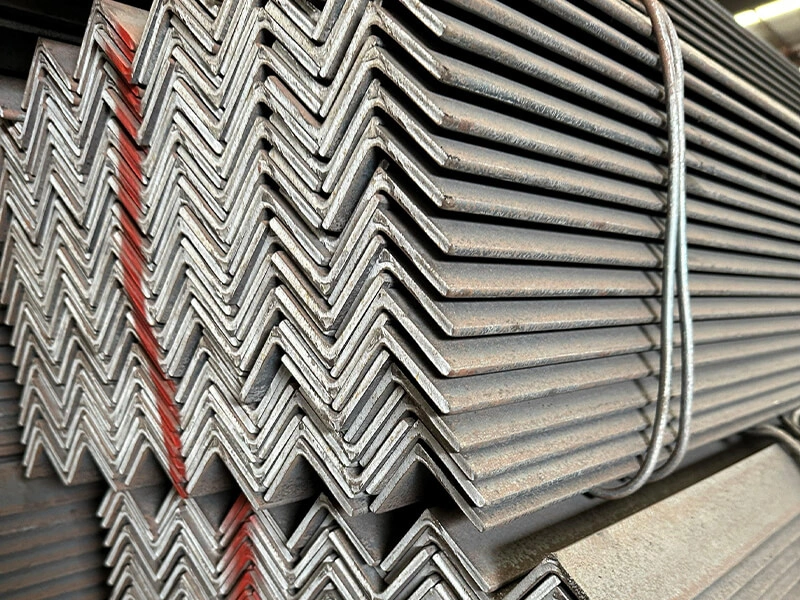
Comprehensive Guide to Steel Angle Classification
Understanding steel angle grades1 requires knowledge of both general structural grades and marine-specific classifications. The grading system tells you exactly what properties to expect from the material.
General structural angles follow ASTM standards widely used in construction. ASTM A362 is the most common carbon steel angle with minimum yield strength of 36 ksi. ASTM A572 Grade 50 offers higher strength with 50 ksi yield strength. Weathering steel angles like ASTM A588 provide better atmospheric corrosion resistance through their chemical composition.
Common Steel Angle Grades and Properties:
| Grade Standard | Yield Strength (min) | Tensile Strength | Common Applications | Corrosion Resistance |
|---|---|---|---|---|
| ASTM A362 | 36 ksi (250 MPa) | 58-80 ksi (400-550 MPa) | General construction | Basic, requires coating |
| ASTM A572 Gr50 | 50 ksi (345 MPa) | 65 ksi (450 MPa) | Bridges, buildings | Moderate with protection |
| ASTM A588 | 50 ksi (345 MPa) | 70 ksi (485 MPa) | Outdoor structures | Good weathering resistance |
| ABS AH36 | 51 ksi (355 MPa) | 71-90 ksi (490-620 MPa) | Ship hull structures | Marine-grade with coatings |
| 316 Stainless3 | 30 ksi (205 MPa) | 75 ksi (515 MPa) | Marine hardware | Excellent saltwater resistance |
High-strength low-alloy (HSLA) angles offer better mechanical properties than carbon steel. Grades like ASTM A572 and A992 provide higher strength-to-weight ratios, making them suitable for applications where weight reduction matters. These steels often contain vanadium, niobium, or titanium for improved strength through grain refinement.
Stainless steel angles form another important category for marine applications. Type 304 stainless offers good general corrosion resistance, while Type 316 provides superior performance in chloride environments due to molybdenum content. Marine grade stainless steels like 316L have lower carbon content for better welding performance.
Marine classification society grades represent the highest standard for ocean-going vessels. The American Bureau of Shipping (ABS), Lloyd’s Register (LR), Det Norske Veritas Germanischer Lloyd (DNV GL), and Bureau Veritas (BV) each have their grading systems. These grades ensure materials meet specific requirements for shipbuilding and offshore structures.
What grade is marine steel?
Project engineers often struggle to identify which steel grades qualify as genuine marine-grade material. Using non-marine grades in saltwater environments leads to accelerated corrosion and potential structural failures that compromise safety.
Marine steel grades are specifically designed for saltwater exposure and follow classification society standards1. Common marine grades include ABS grades (AH32, AH36, DH32, DH36), LR grades (A, B, D, E with 32 or 36), and DNV grades (A32, A36, A40). These steels offer enhanced corrosion resistance2 and mechanical properties3 suitable for marine environments.
Understanding Marine Steel Grade Specifications
Marine steel grades differ significantly from regular structural steels in their chemical composition, mechanical properties3, and quality control requirements. These differences ensure reliable performance in the harsh marine environment.
Classification society grades form the backbone of marine steel specifications. ABS grades range from AH32 to AH40 for normal strength and DH32 to DH40 for higher strength applications. The "H" indicates high tensile strength, while the number indicates minimum yield strength in ksi. For example, AH36 has 36 ksi minimum yield strength.
Marine Steel Grade Comparison:
| Classification Society | Normal Strength Grades | High Strength Grades | Minimum Yield Strength | Key Applications |
|---|---|---|---|---|
| American Bureau of Shipping (ABS) | A, B, D, E | AH32-DH40 | 32-40 ksi (220-275 MPa) | Ship hulls, offshore platforms |
| Lloyd’s Register (LR) | A, B, D, E | AH32-EH40 | 32-40 ksi (220-275 MPa) | Marine structures, vessels |
| DNV GL | A, B, D, E (normal) | A32-A40, D32-D40 | 32-40 ksi (220-275 MPa) | Offshore installations, ships |
| Bureau Veritas (BV) | A, B, D, E | AH32-FH40 | 32-40 ksi (220-275 MPa) | Marine engineering projects |
Chemical composition requirements for marine steels are strictly controlled. Carbon content typically ranges between 0.16-0.18% for good weldability. Manganese content varies from 0.90-1.60% depending on thickness and strength grade. Silicon, phosphorus, and sulfur levels are tightly controlled to ensure toughness and weldability.
Mechanical properties exceed those of regular structural steels. Marine steels maintain higher impact toughness at low temperatures, crucial for offshore applications. Charpy V-notch testing at -20°C or -40°C ensures adequate fracture resistance. Yield-to-tensile strength ratios are controlled to provide good deformation capacity.
Quality assurance and testing requirements are more rigorous for marine steels. Each plate undergoes ultrasonic testing for internal defects. Mechanical testing includes tension tests, impact tests, and bend tests. Manufacturing processes must be approved by classification societies, with surveyors witnessing production and testing.
What are the grades of offshore steel?
Offshore projects demand even higher performance than standard marine applications, yet many suppliers blur the lines between these specifications. This confusion can lead to using inadequate materials in critical offshore structures.
Offshore steel grades include API standards like API 2H Grade 501, API 2W Grade 50, and API 2Y Grade 60, plus enhanced classification society grades. These steels offer superior toughness, fatigue resistance2, and through-thickness properties3 for demanding offshore applications like platforms, pipelines, and wind turbines.
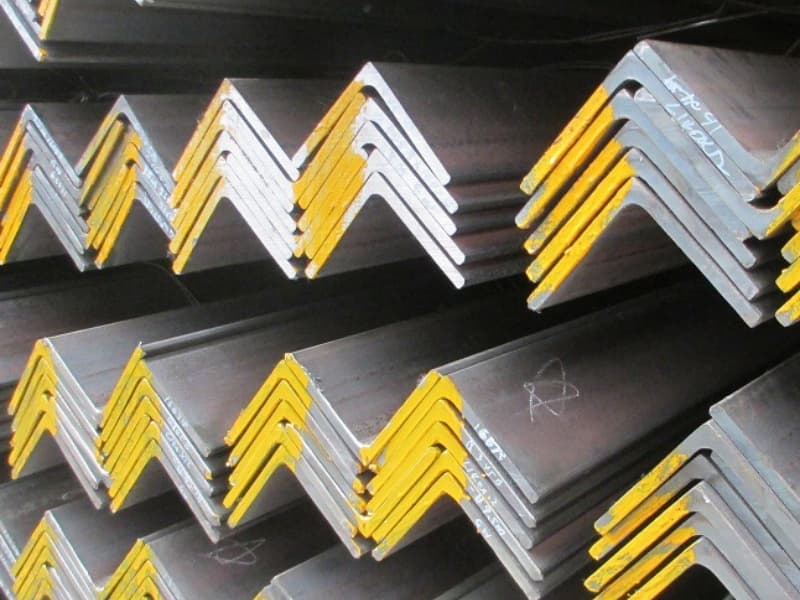
Offshore Steel Grade Requirements and Applications
Offshore steel grades represent the highest tier of structural steels, designed to withstand extreme environmental conditions including storms, ice loads, and constant wave action. Understanding these grades ensures safety in offshore operations.
API specifications4 govern many offshore structural applications. API 2H Grades 42 and 50 provide atmospheric corrosion resistance similar to ASTM A588. API 2W Grades 50 and 60 offer excellent notch toughness at low temperatures. API 2Y Grade 60 provides the highest strength for weight-critical applications.
Offshore Steel Grade Specifications:
| Grade Designation | Yield Strength (min) | Tensile Strength | Impact Test Temperature | Key Features |
|---|---|---|---|---|
| API 2H Grade 501 | 50 ksi (345 MPa) | 70-90 ksi (485-620 MPa) | -40°C (-40°F) | Weathering resistance, weldable |
| API 2W Grade 50 | 50 ksi (345 MPa) | 70-90 ksi (485-620 MPa) | -60°C (-76°F) | Excellent low-temperature toughness |
| API 2Y Grade 60 | 60 ksi (415 MPa) | 75-95 ksi (520-655 MPa) | -40°C (-40°F) | High strength, good toughness |
| EN 10225 S420G2+M | 420 MPa | 500-660 MPa | -40°C (-40°F) | European offshore standard |
| ASTM A707 L5 | 65 ksi (450 MPa) | 77-95 ksi (530-655 MPa) | -60°C (-76°F) | Low temperature service |
Enhanced classification society grades address specific offshore needs. DNV GL offers offshore grades like OE420, OE460, and OE500 with improved toughness and fatigue properties. ABS has similar grades with enhanced through-thickness properties3 for highly stressed connections.
Through-thickness properties are critical for offshore applications. Z-quality steels with reduced sulfur content (typically below 0.005%) provide improved resistance to lamellar tearing in thick sections. This is essential for node connections in offshore platforms where complex stress patterns occur.
Fatigue performance requirements exceed those for shipbuilding steels. Offshore steels must withstand millions of load cycles from waves and operational loads. This requires clean steel with minimal inclusions, controlled microstructure, and often specific heat treatments like normalizing or thermo-mechanical control process (TMCP).
Is 2062 E250 angle?
Many buyers encounter the IS 2062 E250 designation but remain unsure about its suitability for marine applications. This confusion can lead to using inappropriate materials in corrosive environments, with costly consequences.
IS 2062 E250 refers to an Indian standard structural steel with minimum yield strength of 250 MPa. While it’s a reliable general construction steel, it lacks the specific properties required for marine applications. Marine environments need enhanced corrosion resistance and toughness that E250 doesn’t provide.
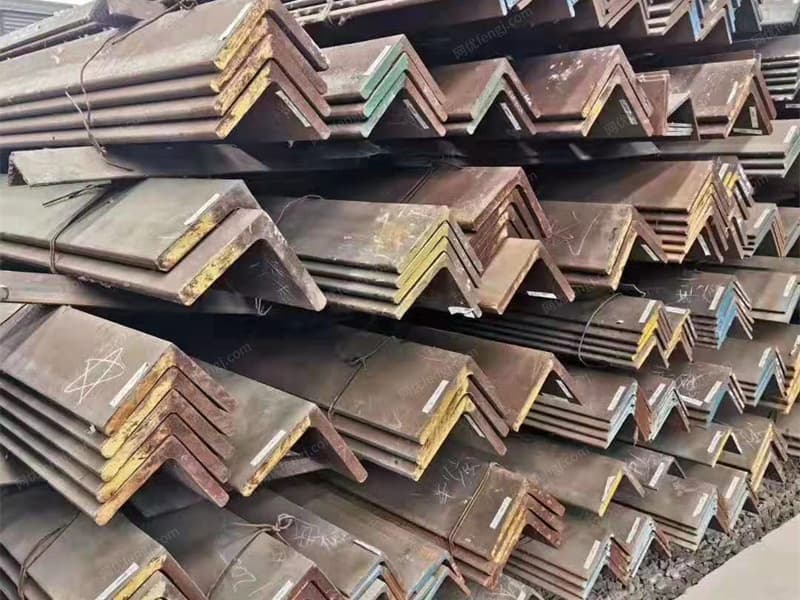
Understanding IS 2062 E250 and Its Limitations in Marine Service
IS 2062 is the Indian standard for hot-rolled medium and high tensile structural steel, with E250 representing the 250 MPa minimum yield strength grade. Understanding its properties helps determine appropriate applications.
The IS 2062 standard covers several steel grades with different quality levels. E250 has three quality grades: E250A, E250B, and E250C with increasing levels of impact toughness. E250A has no Charpy impact requirements, E250B requires 27J at 0°C, and E250C requires 27J at -20°C. Only E250C approaches the toughness needed for some marine applications.
IS 2062 E250 Grade Comparison:
| Grade Quality | Yield Strength (min) | Tensile Strength | Elongation (min) | Impact Test Requirement |
|---|---|---|---|---|
| E250A | 250 MPa | 410-540 MPa | 23% | Not specified |
| E250B | 250 MPa | 410-540 MPa | 23% | 27J at 0°C |
| E250C | 250 MPa | 410-540 MPa | 23% | 27J at -20°C |
| E250BR | 250 MPa | 410-540 MPa | 23% | 27J at 0°C (weathering) |
| E350BR | 350 MPa | 490-630 MPa | 22% | 27J at 0°C (weathering) |
Chemical composition limits affect marine performance. E250 has carbon content up to 0.23%, manganese up to 1.50%, and sulfur/phosphorus limits of 0.045%. These limits don’t provide the corrosion resistance needed for marine environments. The steel requires extensive protection systems in saltwater exposure.
Corrosion resistance is inadequate for marine applications. Unlike marine grades with specific alloying for saltwater resistance, E250 will corrode quickly without comprehensive protection. Regular marine grades like ABS AH36 have copper, chromium, and nickel additions that improve atmospheric corrosion resistance.
Welding considerations differ from marine grades. E250 has higher carbon equivalent values than marine grades, requiring more careful welding procedures. Marine applications often demand specific welding consumables and procedures approved by classification societies, which E250 typically doesn’t meet.
Availability of certification and testing varies significantly. Marine steels come with comprehensive certification including impact tests, ultrasonic tests, and chemical analysis for each plate. Standard E250 material may only have batch testing unless specifically ordered with enhanced testing requirements.
Conclusion
Understanding marine steel grades ensures you select materials that perform reliably in saltwater environments. Proper grade selection prevents costly failures and ensures project success.
-
Explore the specifications of API 2H Grade 50 to understand its applications in offshore structures. ↩ ↩ ↩ ↩ ↩
-
Discover the significance of fatigue resistance in offshore steel to enhance safety and performance. ↩ ↩ ↩ ↩ ↩
-
Understand through-thickness properties to ensure structural integrity in offshore applications. ↩ ↩ ↩ ↩ ↩
-
Explore API specifications to ensure compliance and safety in offshore structural applications. ↩