
Your shipyard runs on tight schedules and thin margins. A single material delay can stall the entire production line, costing thousands per hour. Is your current steel supply model built for speed and scale, or is it a constant bottleneck?
Large shipyards require specialized marine angle steel supply models. These go beyond simple purchasing to include Just-In-Time (JIT) delivery programs, blanket orders with fixed pricing, vendor-managed inventory (VMI), and technical partnership agreements. The right model synchronizes material flow with the block construction schedule, turning the supply chain into a competitive advantage.
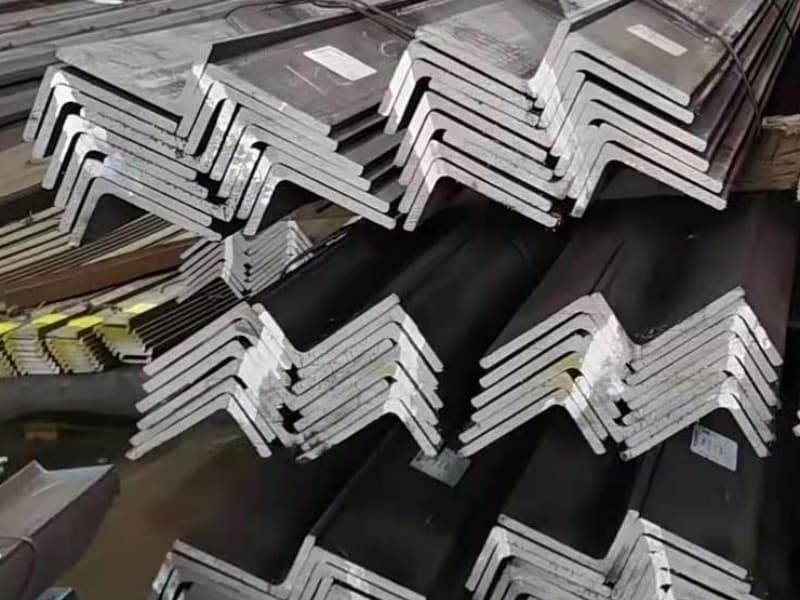
I’ve worked with yards from Vietnam to Romania, and their success often hinges on how they answer basic questions. Questions about price, type, weight, and size seem simple, but the answers determine which supply model will work. Let’s start with these fundamentals and then explore how they shape the sophisticated models that keep the world’s largest yards building on time.
What is the price of 40x40x5 angle per kg?
You request a quote for a common size. The price per kg you receive is a snapshot of the volatile spot market. Basing a multi-ship project on this number is like navigating a storm with an old map.
The spot price1 for a 40x40x5 mild steel angle2 per kg fluctuates daily. It is influenced by raw material costs, mill capacity, and demand. A current reference FOB China price might be $0.75 to $0.95 USD/kg. For a large shipyard, this spot price1 is irrelevant; they need contract models3 that ensure stable, predictable costs for thousands of tons.
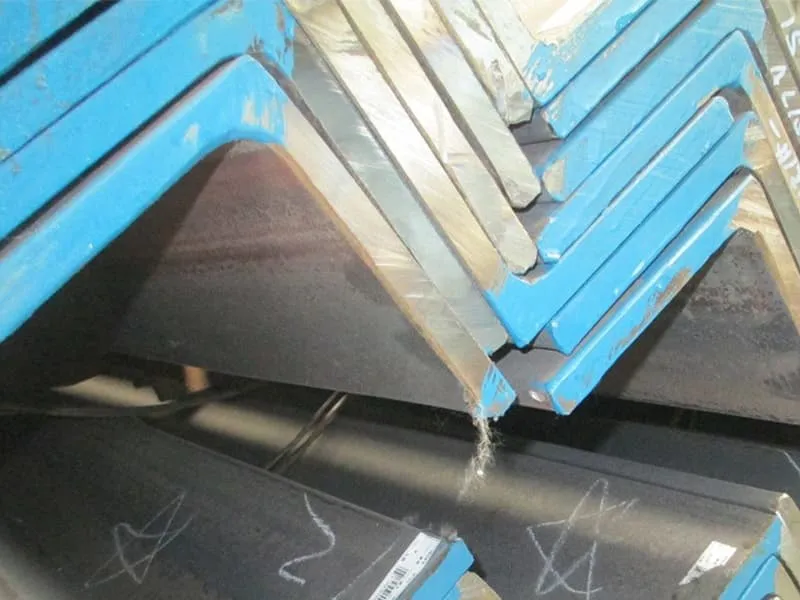
From Spot Price Chaos to Contractual Cost Certainty
A large shipyard consumes steel by the thousands of tons, not by the kilogram. The spot price1 inquiry for a 40x40x5 angle reveals a procurement strategy stuck in a reactive mode. For scale operations, this approach is financially dangerous and operationally crippling. Let’s examine why and what models replace it.
The problem with spot pricing for large yards is threefold:
- Budgetary Impossibility: You cannot accurately bid on a $100 million newbuild vessel if your major material cost can swing 20% between the bid date and the procurement date. The financial risk4 is too high.
- Administrative Overhead: Constantly requesting and comparing quotes for hundreds of line items consumes massive time for both the buyer and multiple suppliers.
- No Priority with Mills: Spot buyers get the leftover capacity. When mills are busy, your large, urgent orders get deprioritized in favor of their long-term contract customers.
Large shipyards solve this by implementing structured supply models that move the conversation from "price per kg" to "total cost of ownership5." The most common models are:
1. Annual Blanket Order6 with Fixed/Formula Pricing:
- How it works: The yard forecasts its annual consumption of various angle sizes (including 40x40x5). They issue a single blanket order to one or two preferred suppliers. The contract sets either a fixed price for the year or a formula (e.g., CRU Index + $X).
- Yard Benefit: Absolute cost certainty for budgeting. Guaranteed supply allocation from the mill. Reduced administrative work.
- Supplier’s Role: Must have deep mill partnerships to secure the large, year-long capacity commitment. Provides monthly or quarterly releases against the blanket order.
2. Project-Based Fixed-Price Contract7:
- How it works: For a specific series of ships (e.g., 4x 8,000 TEU container ships), the yard agrees on a fixed price for all steel for the project duration (18-24 months).
- Yard Benefit: Locks in project profitability. Eliminates commodity risk for the duration of the build.
- Supplier’s Role: Bears the market risk but gains a guaranteed, high-volume order. Requires sophisticated hedging on raw materials.
Here is a comparison of how different purchasing approaches handle the "price question":
| Purchasing Approach | Response to "Price of 40x40x5?" | Financial Risk for Yard | Operational Impact |
|---|---|---|---|
| Reactive Spot Buying | "Today’s price is $0.85/kg, valid for 24 hours." | Very High. Unbudgeted cost increases likely. | Low priority with supplier; frequent delays; constant quoting needed. |
| Annual Blanket Order6 | "Our 2024 contract price for that size is $0.82/kg, fixed for all releases." | Very Low. Cost is locked in. | High priority. Scheduled releases match production plan. |
| Project-Based Contract | "For the ‘Project Neptune’ series, that size is $0.80/kg as per Schedule B of our contract." | Zero for that project. | Material supply is a planned project milestone, not a procurement task. |
My direct experience involves a yard in Southeast Asia that was building bulk carriers. They were using spot buying and constantly fighting delays and budget overruns. We proposed an analysis of their last two years of purchases. We grouped all their small spot orders for angles like 40x40x5, 50x50x6, etc. The total volume was huge but fragmented. We showed them that a blanket order for that aggregated volume would give them a 10% cost saving versus the annual average spot price1, plus guaranteed monthly delivery slots. They switched models. The "price per kg" became a stable line item in their ERP system, not a daily worry. For large yards, the goal is to eliminate the need to ask for a spot price1 altogether.
What type of steel is used in shipbuilding?
You know it needs to be strong, but "shipbuilding steel" is a family of specialized grades, not a single type. Choosing the wrong one can fail class approval. Your supply model must guarantee the correct grade every time, at scale.
Shipbuilding primarily uses high-strength, low-alloy (HSLA) steels1 with guaranteed notch toughness. Common grades are defined by classification societies2 (like ABS, LR, DNV) such as Grade A, B, D, E3, AH32/36, DH32/36, EH32/36. The "H" denotes high strength, and the letter (A, D, E) indicates the impact test temperature, which is critical for hull integrity in different operating environments.

Navigating the Grade Labyrinth: How Supply Models Ensure Specification Compliance
A ship’s structural drawing is a map of different steel grades. The bottom plating might require EH36 for Arctic service, while an interior bulkhead might use Grade A. A large yard’s supply model must be sophisticated enough to deliver this mix accurately, consistently, and with full traceability.
Let’s demystify the primary categories:
Normal Strength Steel (Grades A, B, D, E):
- Yield Strength: 235 MPa minimum.
- The letter indicates the impact test temperature: A (0°C), B (0°C with different chemistry), D (-20°C), E (-40°C).
- Used for less critically stressed parts and smaller vessels.
High Strength Steel (Grades AH32/36, DH32/36, EH32/36, FH32/36):
- Yield Strength: 315 MPa (32) or 355 MPa (36) minimum.
- The most common grades in modern shipbuilding. AH36/DH36 are the workhorses for hulls of large container ships and bulk carriers.
- ‘H’ means High tensile. ‘A/D/E’ again defines the impact test temperature.
The selection depends on the vessel’s Rule Length4 (a classification society calculation) and the operating temperature zone. A supply model must account for this complexity.
A simple "one-size-fits-all" supplier cannot handle this. A yard needs a partner whose model includes:
- Grade Management Capability5: The ability to source, segregate, and certify multiple grades simultaneously.
- Technical Liaison: A team that can read ship drawings and translate "ABS DH36, 12mm Thk" into the correct mill order.
- Certification Integrity: A foolproof system to ensure the Mill Test Certificate (MTC)6 for a batch of EH36 angles is never mixed up with the MTC for Grade A angles.
For large yards, two advanced supply models address this specifically:
1. The "Full Package" Technical Partner Model:
The supplier acts as an extension of the yard’s procurement office. They take the ship’s structural Bill of Materials (BOM), which lists thousands of items with different grades and sizes. They break it down, source all materials from appropriate mills, ensure certification, and deliver in phased kits matching the block assembly schedule.
2. Vendor-Managed Inventory (VMI)7 for Standard Grades:
For high-volume, standard grades like AH36 in common sizes, the supplier holds inventory at a hub near the shipyard. The yard consumes material and is billed monthly. The supplier manages replenishment. This ensures "the right grade is always in stock" without the yard tying up capital in a large warehouse.
| Supply Challenge | Inefficient Model (Multiple Spot Buyers) | Efficient Model (Integrated Technical Partner) |
|---|---|---|
| Handling Multiple Grades | Different suppliers for different grades; high risk of mix-up. | Single point of responsibility for sourcing and certifying all grades. |
| Traceability | Certificates arrive haphazardly; difficult to match to material on the dock. | Certified material is delivered with a consolidated, block-specific certification package. |
| Technical Queries | Yard engineers must explain specs to each new salesperson. | Supplier has a dedicated technical team familiar with the yard’s standard specs. |
| Inventory of Odd Grades | Yard must stock rarely used grades, tying up money and space. | Supplier’s broader client base allows them to source odd grades on demand without yard inventory. |
I worked with a yard in the Middle East that was struggling with certification delays. They had a traditional model: buy plates from one supplier, angles from another. The angles would arrive, but the MTCs would be delayed or incomplete, halting construction. We proposed a consolidated model where we supplied both plates and angles for specific blocks. We provided a single, pre-vetted certification package for each block delivery. This reduced their material inspection and approval time from weeks to days. The "type of steel" wasn’t just a technical spec; it was a data flow problem. The right supply model ensures the steel and its pedigree arrive together, seamlessly.
What is the weight of 75x75x6mm MS angle?
You need this for a lifting plan or a transportation quote. The theoretical weight1 is easy, but for a shipyard ordering 10,000 meters of it, small tolerances add up to significant cost and logistics implications.
The theoretical weight1 of a 75x75x6mm mild steel equal angle2 is approximately 6.8 kg per meter. For a standard 12-meter length, this is about 81.6 kg per piece. In high-volume procurement, yards must agree with suppliers on the weighing method (theoretical vs. actual) and acceptable tolerances to ensure fair billing and accurate logistics planning.
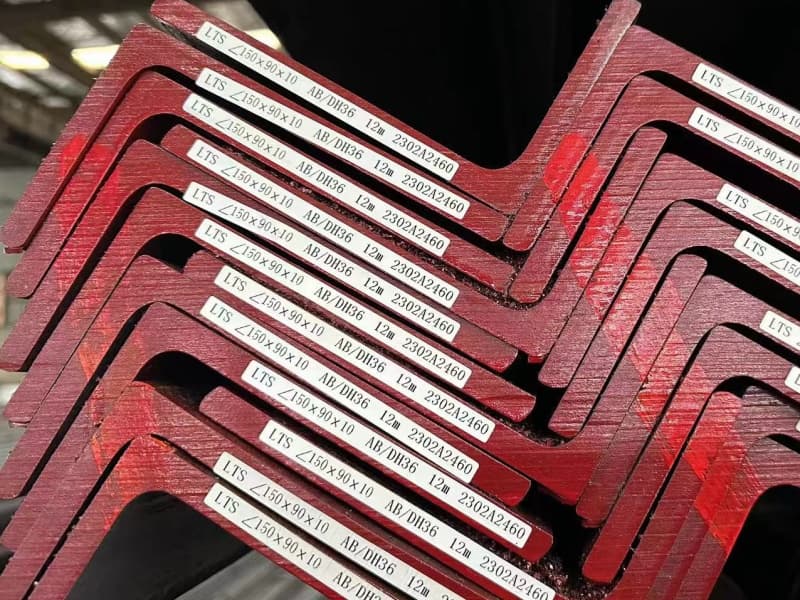
Weight Matters at Scale: Tolerances, Logistics, and Cost Control
For a single piece, a small weight variance3 is irrelevant. For a shipyard consuming kilometers of angle steel, these variances directly impact the bottom line and operational efficiency. The chosen supply model must have clear, fair protocols for managing weight.
First, understand where variance comes from:
- Manufacturing Tolerances: Leg width (e.g., ±2mm) and thickness (e.g., ±0.5mm) are allowed by standards like EN 10056-1. A 75x75x6 angle could legally be 73x77x6.5mm.
- Scale of Impact: If you order 1,000 tons based on theoretical weight1, a -2% actual weight tolerance means you receive only 980 tons of physical steel, but you may have paid for 1,000 tons. This 20-ton shortage can stop production.
Therefore, large yards and their suppliers agree on commercial terms in the supply model:
1. Weighing Method:
- Theoretical Weight Billing: Payment based on calculated weight from ordered dimensions. Simple, but can be unfair. Often used in less sophisticated contracts.
- Actual Weight Billing: Payment based on certified weight from mill scales or third-party surveyor4 (like SGS) at the loading port. This is the fairer standard for large contracts.
2. Logistics Optimization:
Accurate weight is critical for shipping. Overestimating wastes container space (increasing cost per ton). Underestimating can lead to overweight container penalties or incorrect crane selection on site. A good model includes detailed packing lists with estimated weights per bundle for advanced logistics planning.
3. Production Planning:
The workshop needs accurate weights for lifting gear selection and load distribution in prefabricated blocks. Consistent, predictable weights from a trusted supplier make this planning reliable.
Advanced supply models like Just-In-Time (JIT) Delivery5 depend entirely on precise weight and quantity data. The yard’s system tells the supplier: "Deliver 5,800 kg of 75x75x6mm angles to Panel Line B on Thursday morning." If the delivered weight is off by 10%, it disrupts the precise workflow.
Consider the differences in how models handle weight:
| Procurement Model | Typical Weight Handling | Risk/Impact for Shipyard |
|---|---|---|
| Spot Purchase | Supplier uses theoretical weight1; actual weight is unknown until arrival. | High financial risk of short weight. Logistics planning is guesswork. |
| Annual Contract | Contract specifies "Actual Weight Billing certified by [Third Party]." | Low risk. Fair cost. Reliable data for logistics and planning. |
| JIT/Kitting Model | Weight is a critical data point for each kit. Accuracy is mandatory for line feeding. | Extremely high operational impact. Inaccuracy stops the production line. |
A case from a client in Eastern Europe highlights this. They had a fixed-price contract but were billed on theoretical weight1. They decided to weigh received material. They found a consistent 1.5% average shortfall across all sections. Over a year, this represented a significant financial loss. When renegotiating, they made "actual weighed weight at load port, certified by SGS" a non-negotiable term. The supplier, now in a long-term partnership model, agreed. The supplier also started providing better bundle weights, which helped the yard optimize container loading, reducing their overall freight cost. The question of weight evolved from a potential conflict to a key performance indicator (KPI) within a cooperative partnership model.
What sizes does steel angle come in?
Your project requires a specific size. But do you know if it’s a standard, mill-run size or a special order? This simple question determines lead time, cost, and which supply model is feasible.
Steel angles come in a wide range of standard sizes1, defined by leg lengths and thickness. Common equal leg angle ranges include small sizes like 20x20x3mm up to large sections like 200x200x24mm. Unequal leg angles (e.g., 100x75x8mm) are also standardized. For shipbuilding, mills produce specific marine-grade sizes in long lengths (often 12m+), and non-standard sizes1 require custom rolling2 with higher cost and lead time.
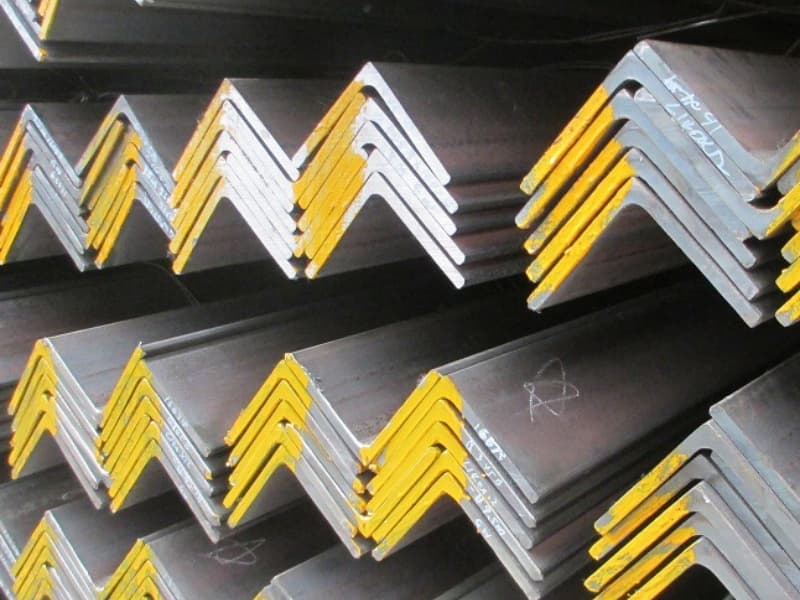
Standard vs. Special Sizes: How Supply Models Manage Complexity and Cost
A large shipyard uses hundreds of different angle sizes. Most are standard, but some are specials for unique structural needs. The efficiency of the supply chain3 depends on how well the procurement model4 distinguishes between and manages these two categories.
Standard Sizes (Mill Run):
These are sizes mills produce regularly for stock or large orders. They have the shortest lead times (4-6 weeks) and the best prices. Examples for shipbuilding include common stiffener sizes like 80x80x8, 100x100x10, 150x150x12 in grades AH36/DH36. A smart supply model maximizes the use of standard sizes1 in design.
Special Sizes (Custom Rolled):
These are non-standard dimensions. They require the mill to set up its rolling mill for a small batch, which incurs a high setup charge and a long lead time (8-12 weeks or more). The per-ton cost is much higher. Using specials should be a deliberate, minimized choice.
An effective shipyard supply model includes:
1. Standardization Drives with the Design Office:
The procurement team works with naval architects to favor standard sizes1 in new designs. This reduces cost and lead time for every future vessel.
2. Two-Tiered Supply Strategy:
- Tier 1 (High-Volume Standards): Sourced via annual blanket order or VMI from a core partner. This covers ~80% of the volume.
- Tier 2 (Specials & Low-Volume): Sourced via project-specific contracts or from a flexible supplier who can manage custom rolling2. This model acknowledges that 100% standardization is impossible but controls its impact.
3. Kitting and Pre-Cutting Services:
Some advanced suppliers offer value-added services5. Instead of just supplying 12m lengths of a standard 100x100x10 angle, they can pre-cut it to the exact lengths required for a specific block (e.g., 4.5m, 3.2m, 4.3m). This reduces yard scrap and labor cost. This is only feasible within a deep, integrated partnership model.
Here is how different models handle size complexity:
| Supply Model | Approach to Standard Sizes | Approach to Special Sizes | Impact on Yard Efficiency |
|---|---|---|---|
| Fragmented Spot Buying | May get standard sizes1, but from various sources with quality variance. | Each special is a new, difficult, and expensive negotiation. | High cost, long lead times for specials, inconsistent quality for standards. |
| Annual Blanket Order | Excellent. Secures stable supply and price for all forecasted standard sizes1. | Usually excluded. Must be handled separately, disrupting the model. | Optimizes the bulk of procurement but leaves a problematic tail. |
| Full-Service Technical Partner | Manages standard sizes1 via blanket agreement. | Manages specials as part of the service, leveraging their mill relationships to minimize cost and lead time. | Holistic management of the entire size portfolio. Design feedback to minimize future specials. |
My insight comes from a partnership with a yard in Southeast Asia. They had a recurring special size for a unique hatch coaming design. Every new ship required a custom rolling2, causing a 10-week critical path delay. We analyzed the design with them and found that with a minor, structurally acceptable change, they could use a readily available standard bulb flat section. We facilitated a meeting between our mill engineer and their design team. The change was adopted. This eliminated the custom rolling2, saved $XX,000 per ship, and cut 8 weeks off the material lead time. This is the highest form of supply model: a technical partnership6 that goes beyond delivering goods to actively improving the yard’s design for manufacturability and supply chain3 efficiency. The question "what sizes does it come in?" becomes a collaborative discussion about optimization, not just a catalog inquiry.
Conclusion
For large shipyards, the choice of marine angle steel supply model is a strategic decision. Moving from transactional spot buying to integrated models like blanket orders, JIT, and technical partnerships unlocks cost predictability, ensures specification compliance, and synchronizes material flow with production, forming a true competitive edge.
、
-
This resource provides insights into standard sizes, helping you choose the right dimensions for your project. ↩ ↩ ↩ ↩ ↩ ↩ ↩ ↩ ↩ ↩ ↩ ↩ ↩ ↩ ↩ ↩ ↩ ↩
-
This link explains custom rolling, a crucial process for obtaining non-standard steel angles. ↩ ↩ ↩ ↩ ↩ ↩ ↩
-
Discover how supply chain strategies can optimize procurement and reduce costs in your projects. ↩ ↩ ↩ ↩ ↩
-
Explore different procurement models to improve your purchasing strategy for steel angles. ↩ ↩ ↩ ↩
-
Find out how value-added services can enhance efficiency and reduce waste in your projects. ↩ ↩ ↩ ↩
-
Learn how technical partnerships can lead to better design and supply chain efficiency in your projects. ↩ ↩ ↩ ↩
-
Explore how VMI optimizes inventory management and ensures timely availability of materials. ↩ ↩