
Have you ever stared at a steel specification sheet, confused by the alphabet soup of AH36, DH36, and EH36? You are not alone. Choosing the wrong grade can lead to project delays, safety risks, and costly rework on the high seas.
The key difference between marine bulb flat steel grades AH36, DH36, and EH36 lies in their impact toughness at low temperatures, which is critical for a ship’s structural integrity in different operating environments. This toughness is denoted by the prefix letters A, D, and E.

I remember a client from Qatar who was building offshore support vessels. They initially thought "higher grade" just meant higher price. But after we discussed their specific routes—some through warmer Gulf waters, others venturing into colder regions—they understood that selecting the correct grade was not about cost, but about matching the steel to the sea’s challenge. This article will break down these grades clearly, so you can make informed decisions for your next shipbuilding or repair project. Let’s dive into the specifics and clear up the common questions.
What is the difference between EH36 and DH36?
Imagine your ship is sailing through icy Arctic waters. The steel in its hull must not become brittle and crack. This is where the choice between EH36 and DH36 becomes a matter of operational safety, not just paperwork.
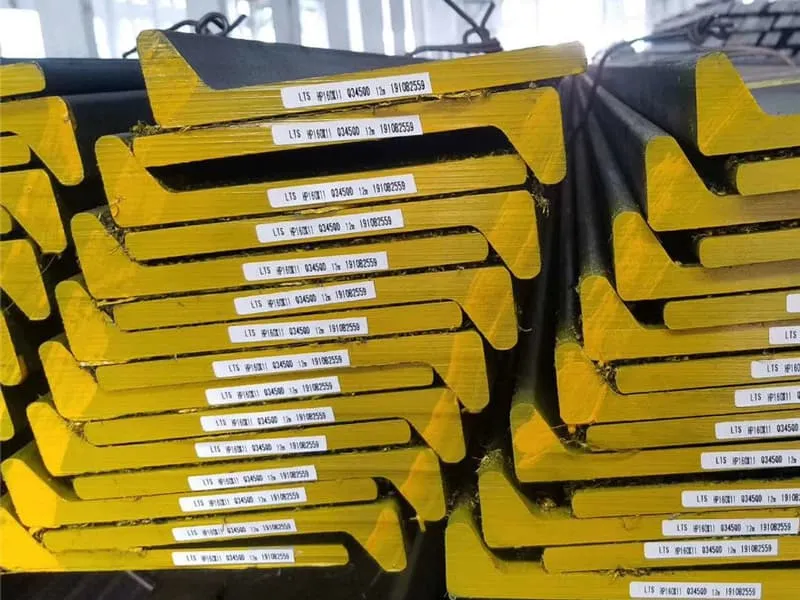
EH36 and DH36 are both high-strength marine structural steels, but EH36 offers superior impact toughness at lower temperatures. DH36 is typically tested for toughness at -20°C, while EH36 is tested at -40°C, making it suitable for ships operating in polar or severely cold environments.
Understanding the "Temperature" in Temperature Resistance
The core difference is not in their chemical composition or yield strength—both are 355 MPa minimum. The difference is entirely in their ability to absorb energy during an impact in freezing conditions. This property is called "Charpy V-Notch Impact Toughness."
Think of it like this: a ceramic plate and a plastic plate might both hold your dinner at room temperature. But if you drop them on a frozen floor, the ceramic shatters while the plastic might just bounce. DH36 is like a durable plastic, good for cold weather. EH36 is like a special engineered polymer, designed to remain ductile even in extreme cold.
Application-Driven Selection
You should not choose EH36 simply because it seems "better." The choice is dictated by the rules of classification societies (like ABS, DNV, LR) based on the ship’s design temperature. This is the lowest service temperature the hull structure is expected to face.
- For DH36: This is the workhorse for most ocean-going vessels. Bulk carriers, container ships, and tankers operating on major trade routes (Asia to Europe, Trans-Pacific) will largely use DH36. The North Atlantic can get cold, but -20°C toughness is usually sufficient.
- For EH36: This is specialized steel. It is mandatory for ice-class vessels (like icebreakers, Arctic shuttle tankers) and ships with a design temperature at or below -40°C. Using EH36 on a coastal ferry in Southeast Asia would be an unnecessary cost.
Let’s look at a practical comparison:
| Feature | DH36 Marine Steel | EH36 Marine Steel |
|---|---|---|
| Key Difference | Good low-temperature toughness | Excellent low-temperature toughness |
| Impact Test Temp. | -20°C | -40°C |
| Typical Applications | General ocean-going vessels (bulk carriers, tankers), most commercial ships | Ice-class vessels, Arctic & Antarctic operations, offshore structures in cold regions |
| Cost Implication | Standard cost for high-strength steel | Premium cost due to more stringent manufacturing controls |
| Governed by | Ship design temperature rules (typically above -25°C) | Rules for polar code or specific low design temperatures |
My advice from the yard: I once supplied a large batch of DH36 bulb flats to a shipyard in Vietnam for a series of container ships bound for North America. The specification was clear. Later, a contractor in Norway contacted us for a retrofit project on a research vessel. They needed EH36. The conversation immediately focused on certified mill reports and our ability to trace the material’s impact test results. The requirements, and the scrutiny, were on a different level. Always check the classification society’s approval and the specific design requirements of your project first.
What is the difference between A36 and AH36 steel?
This is a classic mix-up that can cause big problems. Seeing "A36" on a cheaper list might tempt you, but using it in a marine application is like using a car tire on a truck—it might fit, but it will fail under load.
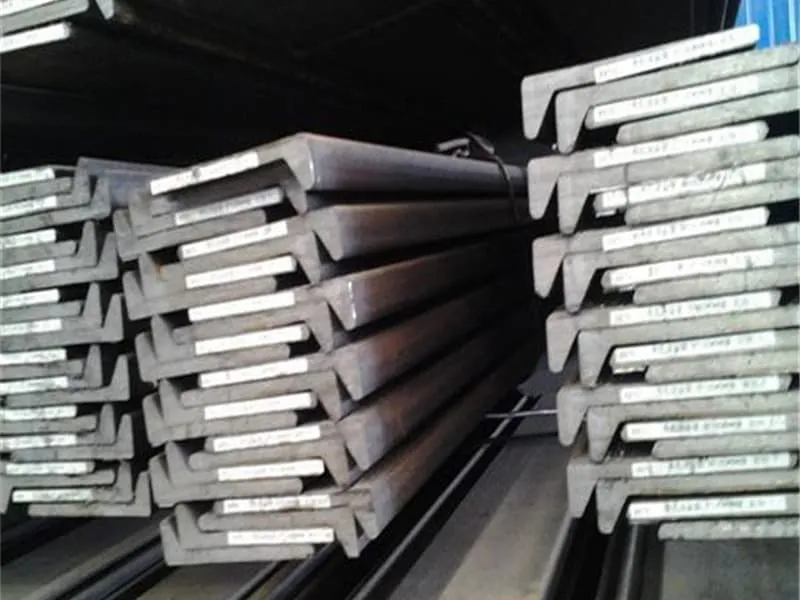
A36 is a general-purpose structural steel for bridges and buildings, with no guaranteed impact toughness. AH36 is a marine-grade steel with a minimum yield strength of 355 MPa and certified impact toughness at 0°C, making it fit for ship hull construction.
Why the "H" and the Number Matter
The names seem similar, but they belong to different worlds. A36 is governed by ASTM standards (from the USA) for broad construction. AH36 follows specialized marine standards from classification societies (like ABS AH36) or international standards like EN 10025.
The "A" in A36 stands for "structural." The "36" refers to a minimum yield strength of 36 KSI (about 250 MPa). Crucially, it has no mandatory Charpy impact test requirement.
In contrast, the "H" in AH36 stands for "High-strength." The "36" here means 355 MPa yield strength (a much stronger steel). The letter "A" as a prefix in AH36 indicates its grade of impact toughness (tested at 0°C). This mandatory toughness certification is what makes it a "marine" steel.
The Critical Mistake to Avoid
The most dangerous assumption is thinking A36 is just a weaker version of AH36 and could be used for non-critical parts. This is wrong. Marine structures are subject to dynamic, cyclic loading from waves—a completely different stress profile from a static building.
- Fatigue Life: Marine-grade steels are produced with cleaner steel-making practices (like fine grain practice) to improve fatigue resistance. A36 is not.
- Weldability: AH36 has carefully controlled carbon content and carbon equivalent (CE) to ensure it can be welded easily in shipyard conditions without cracking. A36’s chemistry is not optimized for the large, restrained welds common in shipbuilding.
- Certification: Every plate of AH36 comes with a Mill Certificate (or Certified Test Report) that lists its chemical analysis and mechanical properties, including the impact values. For A36, a certificate of conformity is common, but not a detailed test report.
Here is a direct breakdown:
| Feature | ASTM A36 Carbon Steel | Marine Grade AH36 Steel |
|---|---|---|
| Primary Use | Buildings, bridges, general fabrication | Ship hulls, offshore structures |
| Yield Strength | ~250 MPa | 355 MPa (Min) |
| Impact Toughness | Not required | Required (Typically at 0°C) |
| Key Standard | ASTM A36 | ABS Rules, EN 10025-4, etc. |
| Critical Concern | Static load bearing | Dynamic wave loading, fatigue, brittle fracture |
| Documentation | Certificate of Conformity (CoC) common | Mill Test Certificate (MTC) / Certified Test Report mandatory |
A story from the field: A new procurement manager for a fabrication shop in Mexico once asked us for a quote on "A36" for a small dock project. During our call, I learned the dock was for servicing coastal fishing boats. I explained that while the static load might be okay, the constant impact from boats and the corrosive environment meant AH36 was the correct choice for longevity. We supplied AH36 from a stock of readily available sizes. He later thanked us, saying the clarity saved his project from potential future failure. The right grade protects your reputation.
What is the meaning of AH36?
Decoding "AH36" is the first step to speaking the language of shipbuilding. It is not a random code; it is a precise description of the steel’s capability, telling engineers exactly what they are getting.
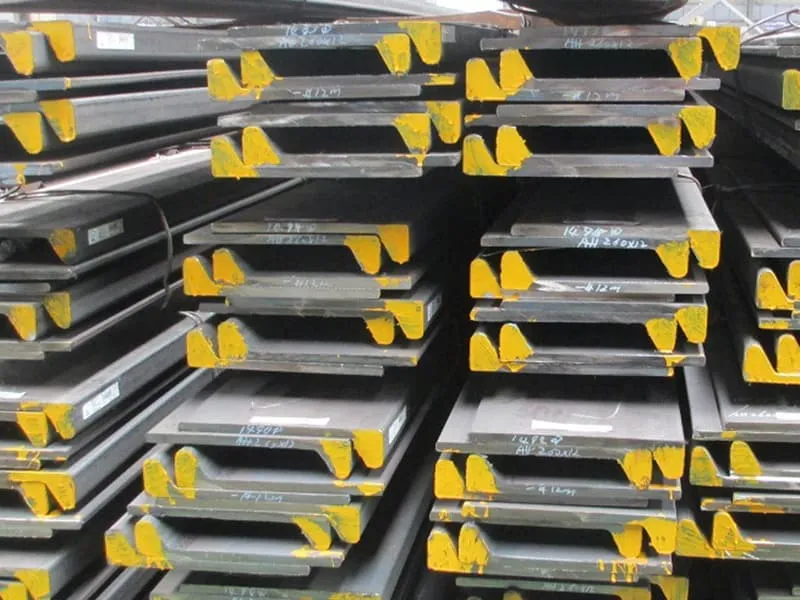
AH36 is a standardized designation for a high-strength marine structural steel. The ‘A’ signifies its impact toughness grade (tested at 0°C), the ‘H’ stands for High-strength, and the ’36’ denotes a minimum yield strength of 355 MPa (36 kgf/mm²).
Breaking Down the Alphanumeric Code
Let’s take it apart piece by piece, as this logic applies to many marine grades (like DH36, EH32, FH40 etc.).
-
First Letter (A): Impact Toughness Grade. This is the most important part for a naval architect. It tells you the temperature at which the steel has been tested to resist brittle fracture.
- A = Tested at 0°C (32°F). For normal temperature zones.
- D = Tested at -20°C (-4°F). For cold / North Atlantic service.
- E = Tested at -40°C (-40°F). For Arctic/severely cold service.
- F = Tested at -60°C (-76°F). For extreme polar conditions.
-
The Letter ‘H’: High-Strength. This distinguishes it from normal strength steel (often just "A", "B", "D", "E" with no ‘H’, which have a yield strength of 235 MPa). The ‘H’ series steels (AH, DH, EH, FH) offer greater strength, allowing for lighter ship structures.
-
The Number (36): Yield Strength. The number ’36’ represents the minimum yield strength in kilograms-force per square millimeter (kgf/mm²). To convert to Megapascals (MPa), you multiply by approximately 9.81. So, 36 kgf/mm² ≈ 355 MPa. Other common numbers are ’32’ (315 MPa) and ’40’ (390 MPa).
How This Translates to Your Order
When you order "AH36 bulb flat steel," you are ordering a product with a very specific promise:
- It will yield (start to deform permanently) only after a stress of 355 MPa is applied.
- It has been tested and certified to absorb a minimum amount of energy during an impact at 0°C.
- Its chemical composition (max levels of Carbon, Manganese, Silicon, etc.) is controlled to ensure this strength and toughness, along with good weldability.
This standardization is global. Whether you are buying from a mill in China, a stockholder in Europe, or a supplier in the Middle East, "AH36" means the same thing. It allows a designer in the Philippines, a builder in Vietnam, and a classifier from DNV to all work from the same clear script.
In practice: Our client, Gulf Metal Solutions in Saudi Arabia, often orders AH36 plates and sections. Their projects in the Arabian Gulf have a design temperature well above 0°C, so ‘A’ grade toughness is perfectly adequate. The ‘H36’ strength allows them to fabricate lighter, stronger components for oil tankers and bulk carriers, which is a key selling point for their own customers. Understanding the code lets them specify correctly every time.
Is DH361 mild steel?
This question reveals a common terminology gap. In everyday language, "mild steel" often means "low carbon, soft steel." But in engineering and shipbuilding, we use more precise categories. Calling DH361 "mild steel" undersells its capabilities.
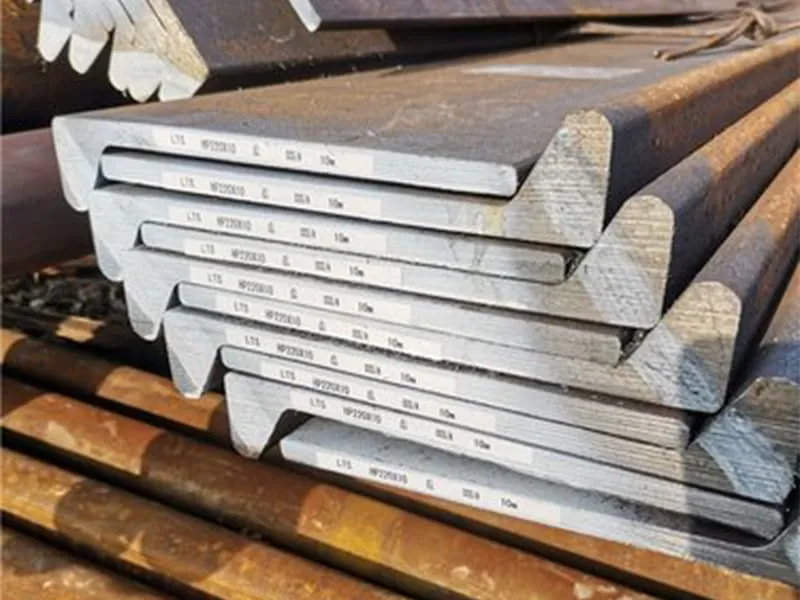
No, DH361 is not mild steel. Mild steel typically refers to low-carbon steel with a yield strength2 around 250 MPa and no guaranteed impact toughness3. DH361 is a high-strength, low-alloy (HSLA) marine-grade steel4 with a yield strength2 of 355 MPa and certified toughness at -20°C.
From "Mild" to "High-Strength": A Significant Leap
Mild steel (like S235JR or A36) is the basic material for frames, brackets, and non-critical parts in many industries. It is relatively soft, easy to weld and form, but it is not designed for the demanding life of a ship’s primary structure.
DH361 belongs to a different family: High-Strength Low-Alloy (HSLA) steels. The "low-alloy" part is key. It contains small, precise amounts of elements like Manganese, Niobium, Vanadium, or Titanium. These elements work to:
- Increase Strength: They allow the steel to achieve 355 MPa yield strength2 without needing a high carbon content (which makes steel brittle and hard to weld).
- Refine Grain Structure: They promote a fine grain structure during rolling and heat treatment, which directly improves both strength and toughness.
- Improve Weldability: With lower carbon but higher strength from alloys, DH361 can be welded easily without pre-heat in most thicknesses, a huge advantage in shipyard efficiency.
The Practical Implications of the Difference
Using true mild steel where DH361 is specified would be a catastrophic failure. The structure would be under-designed.
- Weight Savings: This is the biggest advantage. Using 355 MPa DH361 instead of 235 MPa mild steel allows you to use thinner plates and sections while maintaining the same strength. This reduces the ship’s weight, which increases cargo capacity or fuel efficiency.
- Performance Under Load: A ship’s hull is like a giant, flexible beam. As it rides waves, it experiences alternating bending stresses (sagging and hogging). DH361, with its higher strength and proven toughness, can withstand these dynamic loads and resist crack propagation far better than mild steel.
- Cost Perspective: Yes, DH361 costs more per ton than mild steel. But you use fewer tons. The total material cost for a structure might be similar, but you gain the immense benefits of reduced weight and guaranteed performance. The real cost of using mild steel would be failing class approval before the ship even leaves the yard.
To illustrate the contrast:
| Characteristic | Mild Steel (e.g., S235) | Marine Grade DH361 Steel |
|---|---|---|
| Category | Carbon Steel | High-Strength Low-Alloy (HSLA) Steel |
| Typical Yield Strength | 235 MPa | 355 MPa |
| Key Property | Good formability and weldability | High strength + Good toughness + Good weldability |
| Impact Toughness | May or may not be specified; if so, at milder temperatures | Mandatory certification at -20°C |
| Primary Use in Marine | Non-critical interiors, secondary structures, fittings | Main hull structure, decks, frames in ocean-going vessels |
| Design Advantage | Low cost, easy to work with | Enables lighter, stronger designs (weight savings5) |
Final thought: When a buyer from Romania asked us this exact question, I showed them the physical MTC for a batch of DH361. Pointing to the "-20°C" and the "355 MPa" numbers, I said, "Mild steel doesn’t come with this promise. Your ship does. That’s why you need DH361." They ordered 500 tons for a bulk carrier series. The terminology matters because the performance demands are real.
Conclusion
Choosing between AH36, DH36, and EH36 isn’t about picking a grade; it’s about matching the steel’s proven toughness to your vessel’s operational environment. Understanding these codes ensures safety, compliance, and optimal performance at sea.
-
Explore the unique properties of DH36 steel, a high-strength material essential for marine applications. ↩ ↩ ↩ ↩ ↩ ↩ ↩ ↩ ↩ ↩ ↩ ↩ ↩
-
Understand yield strength’s significance in material selection for structural integrity and safety. ↩ ↩ ↩
-
Discover the importance of impact toughness in steel, especially for marine applications under extreme conditions. ↩
-
Explore the characteristics of marine-grade steel, essential for durability and performance in maritime environments. ↩
-
Find out how high-strength steel can reduce weight and improve efficiency in shipbuilding and other industries. ↩