
You run a large shipyard. You need thousands of tons of L‑shaped steel. Order too early and you tie up cash. Order too late and you stop production.
A good procurement strategy for large shipyards includes phasing orders to match hull block construction, selecting suppliers based on mill certifications and lead time, balancing long‑term frame agreements with spot buying, and using min/max inventory or VMI. This keeps steel flowing without wasting capital.
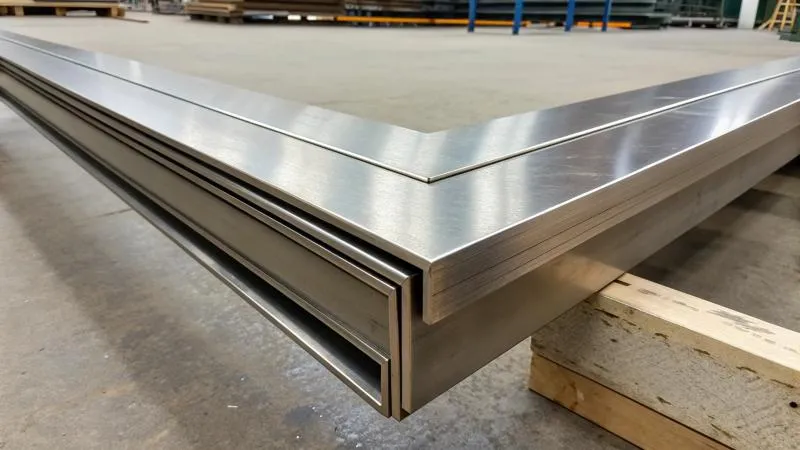
I am Zora Guo from cnmarinesteel.com. I supply L sections to shipyards across Asia and the Middle East. Large shipyards have different needs than small yards. They need volume, reliability, and cost control. Let me share a strategy that works.
How to Phase L‑Section Orders Based on Hull Block construction and Assembly sequence?
You order all your L sections at once. They arrive. You stack them. Six months later, you finally use the last bundle. The steel has rusted. Your money has been tied up for months.
Phase your L‑section orders to match your hull block construction sequence. Divide the ship into blocks – bottom, side, deck, superstructure. Order steel for each block 4‑6 weeks before fabrication starts. This reduces inventory holding costs by 30‑50% and prevents rust from long storage. Work with your supplier on a phased delivery schedule. The supplier holds the steel or coordinates mill rolling to match your dates.
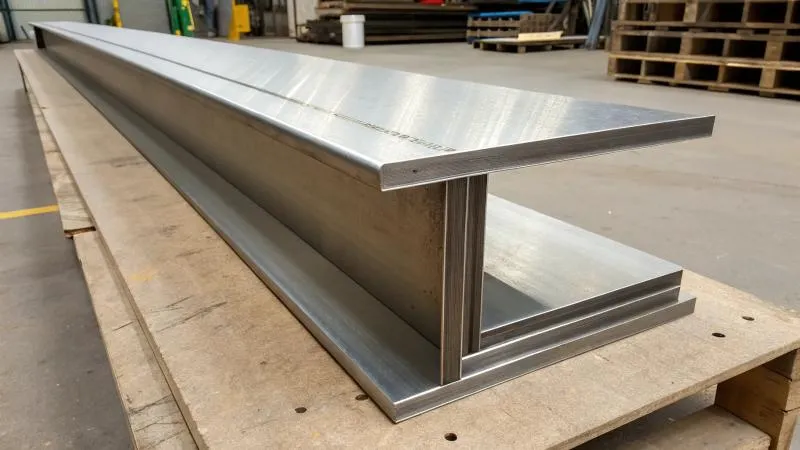
Let me explain how to set up phasing.
Step 1: Map Your Block construction sequence
A large ship is built in blocks. Each block has its own set of L sections. Typical block sequence for a tanker or bulker:
- Bottom block – heaviest L sections, highest grades
- Side blocks – medium sections
- Deck blocks – lighter sections
- Fore and aft peaks – special shapes
- Superstructure – smallest sections, lowest grades
Step 2: Define Lead time for Each Phase
Work backwards from your fabrication start date. Each delivery needs:
- Mill rolling: 2‑4 weeks (for standard sizes) or 6‑8 weeks (for special sizes)
- Transport: 2‑5 weeks (depending on distance)
- Buffer: 1‑2 weeks
Example for a shipyard in Vietnam ordering from China:
- Fabrication of bottom block starts: Week 10
- Lead time: 4 weeks (mill) + 3 weeks (sea freight) + 1 week (buffer) = 8 weeks
- Order placement: Week 2
Step 3: Create a Phased Order Plan
| Block | L section sizes | Grade | Fabrication start | Order date | Delivery date |
|---|---|---|---|---|---|
| Bottom | L200x100x16, L250x100x16 | DH36 | Week 10 | Week 2 | Week 9 |
| Inner bottom | L150x90x12, L200x100x14 | AH36 | Week 14 | Week 6 | Week 13 |
| Side shell | L125x80x10, L150x90x12 | AH32, AH36 | Week 18 | Week 10 | Week 17 |
| Deck | L100x75x8, L125x80x10 | A, AH32 | Week 22 | Week 14 | Week 21 |
| Superstructure | L75x50x6, L100x75x8 | A | Week 26 | Week 18 | Week 25 |
Step 4: Coordinate with Your Supplier
Send the phased schedule to your supplier. Ask them to:
- Reserve mill capacity for each phase
- Confirm lead times for each size and grade
- Provide a delivery commitment in writing
A Real Example
A shipyard in Malaysia built 4 bulk carriers. They used to order all L sections at once. Inventory sat for 4‑6 months. Corrosion was a problem. They switched to phased orders. Inventory holding cost dropped by 40%. Steel arrived rust‑free. The procurement manager told me: “We also freed up yard space. Now we can store blocks, not just steel.”
What Supplier selection criteria (Mill certifications, Capacity, and Lead time) Matter Most for Large Shipyards?
You have many suppliers to choose from. Price is important. But for a large shipyard, other factors matter more.
For large shipyards, the top supplier selection criteria are: mill certifications (ABS, DNV, LR approvals for L sections), production capacity (ability to supply thousands of tons per month), and reliable lead time (not just promises). Also check the supplier’s financial stability and communication speed. A low‑price supplier that misses delivery by 4 weeks costs you more than a slightly higher price with on‑time delivery.
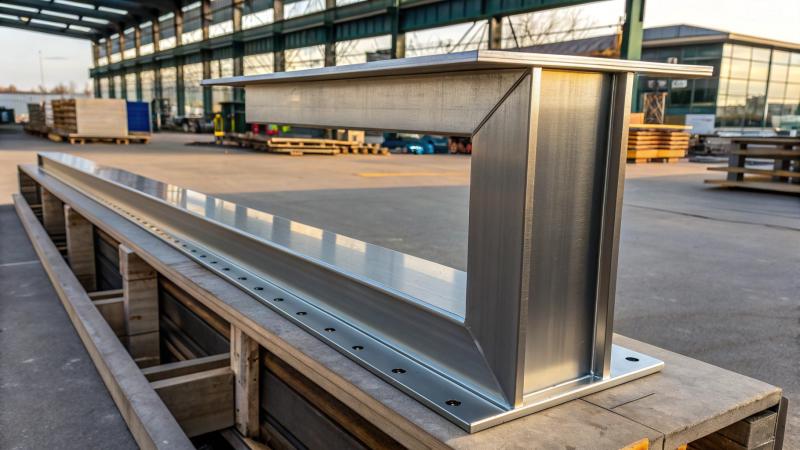
Let me rank the criteria by importance.
Criterion 1: Mill Certifications (Non‑Negotiable)
The mill must hold current approvals from the classification societies your project needs. Check the ABS, DNV, and LR online lists.
What to verify:
- Mill name matches the list
- Approval covers L sections (not just plates)
- Approval covers the grades you need (A, AH32, AH36, DH36)
- Approval is not expired
Criterion 2: Production Capacity
A small mill may not handle large shipyard orders. Ask the supplier for the mill’s monthly production capacity for L sections.
Typical capacities:
- Small mill: 2,000‑5,000 tons per month
- Medium mill: 5,000‑15,000 tons per month
- Large mill: 15,000‑30,000 tons per month
For a large shipyard needing 1,000 tons per month, a medium mill is fine. But if you need 5,000 tons per month, you need a large mill or multiple mills.
Criterion 3: Lead Time Reliability
Ask for the supplier’s on‑time delivery record. Request references from other large shipyards.
Red flags:
- “We can deliver in 2 weeks” – unrealistic for marine L sections.
- No references or unwilling to share.
- Vague delivery dates (e.g., “end of month” instead of a specific week).
Criterion 4: Communication and Support
For a large shipyard, you need a supplier who responds within 24 hours, provides English-speaking support, and offers third‑party inspection (SGS, class surveyor).
Criterion 5: Price
Price matters, but it is not the top factor. A 5% price difference is small compared to the cost of a 2‑week production delay.
A Real Example
A shipyard in Qatar evaluated three suppliers. Supplier A had the lowest price but a small mill with no DH36 approval. Supplier B had medium price, approved mill, but long lead time (10 weeks). Supplier C (a partner) had slightly higher price, approved mill, and 5‑week lead time. The shipyard chose Supplier C. The procurement manager said: “We cannot risk a 10‑week lead time. Our production schedule is tight.”
How to Balance Long‑Term Frame Agreements and Spot Buying for Cost and Supply Security?
You sign a long‑term agreement. Prices are locked. Then the market drops. You pay more than spot price. Or you buy only spot. Then prices spike. You lose money.
Balance long‑term frame agreements (LTAs) with spot buying. Use LTAs for 70‑80% of your volume. This locks in supply and price for your core needs. Keep 20‑30% for spot buying. Use spot buying to take advantage of market dips or to buy additional sizes not in the LTA. Also keep a second approved supplier for spot buying. This strategy gives you cost stability and flexibility.
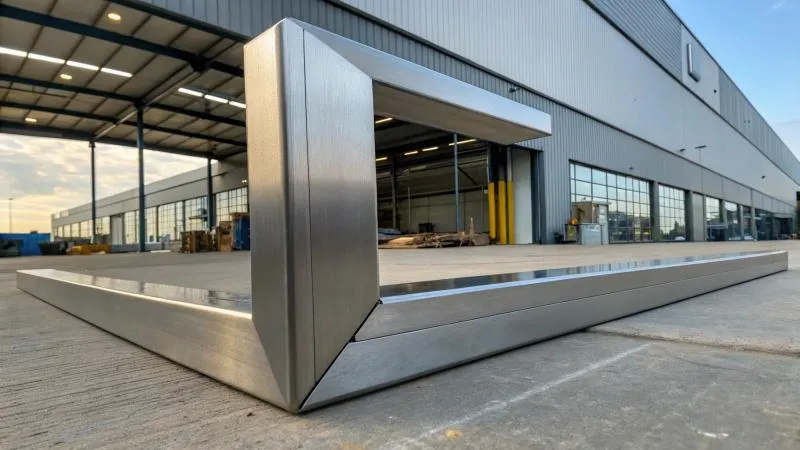
Let me explain how to set this up.
What a Long‑Term Frame Agreement Includes
An LTA is a contract between your shipyard and a supplier (or directly with a mill). It covers a fixed volume over a fixed period (12‑24 months).
Key terms:
- Volume commitment – e.g., 1,000 tons per month of L sections in specified sizes.
- Price mechanism – fixed price, or formula based on raw material cost (e.g., billet price + rolling fee).
- Delivery schedule – monthly or bi‑weekly releases.
- Quality standards – class society rules, tolerances, inspection.
- Penalties for late delivery – discount or compensation.
How Much Volume for LTA?
For a large shipyard, I recommend:
- Base volume (70‑80%) – under LTA with your primary supplier. This covers your predictable, repeat needs.
- Flex volume (20‑30%) – spot buying from a secondary supplier. Use for: additional orders, special sizes, or when market prices drop below your LTA.
When to Use Spot Buying
Spot buying makes sense when:
- Market price falls below your LTA price (you buy extra and store it, or negotiate a LTA price adjustment).
- You need a small quantity of a non‑standard size not in your LTA.
- Your primary supplier cannot deliver on time (you buy from a backup).
A Real Example
A large shipyard in South Korea had an LTA for 80% of their L section needs. The price was fixed at $850/ton for AH36. The market dropped to $800/ton. They used their 20% spot buying to purchase 500 tons at the lower price. They also asked the LTA supplier for a price match on future releases. The supplier agreed to $820/ton. The shipyard saved $30/ton on the next 1,000 tons.
What Inventory and Replenishment Strategies (Min/Max, VMI) Reduce Tie‑Up Capital While Ensuring Availability?
You hold a large stock of L sections. You are ready for anything. But your money is sitting on steel. You could have used it for other things.
Use a min/max inventory system for common L sections. Set a minimum level (e.g., 2 weeks of usage) and a maximum level (e.g., 6 weeks). When stock hits the minimum, order enough to reach the maximum. For very common sizes, use vendor managed inventory (VMI) – the supplier holds stock at your yard or nearby, and you pay only when you use it. These strategies reduce capital tied up in inventory by 30‑50%.

Let me detail each strategy.
Strategy 1: Min/Max System
How it works:
- Calculate your weekly usage for each L section size and grade.
- Set a minimum level (safety stock) – e.g., 2 weeks of usage.
- Set a maximum level – e.g., 6 weeks of usage.
- When stock falls to the minimum, place an order to bring it back to the maximum.
Example for L150x90x12 AH36:
- Weekly usage: 50 tons
- Minimum: 100 tons (2 weeks)
- Maximum: 300 tons (6 weeks)
- When stock reaches 100 tons, order 200 tons (to reach 300).
Capital effect: Instead of holding 6 weeks of stock (300 tons), you hold an average of 200 tons. That is 33% less capital tied up.
Strategy 2: Vendor Managed Inventory (VMI)
For your highest‑volume L sections, VMI is even better. The supplier keeps the steel at your yard or in a nearby warehouse. You pay only when you take it.
How VMI works:
- You and the supplier agree on a minimum and maximum stock level at your yard.
- The supplier owns the steel until you use it.
- You take steel as needed.
- The supplier monitors stock and replenishes automatically.
Capital effect: You pay only for steel after you use it. Your working capital tied up in inventory drops to near zero.
Which Sizes for Which Strategy?
| L section size | Usage frequency | Recommended strategy |
|---|---|---|
| L150x90x12 AH36 | Daily | VMI |
| L125x80x10 AH32 | 2‑3 times per week | Min/max (2‑6 weeks) |
| L200x100x14 DH36 | Weekly | Min/max |
| L100x75x8 A | Monthly | Order on demand (no buffer) |
| Special sizes | Once per project | Order per project |
A Real Example
A shipyard in Vietnam used to hold 600 tons of L sections in stock. Average inventory value: $500,000. They switched to a min/max system for medium‑use sizes and VMI for high‑use sizes. Average inventory dropped to 350 tons ($290,000). They saved $210,000 in working capital. The procurement manager said: “We also reduced storage space. Now we use that space for block assembly.”
Implementing VMI
To set up VMI, you need:
- A trusted supplier with local presence or fast shipping.
- Daily or weekly usage data sharing (simple spreadsheet works).
- A simple agreement on restocking triggers.
We at cnmarinesteel.com offer VMI for large shipyards. We keep a buffer stock at our warehouse or at the yard. The buyer pays 30 days after use.
Conclusion
Phase orders to match block construction. Choose suppliers based on mill approvals and lead time. Balance LTAs with spot buying. Use min/max and VMI to cut inventory capital. This strategy keeps your shipyard running efficiently.