
When you place a repeat order for marine L-shaped steel, you expect the same quality and delivery as the first time. But many buyers find that quality drops or shipments arrive late. This can stop your production line and cost you money. How can you avoid these risks? In this article, I will share the key points to evaluate a supplier for repeat orders. I will use my own experience from working with buyers around the world.
To find a reliable supplier for repeat orders, you must check four main areas: quality control standards, production capacity and consistency, logistics reliability, and the true cost of the partnership. By looking at these factors, you can choose a partner who will deliver the same high quality every time.
Now let’s look deeper at each of these areas. I will explain what to check and why it matters. I will also share stories from my work with buyers in Saudi Arabia, Vietnam, and other countries. By the end, you will know exactly how to evaluate a marine steel supplier for repeat orders.
What Are the Key Quality Control Standards for Marine-Grade L-Shaped Steel?
You receive a shipment of L-shaped steel. The surface looks rough. Some pieces have rust spots. You measure the dimensions and find they are not within the tolerance. This forces you to reject the material and reorder. Your project is delayed. This is a common problem when quality control is weak.
The key quality control standards for marine-grade L-shaped steel include the chemical composition, mechanical properties, dimensional tolerances, and surface finish. A good supplier follows international standards like ASTM A131, DNV, or BV, and offers third-party inspection before shipment.

Chemical Composition1 and Mechanical Properties2
Marine steel must resist corrosion and handle stress in saltwater environments. The chemical elements like carbon, manganese, and chromium need to be within specific ranges. For example, too much carbon can make the steel brittle. A reliable supplier provides a mill test certificate for each batch. This certificate shows the exact chemical analysis and mechanical test results like yield strength and tensile strength.
I remember a buyer from Malaysia who once complained about cracks in the steel they received from another supplier. The problem was the carbon content was too high. Since then, they always ask me for the mill certificate before shipment. We work with certified mills that provide these documents without delay. We also offer SGS inspection at the loading port. This gives buyers peace of mind.
Dimensional Tolerances3 and Surface Finish4
For L-shaped steel, the leg length, thickness, and angle must be accurate. If the dimensions are off, the steel will not fit during assembly. The surface should be free of rust, scale, and pits. Many suppliers cut corners on surface treatment to save money. But a good supplier uses proper storage and rust prevention oil.
I suggest you ask your supplier about their surface preparation process. Do they store the steel indoors? Do they apply anti-rust oil? In our warehouse in Liaocheng, we keep all steel under cover and use oil coating for long-term storage. We also allow buyers to send a third-party inspector to check the surface finish before loading.
Third-Party Inspection5 and Certification6
A serious supplier welcomes third-party inspection. If a supplier hesitates or makes excuses, that is a red flag. International classification societies like DNV, BV, and Lloyd’s Register have strict rules for marine steel. A supplier who works with these societies shows they meet high standards.
| Quality Factor | What to Check | Why It Matters |
|---|---|---|
| Chemical Composition | Mill certificate shows C, Mn, Si, P, S within limits | Ensures corrosion resistance and strength |
| Mechanical Properties | Yield strength, tensile strength, elongation | Guarantees the steel can handle stress |
| Dimensional Tolerances | Leg length, thickness, angle, straightness | Allows proper fit in fabrication |
| Surface Finish | No rust, pits, or cracks; oiled surface | Prevents corrosion during transport |
| Certification | DNV, BV, ABS, or LR approval; third-party inspection | Verifies compliance with marine standards |
In my experience, buyers who insist on third-party inspection rarely face quality surprises. Our team at China Marine Steel always coordinates with SGS or other agencies to make the inspection smooth. We know that stable quality is the foundation of repeat orders.
How to Evaluate Supplier Consistency: Production Capacity1 and Lead Times?
Imagine you have a contract to deliver a vessel in six months. You place a repeat order for L-shaped steel. The supplier confirms the order but later says they cannot produce it on time. You have to find another source quickly, which costs extra money and time. This happens when a supplier’s capacity is overstretched.
To evaluate supplier consistency, you need to check their monthly production capacity, their relationship with steel mills, their inventory levels, and their track record of on-time delivery. A reliable supplier can show you these numbers and provide references.

Production Capacity and Mill Partnerships2
Many steel suppliers do not produce steel themselves. They buy from mills and then resell. This means their capacity depends on the mills they work with. A supplier who has long-term cooperation with several certified mills can secure capacity even during peak seasons. Ask them how many tons they can supply per month and which mills they partner with.
Our company has worked with the same mills for over a decade. This allows us to reserve production slots for our regular buyers. When a buyer from the Philippines needed an urgent repeat order, we were able to fit it into the mill schedule because of our strong relationship. That buyer now trusts us with all their orders.
Inventory and Buffer Stock3
Some suppliers keep inventory in their own warehouse. This is a big advantage for repeat orders. If they have stock, they can ship within days instead of weeks. Ask if they hold common sizes of L-shaped steel in stock. Also ask about their minimum order quantity for repeat orders. Flexible MOQ helps you manage your own inventory better.
We keep a buffer stock of popular sizes like 100x75x7mm and 150x90x10mm L-shaped steel. This means we can often ship repeat orders within one week. Our buyers appreciate this because it reduces their need to hold large inventory.
On-Time Delivery Record4
Past performance is the best predictor of future behavior. Ask the supplier for references from other buyers who place repeat orders. Contact those buyers and ask if deliveries arrived on time. If the supplier cannot provide references, be careful.
| Capacity Factor | What to Check | Why It Matters |
|---|---|---|
| Monthly Capacity | Tons per month; peak season limits | Ensures they can handle your volume |
| Mill Relationships | Names of partner mills; length of cooperation | Indicates ability to secure material |
| Inventory Levels5 | Stock of common sizes; buffer stock | Reduces lead time for repeat orders |
| On-Time Delivery | Reference checks; past shipping records | Confirms reliability |
| MOQ Flexibility6 | Minimum order quantity for repeat orders | Helps you manage your cash flow |
I always encourage potential buyers to call our existing customers. One buyer from Qatar did this and heard good things about our delivery speed. He later told me that the feedback convinced him to place a trial order. Now he orders from us every quarter.
How Reliable Are Logistics and Supply Chain for Recurring Orders?
You have a great supplier with good quality and capacity. But when the ship arrives, you find that the steel is poorly packed and damaged by seawater. Or the shipping documents are wrong and the steel gets stuck at customs. These logistics problems can ruin a repeat order relationship.
Logistics reliability for recurring orders involves packaging quality1, choice of shipping lines, experience with export documentation, and ability to assist with customs clearance2. A supplier with strong logistics support saves you time and money.
Packaging for Marine Transport
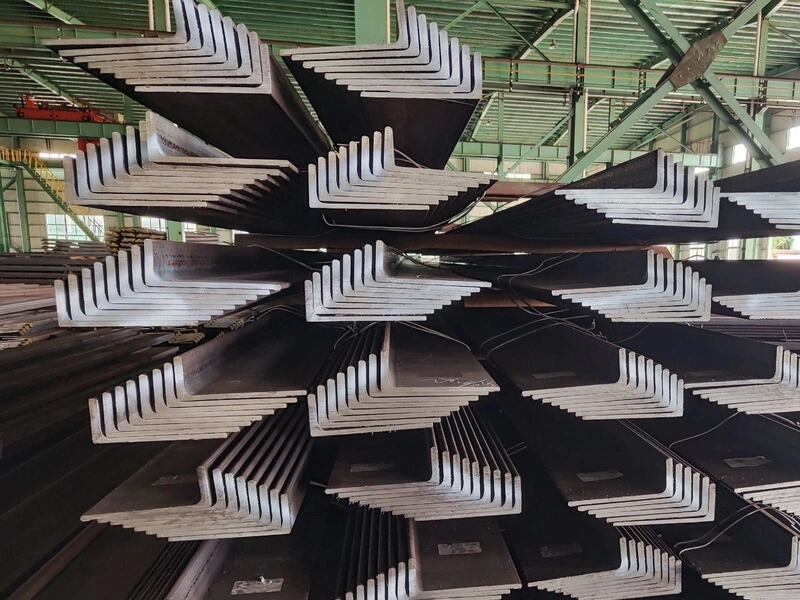
Marine steel travels long distances, often by sea. Moisture and salt can cause rust quickly. Good packaging includes steel bands, waterproof paper, and sometimes VCI oil or plastic wrapping. Ask your supplier how they pack L-shaped steel for export. Look for photos or videos of previous shipments.
We learned the importance of packaging from our first shipments years ago. A buyer in Mexico once received steel with some surface rust because we did not use enough waterproofing. We immediately improved our packaging. Now we use multiple layers: rust preventive oil, then kraft paper, then steel strapping, and finally plastic wrap if needed. Our buyers often comment that our packaging is the best they have seen.
Shipping Options and Flexibility
Some suppliers only offer FOB terms and leave everything else to you. Others can arrange door-to-door delivery including customs clearance. For repeat orders, it helps if the supplier can handle the whole process. This reduces your workload and ensures consistency.
We offer both FOB and CIF terms. For regular buyers, we can also arrange delivery to their warehouse, including customs clearance in countries like Saudi Arabia and Vietnam. We work with reliable freight forwarders3 who know the local regulations. This service was one reason Gulf Metal Solutions in Saudi Arabia chose to work with us again.
Handling Delays and Emergencies
Even the best plans can face delays: bad weather, port strikes, or document issues. A reliable supplier communicates immediately when problems arise and suggests solutions. They do not wait for you to ask.
| Logistics Factor | What to Check | Why It Matters |
|---|---|---|
| Packaging | Waterproofing, steel bands, edge protectors | Prevents rust and damage during transit |
| Shipping Lines | Regular carriers; experience with your destination | Ensures timely sailing and handling |
| Documentation | Export licenses, certificates of origin, packing lists | Avoids customs delays |
| Customs Support | Assistance with import clearance in your country | Speeds up delivery |
| Emergency Plan | How they handle delays or mistakes | Shows commitment to problem-solving |
I remember a shipment to Romania that was delayed because the vessel had engine trouble. We immediately contacted the buyer, explained the situation, and offered to split the order into two smaller shipments by air and sea to keep their production running. The buyer appreciated the honesty and flexibility. That relationship is still strong today.
How to Balance Unit Price with Long-Term Partnership Value in Cost Analysis?
Price is always a factor. But if you focus only on the lowest unit price, you may end up paying more in the long run. Poor quality leads to rework, delays lead to penalties, and poor communication wastes your time. A long-term partnership with a reliable supplier can save you these hidden costs1.
Cost analysis for repeat orders should consider the total cost of ownership2: the price per ton plus the costs of quality issues3, delays, communication, and the value of trust. A slightly higher unit price from a dependable supplier often results in lower overall costs.
Hidden Costs of Low-Price Suppliers
When a supplier offers a very low price, they may cut corners. They might use lower-grade steel, skip surface treatment, or use cheap packaging. You might receive the steel and find it does not meet your specifications. Then you have to spend time and money to inspect, reject, and reorder. The delay can cost you more than the price difference.
I have seen this happen many times. A buyer in Thailand once chose a cheaper supplier for an L-shaped steel order. The steel arrived with wrong dimensions. They had to stop production and buy from us at a higher price, but with urgent air freight. The total cost was much higher than if they had chosen us from the start.
The Value of Communication and Trust
Good communication saves time. When you have a question, you get a quick answer. When there is a problem, the supplier tells you honestly. This trust allows you to plan better and reduces stress. Over many orders, this efficiency adds up.
Our company assigns a dedicated export sales rep to each major buyer. This rep speaks fluent English and knows the buyer’s history. When Gulf Metal Solutions had a question about a certificate, they emailed our rep and got a reply within two hours. That kind of response builds trust.
Long-Term Partnership Benefits
A long-term partner may offer you better payment terms, reserved production slots, or priority during shortages. They understand your needs and can suggest better products or cost-saving ideas4. These benefits are hard to quantify but very real.
| Cost Factor | Low-Price Supplier | Reliable Partner |
|---|---|---|
| Unit Price | Lower | Slightly higher |
| Quality Cost | High (rework, rejection) | Low (consistent) |
| Delay Cost | Possible (missed deadlines) | Rare (on-time) |
| Communication Cost | High (slow replies, language issues) | Low (dedicated rep) |
| Trust Value | Low | High (peace of mind) |
| Total Cost | Often higher | Often lower |
I advise buyers to calculate the total cost over a year of multiple orders. Include the time spent chasing shipments and solving problems. Often the reliable partner comes out ahead. That is why many of our buyers start with a trial order and then stay with us for years.
Conclusion
To evaluate a marine L-shaped steel supplier for repeat orders, focus on quality standards, production consistency, logistics reliability, and total cost of ownership. These four areas will help you find a partner who delivers stable quality and supports your business growth.
-
Exploring hidden costs can reveal why low prices may lead to higher expenses and poor quality. ↩ ↩ ↩ ↩
-
Understanding total cost of ownership helps you make informed decisions that save money in the long run. ↩ ↩ ↩ ↩
-
Learning about quality issues can help you avoid costly mistakes and improve your procurement process. ↩ ↩ ↩ ↩
-
Exploring cost-saving ideas can lead to innovative solutions that enhance efficiency and reduce expenses. ↩ ↩ ↩
-
High inventory levels allow for quicker shipping, reducing lead times and improving customer satisfaction. ↩ ↩
-
Flexible minimum order quantities help manage cash flow and inventory, making it easier to place repeat orders. ↩ ↩