
Have you ever received a price quote for marine steel plate and wondered why it changes so much from one month to the next?
You are not alone. Many buyers struggle to understand what makes up the final price.
The cost of marine steel plate depends on raw materials, production methods, hidden fees, and the way mills calculate their prices.
If you know these parts, you can predict price changes and negotiate better deals.

But knowing the names of these cost drivers is not enough. You need to see how each one actually moves the price up or down.
Let me walk you through the four main areas that shape every invoice.
Raw Material Breakdown: How Iron Ore, Scrap, and Alloys Drive Base Prices?
Have you ever watched the news about iron ore1 prices and wondered if your next shipment will cost more?
The truth is, raw materials can change your final price before the steel is even made.
The base price of marine steel2 plate comes mainly from three raw materials: iron ore, scrap steel3, and alloying elements4 like manganese and nickel.
When these go up, mills raise their prices to protect their profit.
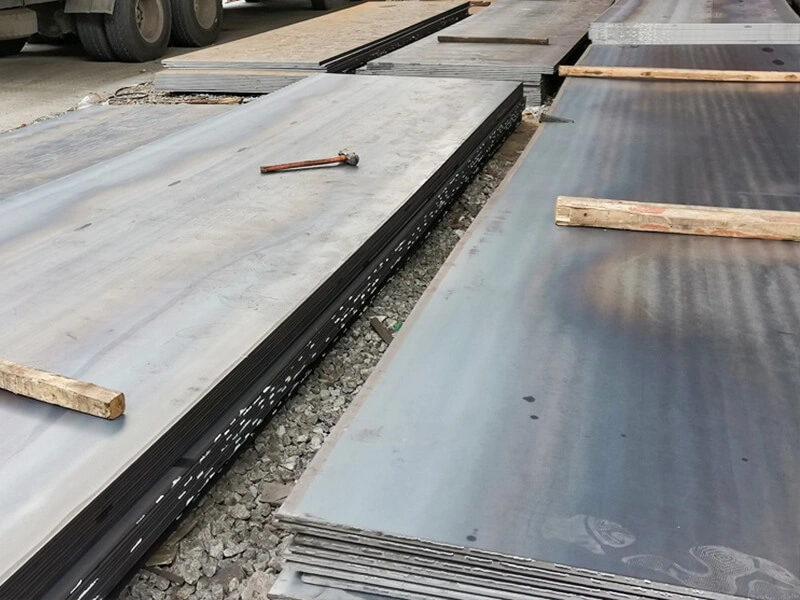
Why raw material costs are so volatile
Steel mills buy these materials in huge volumes, but they cannot control the global markets. Iron ore is mined in a few countries, and any supply disruption—like a strike in Australia or a flood in Brazil—sends prices up. Scrap metal prices follow demand from electric arc furnaces, which are popular in countries like the United States and Turkey. When those furnaces run at full capacity, scrap gets expensive.
For marine steel, alloys are even more critical. Ship plates need high strength and corrosion resistance. This means adding elements like chromium, nickel, and molybdenum. These are not cheap. Nickel, for example, is also used in stainless steel and batteries, so when electric vehicle production rises, nickel prices follow.
How mills pass these costs to you
Mills do not absorb raw material spikes. They use formulas that link their selling price to published indexes. You may see terms like “iron ore index plus conversion cost” in a quote. This means if iron ore goes up by $10, your plate price goes up by roughly that amount, adjusted for yield loss.
To make this clearer, here is a simple breakdown of how raw materials affect the final plate cost:
| Raw Material | Typical Share of Plate Cost | Price Driver |
|---|---|---|
| Iron ore | 30–40% | Global mining output, freight rates |
| Scrap steel | 15–25% (in EAF route) | Local demand, recycling rates |
| Alloys (Mn, Ni, Cr) | 10–20% | Specialty metal markets, energy costs |
| Other (lime, energy) | 5–10% | Electricity, coal, transport |
Note: Percentages vary by mill and production route.
What this means for you as a buyer
You cannot stop raw material prices from moving, but you can time your purchases. If you see iron ore futures dropping, it may be wise to wait a few weeks. On the other hand, if alloy prices are rising due to a new mining policy, locking in a price now could save you money.
In my experience, buyers who follow these three indexes—iron ore (62% Fe CFR China), scrap (HMS 1&2), and nickel (LME)—have a real advantage. They call us when the market dips and ask for updated quotes. That is how they get the best prices.
Beyond the Steel: The Hidden Costs of Certification, Testing, and Documentation?
Have you ever received a bill that was higher than the quote and wondered where the extra money went?
Often, the steel itself is only part of the story.
Certification, third-party testing, and documentation1 can add 5–15% to your total cost, depending on the requirements of your project.
These fees are not always shown in the initial price, so you need to ask for them early.
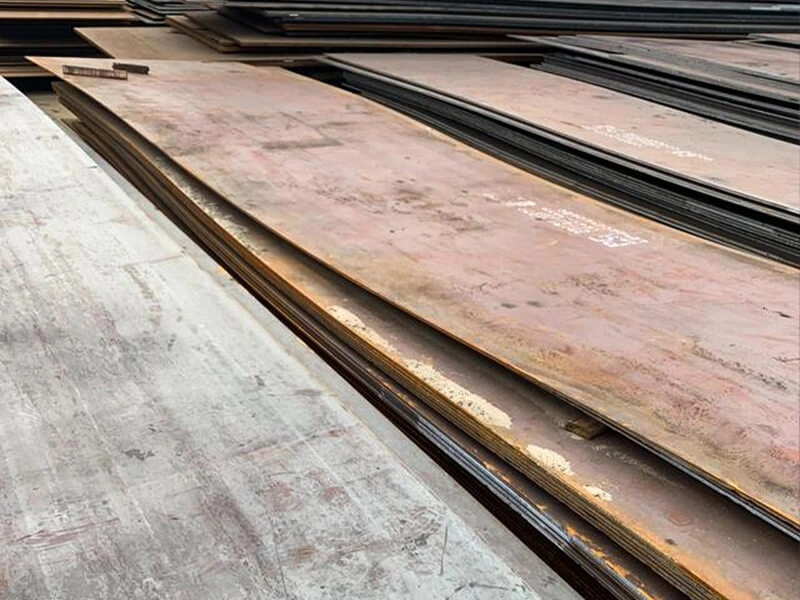
Why marine steel requires special paperwork
Ships and offshore structures must meet strict rules from classification societies like DNV, ABS, LR, or BV. These societies require that every plate be traceable from the melt shop to the final user. That means the mill must keep records of the chemical composition, mechanical tests, and heat treatment for each batch. If you buy from a mill that is not approved by these societies, you will have to pay for extra testing later.
The main hidden fees you should expect
Let me list the common ones that surprise new buyers:
- Mill test certificates (MTC)2: Most mills include one set of documents, but if you need additional copies or certified translations, there is a fee.
- Third-party inspection3: If your contract requires SGS, Bureau Veritas, or another inspector to be present during testing, you pay for their time and travel. This can be several hundred dollars per day.
- Additional mechanical tests4: Standard plates come with basic tensile and bend tests. But if your specification calls for Charpy V-notch impact tests at low temperatures, each extra test costs money.
- Ultrasonic testing (UT)5: Many marine grades require UT to check for internal flaws. This is charged per square meter and adds to the cost.
- Marking and identification6: Some buyers want every plate stenciled with heat numbers and their own marks. That takes time and ink.
How we handle these costs for our clients
At our company, we try to be transparent. When a client from Saudi Arabia, like Gulf Metal Solutions, asks for a quote, we list all possible certifications separately. We also explain which ones are mandatory and which are optional. This way, they can decide if they really need that extra UT test or if the standard mill certificate is enough.
Here is an example table that shows how these costs can add up for a 100-ton order:
| Item | Cost per ton (USD) | Notes |
|---|---|---|
| Base plate price | 800 | Grade A ship plate |
| Mill test certificate | 5 | Included if standard |
| Third-party inspection (SGS) | 12 | Inspector fee divided by tons |
| Extra Charpy tests | 8 | Required for low-temp service |
| Ultrasonic testing | 15 | Per square meter, total |
| Marking & packaging | 4 | Special paint and bands |
| Total | 844 | Without surprises |
You see, the base price of $800 becomes $844. That is a 5.5% increase. If you forget to budget for these, your profit margin shrinks.
Decoding the Price Formula: Understanding Mill Pricing Models and Surcharges?
Do you ever get a quote that says "base price + alloy surcharge" and feel confused about how the final number came up?
You are not alone. Mill pricing can seem like a secret code.
Most steel mills use a formula that starts with a base price and then adds surcharges for alloys, energy, and sometimes even freight.
Understanding this formula helps you compare quotes and know if you are paying a fair price.
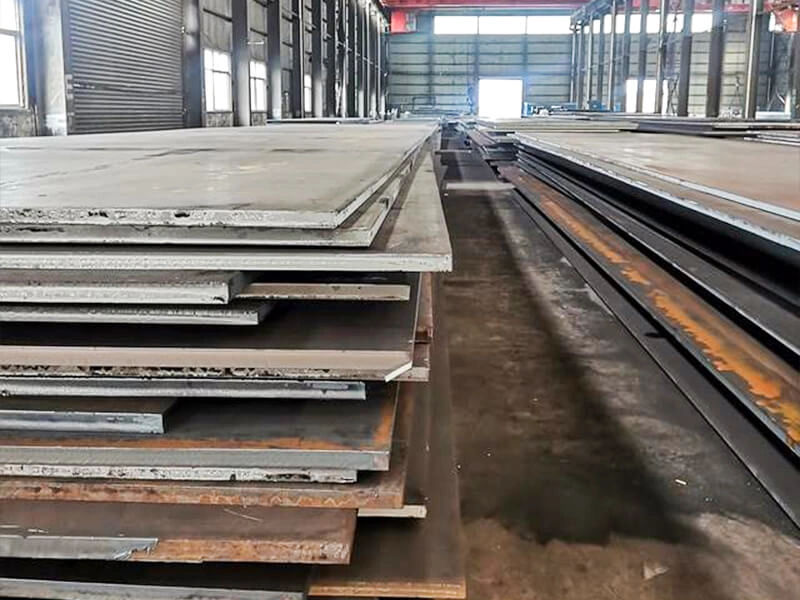
Base price vs. total price
The base price is what the mill charges for the simplest version of the steel—usually a common grade like ordinary-strength ship plate, with no extras. But marine steel often requires higher strength or special properties. That is where the extras come in.
Common surcharges you will see
Mills publish these surcharges monthly or quarterly. They are based on average market prices for alloys and energy. Here are the main ones:
- Alloy surcharge1: When steel contains chromium, nickel, molybdenum, or vanadium, the mill adds a fee to cover the cost. This changes every month.
- Dimension extras2: Thicker plates or very wide plates may cost more because they need more rolling passes or special handling.
- Heat treatment surcharge3: If the plate needs normalizing, quenching, or tempering, that adds energy and time.
- Quantity extras: Small orders cost more per ton because the mill has to change rolls and settings.
How to read a mill quotation4
Let me give you an example. Suppose you request a quote for 50 tons of DH36 ship plate, 20mm thick. A mill might respond:
- Base price: $750/ton
- Alloy surcharge: $90/ton (because DH36 has more manganese)
- Dimension extra: $20/ton (for 20mm thickness)
- Quantity extra: $30/ton (because 50 tons is less than a full rolling)
- Total: $890/ton
If another mill quotes $850/ton with no breakdown, you cannot compare directly. They might have a higher base but lower extras, or they might be hiding something. Always ask for a breakdown.
Why surcharges exist
Mills do this to protect themselves from price swings. If they quoted a fixed price for six months and alloy prices doubled, they would lose money. By separating the surcharge, they share the risk with you. As a buyer, you also benefit when alloy prices fall—your price goes down automatically.
In our business, we explain this to every new client. We send them a simple spreadsheet that shows how the total is calculated. This builds trust. One client from Mexico told me, "Now I finally understand why your price changes every month. It makes sense."
Economies of Scale: How Plate Dimensions, Quantity, and Cut-to-Length Affect Unit Cost?
Have you ever wondered why buying 100 tons costs less per ton than buying 20 tons?
It is not just because you are a big client. It is about how mills operate.
The cost per ton of marine steel plate1 drops when you order larger quantities, standard dimensions, and full mill plates instead of cut pieces.
Understanding this can save you thousands on every order.
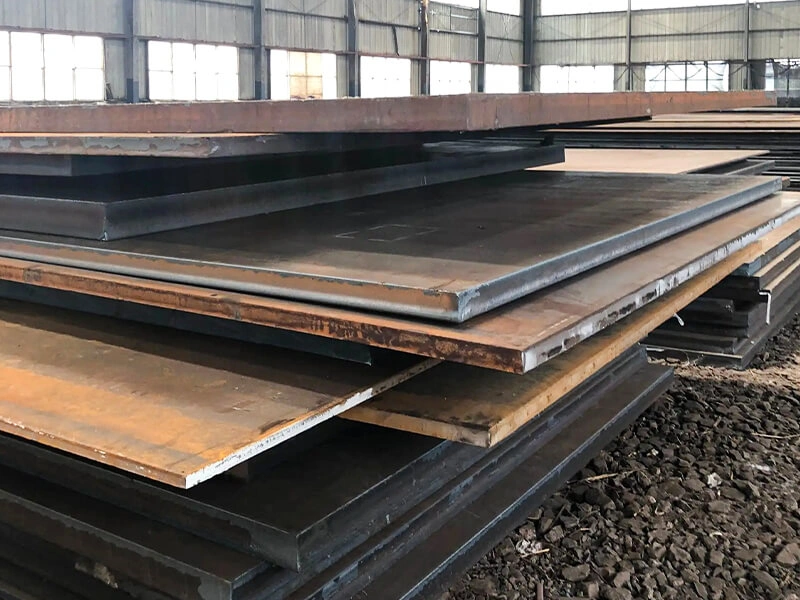
How quantity changes the game
Mills love long production runs. When they roll steel, they have a fixed cost to set up the rolls and heat the furnace. That cost is spread over every ton produced. If they make 1,000 tons in one run, the setup cost per ton is small. If they make only 50 tons, the setup cost per ton is high.
That is why mills often have price breaks2 at certain quantities. For example:
- 1–20 tons: highest price
- 21–50 tons: medium price
- 51–100 tons: lower price
- 100+ tons: best price
If you are a wholesaler3, you can combine orders from different projects to reach a higher quantity break. We do this for our clients all the time.
Plate dimensions matter
Standard widths and lengths are cheaper. Why? Because the mill has rollers set to a certain width. If you ask for a non-standard width, they have to adjust the rolls, which takes time and wastes some steel at the edges.
Common standard widths for ship plate are 2000mm, 2500mm, and 3000mm. Standard lengths are 6000mm, 8000mm, and 12000mm. If your design can use these sizes, you will pay less.
Cut-to-length vs. mill plate
When you buy a "mill plate," you get a piece that came straight from the rolling process. It has the original edges and is exactly as rolled. If you ask for "cut-to-length4," you are taking a larger plate and cutting it down. That adds labor, machine time, and waste.
For example, a 12-meter plate cut into two 6-meter pieces costs more than two 6-meter plates bought directly from the mill. The cutting charge might be $20–$30 per ton. Over a large order, that adds up.
How we help buyers optimize
We often advise our clients to review their cutting plans5. If you need many small pieces, maybe you can order a few large plates and cut them yourself, or we can arrange cutting at the mill with lower waste.
Here is a comparison table for a hypothetical order of 100 tons:
| Order Type | Price per ton | Total cost | Notes |
|---|---|---|---|
| 100 tons, standard sizes | $800 | $80,000 | Best value |
| 100 tons, non-standard sizes | $830 | $83,000 | Extra dimension charge |
| 10 orders of 10 tons, standard sizes | $870 | $87,000 | Small order penalties |
| 100 tons, cut-to-length pieces | $820 | $82,000 | Cutting fee included |
The difference between the best and worst scenario is $7,000. That is real money.
Conclusion
Marine steel plate pricing is not a mystery. It comes from raw materials, certification costs, mill formulas, and order quantities. When you understand these four areas, you can buy smarter and save money.
-
Explore how purchasing marine steel plate in larger quantities can significantly reduce costs and improve efficiency. ↩ ↩ ↩ ↩
-
Learn about the pricing strategies and breaks that can save you money when ordering steel. ↩ ↩ ↩ ↩
-
Explore how wholesalers can help you combine orders for better pricing and efficiency. ↩ ↩ ↩ ↩
-
Understand the cost implications and benefits of choosing mill plates over cut-to-length options. ↩ ↩ ↩ ↩
-
Find out how reviewing and optimizing cutting plans can lead to significant savings on steel orders. ↩ ↩
-
Learn how proper marking and identification can enhance traceability and compliance in your projects. ↩