
You run a shipyard far from major ports. Your steel plates arrive late. They are rusty. The road destroyed them.
Delivering marine steel plates to remote shipyards faces three main challenges: limited port infrastructure and small berths, poor roads with bridge weight limits, and long lead times. Corrosion during prolonged storage is also a risk. Overcoming these requires careful planning, buffer stocks, and protective packaging.
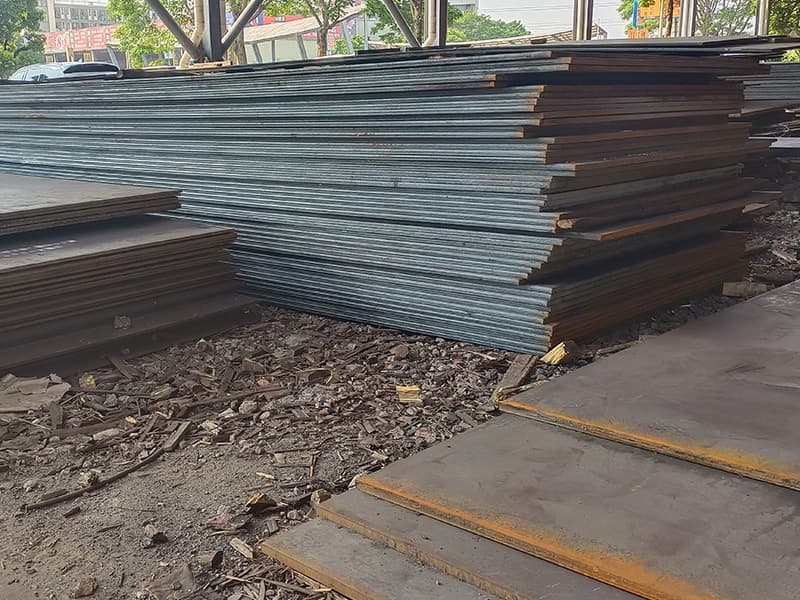
I am Zora Guo from cnmarinesteel.com. I have supplied steel plates to remote shipyards in the Philippines, Indonesia, Myanmar, and Papua New Guinea. Each delivery was a puzzle. But I learned how to solve it. Let me share what works.
How Do Limited Port Infrastructure and Small Berth Capacities Delay Steel Plate Discharge?
Your vessel arrives at the remote port. The berth is already occupied by a cargo ship. Or the port has no gantry crane. You wait. Days turn into weeks.
Limited port infrastructure – small berths, low crane capacity, and single berth – causes major delays. A vessel may wait 5‑10 days just to get a berth. Small ports often have cranes with safe working load (SWL) under 30 tons, so heavy bundles need special handling. Some ports have no container gantry at all, so steel must be discharged by ship’s gear (on‑board crane), which is very slow. To avoid delays, pre‑book berths months in advance, reduce bundle weights to match port crane capacity, and use flat racks or breakbulk if containers cannot be handled.

Let me explain the specific infrastructure issues.
Berth Capacity and Congestion
Remote ports often have only one or two berths. They may serve multiple cargo types: containers, bulk grain, fuel, and project cargo. Your steel vessel may have to wait until the berth is free.
Example: A shipyard in eastern Indonesia used a port that had one berth. The berth was shared with a cement plant. Ships waiting for cement often took priority. Steel vessels waited an average of 8 days for a berth. Demurrage cost $12,000 per day. That added $96,000 to the project.
What you can do:
- Book the berth 2‑3 months ahead. Get a written confirmation.
- Ask about other cargo. If the port is busy, consider an alternative port (even if farther).
- Negotiate demurrage caps: "Maximum demurrage 5 days, after that carrier pays."
Crane Capacity
Many remote ports have older cranes with low safe working load (SWL). A common crane in a remote port might have SWL of 25‑30 tons. If your steel bundle weighs 35 tons, the crane cannot lift it.
What you can do:
- Ask the port for the crane’s SWL before you ship.
- If the SWL is low, split heavy bundles into smaller ones (each under the crane limit).
- If the bundle must be heavy, ask if a mobile crane can be hired (more expensive, but possible).
Rule of thumb: For ports you do not know, assume crane SWL of 20‑25 tons. Keep each bundle under 20 tons.
Container Handling
Some remote ports cannot handle standard 20ft and 40ft containers. They lack a container gantry crane or reach stacker. In that case, you must ship breakbulk (steel loaded directly into the vessel’s hold) or flat racks.
Breakbulk discharge is slow. A vessel might discharge 200 tons per day using ship’s gear (on‑board cranes). The same vessel could discharge 1,000 tons per day using a port crane. Plan for slower discharge times.
A Real Example
A shipyard in Myanmar used a port on the Ayeyarwady River. The port had a single berth and a crane with SWL of 25 tons. We shipped plates in bundles of 22 tons. The crane could lift them. However, the berth was booked for a bulk carrier that arrived late and stayed 5 days overtime. Our vessel waited 7 days. Demurrage was $14,000. We now add a clause: "If berth is not available on agreed date, port pays demurrage."
What Transport Risks (Poor Roads, Bridge Weight Limits, Long Distances) Affect Final‑Mile Delivery?
The steel is off the vessel. Now it must travel by truck to your yard. The roads are bad. Bridges have weight limits. The distance is long.
Final‑mile delivery to remote shipyards faces poor road conditions (potholes, unpaved sections, narrow lanes), bridge weight limits (often 20‑30 tons), and long distances (500‑1,500 km). Trucks with heavy steel bundles can get stuck, break axles, or be refused at bridges. To manage this, use smaller trucks (10‑15 ton capacity), reconnoiter the route, strengthen bridges with temporary steel plates, and add extra days to your schedule for breakdowns. Each ton of steel that travels 500 km on bad roads should have a 10% spare factor for delays.
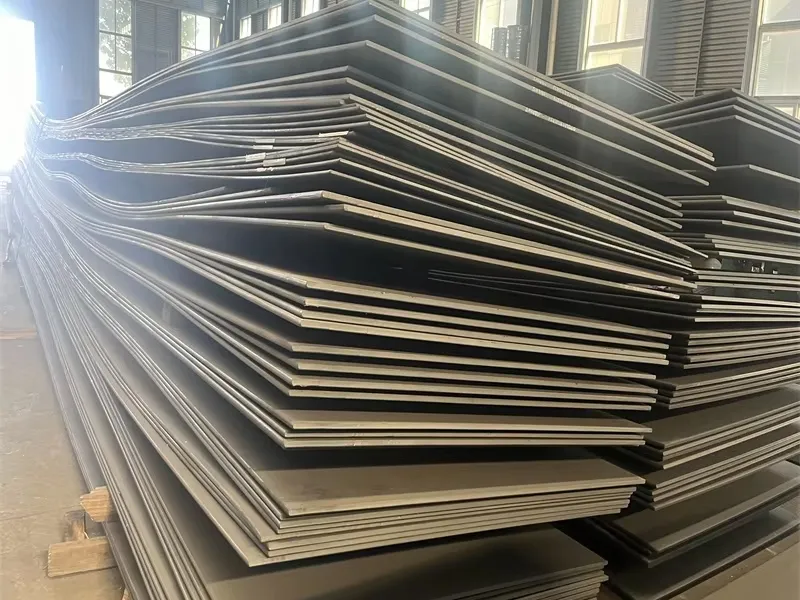
Let me break down the risks.
Risk 1: Poor Road Conditions
Potholes and washboard surfaces shake the truck. The steel bundles bounce. Straps loosen. Plates shift. Edge damage occurs.
What happens: A 12m plate bouncing on a truck with loose straps can slide and hit the side of the trailer. The edge bends. The plate is rejected.
Prevention:
- Use flatbed trailers with heavy‑duty lashing rings.
- Use extra straps (minimum 4 per bundle).
- Drive slowly. Many truck drivers speed to make up time, but that increases damage. Offer a bonus for safe, slow delivery.
- If roads are very bad, use smaller bundles (10 tons max) so the truck has less weight and less bounce.
Risk 2: Bridge Weight Limits
Many rural bridges are rated for 20‑30 tons. A loaded truck with 25 tons of steel + 10 tons of trailer = 35 tons – too heavy. The bridge may crack or the driver may be fined.
Prevention:
- Scout the route. Ask local drivers about bridge limits.
- If a bridge is too weak, use two smaller trucks instead of one large one.
- For critical crossings, you may need to reinforce the bridge with steel plates (temporary). This is expensive but sometimes necessary.
- Plan an alternative route, even if longer.
Risk 3: Long Distances and Remote Breakdowns
A 1,000 km journey on remote roads can take 5‑7 days. A breakdown can add 2‑3 days if there is no repair shop nearby.
Prevention:
- Work with trucking companies that have a support network (e.g., a second truck nearby).
- Carry spare tires, basic tools, and a satellite phone.
- Build extra time into your schedule. For a 1,000 km trip on poor roads, plan 10 days not 5.
Weight and Distance Guidelines
| Distance | Road condition | Recommended truck size | Expected transit time | Delay buffer |
|---|---|---|---|---|
| Under 200 km | Paved | 25 ton | 1 day | 0.5 day |
| 200‑500 km | Mixed (some unpaved) | 20 ton | 2‑3 days | 1 day |
| 500‑1,000 km | Poor (many potholes) | 15 ton | 5‑7 days | 2‑3 days |
| Over 1,000 km | Very poor | 10 ton | 10‑14 days | 4‑5 days |
A Real Example
A shipyard in Papua New Guinea needed 200 tons of plates. The nearest port was 600 km away on a road with washed‑out sections and bridges rated for 20 tons. We shipped the steel in 15‑ton bundles on light trucks (trailer weight 8 tons, total 23 tons – over the bridge limit). We had to cross one bridge that was rated 18 tons. We hired a contractor to lay steel plates over the bridge deck to spread the load. The crossing took 4 hours but worked. The total delivery took 12 days instead of 7. The schedule was adjusted.
How to Manage Extended Lead Times and Schedule Uncertainty When Delivering to Remote Locations?
You need steel by week 10. You order at week 2. Normal lead time is 8 weeks. But the remote port adds 2 weeks waiting. The bad roads add 1 week. Your steel arrives at week 13. You are late.
Extended lead times for remote shipyards come from port waiting, slow discharge, and road transport. The total lead time can be 2‑3 times longer than for a major port. To manage this, order steel 4‑6 weeks earlier than you think you need it. Build a buffer of 30‑50% into your schedule. Use phased deliveries so that a delay in one shipment does not stop all production. Work with a supplier who has experience with remote logistics and can provide realistic lead times – not optimistic ones.
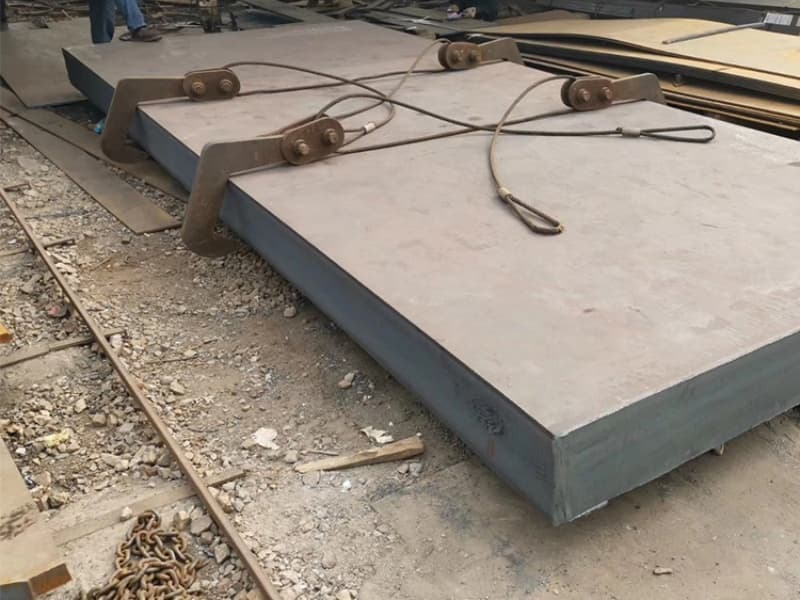
Let me show you how to calculate realistic lead times.
Lead Time Components for Remote Delivery
| Component | Major port (weeks) | Remote port (weeks) |
|---|---|---|
| Mill production | 2‑4 | 2‑4 |
| Sea freight to main port | 2‑4 | 2‑4 |
| Transshipment to feeder vessel | 0 | 1‑3 |
| Sea freight to remote port | 0 | 1‑3 |
| Port waiting (berth congestion) | 0‑1 | 2‑5 |
| Discharge (slow crane) | 0.5 | 1‑2 |
| Customs clearance | 0.5‑1 | 1‑2 |
| Road transport | 0.5‑1 | 2‑5 |
| Total | 6‑12 | 12‑24 |
For a remote shipyard, plan for 20‑24 weeks from order to arrival. If you need steel in week 20, order in week -4 (four weeks before project start). Yes, that means ordering before you have all the design details.
Buffer Stock – Your Insurance
Because lead times are uncertain, keep a buffer stock of common steel sizes at your yard. For a remote shipyard, I recommend a buffer of 3‑4 months of consumption.
Example: If you use 100 tons per month, keep 300‑400 tons of common plates in stock. This absorbs any supply gap. Yes, it ties up capital, but it is cheaper than stopping production.
Phased Deliveries – Spreading the Risk
Instead of ordering all steel at once, order in phases. Place the first order very early (for the keel and bottom). Then place subsequent orders every 2‑3 months. If the first order is delayed, you have time to catch up.
Phased order example for a 12‑month project:
- Order 1 (month -4): Bottom plates (20% of total)
- Order 2 (month 0): Side plates (30%)
- Order 3 (month 3): Deck plates (30%)
- Order 4 (month 6): Superstructure plates (20%)
Each order has its own 20‑week lead time. But if order 1 is delayed, you can still work on design and cutting for later phases.
Communication – The Most Important Tool
Your supplier needs to know your real schedule. Share your project plan. Ask for weekly updates on their production status. If the mill is behind, you can sometimes expedite a small quantity by air freight (expensive but possible for urgent items).
A Real Example
A shipyard in a remote part of the Philippines planned to order steel 12 weeks before need. The first order arrived 4 weeks late because the port was congested. The project stopped. They now order 20 weeks ahead and keep a 200‑ton buffer of common plates. The buffer cost $160,000 in capital, but it saved them from a $500,000 delay.
How to Protect Steel Plates from Corrosion and Damage During Prolonged Storage at Underserviced Yards?
Your steel arrives. You are not ready to use it. It sits in the yard for weeks or months. The yard has no covered storage. Rust forms.
At underserviced remote yards, steel plates face corrosion from rain, humidity, and salt air. They also face damage from improper stacking (bending) and other yard activities. To protect plates, store them on wooden dunnage off the ground, stack with thickest at bottom, limit stack height, cover with tarps or plastic sheets, and apply a corrosion inhibitor spray if storage exceeds 1 month. For long‑term storage (over 3 months), re‑stack plates and re‑apply inhibitor every 2 months. A covered shed is ideal, but many remote yards do not have one. Accept that you will need to grind surface rust before use – but prevent deep pitting.
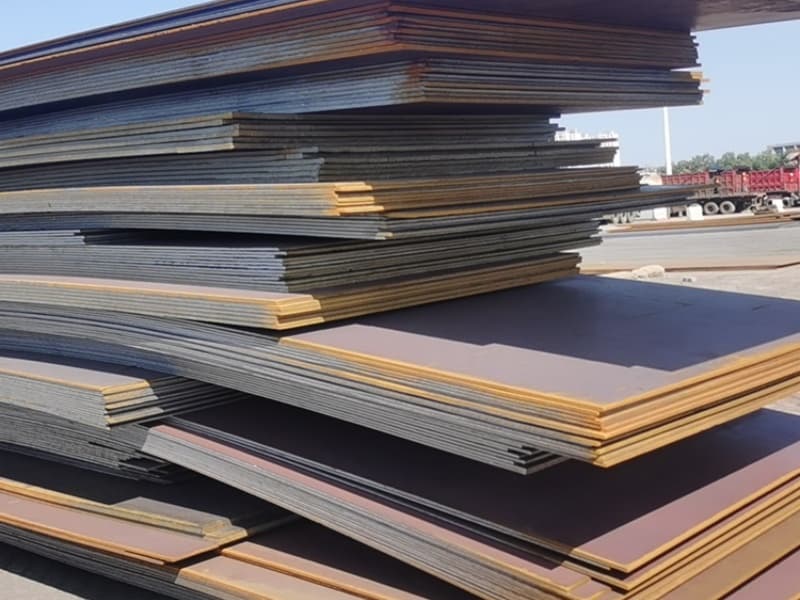
Let me detail the protection measures.
Storage Setup – The Basics
- Ground: Level, paved or compacted gravel. No mud.
- Dunnage: Wooden timbers (100mm x 100mm) between ground and bottom layer. Also between layers.
- Stack height: Maximum 5 layers for plates under 15mm, 6 layers for thicker plates.
- Stacking order: Thickest plates at bottom, thinnest on top.
Corrosion Protection
For storage less than 1 month:
- Keep plates covered with tarps. Use ropes or straps to hold the tarp down in wind.
- Ensure the tarp does not touch wet ground. Water can wick up.
For storage 1‑3 months:
- Apply a corrosion inhibitor spray (e.g., Rust‑X, LPS 3, or similar). The spray leaves a waxy film.
- Cover with tarps. If possible, use heavy‑duty polyethylene sheeting (black) to block UV.
- Check monthly. If rust appears, re‑apply inhibitor.
For storage over 3 months:
- This is risky. Consider moving the steel to a covered warehouse, even if it is far.
- If you must store outside, re‑stack every 2 months to prevent permanent bending.
- Re‑apply inhibitor every 2 months.
- Accept that the top surfaces will have surface rust. It can be ground off. But deep pitting is not acceptable.
What to Do with Rust When You Finally Use the Plates
Surface rust (light brown or orange) that is not pitted can be removed by:
- Grinding with a flap disc
- Sandblasting
- Wire brushing
Pitting (holes in the surface) that exceeds 0.5mm depth is not acceptable for class‑approved structures. The plate may need to be downgraded or rejected.
A Real Example
A shipyard in a remote island of Indonesia stored 500 tons of plates for 6 months. The yard had no tarps. The plates were stacked directly on the ground. When they were finally used, the bottom 3 layers were heavily rusted with pits up to 2mm deep. 40% of the plates were rejected. The yard lost $120,000. Now they use dunnage, tarps, and a corrosion inhibitor. They also schedule deliveries to match their production, so steel does not sit for months.
Conclusion
Remote shipyards face port infrastructure limits, poor roads, long lead times, and corrosion risks. Mitigate by booking berths early, using smaller trucks, ordering steel 4‑6 weeks earlier, and protecting stored plates with dunnage, tarps, and corrosion inhibitor.