
The truck arrives with your marine steel plates. You sign the delivery note. Later you find rust and cracks. Now it is your problem.
A proper inspection checklist before yard acceptance means you check visual defects, measure dimensions, verify mill certificates, and perform ultrasonic testing on critical plates. Reject any plate that fails before you unload it.
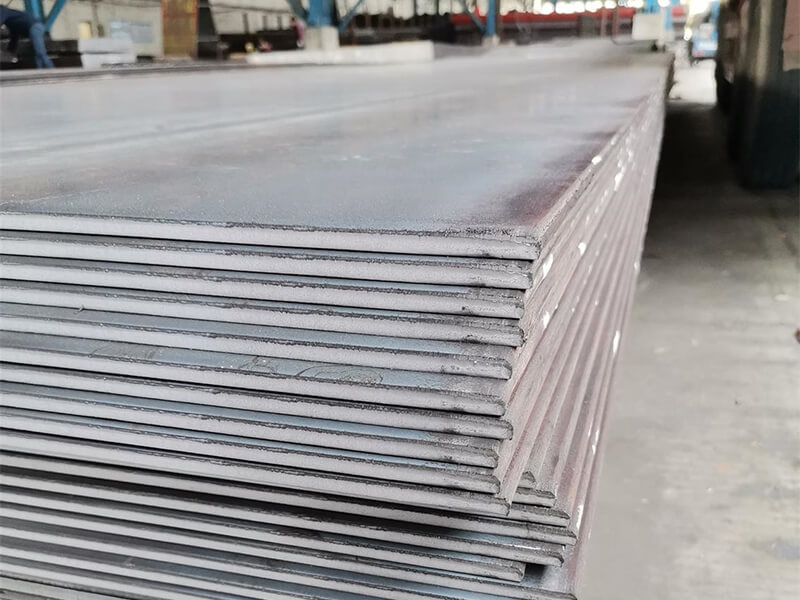
I have supplied marine steel plates to shipyards for more than ten years. I have seen buyers accept bad steel because they did not look close enough. I have also seen smart buyers reject plates immediately and save thousands of dollars. Let me walk you through four questions. Each one gives you a practical checklist item. Use these steps every time steel arrives at your yard.
What Visual and Surface Defects (Rust, Laminations, Edge Cracks) Should You Reject On the Spot?
You see a little rust on the plate. The driver says it is just surface rust. You believe him. Three months later, you find deep pitting.
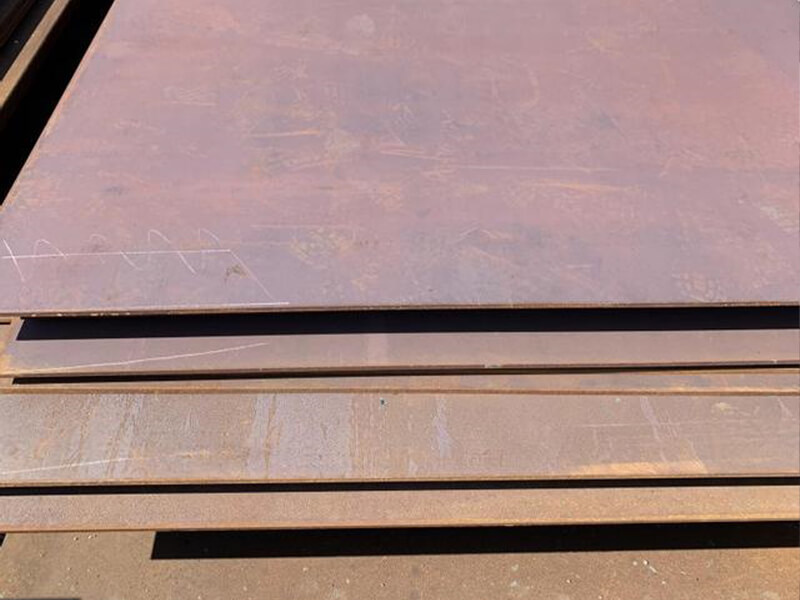
Reject any plate with red rust that flakes off, laminations that look like blisters or peeling layers, edge cracks longer than 1 mm, or deep pitting. Surface rust from storage is fine. Active rust is not.
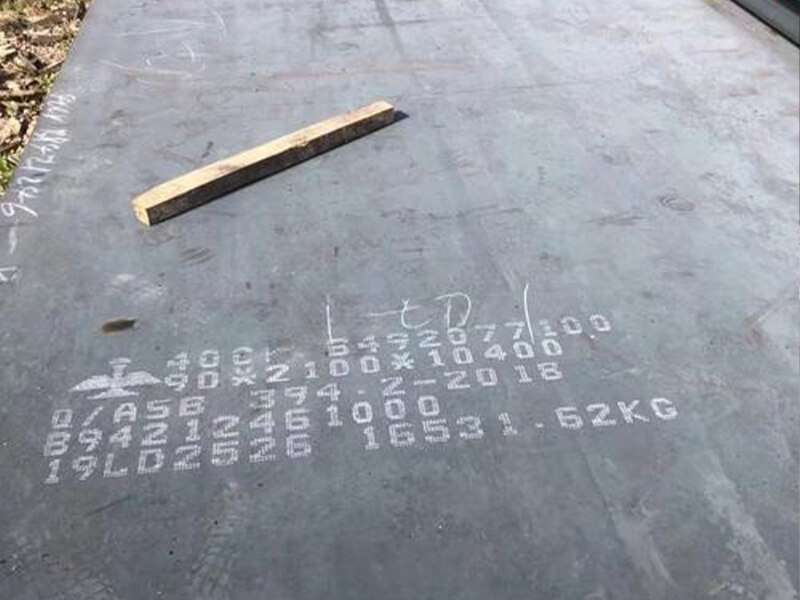
I remember a buyer in Pakistan who accepted a whole shipment of marine plates. The surface looked a little orange. The supplier said it was “mill scale”. But it was actually heavy rust. After two weeks in the yard, the rust grew deeper. The buyer had to grind every plate. That cost him $5,000 in labor. He never made that mistake again.
So what exactly should you look for? Let me give you a simple visual checklist.
Three visual defects that mean instant rejection
| Defect | What it looks like | Why you reject |
|---|---|---|
| Red or brown rust that flakes off | You can scratch it with a fingernail and bits fall | Active rust removes thickness. It will get worse. |
| Laminations (layers peeling apart) | The plate surface has blisters or lines that look like wood grain | The mill rolled in impurities. The plate can split under stress. |
| Edge cracks | Visible cracks on the cut edge, even small ones | Cracks grow during welding. They become hull failures. |
Also look for deep pitting. Pitting is small holes in the surface. Surface pitting less than 0.5 mm deep is usually okay. Pitting deeper than 1 mm is not okay. It weakens the plate.
Another defect is rolled‑in scale. That is when mill scale gets pressed into the plate surface. It looks like dark patches. Rolled‑in scale is not a rejection by itself. But you need to remove it before painting. That takes extra time and money. So you can ask for a discount.
I also check the plate edges. The mill cuts plates from larger slabs. Sometimes the edge has small cracks from the cutting torch. Cracks longer than 1 mm are a problem. They will grow when you weld the plate. Reject the plate or ask the supplier to cut off the bad edge.
Let me give you a practical tip. Carry a small steel ruler and a magnifying glass. Also carry a piece of clear tape. Put the tape on a rusty spot. Peel it off. If rust flakes stick to the tape, that is active rust. Reject it.
Also check the plate surface for indentations. A small dent from handling is usually fine. But a deep dent that changes the thickness is not fine. Measure the depth. If it is more than 5% of the plate thickness, reject it.
I tell my customers: “Do not trust the driver. Do not trust the supplier’s photos. Trust your own eyes. Inspect every plate before you unload.” Once the plate is on your yard, it is hard to send back. The supplier will say “you accepted it.” So inspect first. Unload second.
How to Verify Plate Dimensions, Thickness Tolerances, and Shape (Flatness, Camber) Before Unloading?
You order 12 mm plates. The mill sends 11.5 mm plates. That is within tolerance? Maybe not for your class society.
To verify dimensions, measure thickness at four corners and the center. Check length and width with a steel tape. Check flatness by laying a straight edge across the plate. Check camber by pulling a string along the long edge. Reject if any measurement is outside the tolerance in your purchase order.
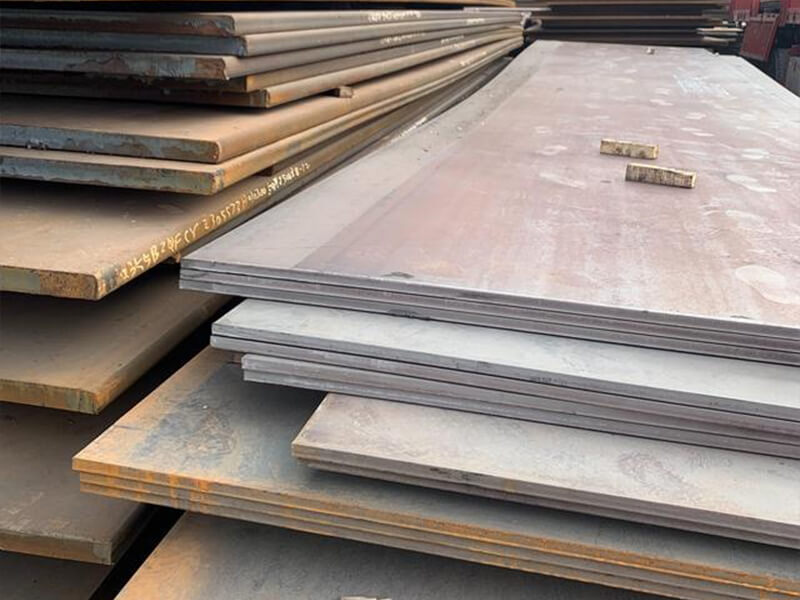
A customer in Thailand once called me. He was angry. He said my plates were too thin. I asked him to show me his measurement. He measured only the center of the plate. But the tolerance allows the center to be slightly thinner than the edges. He did not know that. After I explained, he measured the edges. They were correct. He learned to measure properly.
So what tolerances should you use? Most shipbuilding follows standards like ASTM A6 or EN 10029. But your class society (ABS, LR, DNV) may have stricter rules.
Standard dimensional tolerances for marine plates (typical)
| Measurement | Tolerance | How to check |
|---|---|---|
| Thickness (for plates 6‑20 mm) | ±0.3 mm to ±0.5 mm depending on width | Use a digital caliper or ultrasonic thickness gauge |
| Length | +3 mm / -0 mm | Steel tape measure along the center line |
| Width | +3 mm / -0 mm | Steel tape measure at three points |
| Flatness (local bow) | 5 mm per 1 meter of straight edge | Lay a straight edge across the plate. Measure the gap. |
| Camber (side bend) | 5 mm per 5 meters of length | Pull a string line from corner to corner. Measure the biggest gap. |
The most common mistake is measuring thickness at only one point. Do four corners and the center. Average them. If the average is below the minimum, reject the plate. But remember: plates are rolled with a slight crown. The center is often 0.2‑0.3 mm thinner than the edges. That is normal.
Another mistake is checking flatness on the ground. The ground is never perfectly flat. Lift the plate onto two supports. Then check flatness. Or check it on the delivery truck if the truck bed is flat.
Camber is another hidden problem. Camber means the plate bends to the side like a banana. A little camber is fine. Too much camber makes it hard to fit the plate to the frame. To check camber, pull a string from one corner to the opposite corner along the long edge. The string should touch the edge at both ends. Measure the gap between the string and the plate edge at the middle. If the gap is more than 5 mm over 5 meters, reject it for critical areas.
I also check the plate for twist. Lay the plate on a flat surface. Put a spirit level across it at the corners. If one corner is more than 3 mm higher than the others, the plate is twisted. Twisted plates are very hard to weld. Reject them or ask for a price reduction.
Use a simple tool kit. A 1‑meter straight edge. A 5‑meter steel tape. A digital caliper (0‑150 mm range). A string line. A 300 mm ruler. This kit costs less than $100. It pays for itself on the first shipment.
Remember: do not sign the delivery note until you finish these checks. Once you sign, you accept the dimensions. The supplier can say “you agreed.” So take your time. Measure twice. Cut once.
What Mill Certificates and Heat Number Traceability Are Required for Class Society Acceptance?
You have a stack of plates. The class surveyor asks for the heat numbers. You cannot find them. The surveyor rejects the whole batch.
For class society acceptance, you need a mill certificate (MTC) that shows chemical composition and mechanical properties. Each plate must have a visible heat number stamped or painted on it. That heat number must match the MTC. No match means no acceptance.
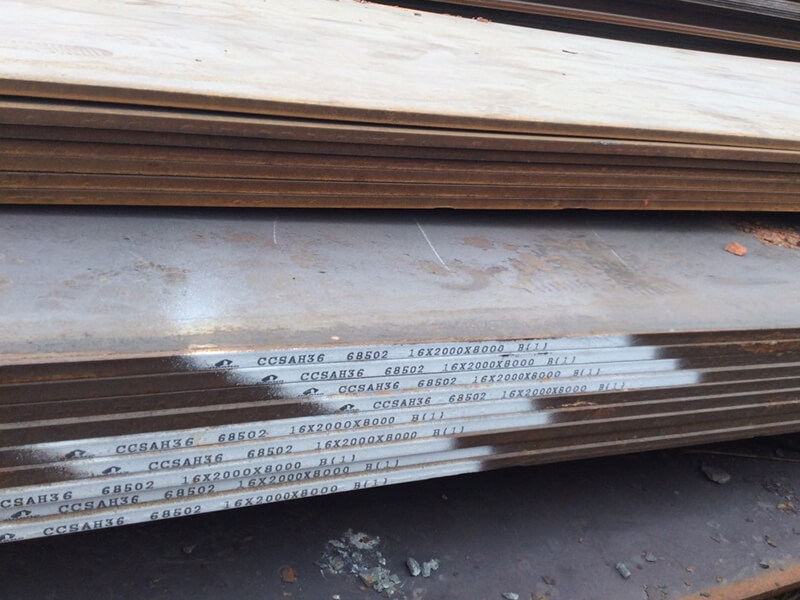
I had a customer in Mexico who lost three weeks because he mixed up heat numbers. He received 100 plates. The mill certificate was one page for all plates. But the heat numbers on the plates were different. He did not check. The class surveyor came. He picked one plate. The heat number on the plate did not match any number on the certificate. The surveyor rejected all 100 plates. My customer had to hire a third‑party inspector to test every plate. That cost him $8,000.
So what exactly is a mill certificate? It is a document from the steel mill. It states the chemical composition, (carbon, manganese, silicon, etc.) and mechanical properties (yield strength, tensile strength, elongation). It also shows the heat number and the plate dimensions.
What to check on every mill certificate
| Item | What to look for | Why it matters |
|---|---|---|
| Heat number | A unique alphanumeric code | This links the certificate to the actual plate |
| Chemical composition | Values within class society limits | Wrong chemistry means brittle or weak steel |
| Mechanical properties | Yield strength and tensile above minimum | Ship hull needs strong steel |
| Plate dimensions and quantity | Matches your purchase order | No missing or extra plates |
| Mill stamp and date | Legible and not expired | Some class societies require fresh certificates |
Now heat number traceability. Each plate should have its heat number stamped into the surface. Some mills use paint. Paint can wash off. Stamped numbers are better. Check every plate. If the stamp is hard to read, ask for a replacement plate.
You also need to keep a log. Write down which plate went into which part of the ship. The class surveyor may ask for this later. For example: “Plate A‑123, heat number H4567, used in frame 20, port side.” That is traceability.
Another requirement: the mill certificate must be original or certified true copy. A photocopy or scan is often not accepted. Ask your supplier to send the original certificate with the shipment. I always send two originals to my customers. One for the yard. One for the class society.
Also check the certificate date. Some class societies require certificates to be less than one year old. If the mill produced the steel two years ago, the certificate may be expired. You will need to retest the steel. That costs time and money.
I also recommend asking for a witness test. For critical projects, I invite an SGS inspector to the mill. He watches the steel being rolled and tested. He issues his own report. That report is even stronger than the mill certificate. My customers in Qatar and Saudi Arabia always ask for this.
So do not accept plates without matching mill certificates and heat numbers. It is your proof that the steel is safe. No proof, no acceptance.
How to Perform Ultrasonic or Visual Testing for Internal Laminations and Marking Legibility?
The plate looks good on the outside. But inside, there is a lamination. You will only find it when you cut the plate.
Ultrasonic testing (UT) sends sound waves through the plate. If the sound bounces back early, there is a lamination. For visual testing, you check that all markings (heat number, grade, size) are legible and correct. Reject any plate with internal laminations larger than 5 mm or markings that you cannot read.
I will share a story from a customer in Romania. He built a small tanker. He used plates that passed visual inspection. But one plate had a hidden lamination. When he welded a bracket to it, the plate split open. The lamination was 10 cm long. He had to cut out the whole section and replace it. That cost him one month of delay. After that, he bought an ultrasonic thickness gauge. He tested every plate before cutting.
So what is a lamination? During steelmaking, gas bubbles or impurities get trapped inside. The mill rolls the steel. The bubbles flatten into thin layers. Those layers are laminations. They look like lines inside the steel. Under stress, the layers can separate. That is bad for a ship hull.
How to test for internal laminations
| Test method | Equipment needed | What you find |
|---|---|---|
| Ultrasonic flaw detection | UT machine with a straight beam probe | Any lamination larger than the probe diameter (typically 5‑10 mm) |
| Ultrasonic thickness gauge | Simple thickness gauge | If thickness reading jumps, there is a lamination |
| Visual after cutting | None – cut the plate and look at the cut face | Laminations visible as dark lines |
Most shipyards do not have a UT machine. That is fine. You can use a simple ultrasonic thickness gauge. These cost about $500. Move the gauge across the plate in a grid pattern. If the thickness reading suddenly changes by 1 mm or more, you have found a lamination. Mark that area. Cut it out or reject the plate.
For high‑stress areas like the keel or deck, I recommend full UT scanning. Hire a third‑party inspector. He will scan the entire plate. He will give you a report of any laminations. This is common for tankers and container ships. The class society often requires it.
Now let me talk about marking legibility. Every marine steel plate must have certain markings. The class society rules say: heat number, steel grade (like AH36, DH36), mill name, and plate dimensions. These markings must be legible. If you cannot read them, the class surveyor will reject the plate.
Check the markings under good light. If they are painted, make sure the paint is not peeling. If they are stamped, check that the stamp is deep enough. I have seen plates where the stamp was so light that you could only see it with a magnifying glass. That is not acceptable. Ask for a replacement.
Also check that the markings match the mill certificate. The heat number on the plate must be exactly the same as the heat number on the certificate. One wrong digit means the certificate is for a different plate.
One more tip: take photos of the markings on every plate. Keep a digital folder with the plate number and the photo. When the class surveyor asks for proof, you show the photo. This has saved my customers many times.
So include these tests in your inspection checklist. Visual for surface. Measurement for size. UT for hidden laminations. Markings for traceability. Do all four, and you will accept only good steel.
Conclusion
Inspect every marine steel plate for rust, measure it, check certificates, and test for hidden laminations. Reject before unload.