
You are about to place a multi-million dollar order for marine steel plate. The success of your entire shipbuilding project depends on this material. One mistake in specification, one missed certificate, one delayed shipment, and your schedule collapses. A procurement checklist is not a luxury. It is a necessity.
A marine steel plate procurement checklist should cover: 1) Technical specification (grade, dimensions, standard). 2) Certification requirements (classification society, impact testing). 3) Supplier qualification (mill source, track record). 4) Quality assurance (third-party inspection, testing). 5) Logistics (delivery schedule, packaging, Incoterms). 6) Documentation (Mill Test Certificates, compliance certificates). Following this checklist ensures you receive the right material, on time, with the right paperwork.
A checklist is only useful if you understand each item on it. The questions your team asks about marine steel plate reveal where mistakes can happen. Let’s go through the most common questions and turn them into checklist items.
What is a marine steel plate1?
You are training a new procurement assistant. They see "marine steel plate1" on the material list and ask, "What is that?" If they cannot visualize the product, they cannot order it correctly. Every person involved in procurement must have a clear understanding of what marine steel plate1 is and what makes it different from ordinary plate.
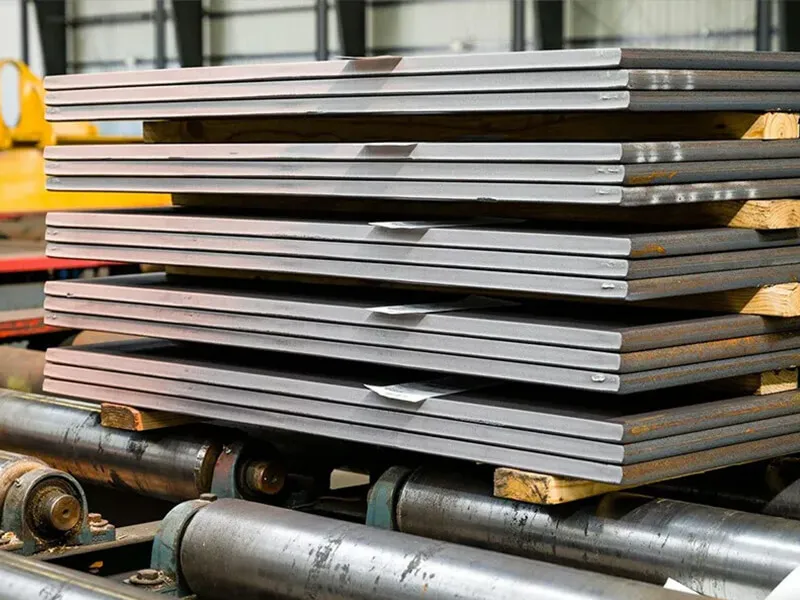
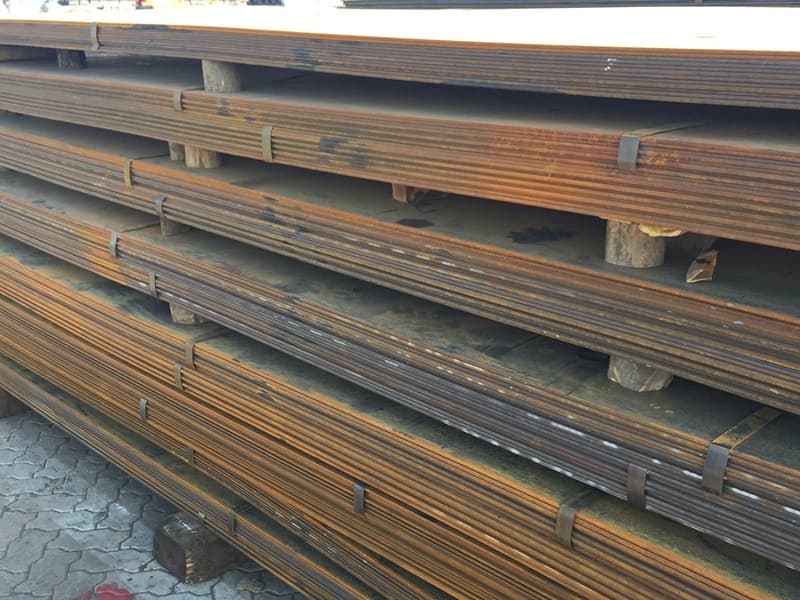
A marine steel plate1 is a flat, hot-rolled steel product specifically manufactured for use in shipbuilding and offshore structures. It is produced to strict standards set by classification societies2 (ABS, LR, DNV, etc.) and has guaranteed mechanical properties3, including yield strength, tensile strength, and impact toughness at specified temperatures. It is not the same as ordinary construction plate. It is engineered for the harsh marine environment.
Checklist Item 1: Product Definition and Specifications
Before you order, ensure your team understands the product.
| 1. Key Characteristics of Marine Steel Plate. | Characteristic | What It Means | Why It Matters |
|---|---|---|---|
| Grade | Designation like Grade A, AH36, DH36. | Defines strength and toughness. | |
| Dimensions | Thickness, width, length. | Must match design and cutting plan. | |
| Standard | Produced to a recognized standard (e.g., ASTM A131, EN 10025). | Ensures consistent properties. | |
| Certification | Approved by a classification society (ABS, LR, DNV). | Required for classed vessels. | |
| Traceability | Each plate marked with heat number and grade. | Allows verification against certificate. |
2. What to Check on Your Spec.
- Is it clearly labeled as "Marine Steel Plate"? Not just "steel plate."
- Is the grade specified correctly? e.g., "ABS Grade AH36" not just "AH36."
- Are the dimensions complete? Thickness x Width x Length. Include tolerances if critical.
- Is the standard referenced? e.g., "ASTM A131 / A131M."
3. Common Mistakes.
- Ordering "steel plate" and receiving construction-grade material.
- Specifying only thickness, forgetting width and length.
- Assuming all "AH36" is the same without specifying the classification society.
My Insight from the Field
A shipyard in Vietnam once ordered "steel plate, 20mm thick, AH36." They received plate that was 20mm thick and had a certificate saying AH36. But when the class surveyor arrived, they noticed the certificate was from a non-approved mill. The steel was rejected. The problem? The purchase order did not specify "ABS certified" or list an approved mill. Now, their checklist includes: "Must be from ABS-approved mill with valid certificate." This simple addition saves them from repeated errors.
Is 304 or 316 stainless steel marine grade?
You are ordering stainless steel plate for marine fittings. The eternal question: 304 or 316? Getting it wrong can lead to corrosion failure and costly replacement. Your checklist must include a step to verify the correct grade for the application.
Of the two, 316 stainless steel is considered the true marine grade1. Its addition of molybdenum (2-3%) provides significantly enhanced resistance to chloride-induced corrosion2 from saltwater. 304 lacks molybdenum and is susceptible to pitting and crevice corrosion in marine environments. While 304 may be used in interior, dry applications, 316 is the standard for exterior and seawater-exposed components.
Checklist Item 2: Stainless Steel Grade Selection
This step prevents corrosion failures.
| 1. The Chemistry Difference. | Element | 304 Stainless | 316 Stainless | Why It Matters |
|---|---|---|---|---|
| Chromium (Cr) | 18-20% | 16-18% | Forms protective oxide layer. | |
| Nickel (Ni) | 8-10.5% | 10-14% | Stabilizes the structure. | |
| Molybdenum (Mo) | 0% | 2-3% | Key differentiator. Resists chloride pitting. | |
| Pitting Resistance Equivalent (PRE)3 | ~18-20 | ~24-26 | Higher is better for resisting pitting. |
| 2. Application Guide. | Application | Recommended Grade | Reason |
|---|---|---|---|
| Exterior railings, fittings | 316 | Direct saltwater exposure. | |
| Seawater piping | 316 or 316L | Continuous immersion. | |
| Interior, dry areas | 304 | No salt exposure, cost-effective. | |
| Freshwater systems | 304 | Acceptable if no chlorides. | |
| High-temperature marine | 316 or higher | 304 may sensitize and corrode. |
3. What to Check on Your Order.
- Grade Specified: Is it 304 or 316? If marine exposure, it should be 316.
- Low-Carbon Version: For welded applications, specify 304L or 316L to prevent sensitization.
- Certification: For critical applications, require PMI (Positive Material Identification) testing to verify the alloy.
4. The Cost of Getting It Wrong.
Using 304 in a marine environment leads to pitting, rust staining, and eventual failure. The cost of replacement far exceeds the initial saving.
My Insight from the Field
A client in Qatar once ordered 304 stainless steel plates for exterior railings on a new vessel. They wanted to save money. Two years later, they contacted us again. The railings were pitted and rusting. They had to replace them with 316 at twice the cost. The lesson: the small saving on material was dwarfed by the cost of premature replacement. Now, they specify 316 for all exterior applications.
What is marine grade steel1?
You are reviewing a supplier’s quote. It says "marine grade steel1." What does that actually mean? The term is often used loosely. Your checklist must define it precisely so you know what you are getting.
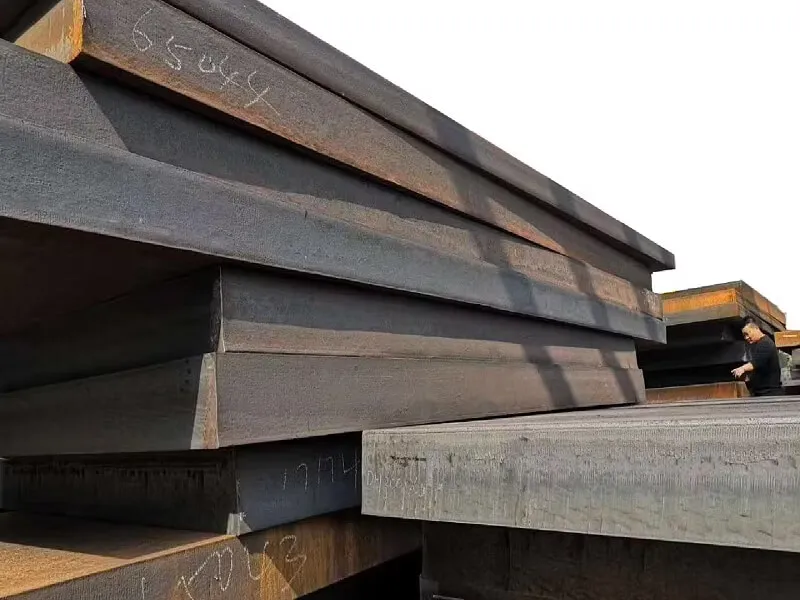
Marine grade steel is steel that meets the specific requirements of classification societies2 (ABS, Lloyd’s Register, DNV, etc.) for use in shipbuilding and offshore structures. This includes guaranteed mechanical properties (yield strength, tensile strength), impact toughness3 at specified temperatures, controlled chemistry4 for weldability, and full traceability5 from the mill to the finished product. It is not a single grade, but a family of grades (A, B, D, E, AH32, AH36, DH36, EH36, etc.) each suited for different applications and environments.
Checklist Item 3: Verifying "Marine Grade"
This step ensures you get certified material, not just a marketing term.
| 1. The Elements of True Marine Grade. | Element | What It Means | How to Verify |
|---|---|---|---|
| Classification Society Approval | Steel produced by a mill approved by ABS, LR, DNV, etc. | Check the mill’s approval certificate. | |
| Impact Testing | Steel tested at specified temperatures (0°C, -20°C, -40°C) for toughness. | Review Mill Test Certificate6 for Charpy V-notch results. | |
| Controlled Chemistry | Carbon equivalent (CE) limited for weldability. | Check chemistry on MTC. | |
| Traceability | Each piece marked with heat number and grade. | Inspect physical markings. | |
| Certificate | Mill Test Certificate6 with class society stamp or reference. | Verify certificate is original and matches material. |
2. Common Misconceptions.
- "It’s marine grade because it’s strong." Strength alone is not enough. Toughness matters.
- "It’s marine grade because it’s from a coastal mill." Location means nothing. Certification means everything.
- "It’s marine grade because it says so on the quote." Marketing claims are not proof. Demand documentation.
3. What to Check on Your Order.
- Does the specification require a specific classification society? e.g., "ABS Grade AH36."
- Does the supplier provide the mill’s approval certificate? Ask for it if not provided.
- Does the Mill Test Certificate6 show the required impact tests? For Grade A, impact tests may not be required. For AH36, they are.
My Insight from the Field
A client in Malaysia once received a quote for "marine grade steel1" at a very attractive price. They asked us to review it. The supplier’s certificate showed the steel was actually a construction grade with a fake "marine" label. There were no impact tests and no class society approval. We advised the client to reject the quote. They later told us that another buyer had accepted a similar quote and ended up with rejected material and a delayed project. This is why verification is non-negotiable.
Is 304 stainless steel ok for marine use?
You are under budget pressure. The designer specified 316, but 304 is cheaper. Can you substitute? This question comes up on every project. Your checklist must have a clear answer based on the application.
No, 304 stainless steel is generally not ok for marine use, especially in applications with direct and continuous exposure to saltwater. While it has good corrosion resistance in many environments, the chlorides in seawater can cause pitting and crevice corrosion in 304, leading to premature failure. For marine applications, grades with higher molybdenum content, like 316, are required. The only exception is for interior, dry applications where salt exposure is minimal.

Checklist Item 4: Evaluating 304 for Marine Applications
This step prevents corrosion failures and budget overruns from replacement.
1. The Science Behind the Limitation.
- Pitting Resistance Equivalent (PRE)1: 304 has a PRE of 18-20. 316 has a PRE of 24-26. The difference is molybdenum.
- Critical Pitting Temperature: In seawater, 304 will start pitting at a lower temperature than 316. In warm marine environments, the risk is higher.
- Crevice Corrosion2: In tight spaces (under fittings, at welds), 304 is highly susceptible to crevice corrosion. 316 performs much better.
| 2. When 304 Might Be Acceptable. | Application | Is 304 OK? | Reason |
|---|---|---|---|
| Interior railings, dry | Yes | No salt exposure. | |
| Galley equipment | Yes | Freshwater cleaning, minimal salt. | |
| Exterior railings, coastal | No | Salt spray will cause pitting. | |
| Exterior fittings, direct seawater | No | Rapid failure expected. | |
| Seawater piping | No | Continuous immersion, crevice risk. |
3. The Cost-Benefit Analysis.
- Initial Cost: 304 is cheaper.
- Lifecycle Cost3: 304 in marine use may fail in 2-5 years. Replacement cost (material + labor) is 3-5 times the original material cost.
- Verdict: 316 is cheaper in the long run for marine exposure.
4. What to Check on Your Order.
- Application: Where will the steel be used? If marine exposure, 316 is required.
- Specification: Does the design call for 316? If so, do not substitute without engineering approval.
- If Substituting: Get written approval from the designer and class society. Document it.
My Insight from the Field
A shipowner in the Middle East once insisted on 304 for all exterior fittings to save money on a new vessel. The shipyard warned him. He did not listen. Within three years, the railings were rusting and pitting. He had to replace them at his own expense, at a cost far exceeding the original saving. He later told me, "I learned that cheap stainless is the most expensive stainless." Now, he specifies 316 for everything exposed to the elements.
Conclusion
A comprehensive marine steel plate procurement checklist protects your shipbuilding project from errors. It covers product definition, grade selection, certification verification, and application suitability. Use it on every order to ensure quality, compliance, and project success.
-
Learn about PRE values to understand corrosion resistance in different environments, crucial for material selection. ↩ ↩ ↩ ↩ ↩ ↩ ↩ ↩ ↩
-
Understanding crevice corrosion is vital for preventing failures in marine environments, ensuring safety and durability. ↩ ↩ ↩ ↩
-
Exploring lifecycle costs can reveal the long-term financial implications of choosing materials for marine use. ↩ ↩ ↩ ↩
-
Explore the importance of controlled chemistry for weldability and overall steel quality in marine environments. ↩
-
Traceability ensures accountability and quality assurance in the supply chain of marine grade steel. ↩
-
Understanding Mill Test Certificates helps verify the quality and compliance of your steel materials. ↩ ↩ ↩