
You have a shipbuilding project. The design is ready. The yard is prepared. But the steel does not arrive. Or it arrives wrong. Or it fails class inspection. Your project stops.
Poor marine steel plate procurement causes shipbuilding project failures through late delivery that derails schedules, substandard plates that fail class inspection, poor forecasting that wastes material, and supplier instability that brings everything down. These four failures have sunk more projects than bad design ever has.
I am Zora Guo from cnmarinesteel.com. I have supplied steel plates to shipyards for years. I have also seen projects fail because the procurement was handled badly. Not by me – by other suppliers who promised but could not deliver. Let me explain the four ways poor procurement kills shipbuilding projects.
How Does Late Steel Delivery Derail Entire Ship Construction Schedules and Lead to Costly Delays?
You have a production schedule. The keel is to be laid on Week 10. Steel plates need to be cut and welded starting Week 8. If the steel arrives Week 12, your workers stand idle. Costs pile up.
Late steel delivery is the single biggest cause of schedule overruns in shipbuilding. Steel plate delivery delays of 4‑8 weeks are common when procurement is poorly managed. A 4‑week delay can add 10‑15% to the total project cost through idle labor, extended yard rental, and late delivery penalties. For a $50 million vessel, a 4‑week delay can cost $2‑5 million in direct costs alone. The shipyard cannot work without steel. Cutting, welding, and assembly all stop. Subcontractors are sent away. When the steel finally arrives, the yard must scramble to catch up. Overtime costs double. Mistakes increase. Quality drops. Late steel delivery is not just an inconvenience. It is a project killer.
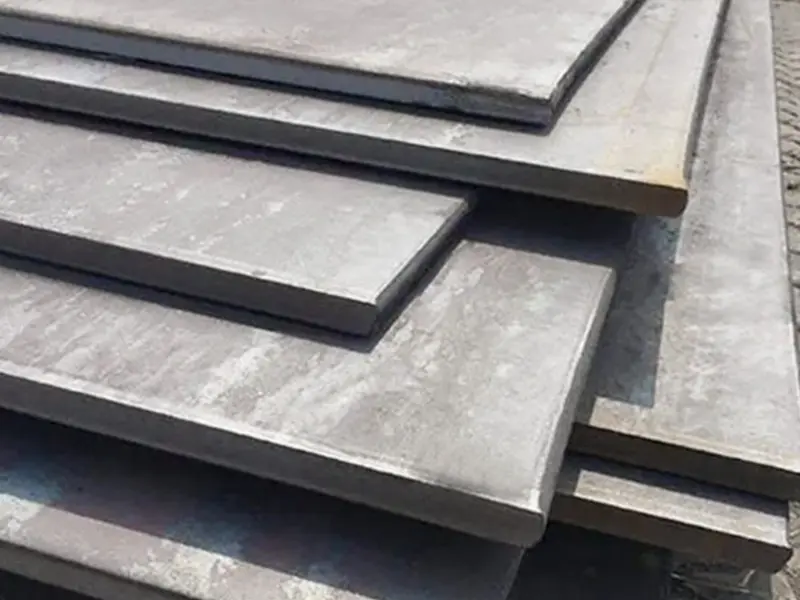
Let me show you the real cost of late delivery.
The Chain Reaction of a Late Shipment
When steel plates are late, the entire schedule shifts. Here is what happens in sequence:
- Cutting stops. The plasma cutters sit idle. The nesting team has no plates to program.
- Fabrication stops. Sub‑assemblies cannot be built without cut parts.
- Block assembly stops. Prefabricated blocks cannot be assembled.
- Outfitting stops. Piping, electrical, and insulation work depends on structural completion.
- Launch is delayed. The vessel stays on the slipway. Yard space is blocked.
- Delivery is delayed. Client penalties apply.
A bulk carrier project in Vietnam lost 6 weeks because the steel plates arrived 8 weeks late. The yard owner told me: "We kept paying workers to sit and wait. We paid for cranes we did not use. We paid late delivery penalties to the client. The delay cost us $3 million on a $40 million vessel."
The Hidden Cost of Late Steel
| Cost category | 4‑week delay impact (medium vessel) |
|---|---|
| Idle labor (100 workers × 40h × $20/h) | $320,000 |
| Yard rental (extension) | $100,000‑200,000 |
| Subcontractor cancellation fees | $50,000‑100,000 |
| Overtime to catch up | $150,000‑300,000 |
| Penalties for late delivery | $200,000‑500,000 |
| Interest on delayed payment | $100,000‑200,000 |
| Total | $920,000‑1.6 million |
Why Late Delivery Happens
Late steel delivery does not come out of nowhere. It happens because:
- The supplier did not reserve mill capacity early enough
- The mill had a breakdown and the supplier had no backup
- The supplier did not track production status and only noticed the delay when it was too late
- The procurement team placed the order too late (did not account for mill lead time)
All of these are avoidable with proper planning and supplier management.
A Real Example
A shipyard in Malaysia was building a 60m fishing vessel. The steel plates were ordered from a new supplier who promised 8‑week delivery. At week 10, still no steel. The supplier said "the mill is backlogged." At week 14, the steel arrived. The yard had already sent 80 workers home for 4 weeks. The delay cost $400,000. The project missed the fishing season launch window. The client cancelled the contract.
Why Do Substandard Plates That Fail Class Inspection Cause Rework, Rejection, and Project Stoppages?
The steel arrives. It looks fine. The class surveyor tests it. It fails. The plates are rejected. You cannot use them. You must wait for replacements.
Substandard steel plates are the second biggest procurement failure. Plates that fail thickness tolerance, mechanical properties (yield, tensile, Charpy impact), or surface quality (laminations, deep pits, cracks) must be rejected. A single rejected batch of 50 tons can take 4‑8 weeks to replace. During that time, production stops. Worse, if the bad steel has already been cut and welded into a block, the entire block may need to be scrapped. Rework costs can exceed the original steel cost by 2‑3 times. Class society rules are strict. There is no negotiation. If the plate fails, it fails. Period.
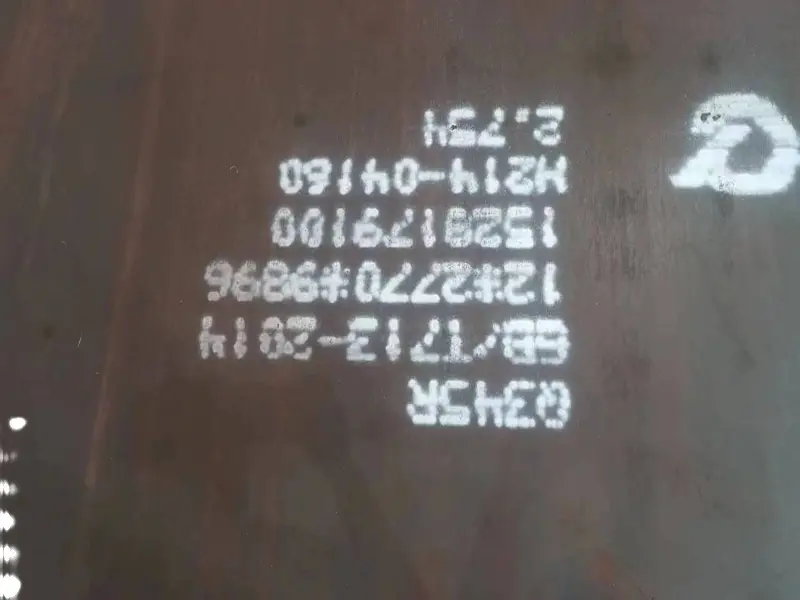
Let me explain the cost of substandard steel.
Common Plate Failures
| Failure type | Cause | Consequence |
|---|---|---|
| Thickness under tolerance | Mill rolled to save material | Plates are weaker than designed. Rejected. |
| Low yield strength | Wrong chemistry or heat treatment | Grade downgrade or rejection. |
| Low Charpy impact | Poor steel cleanliness, brittle | Fails low‑temperature test. Rejected. |
| Laminations | Internal defects from casting | Welds crack. Rejected. |
| Surface defects (pits, scabs) | Rolling defects | Must be ground. If too deep, rejected. |
The Cost of Rejection
If 50 tons of plates are rejected and must be replaced, the cost is not just the replacement steel. You also pay for:
- Lost time: 4‑8 weeks waiting for replacement plates
- Idle labor: Workers cannot cut if there is no steel
- Rework: If the bad plates were already cut or welded, you must scrap that work and do it again
- Inspection fees: Re‑inspection of replacement plates
A shipyard in Indonesia had 100 tons of DH36 plates fail Charpy impact. The plates had been cut but not welded. The yard had to scrap the cut parts ($50,000) and wait 6 weeks for replacements. Total cost: $80,000 in replacement steel + $50,000 scrapped parts + $200,000 in idle labor = $330,000.
Why Substandard Steel Happens
Plates fail because:
- The supplier used a mill with poor quality control
- The mill certificate was falsified or inaccurate
- The procurement team did not require third‑party inspection before shipment
- The supplier mixed batches from different heats
A Real Example
A shipyard in Qatar received 200 tons of AH36 plates. The mill certificates looked fine. During fabrication, welders noticed that some plates cracked at the weld edge. The class surveyor ordered retesting. The tests showed that 40 tons of plates had a CEV (carbon equivalent) over 0.45% – too high for the specified welding procedure. The plates were rejected. The yard had to cut out the welded sections and replace them. The rework took 10 weeks and cost $500,000. The project was delayed by 3 months.
How Can Poor Forecasting, Over‑Ordering, or Mismatched Specifications Inflate Costs and Waste Materials?
You order too much steel. Or you order the wrong thickness. Or you order plates that do not match the nesting plan. The steel sits in the yard. You paid for it. You cannot use it.
Poor forecasting leads to over‑ordering – you buy 20% more steel than you need because you guessed. That extra steel costs money and ties up capital. It also takes up yard space and rusts while waiting. Mismatched specifications are even worse. You order plates in sizes that do not nest efficiently – scrap is 25% instead of 10%. Or you order the wrong grade – high‑strength steel for low‑stress areas, wasting money. For a 1,000‑ton project, over‑ordering by 10% wastes $80,000. Poor nesting adds another 5‑10% waste. Procurement decisions made without engineering input are almost always expensive.
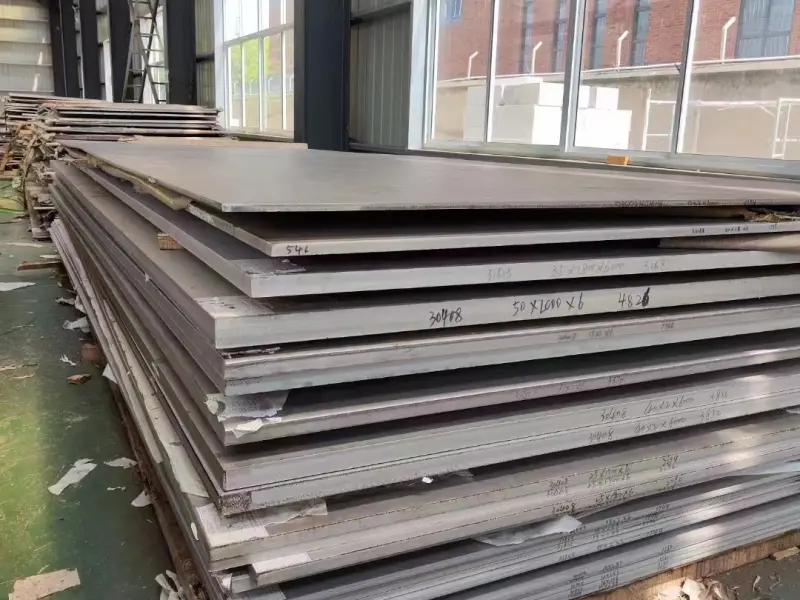
Let me show you the math on procurement waste.
Over‑Ordering – The Cost of Guessing
If your procurement team orders steel without a detailed material takeoff, they will order extra "just in case." A common rule of thumb is to add 10‑15% for safety. But if the actual margin needed is only 5%, the extra 5‑10% becomes waste.
Example: A 2,000‑ton project. Procurement orders 2,200 tons (10% extra) at $800/ton. Extra steel cost: 200 tons × $800 = $160,000. Plus, that steel sits in the yard for 6‑12 months. It rusts. It takes up valuable yard space. When the project ends, the surplus is sold as scrap for $200/ton – losing $600/ton on 200 tons = $120,000.
Mismatched Specifications – The Hidden Waste
Specifying higher grades than needed is a common mistake. AH36 costs about 10‑15% more than Grade A. If you use AH36 for superstructure plates that only need Grade A, you are wasting 10‑15% on those plates.
Example: 200 tons of superstructure plates specified as AH36 instead of Grade A. Cost difference: $80/ton × 200 = $16,000 wasted.
Poor Nesting – The Scrap Problem
If the plate sizes you order do not match the nesting plan, scrap increases. Typical scrap in shipbuilding is 8‑12%. With poor ordering, it can be 15‑20%.
Example: 1,000 tons of plates. 12% scrap = 120 tons waste ($96,000). 20% scrap = 200 tons waste ($160,000). Difference: $64,000 in extra waste.
A Real Example
A shipyard in Vietnam ordered steel plates without a completed nesting plan. They ordered standard sizes (2m × 6m) because they were cheaper. The nesting plan required 2.2m × 8m plates. The scrap rate was 22%. If they had waited for the nesting plan, they could have ordered custom sizes with 10% scrap. The extra 12% waste was 240 tons – $192,000 wasted.
What Role Does Supplier Instability (Financial Health, Capacity, Quality Consistency) Play in Project Failure?
Your supplier seems fine. Then they delay shipment. Then they deliver bad steel. Then they stop answering calls. You learn they are having financial trouble.
Supplier instability is the root cause of many procurement failures. A supplier with weak finances cannot buy raw materials on time. They cannot pay their mill. They delay your order. A supplier with no mill capacity backup cannot recover from a breakdown. A supplier with inconsistent quality cannot guarantee that the second batch will match the first. When a supplier fails, you are left with no steel, no backup, and no time. The project collapses. For every shipbuilding project, you should evaluate your supplier’s financial health, mill relationships, and quality track record before ordering. A cheap supplier with poor stability is the most expensive choice of all.
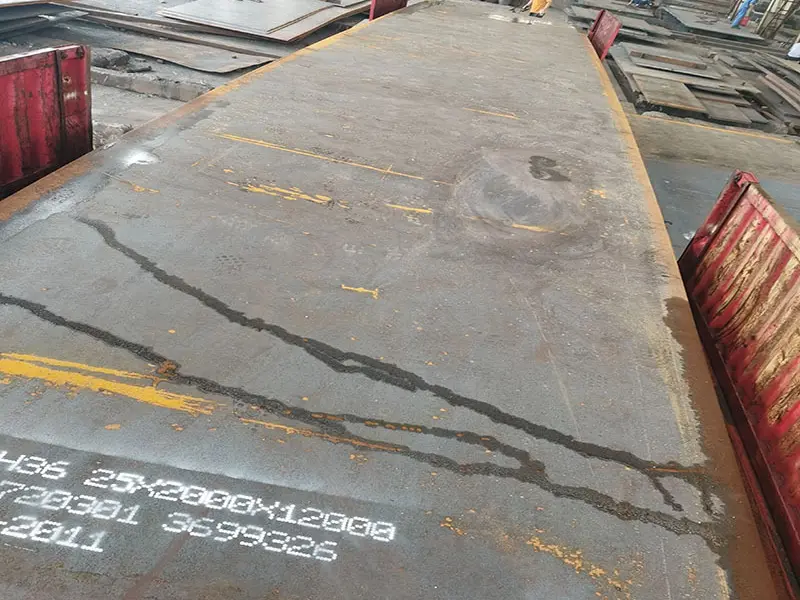
Let me break down what supplier instability looks like.
Financial Health – The Invisible Risk
A supplier that is struggling with cash flow will delay payments to the mill. The mill then delays production of your steel. You suffer the consequence.
Red flags:
- Supplier asks for payment upfront "to secure mill capacity"
- Supplier is vague about mill names and payment terms
- Supplier’s prices are significantly lower than competitors (too good to be true)
- Supplier has no physical office or warehouse
Mill Capacity – The Bottleneck
A supplier that relies on one mill has no backup. If that mill has a breakdown, your order stops.
Red flags:
- Supplier cannot name a backup mill
- Supplier’s lead times are longer than industry average (12+ weeks)
- Supplier cannot provide mill capacity confirmation in writing
Quality Consistency – The Hidden Defect
Even if a supplier delivers on time, inconsistent quality can still ruin your project. Batch A passes test. Batch B fails.
Red flags:
- Supplier cannot provide test reports from independent labs
- Supplier’s rejection rate is above 2%
- Supplier refuses third‑party inspection
A Real Example
A shipyard in Thailand chose a low‑price supplier for 1,000 tons of plates. The supplier had no backup mill. During production, the mill had a furnace failure. The supplier could not shift the order. The steel arrived 12 weeks late. The supplier’s quality was also inconsistent – 10% of plates failed thickness tolerance. The project was delayed 5 months. The shipyard lost the client. The cheap supplier saved them $50/ton ($50,000) but cost them $5 million in lost business.
Conclusion
Shipbuilding projects fail when procurement makes four mistakes: late delivery that destroys schedules, substandard plates that fail class inspection, poor forecasting that wastes material, and supplier instability that brings everything down. Each mistake is avoidable with careful planning and supplier management.