
leading paragraph:
You are planning a shipbuilding project. One wrong steel plate could delay everything. Testing is not just a formality.
snippet paragraph:
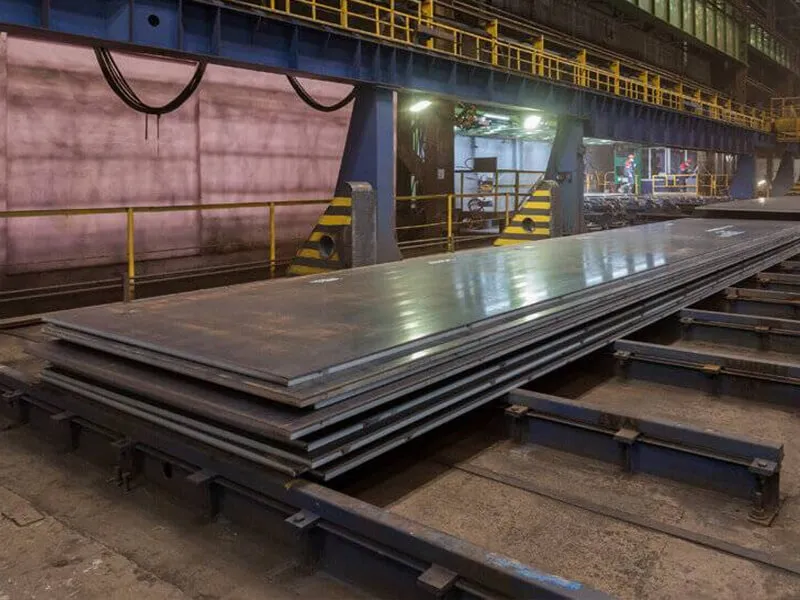
Marine steel plate testing for international projects requires strict adherence to standards like ABS, LR, and DNV. This includes mechanical tests, non-destructive examinations, and full material traceability to ensure safety and project approval.
Transition Paragraph:
I have spent years helping contractors and wholesalers navigate these requirements. From my experience, the testing phase is where many projects either succeed or face costly delays. Let me break down what you actually need to know.
Key International Standards for Marine Steel Plate Testing?
leading paragraph:
Standards can feel like a maze. Different projects ask for different rules. You need to know which ones matter for your order.
snippet paragraph:
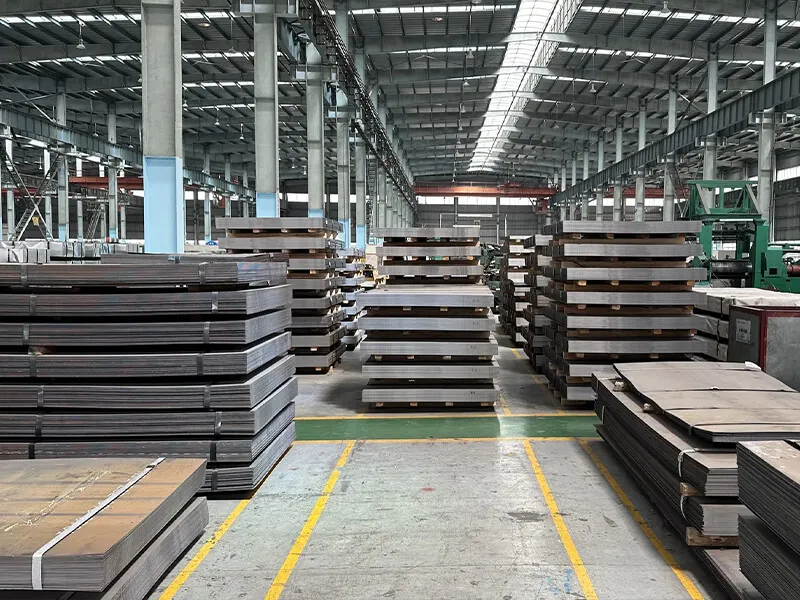
The main international standards for marine steel1 are from classification societies2 like ABS (American Bureau of Shipping), LR (Lloyd’s Register), DNV, and KV. These rules define the chemical makeup and mechanical properties for every grade.
Dive deeper Paragraph:
When I work with clients in Saudi Arabia or Vietnam, they often ask me which standard is the “most important.” The truth is, there is no single answer. Your choice depends entirely on the project’s destination and the shipowner’s preference.
Many people think a standard is just a stamp on a document. But it is much more than that. The standard dictates how the steel is made, from the melting process to the final rolling. For example, a project following DNV rules3 will have different requirements for impact testing at low temperatures compared to a project using LR rules. This is not just paperwork. It affects the steel’s performance in cold waters or high-stress areas.
Here is a simple way to look at the main standards I handle every day:
| Classification Society | Typical Project Use | Key Focus Area |
|---|---|---|
| ABS (American Bureau) | Oil tankers, bulk carriers for US routes | High strength and weldability |
| LR (Lloyd’s Register) | European shipbuilding, large container ships | Strict material traceability4 |
| DNV | Offshore platforms, specialized vessels | Low-temperature performance |
| KV (Korean Register) | Projects built in or for Korean shipyards | Consistent quality control |
A mistake I see often is assuming that “any marine grade” will pass the inspection. This is a risk. If your project requires ABS certification but your mill test report shows LR, the steel will be rejected at the port. I always tell my clients to confirm the required society before we cut the steel. This simple step saves weeks of delay and thousands in demurrage costs.
Essential Mechanical Tests: Tensile, Impact, and Bend Testing?
leading paragraph:
What happens inside the steel when it is under pressure? You cannot guess. You need data. That is why we test it to the breaking point.
snippet paragraph:
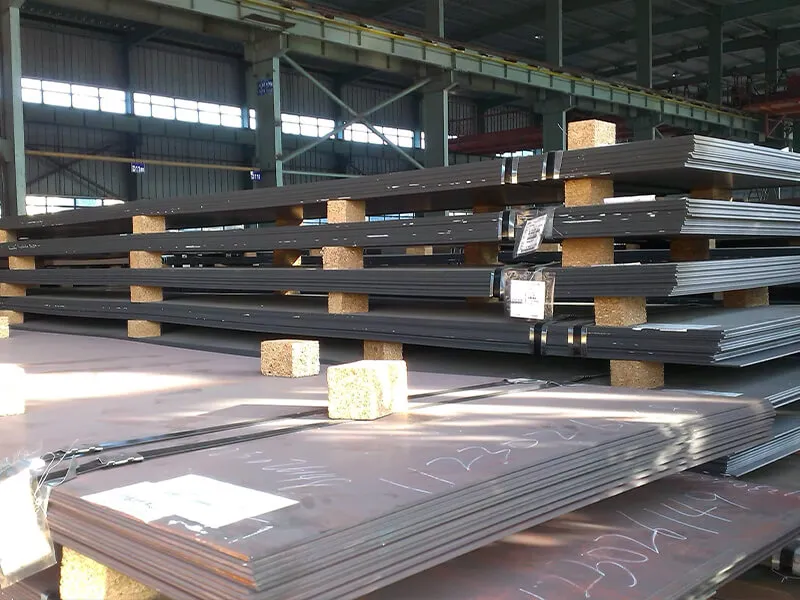
Mechanical tests prove the steel’s strength. The tensile test1 measures pull strength. The impact test2 checks toughness in cold conditions. The bend test3 shows if it can be shaped without cracking.
Dive deeper Paragraph:
I remember a client from Mexico who ordered a large quantity of marine angle steel. He trusted his previous supplier completely. No testing was done before shipment. When the steel arrived, it cracked during simple bending for a hull section. The entire batch was useless. That is why I always insist on clear mechanical test results4 before shipping.
Let me explain these three tests in a way that makes sense for a project manager.
1. Tensile Testing: Pulling to Find Limits
This test is simple but critical. A sample of the steel is pulled until it breaks. The machine records two numbers: yield strength and tensile strength.
- Yield Strength: This is the point where the steel starts to stretch permanently. For shipbuilding, you need to know this number. If it is too low, the hull could warp under load.
- Tensile Strength: This is the maximum force the steel can handle before it snaps.
I always check that the values meet the standard required. A difference of even 5% can be a red flag for poor quality.
2. Impact Testing: Surviving Cold and Shock
Ship decks and hulls face freezing water and constant pounding. If the steel becomes brittle, it can crack like glass. The impact test, often called the Charpy V-notch test, measures how much energy the steel can absorb before breaking.
- Test Temperature: This is key. A standard grade might be tested at 0°C. But a project for the North Sea might require testing at -40°C.
- Absorbed Energy: The result is measured in Joules. Higher numbers mean tougher steel.
If your project involves oil tankers or container ships crossing cold regions, you cannot skip this test. I have seen entire shipments held up because the impact test results were not clearly marked on the certificate.
3. Bend Testing: Checking Flexibility
Shipbuilders do not just stack plates. They bend them into curves for the bow and stern. A bend test checks if the steel can handle this without cracking.
- Guided Bend: The steel is bent around a specific size of mandrel.
- Face and Root Bends: We test both sides to ensure no hidden flaws.
This test is especially important for marine angle steel and bulb flat steel. These shapes undergo severe forming. A failed bend test means your fabricators will have problems during construction.
Non-Destructive Testing (NDT) Methods in Marine Applications?
leading paragraph:
A crack you cannot see can sink a ship. NDT finds these hidden problems. It is the insurance policy for your steel.
snippet paragraph:
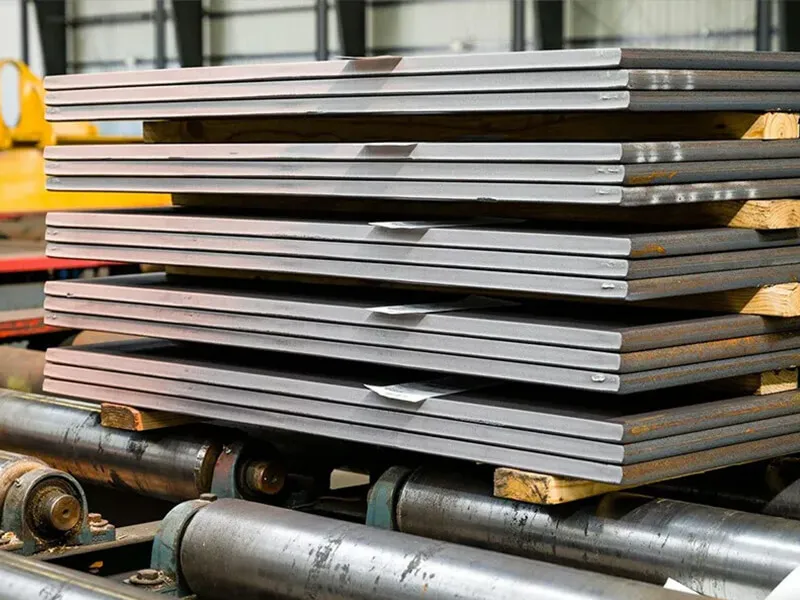
Non-destructive testing (NDT)1 for marine steel includes ultrasonic testing for internal flaws, magnetic particle inspection for surface cracks, and visual checks for surface finish. These methods ensure quality without damaging the material.
Dive deeper Paragraph:
Many buyers think NDT is only for the final ship inspection. That is not correct. In my business, we often perform NDT at the mill or before loading. This gives my clients, like the large importers in Pakistan and the Philippines, complete confidence.
NDT is about looking at the steel from the inside out. It catches problems that a mill test report cannot show. For example, a plate might have perfect chemical composition but still contain a small lamination inside. Laminations are separations within the steel layers. If you weld over that spot, it will cause a major failure. Here are the methods I rely on:
Ultrasonic Testing (UT)2:
This is my go-to method for thick marine steel plates. A technician uses a probe that sends sound waves into the steel. If the sound bounces back from a flaw, the machine shows an echo.
- Why it matters: It finds internal voids, inclusions, and laminations that are invisible from the outside.
- When to use: For critical structural parts like the keel plate or deck plating on large vessels.
Magnetic Particle Inspection (MPI)3:
This method is for finding cracks on the surface or just below it. The steel is magnetized, and a fine powder is applied. If there is a crack, the powder gathers at the flaw.
- Why it matters: It is very sensitive to tiny cracks that could grow under stress.
- When to use: For welded areas and edges of marine angle steel and L-shaped sections.
Visual Inspection4:
Never underestimate a good visual check. Before any high-tech test, I have my team examine the surface.
- Surface Finish: We look for scale, rust, and deep scratches.
- Edge Condition: We check for shear cracks or rough cuts.
For a client in Qatar, a simple visual inspection caught a batch of plates with poor edge preparation. We fixed it before loading. The client avoided a major welding problem on their site.
Material Traceability & Documentation for Project Compliance?
leading paragraph:
You have the steel. The inspector asks for paperwork. If the documents do not match, the steel is useless. Traceability is the chain of proof.
snippet paragraph:
Material traceability1 for marine steel projects requires a complete chain of records. This includes the mill test certificate, heat number2 markings on every plate, and third-party inspection reports. Without full documentation, your project cannot be certified.
Dive deeper Paragraph:
One of the biggest pain points my clients tell me about is documentation. They receive the steel, but the heat numbers on the plates do not match the certificates. Or the certificate is in Chinese with no translation. This is a nightmare for customs clearance and classification society approval.
Traceability is not a nice-to-have. It is a requirement for every international project. Let me break down what this means in practice.
What is a Heat Number?
A heat number is the unique ID for a batch of steel. It links every single plate back to the exact moment it was made. It tells you the furnace it came from, the chemical composition, and the mechanical test results. Every piece of steel I ship must have this number stamped or painted on it.
The Three Critical Documents
I ensure my clients get three main pieces of documentation. I have learned from experience that missing one of these stops the project.
-
Mill Test Certificate (MTC)3: This is the birth certificate of the steel. It comes directly from the mill. It must show:
- Heat number
- Chemical composition (C, Mn, Si, P, S, etc.)
- Mechanical test results (Tensile, Impact, Bend)
- Standard and grade (e.g., ABS Grade A, LR DH36)
Without this, your steel is just scrap metal to an inspector.
-
Third-Party Inspection Report4: Many of my clients in Vietnam and Malaysia require this. An independent company like SGS or BV comes to our warehouse or the mill. They witness the testing and check the dimensions. Their report gives the buyer peace of mind. It shows that the steel was checked by a neutral party before shipment.
-
Packing List with Traceability: This is where I add extra value. My packing list does not just list weights. It links the heat numbers to the specific bundles. If an inspector wants to check a specific plate, they can find it easily on the list.
I always tell my clients: “Get the documents before the ship leaves.” If there is a mistake, I can fix it at the warehouse. It is much harder to fix from 5,000 miles away. Once, a client in Romania needed an urgent correction on a certificate. Because we had all the records, we reissued it in two hours. They cleared customs without a single delay.
Conclusion
Marine steel plate testing is about safety and project success. Meeting international standards requires the right tests, careful inspection, and perfect paperwork. Get these steps right.
-
Understanding material traceability is crucial for compliance and project success. Explore this link to learn more. ↩ ↩ ↩ ↩
-
Heat numbers are vital for traceability and quality assurance. Find out more about their importance in this article. ↩ ↩ ↩ ↩
-
The MTC is essential for verifying steel quality. Discover its significance and requirements through this resource. ↩ ↩ ↩ ↩
-
Third-party inspections ensure quality and compliance. Learn how they protect your project with this informative link. ↩ ↩ ↩ ↩