
An engineering firm in Qatar was fabricating jacket legs for a new offshore gas platform. They needed over 1,500 tons of specialized steel that could survive decades in the harsh Arabian Gulf. Standard shipbuilding steel would not be enough.
This real project example details the specific steel grades and products we supplied for an offshore platform jacket. We focus on the extreme requirements for strength, toughness, and corrosion resistance, and how materials like API 5L pipe steel and offshore-grade plates meet the unique challenges of the ocean environment.
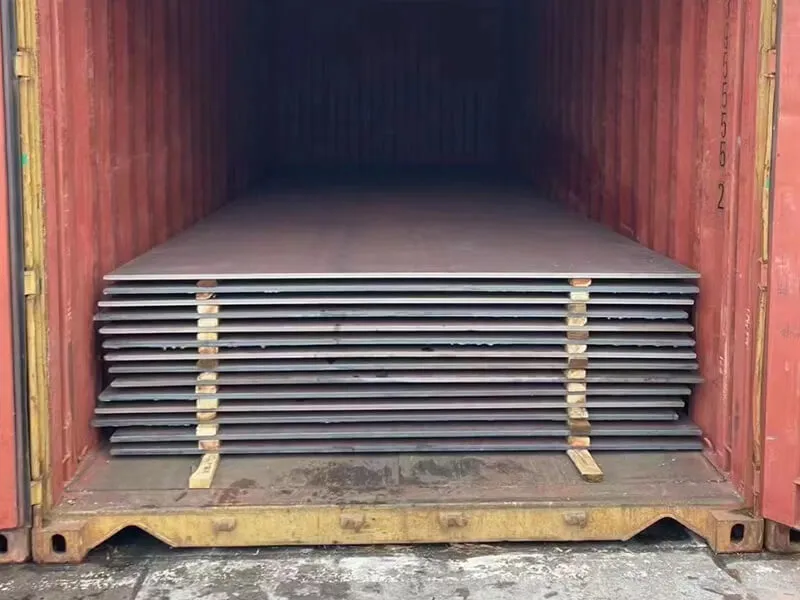
Building an offshore platform is one of the toughest engineering challenges. The materials must handle waves, wind, saltwater corrosion, and heavy loads for 30 years with minimal maintenance. Every steel component has a specific, critical job. Let’s look at the actual materials used in this project, starting from the pipelines that bring the oil up.
What kind of steel is used in oil pipelines?
A platform’s purpose is to extract oil and gas. The pipelines are its arteries, carrying high-pressure, sometimes corrosive fluids from the well to the surface. A pipeline failure here is catastrophic, both for safety and the environment.
Offshore oil pipelines use high-strength, low-alloy (HSLA) steel1, typically conforming to API 5L standards2. Grades like X65, X70, and X803 are common. This steel is designed for high yield strength4, excellent weldability, and good toughness to prevent fracture in the cold depths of the ocean and under high internal pressure.
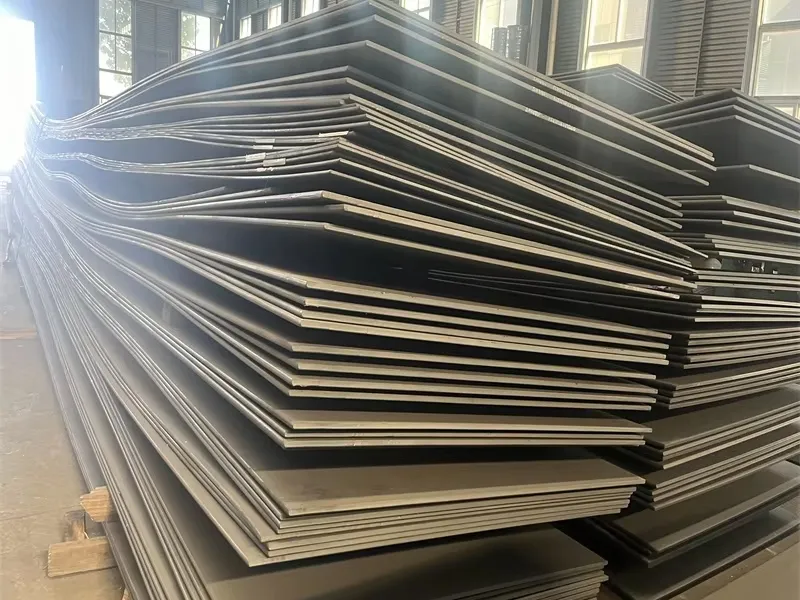
The Demands on a Subsea Pipeline: Beyond Basic Strength
Pipeline steel is not just strong steel. It is a carefully engineered product. The conditions are extreme: high pressure from inside, crushing external pressure in deep water, corrosive contents (like H2S gas), and sub-zero temperatures on the sea floor. The steel must balance multiple, often conflicting, properties.
The Core Standard: API 5L
This specification from the American Petroleum Institute is the global bible for line pipe. It defines everything.
- Grades (X42, X52, X60, X65, X70, X80, etc.): The "X" stands for yield strength4 in ksi (thousands of pounds per square inch). X65 means a minimum yield strength4 of 65 ksi (approx. 450 MPa). For our offshore project, X65 and X70 were specified for different sections.
- Product Specification Levels (PSL1 & PSL2): PSL2 has much stricter requirements for chemistry, toughness, strength uniformity, and non-destructive testing. All major offshore projects require PSL2 pipe.
- Supplementary Requirements: Projects often add "Sour Service5" requirements (for H2S resistance) or specify very low Carbon Equivalent (CE) for weldability.
How Offshore Pipeline Steel is Different
Compared to standard structural steel, pipeline steel has special characteristics:
- Extremely High Toughness: It must not crack, even at the low temperatures found in deep water. Charpy V-Notch impact tests6 are performed at temperatures like -10°C or -30°C, with very high energy absorption requirements.
- Controlled Chemistry for Weldability: Offshore pipelines are welded on lay barges. The welding must be fast and defect-free. A low CE value and limits on sulfur and phosphorus ensure this.
- Through-Thickness Properties: For thicker pipes, the steel must resist lamellar tearing (splitting along its layers) under the high stresses of welded connections.
A Comparison: Onshore vs. Offshore Pipeline Steel
The requirements escalate dramatically for the marine environment.
| Characteristic | Typical Onshore Pipeline (e.g., X60 PSL1) | Typical Offshore Pipeline (e.g., X65 PSL2 Sour Service5) | Why the Offshore Difference Matters |
|---|---|---|---|
| Yield Strength | 60 ksi (414 MPa) | 65 ksi (450 MPa) or higher. | Higher strength allows thinner pipe walls, reducing weight and material cost for long subsea runs. |
| Toughness Requirement | Moderate impact values at 0°C may be enough. | Very high impact values required at low temperatures (e.g., -30°C). | Prevents brittle fracture initiation from a weld defect in cold, deep water under high stress. |
| Chemical Composition Control | Standard limits. | Tighter limits on Sulfur (S) & Phosphorus (P). Very low CE for welding. | Low S/P improves resistance to Hydrogen-Induced Cracking (HIC)7 in sour service. Low CE allows field welding without pre-heat. |
| Non-Destructive Testing (NDT)8 | Standard UT may be sufficient. | 100% Ultrasonic Testing (UT) of the pipe body and welds is mandatory. | Ensures no internal defects are present that could become failure points under cyclic offshore loads. |
| Dimensional Tolerance | Commercial tolerance. | Very tight tolerances on wall thickness, diameter, and ovality. | Ensures precise fit-up for automatic welding on the lay barge and maintains flow efficiency. |
For the Qatar platform project, the client needed large-diameter, thick-walled API 5L X65 PSL2 pipe for the jacket’s main legs, which also act as conductors for drilling. Our role was to source this from a certified mill and provide the full suite of mill test reports, including HIC test results. This level of documentation is not optional; it is the first thing the client’s engineering team and the certifying authority (like DNV) will check. The steel in an oil pipeline is the project’s lifeline, and its specification is the first line of defense against failure.
What metal is used for oil rigs?
"Oil rig" is a broad term. People often picture the towering drill derrick. But the true workhorse is the massive steel substructure below the water: the jacket or hull. This skeleton is almost entirely made of a specific family of metals.
The primary metal used for oil rig structures is steel, specifically carbon-manganese steel1 and high-strength low-alloy (HSLA) steel2. For critical, highly stressed nodes and in splash zones, more resistant grades like offshore structural steel3 (e.g., API 2W4, API 2Y5) or even nickel-alloy steels may be used to combat fatigue and corrosion.
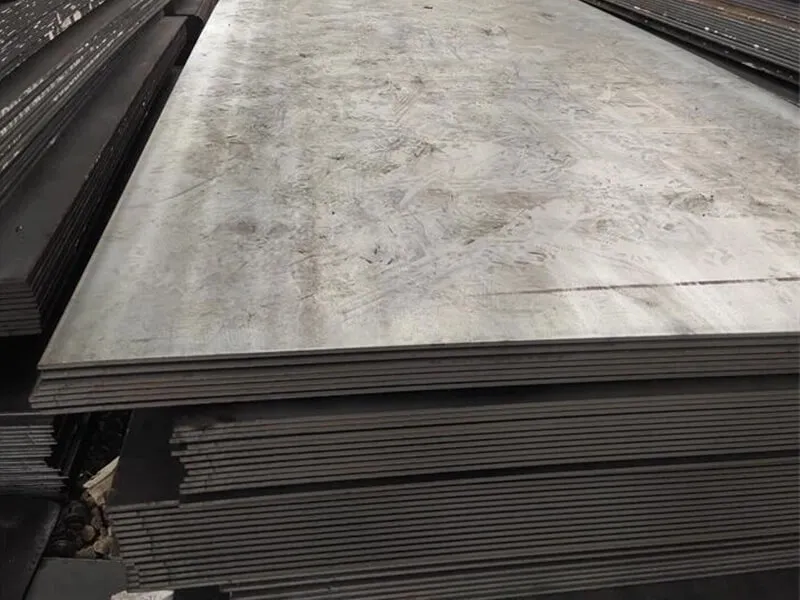
Steel as the Skeleton: Grades and Forms for a Giant
The choice of metal is dominated by steel for one reason: its unmatched combination of strength, toughness, weldability, and cost-effectiveness at a massive scale. However, not all steel is the same. An oil rig uses a carefully selected hierarchy of steel products.
The Bulk Material: Offshore Structural Steel Plates and Sections
Most of the jacket’s weight is in plates rolled into tubular members and wide-flange beams.
- Common Grades: Grades like ASTM A36, A572 Gr. 50 are used for secondary structures. But for primary legs and braces, higher grades are essential.
- Offshore-Specific Grades: Standards like API 2W4 (for plates) and API 2Y5 (for shapes) were developed specifically for offshore structures. They have guaranteed yield strength (e.g., 50 ksi) and, most importantly, guaranteed through-thickness (Z-direction) properties to prevent lamellar tearing at complex welded joints.
- Our Supply: For the platform jacket, we supplied large quantities of S355G10+M steel plates6 (a European offshore grade similar to API 2W4 Grade 50). This steel was then rolled by the fabricator into the large-diameter tubulars for the legs and braces.
Special Areas Demand Special Metals
The entire structure is not uniform. Three zones have different demands:
- Splash Zone: The area between high and low tide. This zone suffers from constant wet-dry cycles and maximum oxygen exposure, making corrosion most aggressive. Here, steel is often clad with a thicker corrosion allowance7 (extra steel thickness), coated with monolithic finishes, or clad with stainless steel.
- Subsea Zone: Permanently underwater. Corrosion is slower but still present. Cathodic protection (sacrificial anodes) is the primary defense here, protecting the carbon steel.
- Atmospheric Zone: Above the water. Protected by paint systems. The steel here must resist wind fatigue.
Why Not Other Metals?
Other metals play supporting, not primary, roles.
- Aluminum: Used for lightweight accommodation modules on top. It is not strong enough for the main structure.
- Stainless Steel: Used for specific piping, valves, and fasteners where corrosion resistance is critical. It is too expensive for the entire structure.
- Copper-Nickel Alloys: Used in seawater cooling systems for their biofouling and corrosion resistance.
Material Selection Logic for Key Rig Components
The metal choice follows a clear cost/performance logic.
| Rig Component | Primary Metal(s) | Key Property Required | Rationale & Fabrication Note |
|---|---|---|---|
| Jacket Legs (Main Tubes) | API 2W4 Grade 50 / S355G10+M Steel Plates | High strength, excellent through-thickness toughness. | These are the primary load-bearing columns. They are fabricated from rolled and welded plate. Lamellar tearing resistance at weld joints is critical. |
| Horizontal & Diagonal Braces | API 2H Grade 50 / S355G8+N Steel Tubes | Good strength, weldability, fatigue resistance. | Braces connect the legs. They experience complex dynamic loads. Seamless or welded tubes are used. |
| Node Joints (where braces meet legs) | Z-Grade Quality Steel Plates8 (e.g., S355G10+Z35) | Exceptional through-thickness (Z-direction) ductility. | Nodes are the most stressed points. Z-grade steel is specially processed to resist tearing under the multi-directional stresses of welds. |
| Deck Support Beams | ASTM A572 Gr. 50 Wide Flange Beams | High strength-to-weight ratio. | The deck is a separate structure. Beams provide support for the heavy topside equipment. |
| Riser Clamps & Guides | ASTM A479 Duplex Stainless Steel9 | High strength and pitting corrosion resistance. | These components are in constant contact with seawater and must not corrode to allow riser movement. |
In this real project, the fabricator’s material take-off list was very detailed. It called for specific plate grades and required Z35 certification for all plate over 40mm thick destined for node areas. Our job was to match this list exactly. We worked with our mill partners to allocate the right heats of steel that had undergone the necessary mechanical testing, including through-thickness reduction of area tests. Supplying metal for an oil rig is about providing certified performance data as much as providing the physical steel.
What are offshore platforms made of?
Look at an offshore platform. You see a complex array of shapes. But at its core, it is a system built from a surprisingly short list of engineered steel products. These products are chosen for their ability to be fabricated into a strong, durable, and safe structure.
Offshore platforms are primarily made of fabricated steel components. This includes steel plates formed into tubular members for the jacket, wide-flange beams and plates for the deck structure, and special sections like bulb flats for stiffening. Everything is joined together by a vast quantity of high-strength welds and bolts.
Deconstructing a Platform: From Raw Steel to Integrated Structure
An offshore platform is a monument to fabrication. It starts with raw steel products in a yard and ends as a single, integrated unit. Let’s break down what goes into its main assemblies.
The Jacket: The Underwater Foundation
The jacket is a three-dimensional space frame, usually made of tubular steel members. Its construction relies on:
- Large-Diameter Tubulars: These form the legs and major braces. They are made from heavy steel plates (like the S355G10+M we supplied) that are cut, beveled, rolled into cylinders, and longitudinally welded.
- Node Pieces: The most complex parts. These are forged or fabricated from thick, Z-quality steel plate to form the connecting points for multiple tubes.
- Piles: Large steel pipes that are driven through the jacket legs into the seabed. They are made from high-strength, thick-walled API pipe steel (e.g., X70 grade) to withstand driving forces and provide anchorage.
The Deck: The Working Topside
The deck is like a multi-story industrial factory. Its structure is more traditional but must support enormous weight.
- Primary Deck Beams: These are typically heavy wide-flange beams (e.g., W36x300) that span between the jacket legs. They carry the entire load of the topside.
- Deck Plating and Stiffeners: The deck floor is made of thick steel plates. These plates are stiffened underneath by an array of bulb flat steel sections or T-sections to prevent buckling under localized loads from equipment.
- Equipment Modules: These are pre-built units (living quarters, power generation, processing). They have their own internal steel frames, often made from standard I-beams and channels.
The Connection: The Vital Interface
How the deck sits on the jacket is critical. It uses large, forged steel shear keys and grouted connections or massive high-strength bolts. These components are made from specially heat-treated alloy steels.
A Bill of Materials (BOM) for a Typical Jacket Section
This table shows how the raw steel products translate into a finished part of the structure.
| Finished Jacket Component | Primary Raw Steel Products Used | Fabrication Process | Why This Product is Chosen |
|---|---|---|---|
| Main Leg (30m length) | Heavy Steel Plate (e.g., 80mm thick S355G10+M), 2.5m wide. | Plate is cut to length, edges beveled, cold-rolled into a cylinder, seam welded (SAW). | Plate allows for variable wall thickness along the leg’s height. The grade offers strength and through-thickness integrity. |
| Diagonal Brace (Tube) | Seamless or welded Steel Pipe to API 5L or structural spec. | Pipe is cut to precise length and angle, ends are profiled (conical cuts) for welding to nodes. | Pipe offers excellent resistance to uniform external pressure (from water) and buckling. |
| Complex Node | Thick Z-grade Steel Plate (e.g., 100mm S355G10+Z35), cast steel forgings. | Plates are cut, shaped, and welded together into a 3D "star" shape. Forgings are machined. | Z-grade plate resists lamellar tearing from the multi-directional weld stresses converging at the node. |
| Launch Truss | Heavy Wide-Flange Beams, Thick Plates. | Beams are welded into a truss structure to support the jacket during sideways launch from a barge. | Beams provide high bending strength to resist launch forces, which are different from in-service loads. |
| Conductor Guides | Marine Grade L-Shaped Section Steel (Angle). | Angles are welded into frames that align the drilling conductors as they are driven through the jacket. | L-shaped steel is stiff, easy to fabricate into frames, and its marine grade resists the splash zone corrosion. |
For the Qatar project, our supply included not just the plates for the main legs, but also a significant amount of marine-grade L-shaped section steel. This steel was used for hundreds of secondary brackets, walkway supports, and conductor guides all over the jacket. Even these "small" parts must be marine grade. If a walkway bracket rusts through, it becomes a safety hazard. Every single component, from the 80-ton leg section to the small bracket, is part of a system where failure is not an option. Supplying steel for an offshore platform means understanding how each product will be used in this integrated, high-stakes system.
What materials are used in offshore structures?
Steel is the backbone, but an offshore structure is a complete ecosystem. It needs materials to protect the steel, to perform specific functions, and to ensure the safety of personnel. The material list extends far beyond basic structural shapes.
Beyond structural steel, offshore structures use a wide range of materials. This includes corrosion protection systems (coatings, anodes), fireproofing (cementitious sprays, intumescent paints), specialized composites for piping, elastomers for seals, and non-metallic materials for accommodation and electrical insulation.
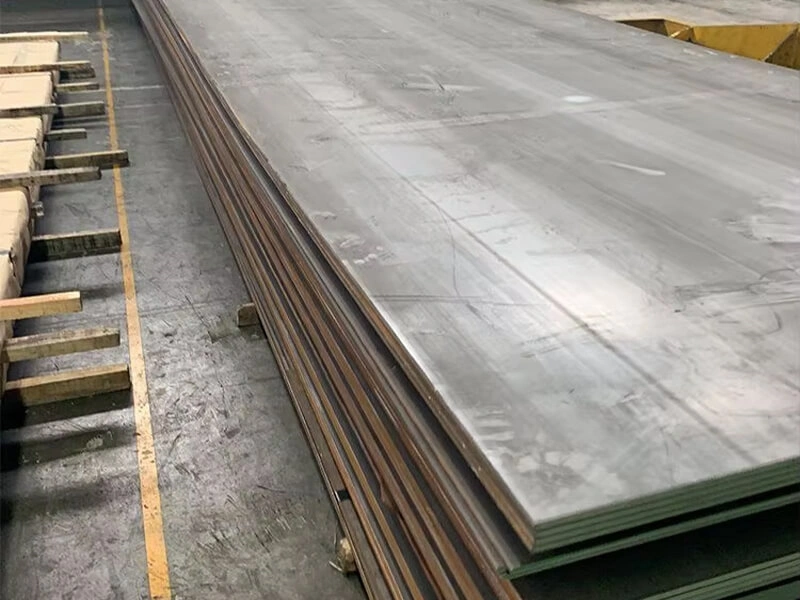
The Complete Material Ecosystem: More Than Just Steel
If steel is the skeleton, these other materials are the skin, nerves, and immune system. They protect the investment, enable function, and ensure longevity. Ignoring them in the procurement and planning phase is a major mistake.
Category 1: Corrosion Protection Materials
This is the largest category after steel itself. The goal is to manage the three corrosion zones.
- Coatings and Paints:
- Epoxy Coatings: The workhorse for submerged and splash zones. High-build, chemically resistant.
- Zinc-Rich Primers: Provide sacrificial galvanic protection at the paint-steel interface.
- Polyurethane Topcoats: UV-resistant finishes for the atmospheric zone.
- Cathodic Protection (CP):
- Sacrificial Anodes: Blocks of aluminum-zinc-indium or magnesium alloy bolted to the structure. They corrode instead of the steel. We often see these anodes specified by weight and alloy type in project documents.
- Impressed Current Systems: Use an external power source and inert anodes. Used for very large structures.
Category 2: Fire and Blast Protection Materials
Hydrocarbon processing is the main activity. Fire is the top safety risk.
- Fireproofing: Steel loses strength rapidly in fire. Cementitious spray (vermiculite-based) is applied thickly to deck legs and critical structural members to provide insulation.
- Intumescent Paints: These paints swell when heated, forming an insulating char. Used in areas where aesthetics or weight matter more.
- Blast Walls: Made from special high-strength, high-toughness steel plates designed to deform and absorb energy from an explosion.
Category 3: Functional and Non-Metallic Materials
These materials enable the platform to operate.
- Piping Materials: While flowlines are steel, internal piping uses:
- Duplex & Super Duplex Stainless Steel: For corrosive fluids and seawater systems.
- GRP (Glass Reinforced Plastic): For low-pressure water and drainage lines.
- Inconel / Hastelloy: Nickel alloys for extreme corrosion and temperature in specific process areas.
- Elastomers and Seals: Special grades of rubber for gaskets, seals, and hoses that resist oil, gas, and seawater.
- Accommodation Materials: Lightweight composites, mineral wool insulation, and specialized flooring for living quarters.
Integrated Material Strategy Table
A successful project coordinates all these materials from the start.
| System / Need | Primary Material Solution | Secondary/Supporting Materials | Coordination Point with Steel Supply |
|---|---|---|---|
| Protect Steel in Splash Zone | Thick, high-performance epoxy coating system. | Additional steel corrosion allowance (extra thickness). | The steel surface condition we supply (e.g., Sa 2.5 blast cleaning) is critical for coating adhesion. |
| Prevent Galvanic Corrosion | Sacrificial aluminum alloy anodes. | Insulating gaskets and sleeves where dissimilar metals connect. | We ensure our steel (e.g., marine angles) has a clean, mill-scale-free surface for optimal anode current distribution. |
| Ensure 60-minute fire rating for deck legs | Cementitious fireproofing spray, 50mm thick. | Wire mesh to hold the material onto steel. | The fireproofing contractor needs the steel dimensions. Our accurate sizing and profiling information helps them quote. |
| Seawater Cooling Pipework | Super Duplex Stainless Steel (UNS S32750) pipes. | Insulation to prevent condensation. | Different material. Procurement is separate, but installation schedules must align with structural steel readiness. |
| Non-Slip Deck Surfacing | Grit-blasted steel plate with epoxy anti-slip coating. | Paint stripe markings for safety zones. | We can supply steel plate pre-blasted to the required profile (e.g., Grit G40) to serve as the base for the anti-slip coating. |
In our role as a steel supplier, we are part of this larger material ecosystem. When we supplied the S355 plates for the Qatar jacket, the project’s coating specification was part of the technical package. It dictated the required surface preparation (blasting to Sa 2.5). Therefore, we arranged for the plates to be shot-blasted and primed with a temporary shop primer at the mill. This protected the steel during fabrication and provided the perfect profile for the final offshore coating system to be applied later. Understanding the full material context allows us to add value beyond just selling tons of steel; it allows us to deliver a product that is ready for the next step in building a complete, durable offshore structure.
Conclusion
An offshore platform is a masterpiece of material engineering. Its strength comes from graded steel, its longevity from integrated protection systems, and its function from a symphony of specialized materials.
-
Explore how carbon-manganese steel contributes to the strength and durability of oil rig structures. ↩ ↩
-
Learn about HSLA steel’s advantages in enhancing the performance of offshore structures. ↩ ↩
-
Discover the critical role of offshore structural steel in ensuring the safety and integrity of oil rigs. ↩ ↩
-
Find out how API 2W steel is specifically designed for offshore structures and its unique properties. ↩ ↩ ↩ ↩ ↩ ↩ ↩
-
Understand the significance of API 2Y steel in providing strength and reliability in offshore environments. ↩ ↩ ↩ ↩
-
Explore the features of S355G10+M steel plates and their application in building robust oil rigs. ↩ ↩
-
Learn about the importance of corrosion allowance in protecting oil rigs from environmental damage. ↩ ↩
-
Find out why Z-Grade Quality Steel is essential for high-stress areas in oil rig structures. ↩ ↩
-
Learn about the benefits of Duplex Stainless Steel in enhancing corrosion resistance in oil rigs. ↩