
I still remember the first time a client from Mexico called me, frustrated. He had received a batch of marine steel plates that looked fine on paper. But when his team started cutting, the rust was already deep. The project fell behind schedule. He lost money. I tell you this story because buying steel from overseas can feel like a gamble. You might save money upfront, but the wrong plate can sink your entire project.
The main risks when buying marine steel plate from overseas include inconsistent quality, wrong grades, poor packaging, and communication delays. If you do not check these areas carefully, you can end up with steel that corrodes too fast or fails safety tests.
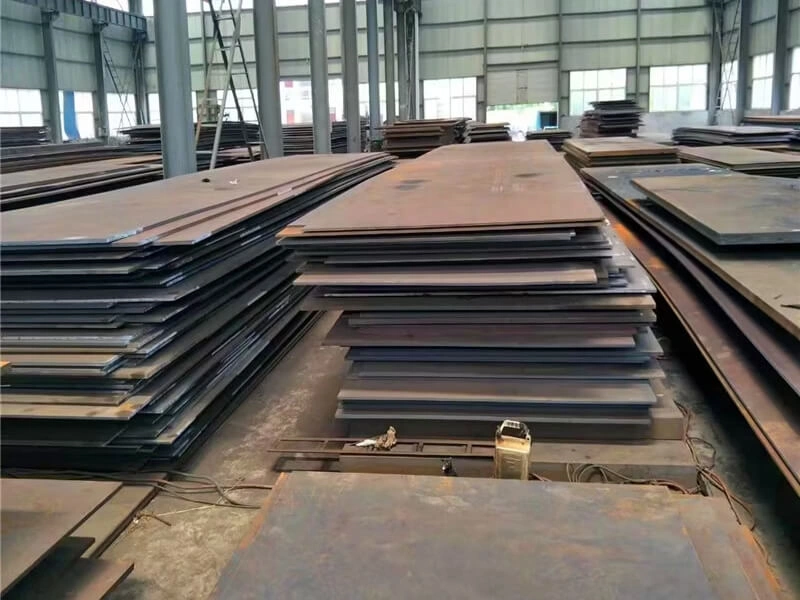
Buying from overseas suppliers, especially from countries like China, can give you great prices and flexible options. But you need to know what to look for. You also need to know what questions to ask. In this article, I will walk you through the most common risks. I will also share how we at CN Marine Steel help our clients avoid these exact problems.
What are the disadvantages of steel plates?
When a buyer from Saudi Arabia first contacted me, he was tired of surface flaws on his steel. He told me his previous supplier sent plates that looked perfect on the bill of lading. But when they arrived, the surface had pits and scales. This is a common disadvantage. Steel plates can have hidden problems.
The main disadvantages of steel plates include susceptibility to corrosion1, weight challenges during transport, surface defects like scaling or pitting, and inconsistent mechanical properties if the mill quality is poor.
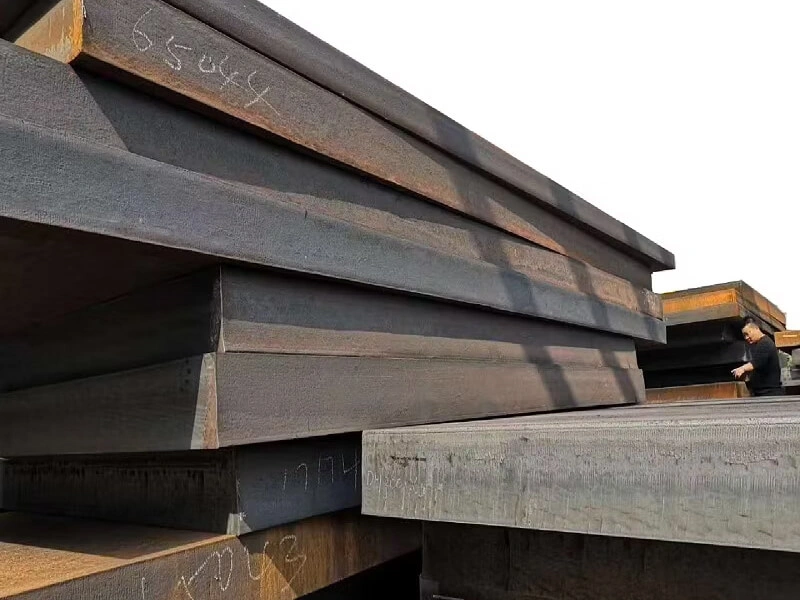
Understanding the Hidden Flaws in Steel Plates
You might think a steel plate is just a piece of metal. But in the marine industry, the plate is the backbone of your ship or tank. If the plate has a disadvantage, your whole structure is at risk. Let me break down the specific disadvantages you need to watch for.
First, there is the issue of internal stress2. Sometimes, during the rolling process at the mill, the steel cools unevenly. This creates internal stress. When you start cutting or welding the plate, it can warp or twist. This is a disaster for shipbuilding, where precision is everything. I have seen a whole section of a hull go out of alignment because the plates had hidden internal stress. The fabricator had to scrap the plates and order new ones, costing weeks of delay.
Second, there is the problem of inclusions3. These are non-metallic particles trapped inside the steel. You cannot see them from the outside. But when you apply stress to the plate, these inclusions become weak points. They can lead to cracks. For a ship that faces constant pounding from waves, this is extremely dangerous. This is why we always recommend third-party inspection4 like SGS. They can do ultrasonic testing to find these internal flaws before the steel leaves the factory.
Third, consider the flatness tolerance. Steel plates for ships need to be flat. If a plate has a slight bend or twist, called "camber," it creates problems during assembly. Your workers will struggle to fit the plates together. This slows down production and increases labor costs. A cheap plate might save you money upfront, but if it slows down your yard, you lose that saving many times over.
Finally, there is the chemical composition. The mill might say the plate is Grade A ship steel. But if the manganese or carbon content is slightly off, the weldability changes. Your welders might find the plates harder to work with. Or worse, the welds might not hold as strongly as they should. In marine environments, bad welds can lead to catastrophic failure.
| Disadvantage | How It Affects Your Project | How We Address It |
|---|---|---|
| Internal Stress | Warping during cutting/welding | Mill test reports & controlled cooling |
| Inclusions | Hidden weak points leading to cracks | Third-party ultrasonic testing (SGS) |
| Flatness Issues | Slow assembly, poor fit-up | Strict tolerance checks before shipment |
| Wrong Chemistry | Poor weldability, weak joints | Certified mill certificates & random lab tests |
Is steel plate1 safe?
A buyer from Vietnam once asked me this question directly. He was building a small tanker. He worried that an accident with the steel could hurt his workers or ruin the ship. I told him that steel itself is a safe material. But the safety depends on the quality of the plate2 and how you handle it.
Yes, steel plate is safe when it meets the correct grade specifications, is handled properly with the right equipment, and is free from manufacturing defects like laminations or cracks.
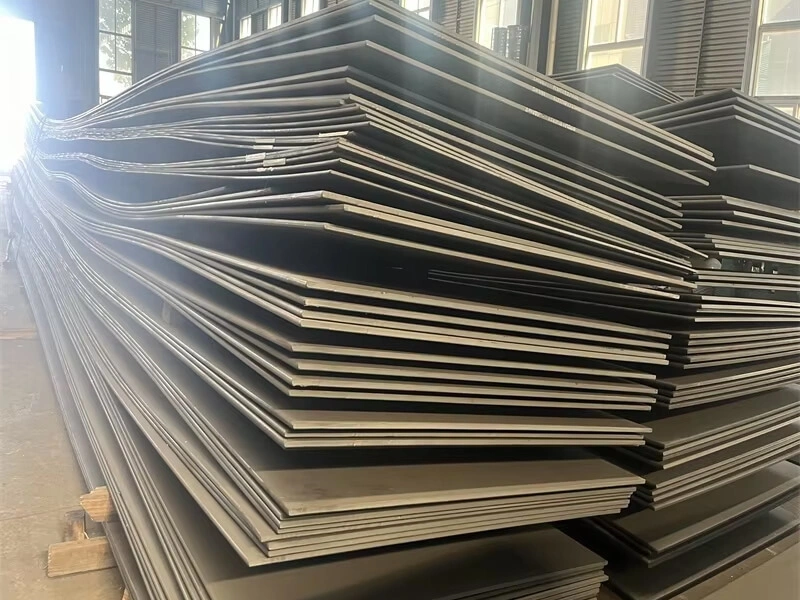
When Steel Plate Becomes a Safety Risk
You might trust a steel plate just because it looks strong. But strength alone does not equal safety. In my years of working with shipbuilders and contractors, I have seen how a seemingly safe plate can turn into a hazard. Let us look at the specific conditions where steel plate safety becomes a concern.
The first safety risk is brittle fracture1. This happens in cold conditions. Some steels lose their toughness when the temperature drops. If you are building a ship that sails in cold northern waters, you need steel rated for that temperature. If you use the wrong grade, the plate can crack suddenly without warning. It snaps like glass. This is not a slow bend or tear. It is a sudden break. That is a major safety risk for any vessel.
Next, consider lamination2. This is a defect where the steel separates into layers, like a book. You cannot always see it. But when you weld on a laminated plate, the heat can cause the layers to separate further. This creates a weak spot. If that spot is in a critical area, like the hull, it can lead to leaks. I had a client in Malaysia who found laminations only after they started welding. We had to replace those plates immediately to keep the project safe.
Another safety factor is the surface condition3. Plates with sharp edges, burrs, or deep scratches can injure workers. When you move heavy plates with magnets or cranes, a burr can catch on something. This can cause the load to shift or drop. Good suppliers dress the edges and ensure the plates are clean. This is not just about quality. It is about protecting the people in your workshop.
Finally, there is the safety of the finished structure. If the plate corrodes unevenly, it creates weak spots. A plate that is safe when new might become dangerous after a few years if its corrosion resistance4 is poor. This is why choosing the right grade for the environment is so important. A plate that is safe for an inland barge might not be safe for an ocean-going oil tanker.
What are the grades of ship plate1?
When I talk to new clients, like the buyer from Qatar, they often just say, "I need ship plate." But ship plate is not one single thing. It is a family of products. Each grade is made for a different part of the ship. Using the wrong grade is like using a spoon to cut a steak. It will not work.
The grades of ship plate are set by classification societies like ABS, LR, and DNV. Common grades include General Strength grades A, B, D, E, and Higher Strength grades2 AH32, DH36, and EH40.
[^3] for ship sections](https://cnmarinesteel.com/wp-content/uploads/2026/01/Marine-steel-plate-36-1.webp)
Breaking Down the Different Grades of Marine Steel
Understanding grades can feel like learning a new language. But if you buy steel, you need to speak it. I will explain it in a way that makes sense for your projects. Think of the grade as a promise. It is a promise about the steel’s strength and toughness.
Let us start with General Strength grades4. These are your standard plates. Grade A is the most common. It is used for parts of the ship that do not face the highest stress. Think of the superstructure or the interior decks. Grade B has a bit more toughness. It is for slightly more critical areas. Grade D and E are for colder environments. They are tested to ensure they do not become brittle in low temperatures. For a ship sailing in the North Atlantic, you would use Grade D or E, not Grade A.
Then we have the Higher Strength grades. These are marked with an "H" like AH, DH, or EH. The number, like 32 or 36, tells you the minimum yield strength. AH36 is stronger than AH32. These steels allow you to use thinner plates while still getting the same strength. This makes the ship lighter. A lighter ship can carry more cargo. That is why many modern ships use higher strength steels for the hull.
But here is the catch. Higher strength steels need more careful welding5. The heat input must be controlled. The filler material must match. If you buy AH36 but your welding team is used to Grade A, you might run into problems. The weld could be weaker than the plate. So, when you choose a grade, you must also think about your workshop’s capabilities.
Another important point is the classification society6. A plate certified by ABS (American Bureau of Shipping) is not the same as one certified by DNV (Det Norske Veritas). They have slightly different rules. But in practice, most mills can produce steel that meets multiple society requirements. When you order, you must specify which society’s stamp you need. Your local port state control or insurance company will check this.
| Grade Type | Examples | Typical Use | Key Feature |
|---|---|---|---|
| General Strength | A, B, D, E | Decks, superstructure, bulkheads | Good weldability, various toughness levels |
| Higher Strength | AH32, DH36, EH40 | Hull shell, keel, high-stress areas | Higher yield strength for lighter structures |
| Z-Grade | Z15, Z25, Z35 | Thick plates, nodes | Improved through-thickness strength |
Why does an un-coated steel plate1 corrode?
A buyer from the Philippines once asked me this. He stored some plates outside, and they rusted in just a few weeks. He was upset. He thought the steel was bad. I explained that rust is not always a sign of bad steel. It is a sign of chemistry. Steel wants to go back to its natural state, which is iron ore, or rust.
An un-coated steel plate corrodes because iron has a natural tendency to react with oxygen and moisture in the air. This electrochemical process creates iron oxide, which we call rust.
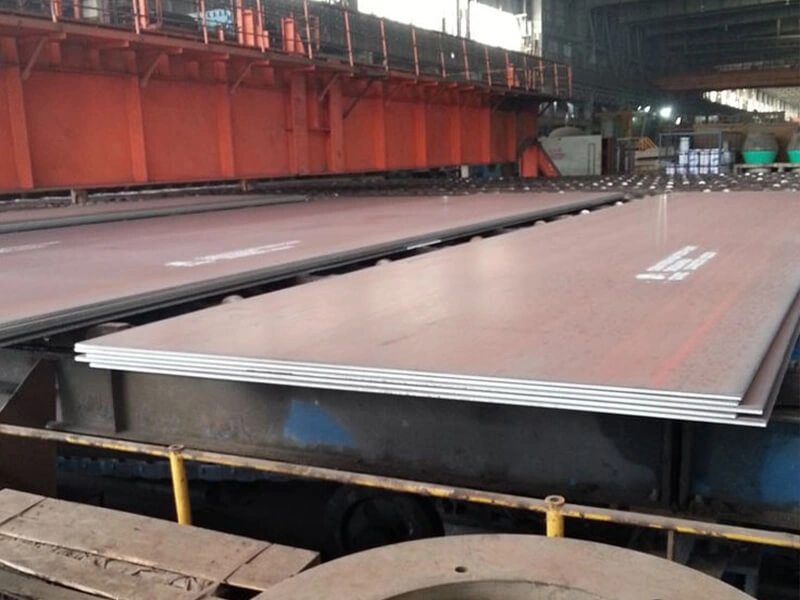
The Science Behind Rust and How to Fight It
You might think rust is just a surface problem. But in the marine world, rust is a slow poison. It eats away the metal, making it thinner and weaker. Understanding why it happens helps you stop it. Let me explain the process simply.
Steel is mostly iron. But in nature, iron is usually found as an ore, mixed with oxygen. In a steel mill, we use huge amounts of energy to remove that oxygen and make pure iron. But the iron "remembers" its natural state. When it is exposed to air and water, it starts a reaction to get back to that oxidized state. This is corrosion. It is a battery, a small electrical cell, on the surface of your steel.
The speed of this reaction depends on the environment. In a dry desert, like parts of Saudi Arabia, corrosion is slow. In a humid, salty coastal area, like in the Philippines or Vietnam, it is very fast. Salt water is an excellent conductor of electricity. It speeds up the battery reaction. That is why marine steel2 needs special protection.
There are two main ways to fight this. The first is alloying. We add other metals to the steel to change its chemistry. For example, adding chromium gives you stainless steel. But for standard ship plate, we add small amounts of copper and other elements. This helps a bit, but it does not stop rust completely. It just slows it down.
The second way is coating. This is your main defense. A good coating system3 keeps the oxygen and moisture away from the steel. But here is the key. For a coating to work, the steel surface must be perfectly prepared. It needs to be clean and dry. If there is mill scale or oil on the plate, the coating will not stick. It will peel off, and rust will start underneath.
At our warehouse in Liaocheng, we see this all the time. A client might order un-coated plates for a project starting in three months. They store them outside. Even with good steel, surface rust appears. This is normal. It is often called "weathering rust." It does not damage the steel’s strength if it is light. But before painting, you must remove it, usually by sandblasting. If you paint over rust, the rust will continue to grow under the paint. The lesson is simple: protect your investment. If you cannot use the steel immediately, keep it covered and dry.
Conclusion
Buying marine steel plate from overseas is a smart move for your business. But you must avoid the risks of bad quality, wrong grades, and poor communication. Focus on trusted suppliers who offer clear communication and third-party inspection support.
-
Understanding the corrosion of un-coated steel plates is crucial for preventing rust and ensuring longevity in various environments. ↩ ↩ ↩ ↩ ↩
-
Marine steel has unique properties that make it suitable for harsh environments; learn how it resists corrosion. ↩ ↩ ↩ ↩ ↩
-
A good coating system is essential for preventing rust; discover the best practices for effective steel protection. ↩ ↩ ↩
-
Learn about General Strength grades and their uses in ship construction, ensuring you choose the right material for your project. ↩ ↩ ↩
-
Welding higher strength steels requires specific techniques; this resource will help you avoid common pitfalls. ↩
-
Understanding classification societies is crucial for compliance and safety in shipbuilding; explore this link for detailed insights. ↩