
Buying marine steel from overseas feels complex. Delays, unclear pricing, and quality risks stop many buyers. Let’s break down the process so you can order with complete confidence.
Ordering marine steel plate from us involves five clear steps: inquiry with specifications, receiving a detailed quotation, confirming order & inspection terms, production & quality control, and final delivery. We support you with clear communication, flexible options, and quality certifications every step of the way.
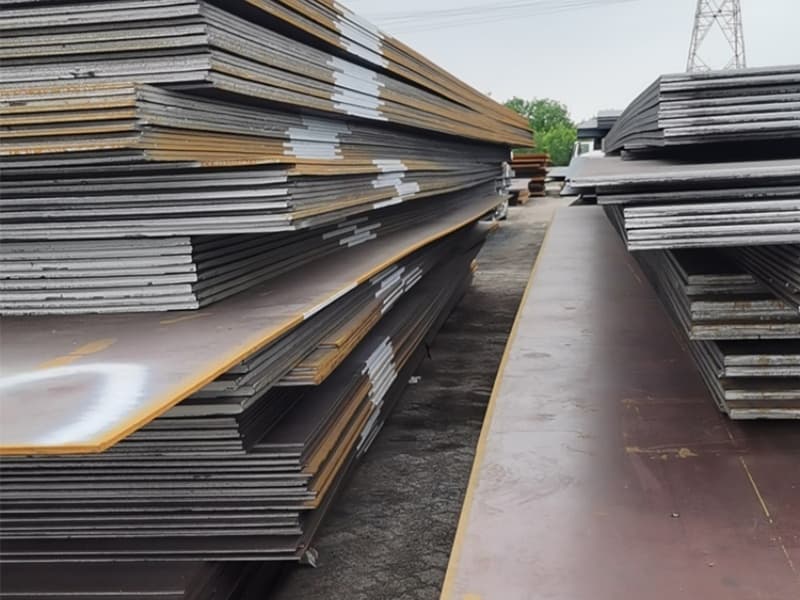
I remember working with Gulf Metal Solutions from Saudi Arabia. Their main issue was not finding suppliers, but finding a reliable partner. Their previous experiences were filled with slow replies and surprise problems. Our process is built to eliminate those exact pain points. This guide will show you how we make international steel procurement smooth and predictable.
What are the grades of marine steel plates?
The wrong steel grade can fail in a marine environment. Corrosion or cracking can lead to expensive repairs and safety risks. Choosing the correct grade is your first and most important decision.
Common marine steel plate grades1 include ABS AH36/DH36/EH36, LR AH36/DH36/EH36, and DNV NV A36/D36/E36. The prefix (A, D, E) indicates toughness at different temperatures, and the number (36, 40) indicates yield strength. We supply all major certified grades for global shipbuilding and offshore projects.
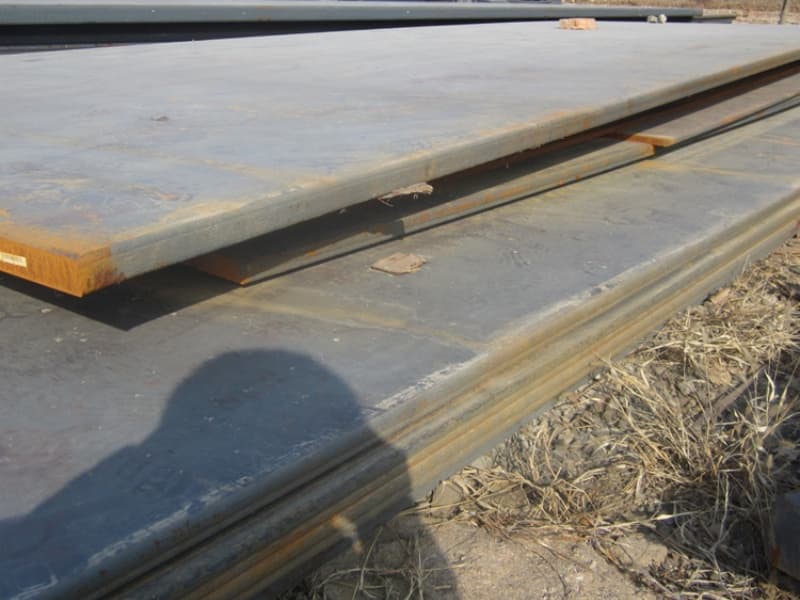
Knowing the grade names is just the start. You need to understand what they mean for your project. Let’s look at the two main classification systems.
Classification by Society and by Application
Marine steel is defined by classification societies2 like ABS (American Bureau of Shipping) and LR (Lloyd’s Register). But you can also think about grades by their intended use.
| Classification System | Common Grades | Key Property | Typical Application |
|---|---|---|---|
| By Society & Strength | AH36/DH36/EH36 (Yield: 355 MPa) | Standard strength, good toughness. | Most commercial ship hulls, offshore structures3. |
| AH40/DH40/EH40 (Yield: 390 MPa) | Higher strength, weight saving. | Large container ships, critical load areas. | |
| By Application Environment | General Hull Steel (e.g., ABS Grade A, B, D, E) | Good weldability, general toughness. | Internal structures, non-critical parts. |
| Ice Class Steel (e.g., ABS Ice Class B, LR Ice Class 1A) | Extra-low temperature toughness. | Vessels operating in Arctic/Antarctic waters. | |
| Offshore & Structural Steel (e.g., EN 10025 S355G2+M) | High strength and specified impact values. | Wind turbine towers, jacket legs for oil platforms. |
The letter in the grade is crucial. ‘A’ grade steel is tested for toughness at room temperature. ‘D’ grade is tested at -20°C. ‘E’ grade is tested at -40°C. For a bulk carrier sailing in tropical waters, AH36 may be enough. For an oil rig in the North Sea, you will likely need DH36 or EH36 for safety.
Beyond the Grade: The Importance of Certification
Specifying "AH36" is not enough. You must receive material with a valid Mill Test Certificate (MTC)4 from a certified mill. This certificate is like the steel’s passport. It proves its chemical composition and mechanical properties meet the exact standard you ordered.
We work only with certified mills. When Gulf Metal Solutions orders DH36 plates from us, they receive the full MTC packet. This document allows their clients, and ultimately the classification society surveyor, to verify the material. Without proper certification, your steel cannot be approved for marine use. Always ask for the MTC upfront in your quotation. We provide it as a standard part of our service, because transparency builds trust.
How much does a 4×8 sheet of 3/16 steel cost?
Asking for a "price per sheet" is normal, but for marine steel, this simple question has a complex answer. The final cost depends on much more than just size.
A 4×8 foot sheet of 3/16 inch (4.76mm) thick marine steel plate does not have a single fixed price. The cost varies based on grade (AH36 vs. DH36), certification, surface finish, order quantity, current raw material prices, and international freight to your destination port.
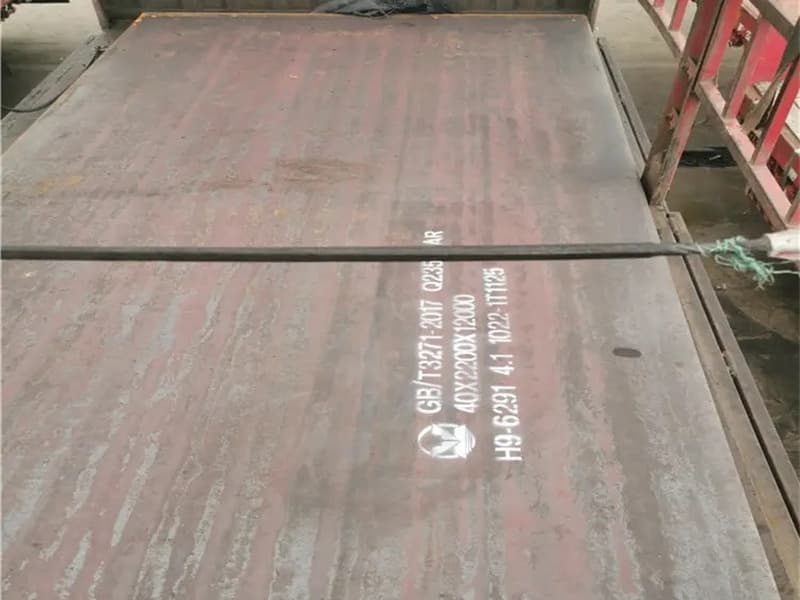
Giving an accurate price requires a conversation. Let’s break down all the elements that change the number on your invoice.
The Real Cost Build-Up: More Than Just Metal
The price of your steel sheet is built like a layered cake. The base is the raw material cost, but many other layers are added on top.
| Cost Component | What It Is | Why It Matters for Your Quote |
|---|---|---|
| 1. Base Material Cost | The price of the steel itself per ton from the mill. This changes daily based on global iron ore and scrap prices. | This is the biggest variable. A price quote is only valid for a short time (e.g., 24-72 hours) because of this volatility. |
| 2. Grade & Certification Premium | AH36 costs less than DH36. Steel from a mill certified by ABS/LR/DNV costs more than non-certified steel. | You pay for performance and assurance. Certified marine-grade steel is a premium product. |
| 3. Processing & Cutting Fees | Cutting your 4×8 sheet from a master plate. Precision plasma cutting costs more than standard shearing. | If you need exact dimensions or many pieces, cutting fees become significant. We can advise on the most cost-effective way. |
| 4. Surface Treatment | Mill scale (black), pickled and oiled, or pre-primed surfaces have different prices. | Pickled steel resists rust better during transport but costs more. This choice affects both initial price and your preparation work. |
| 5. Packaging & Inland Logistics | Professional export packaging (waterproof, sturdy) and trucking to the Chinese port. | Good packaging, like the kind Gulf Metal Solutions praised, prevents damage but adds a small cost. It is always worth it. |
| 6. International Freight & Insurance | Sea freight cost from China to your nearest port (e.g., Dammam, Jebel Ali, Houston). | This can sometimes equal 20-30% of the material cost. We handle FOB or CIF quotes so you see the total delivered cost. |
So, a 4×8 sheet of 3/16" commercial-grade steel might have one very low price. But a 4×8 sheet of 3/16" ABS-certified AH36 steel, pickled and oiled, cut to size, packed for export, and shipped to Saudi Arabia will have a completely different, and honestly higher, price. The latter is what you need for a marine project.
How to Get an Accurate Quote: Provide Clear Information
To get a fast and accurate price from us, please provide these details in your inquiry: 1) Grade and Standard (e.g., ABS AH36), 2) Dimensions and Tolerances (Thickness, Width, Length, quantity of sheets), 3) Surface Condition requirement, 4) Destination Port, 5) Any special testing (SGS, third-party inspection). With this information, we can give you a firm, all-inclusive price within hours, just as we did for our clients in Saudi Arabia and Mexico.
What are the steps in the steel manufacturing process?
You trust us with quality steel, but how is it actually made? Knowing the process helps you understand quality control points and why certified steel is different.
Marine steel plate manufacturing involves four main stages: ironmaking (Blast Furnace), steelmaking (Basic Oxygen Furnace or Electric Arc Furnace), continuous casting (into slabs), and rolling/heat treatment (into finished plates). Each stage is tightly controlled to achieve the required strength, toughness, and internal quality.
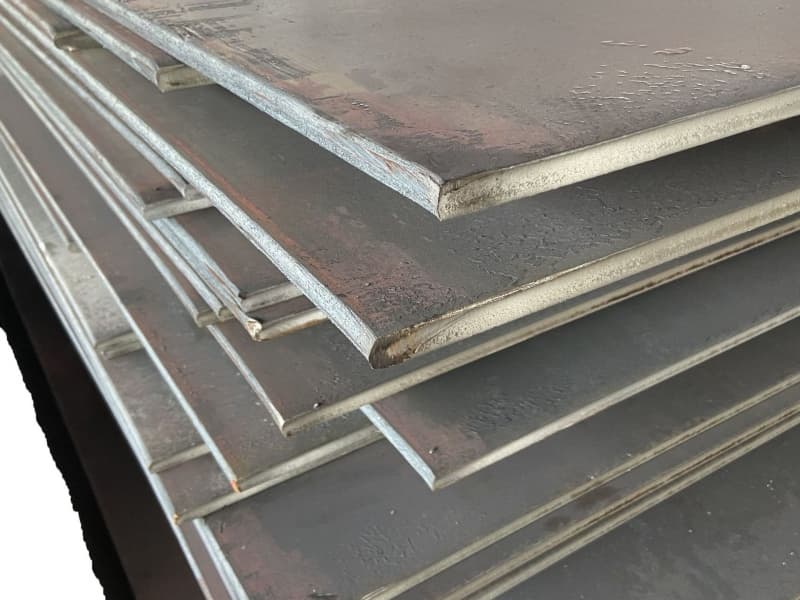
This process transforms raw iron ore into a high-tech engineering material. Let’s walk through each stage and see where quality is built in.
From Raw Material to Finished Plate: A Stage-by-Stage Look
The journey is complex, but we can simplify it into key steps. The table below outlines the sequence and its purpose.
| Manufacturing Stage | Primary Inputs | What Happens Here | Key Quality Outcome |
|---|---|---|---|
| 1. Ironmaking1 | Iron ore, coke, limestone. | In a Blast Furnace, raw materials are melted at very high temperatures. Oxygen is removed, producing molten pig iron. | Produces the base liquid iron, which still contains many impurities (like carbon and sulfur). |
| 2. Steelmaking2 | Molten pig iron, scrap steel. | In a Basic Oxygen Furnace (BOF), oxygen is blown through the melt to burn off impurities. Alloying elements are added. | Precise chemical composition is achieved. This step defines the grade (e.g., carbon, manganese, silicon content). |
| 3. Continuous Casting3 | Molten steel from BOF. | Steel is poured into a water-cooled mold, forming a continuous slab of solid steel. | The slab’s internal structure begins to form. Proper cooling prevents defects. |
| 4. Rolling & Heat Treatment4 | Steel slab. | The slab is reheated and passed through heavy rollers to reach the required thickness (e.g., 3/16", 1/2", 1"). It may then be heat-treated. | This develops the final mechanical properties (strength, toughness). Rolling aligns the grain structure. Heat treatment (like normalizing) refines it. |
After rolling, the plate is cooled, inspected, and cut to order. Ultrasonic testing checks for internal flaws. Samples are taken for lab testing to generate the Mill Test Certificate5.
Why Certified Marine Steel6 is Different: The Role of the Mill
Not all steel mills can produce certified AH36/DH36 plates. The difference lies in process control and documentation.
First, the chemical composition must be extremely precise. Too much sulfur can cause cracking during welding. The mill’s lab constantly analyzes the melt. Second, the rolling and cooling rates are carefully controlled. This ensures the steel develops the right grain size for toughness. Third, every step is documented. The MTC traces the plate back to its specific melt and heat batch.
Our partner mills have approvals from ABS, LR, DNV, and other societies. This means surveyors can audit their processes. When you buy from us, you are not just buying steel. You are buying the result of this highly controlled, documented manufacturing chain. This is why steel from a small, uncertified factory is cheaper but poses a huge risk for marine applications.
How to calculate plate weight for steel?
Incorrect weight calculations lead to budgeting errors and logistics problems. You might underpay for freight or overload a truck. Knowing how to calculate weight is a basic but essential skill.
You can calculate the weight of a steel plate using the formula: Weight (kg) = Length (m) x Width (m) x Thickness (mm) x Density (7.85)1. For imperial units: Weight (lbs) = Length (ft) x Width (ft) x Thickness (in) x 490. Always confirm the actual thickness, as nominal and actual can differ.
This formula is simple, but practical application requires attention to detail. Let’s explore the variables and common pitfalls.
Understanding the Variables and Using a Reference Table
The formula has four parts: dimensions, thickness, and the constant density factor (7.85 kg/dm³ for steel)2.
| Variable in Formula | What to Watch For | Practical Tip |
|---|---|---|
| Length & Width | Use consistent units (meters or feet). For irregular shapes, calculate the total area. | Always use the final cut dimensions, not the mill standard size, if you are ordering specific cuts. |
| Thickness | This is the most critical. Steel plates have a nominal thickness (e.g., 10mm) and an actual or minimum thickness due to rolling tolerances. | For precise costing, ask the supplier for the actual average thickness3 of their product. Marine plates are often sold on theoretical weight4 based on nominal thickness5. |
| Density Factor | 7.85 is standard for carbon steel. Some alloys have slightly different densities, but 7.85 is safe for estimation. | For quick estimates, remember: 1 sqm of 1mm thick steel weighs 7.85 kg. This is a very useful rule. |
To make it easier, here is a quick reference table for common marine plate sizes (using nominal thickness5):
| Size (ft) | Thickness (in) | Nominal Thickness (mm) | Approx. Weight (lbs) | Approx. Weight (kg) |
|---|---|---|---|---|
| 4′ x 8′ | 1/4" (0.25") | 6.35 | 3,920 lbs | ~1,778 kg |
| 4′ x 8′ | 3/16" (0.1875") | 4.76 | 2,940 lbs | ~1,333 kg |
| 5′ x 10′ | 1/2" (0.5") | 12.7 | 12,250 lbs | ~5,558 kg |
| 6′ x 20′ | 1" (1.0") | 25.4 | 58,800 lbs | ~26,670 kg |
From Theory to Practice: How We Help with Weight
In real business, we handle these calculations for you. When you send us a list of the plates you need, our system calculates the total theoretical weight4. This weight is the basis for our price quote (since we sell by the ton) and for arranging ocean freight.
However, the actual shipped weight might be slightly different. Mills guarantee the minimum thickness, so the actual weight is often 2-5% more than the theoretical weight4. Good suppliers, like us, use an agreed "theoretical weight4" for invoicing to keep things fair and predictable. We explain this clearly upfront. For Gulf Metal Solutions’ last order, we provided a detailed packing list with the calculated weight for each bundle, which helped them plan their port offloading perfectly. Knowing how to check these numbers yourself makes you an informed buyer and helps prevent misunderstandings.
Conclusion
Ordering marine steel plate internationally is a detailed process, but it doesn’t have to be difficult. With clear specifications, a reliable partner, and an understanding of grades, costs, and logistics, you can secure the right material for your project efficiently and with confidence.
-
Understanding this formula is crucial for accurate weight calculations, which can save you money and prevent logistical issues. ↩ ↩ ↩
-
The density factor is vital for weight calculations, affecting cost and logistics in steel plate handling. ↩ ↩ ↩
-
Knowing the actual average thickness ensures precise costing and prevents discrepancies in weight calculations. ↩ ↩ ↩
-
Theoretical weight is essential for invoicing and logistics, ensuring fair pricing and accurate shipping estimates. ↩ ↩ ↩ ↩ ↩ ↩
-
Understanding nominal thickness helps in recognizing the difference between standard and actual measurements, crucial for accurate weight. ↩ ↩ ↩
-
Find out why Certified Marine Steel is essential for safety and performance in marine applications, ensuring high standards and reliability. ↩