
A shipyard is a battlefield. Delays from late steel deliveries cause massive production bottlenecks. Material defects mean rework, wasted budget, and angry clients. Your reputation is literally built on the quality and timeliness of the steel you use.
A complete steel solution for shipyards provides all the right marine-grade materials, delivered on time, certified for quality. It covers hull plates, structural sections, and specialized profiles like bulb flats. A true partner ensures the steel meets class society rules, arrives ready for fabrication, and is backed by reliable support.
You need more than just a product list from a supplier. You need a partner who understands the pressure of a dry-dock schedule and the non-negotiable need for certified quality. Let’s break down exactly what makes a steel solution "complete" for modern shipbuilding, from the base plates to the final assembly.
What type of steel is used in ship construction?
Imagine a cargo hold cracking under heavy load in the middle of the Atlantic. The type of steel you choose isn’t a minor detail; it’s the difference between a safe voyage and a catastrophic failure. Ordinary construction steel simply cannot handle the dynamic stresses of the sea1.
The primary steel used in ship construction is marine-grade mild steel2, classified by international societies like ABS, LR, or DNV. Grades like A, B, AH32/EH32, AH363/EH364, and AH40/EH40 are most common. These steels are designed for high strength, good toughness at low temperatures, and excellent weldability to form the ship’s hull and main structure.
The letters and numbers in these grades are a code for performance, not just random labels. Choosing the wrong grade for a specific part of the ship is a fundamental engineering error. Let’s decode this system and see how it applies to a real vessel.
Decoding Marine Steel Grades: A Shipbuilder’s Guide
Ship steel is not a one-size-fits-all material. Different parts of a ship face different challenges. The hull bottom slams into waves. The deck resists twisting forces. The upper structures must be light but strong. Using a single grade everywhere is inefficient and sometimes unsafe. The classification system provides a precise menu.
First, understand the strength levels. The "H" in AH363 stands for "High Strength". The number indicates the minimum yield strength in kgf/mm². So, AH363 steel has a yield strength of 36 kgf/mm² (or about 355 N/mm²). Ordinary Grade A steel has a lower strength. Higher strength (like AH40) allows for thinner, lighter plates, which saves weight and increases cargo capacity. But it also costs more and can be harder to weld.
Second, understand the quality levels (grades). This is indicated by the letter(s) before the strength symbol (A, AH, DH, EH).
- A Grade / AH Grades: This is the standard quality for general use in non-critical areas. It has basic impact toughness requirements.
- D Grade / DH Grades: This steel offers improved low-temperature toughness5. It is used in areas where the operating temperature is lower, such as in vessels sailing in Arctic or Antarctic waters. The "D" refers to the normalized rolling process that refines the grain structure.
- E Grade / EH Grades: This is the highest quality for merchant shipbuilding. It undergoes special thermo-mechanical control processing (TMCP). This gives it the best combination of high strength and exceptional low-temperature toughness5. It is specified for the most critical parts, like the sheer strake6 (the topmost hull plate) and areas of high stress concentration.
Here is a table showing typical applications on a large container ship or bulk carrier:
| Ship Area / Component | Primary Challenge | Recommended Steel Grade(s) | Why This Grade? |
|---|---|---|---|
| Bottom Shell Plating | Impact from waves (slamming), hydrostatic pressure, corrosion. | AH363 / DH36 / EH364 | High strength to resist bending, good toughness for dynamic loads. |
| Side Shell Plating | Wave pressure, docking impacts, corrosion in ballast tanks. | AH32 / AH363 | Balanced strength and cost. DH grades used for colder routes. |
| Deck Plating (Main Deck) | Tensile stress from hull bending, cargo loads, weather exposure. | AH363 / EH364 | High strength is crucial to resist the "hogging and sagging" of the hull. |
| Sheer Strake | The junction of deck and side shell—experiences the highest stress. | EH364 / EH40 | Maximum toughness is critical here to prevent crack initiation in this stress hotspot. |
| Internal Structures (Floors, Girders) | Provides hull stiffness and supports loads. | A / AH32 | Good weldability and general strength are sufficient for many internal members. |
| Ballast Tanks | Severe corrosion from alternating water/air, fatigue. | AH363 with certified corrosion-resistant treatment7 | Often requires specially treated steel or coatings. High strength helps with thinner plates. |
This system allows naval architects to optimize the ship’s design. They can use thicker, lower-grade steel in some areas and thinner, higher-grade steel in others to save weight without compromising safety. As a supplier, we don’t just sell "ship steel." We provide the specific grade for the specific application, complete with the required mill certificates and traceability8. For a recent order from a client in the Philippines building a new bulk carrier, we supplied EH364 for the sheer strake6 and main deck, AH363 for the hull, and standard A-grade for non-critical internal bulkheads. This targeted approach is what a complete solution looks like.
Which steel is used in building construction?
You are walking through a bustling port city. Look at the warehouses, the cranes, the office buildings. The steel in those structures is fundamentally different from the steel in the ships docked beside them. Using shipbuilding steel for a warehouse is overkill and wasteful. Using building steel for a ship is illegal and dangerous.
The steel used in building construction is primarily structural carbon steel1, governed by standards like ASTM A362, A572, or S355 (EN 10025). These steels prioritize high yield strength3 and stiffness to support static loads (like the weight of floors and people) over long spans. Weldability and cost-effectiveness are key drivers.
The core difference lies in the environment and the type of stress. A building fights gravity and wind. A ship fights an aggressive, moving liquid and constant fatigue. Confusing the two is a basic mistake that can have serious consequences. Let’s make the distinction crystal clear.
Marine vs. Building Steel: A Critical Comparison
To source correctly, you must understand why the steels are different. It’s not just about certificates; it’s about physics and chemistry. The requirements diverge in three major areas: mechanical properties, chemical composition, and certification philosophy.
1. Mechanical Properties: Static vs. Dynamic Loading.
- Building Steel (e.g., ASTM A572 Grade 50): Its main job is to resist yielding under a constant, heavy load. Tensile strength and yield strength3 are the most important numbers. Toughness (resistance to cracking) is important, but the required impact test temperatures are usually around 0°C or higher, suitable for ambient climates.
- Marine Steel (e.g., ABS AH36): It must handle dynamic, cyclical loading. A ship’s hull flexes with every wave—a phenomenon called "wave-induced bending." This creates fatigue stress. Therefore, impact toughness at low temperatures is critical. An EH36 steel must demonstrate good toughness at -40°C or -60°C to prevent brittle fracture in cold seas.
2. Chemical Composition: Weldability and Corrosion.
- Building Steel: The chemical mix aims for good strength and easy fabrication (cutting, welding). Carbon content can be higher to achieve strength. It does not need special resistance to seawater corrosion.
- Marine Steel: Chemistry is tightly controlled. Low Carbon Equivalent (CE)4 is vital for superior weldability5 without pre-heat in thick sections, preventing cold cracks. Levels of sulfur and phosphorus (impurities that cause brittleness) are kept very low. Some marine grades include small amounts of alloying elements like nickel for better low-temperature performance.
3. Certification and Traceability:
- Building Steel: Mill test certificates (MTCs) are common, but traceability to a specific heat of steel is not always required for every piece.
- Marine Steel: Full traceability is mandatory. Every plate, every section must be traceable back to its original cast (heat number). The material must be produced by mills approved by classification societies (ABS, DNV, LR, etc.). These societies often have surveyors inspect the production process. The final product receives the society’s stamp.
Here is a direct comparison table:
| Feature | Building Construction Steel (ASTM A572 Gr. 50) | Marine Shipbuilding Steel (ABS AH36) | The Practical Implication |
|---|---|---|---|
| Governing Standard | ASTM (USA) / EN (Europe) – Commercial standards. | Rules of a Classification Society (ABS, DNV, etc.) – Safety standards. | Marine steel is a regulated safety product. |
| Primary Load | Static (dead load, live load). | Dynamic, cyclic (wave action, slamming, fatigue). | Marine steel is engineered for movement and fatigue. |
| Key Mechanical Test | Tensile test, yield strength3. | Tensile test, yield strength3, Charpy V-Notch Impact Test6 at low temp. | Marine steel must prove it won’t crack in cold, stressful conditions. |
| Typical Use Case | Beams, columns, frames in buildings, bridges, warehouses. | Hull plating, decks, frames in ships, offshore platforms. | They are not interchangeable. |
| Cost Driver | Tonnage, market commodity price. | Tonnage, alloying elements, stringent testing, classification fees. | Marine steel carries a premium due to stricter production controls. |
Understanding this difference is crucial for businesses like Gulf Metal Solutions in Saudi Arabia. They might supply steel for both a port warehouse (building steel) and a ship repair project (marine steel). Sourcing the correct material for each job protects their clients and their own reputation. We support this by clearly differentiating our product lines and providing the precise certification package required for each application.
What are the steel sections for shipbuilding?
A ship is not made from flat plates alone. Think of it as a skeleton (frames) covered with skin (plates). The skeleton gives the ship its shape and rigidity. Using the wrong section profile or size weakens the entire structure, leading to flexing, vibration, and potential failure.
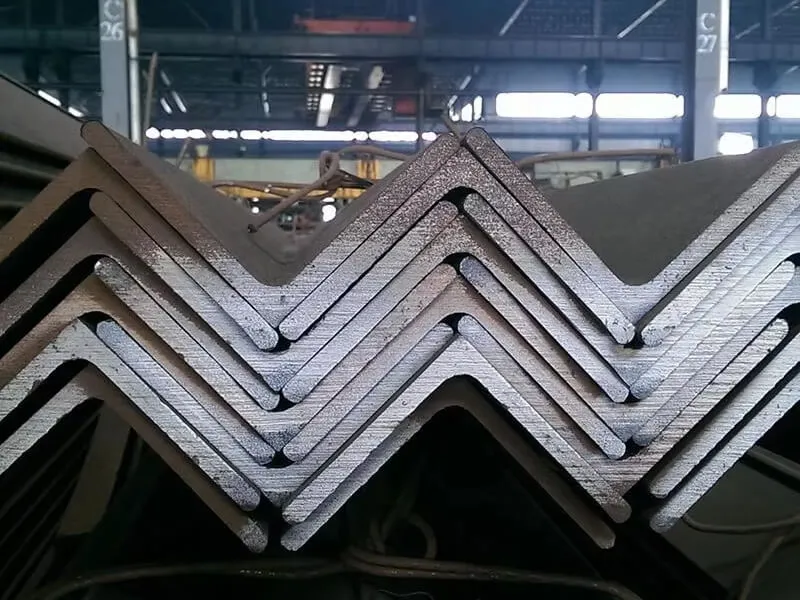
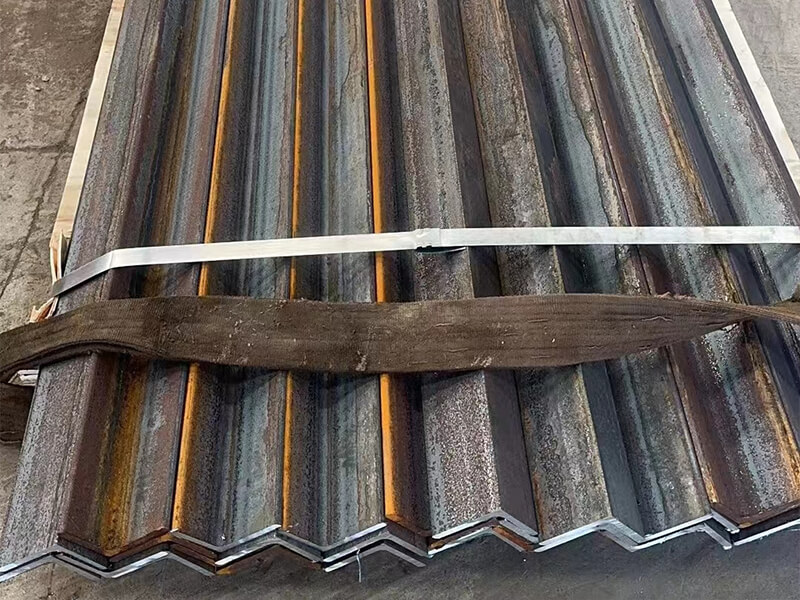
The key steel sections for shipbuilding include angles, bulb flats, L-shaped sections (angles), and flat bars. Bulb flats are especially important as they provide high strength and stiffness with less weight. These sections are used to build frames, stiffeners1, brackets, and other structural members that support the hull plating.
Choosing sections is an art of structural efficiency2. A heavier section adds unnecessary weight. A lighter section might buckle. The goal is to find the perfect profile that meets the strength requirement while minimizing the ship’s weight. Let’s explore the workhorses of ship structure.
The Backbone of the Ship: A Guide to Structural Profiles
Every section profile has a specific job. Naval architects select them based on their "section modulus" – a measure of their bending resistance. Using the right profile in the right place is key to an optimized, seaworthy design. Here are the main players.
1. Bulb Flat Steel (Bulb Plates)3: This is the quintessential shipbuilding section. It looks like a flat bar with a rounded bulb on one edge.
- Why it’s used: The bulb adds a large amount of material away from the neutral axis, which dramatically increases the section’s moment of inertia and section modulus. In simple terms, it makes the beam much stiffer in bending without adding much width.
- Typical Use: Primary and secondary stiffeners1 attached to the hull plating. They are everywhere—on the bottom, sides, decks, and bulkheads. They prevent the large, thin plates from buckling under pressure. Common sizes range from 100x6mm to 400x20mm (bulb height x web thickness).
2. Angle Bars (L-Sections)4: The classic "L" shape. Available in equal or unequal legs.
- Why it’s used: Versatility. They provide good strength in two directions and are easy to fabricate and connect.
- Typical Use: Brackets to connect frames to plates or other members. Smaller stiffeners1 in non-critical areas. Edge reinforcements around openings (like doors or hatches). They are the "connective tissue" of the ship’s structure.
3. Flat Bars5: Simple rectangular sections.
- Why it’s used: For applications where the bending load is minimal or applied in one direction only.
- Typical Use: Stiffeners on non-structural partitions, small brackets, lining bars, and packing material.
4. Special L-shaped Sections6: These are sometimes specified for specific applications where a standard angle or bulb flat is not ideal, offering a tailored combination of properties.
The selection is often summarized in a ship’s scantling drawing7. This drawing specifies the exact profile, dimension, and spacing for every stiffener in every part of the ship. As a supplier, we must be able to provide these profiles in the same marine grades8 as the plate (AH32, DH36, etc.), with full traceability.
Consider this application table:
| Structural Member | Primary Function | Typical Section(s) Used | Reason for Choice |
|---|---|---|---|
| Bottom Longitudinal Stiffener | Resists upward bending from water pressure. | Bulb Flat (e.g., 250×12) | High section modulus efficiently resists the high bending loads on the bottom. |
| Side Frame | Provides transverse shape and strength to the hull. | Welded built-up "T" section or Bulb Flat | Needs to be strong against lateral pressure from water and ice. |
| Deck Beam | Supports deck plating and cargo loads. | Bulb Flat or Angle Bar | Stiffens the deck panel against downward pressure. |
| Bracket (Knee) | Connects a deck beam to a side frame. | Angle Bar (Unequal Leg) | Provides a strong, easy-to-weld triangular connection. |
| Bulkhead Stiffener | Prevents the large bulkhead plate from vibrating or buckling. | Flat Bar or small Angle Bar | Loads are lower than on the outer hull, so simpler sections suffice. |
Supplying these sections is not just about stocking shapes. It’s about providing them with the correct chemistry, mechanical properties, and straightness for automated line production in the shipyard. Our client feedback about "spherical flat steel" (bulb flats) and "L-shaped steel" highlights that a complete solution means having all these specialized profiles available, ready for the next phase of their project.
Why is steel important in marine technology?
Could you build a 400-meter container ship from concrete? Or from aluminum alone? The history of marine technology is, in many ways, the history of steel. No other material has offered the same perfect balance of strength, cost, manufacturability, and durability on such a massive scale.
Steel is the foundation of modern marine technology because it provides the ideal combination of high strength, formability, weldability, and cost-effectiveness required for large, complex, and safety-critical structures. Its properties allow the construction of massive yet efficient vessels that can withstand extreme ocean forces, from giant tankers to deep-sea platforms.
Steel’s dominance isn’t an accident. It’s the result of it meeting a list of demanding requirements that no other material can satisfy all at once. Let’s look at the specific reasons why steel remains irreplaceable.
The Unbeatable Balance: Steel’s Role in Marine Advancement
If we list the requirements for a primary shipbuilding material, steel checks almost every box in a way that alternatives cannot. Its importance stems from a multi-faceted advantage that goes beyond simple strength.
1. Unmatched Strength-to-Cost Ratio.1 This is the most critical factor. Steel offers enormous tensile and yield strength at a per-ton cost that is orders of magnitude lower than advanced composites or specialized alloys. Building a VLCC (Very Large Crude Carrier)2 out of anything else would be economically impossible. This cost-effectiveness enables global trade.
2. Superior Fabricability and Weldability.3 Modern ships are built using block construction. Large sections are prefabricated and then welded together. Steel is uniquely suited to this process.
- It can be hot-rolled into large plates (over 4 meters wide) and long sections.
- It can be cut precisely with plasma, laser, or oxy-fuel.
- It can be bent and formed into complex curves for hull shapes.
- Most importantly, it can be welded reliably and quickly. The development of marine-grade steels with excellent weldability is a key technological triumph. Robotic welding lines in shipyards depend on steel’s consistent behavior.
3. Proven Durability and Maintainability.4 Steel structures have a known lifespan and well-understood failure modes. While it corrodes, we have over a century of experience fighting marine corrosion with coatings, cathodic protection, and resistant grades. Damaged steel can be repaired almost anywhere in the world by cutting out the bad section and welding in a new one. This repairability is crucial for a vessel’s 25-30 year operational life.
4. Recyclability.5 At the end of its life, a steel ship is not waste. Over 95% of its material is recycled into new steel. This "cradle-to-cradle" life cycle is a major environmental and economic advantage, reducing the need for new raw materials.
Let’s compare steel to its main alternatives in a marine context:
| Material | Key Advantages vs. Steel | Key Disadvantages vs. Steel | Best For… |
|---|---|---|---|
| Steel (Marine Grade) | Best strength/cost, excellent weldability, proven durability, fully recyclable. | Heavy (weight), requires corrosion protection. | Primary structure of almost all large commercial vessels, offshore platforms. |
| Aluminum Alloys | Lighter weight (about 1/3 the density), good corrosion resistance. | Cost is 3-5x higher, lower strength, lower melting point (fire risk), more difficult to weld. | Superstructures on ships (to lower center of gravity), high-speed ferries, small craft. |
| Fiber Reinforced Polymers (Composites)6 | Very light, no corrosion, can form complex shapes. | Extremely high cost for large structures, poor fire resistance, repair requires specialist skills, recyclability is challenging. | Specialized vessels like minesweepers, luxury yachts, small patrol boats. |
Steel’s importance, therefore, is systemic. It enables the entire scale and economics of modern maritime industry. Our business is built on facilitating this. We ensure shipyards and fabricators have reliable access to this fundamental material. When a shipyard in Vietnam or Mexico places an order for 5,000 tons of AH36 plate and bulb flats, they are investing in the material that makes their entire project possible. Our job is to make that supply chain link seamless, certified, and dependable.
Conclusion
A complete shipyard steel solution is a deep understanding of marine-grade materials, from hull plates to specialized sections, delivered with the certifications and reliability that keep production on schedule.
-
Understanding this ratio reveals why steel is the preferred choice for shipbuilding, impacting global trade. ↩ ↩ ↩ ↩ ↩ ↩
-
Exploring VLCCs can reveal the complexities of building large vessels and the role of steel in overcoming these challenges. ↩ ↩ ↩ ↩
-
Exploring this aspect highlights the efficiency and effectiveness of modern ship construction techniques. ↩ ↩ ↩ ↩ ↩ ↩ ↩ ↩ ↩ ↩ ↩ ↩ ↩ ↩
-
This knowledge is crucial for understanding the long-term viability of steel in harsh marine environments. ↩ ↩ ↩ ↩ ↩ ↩ ↩ ↩
-
Discovering steel’s recyclability emphasizes its environmental benefits and sustainability in shipbuilding. ↩ ↩ ↩ ↩ ↩
-
Comparing these materials can provide a broader perspective on material choices in shipbuilding. ↩ ↩ ↩ ↩ ↩
-
Understand the importance of scantling drawings in specifying the exact profiles and dimensions for ship structures. ↩ ↩
-
Explore the different marine grades of steel, essential for ensuring durability and compliance in shipbuilding. ↩ ↩