
You are choosing between a Chinese and a European supplier for a critical offshore project. The European steel is 40% more expensive. Is it 40% better? The answer is not simple; it’s a complex trade-off between cost, quality perception, logistics, and technical support.
The main differences are cost and scale versus specialization and tradition. Chinese supply offers large-scale production, competitive pricing, and fast delivery from integrated mills. European supply emphasizes specialized high-tech grades, strict process control, strong technical support, and often shorter lead times for regional projects, but at a significant price premium.
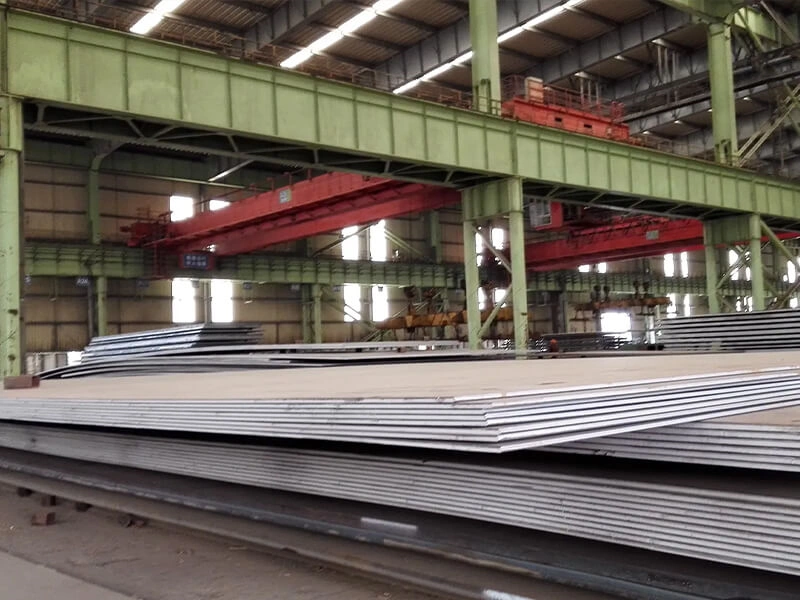
The choice is not about which is universally "better." It’s about which is more fit-for-purpose for your specific project’s requirements, budget, and risk profile. Let’s move beyond stereotypes and examine the real, practical distinctions.
Is Chinese steel as good as American steel?
You need steel for an international project. The specifications are American (ASTM). A Chinese mill claims they can meet it at half the price. Is this possible, or is it a compromise on quality? The question itself assumes a single dimension of "goodness."
Chinese steel can be as good as American steel when it is produced to the same specification, by a mill with equivalent technology and quality control, and is properly certified. China has mills capable of producing world-class, certified steel1 for global markets. However, China also produces a vast amount of lower-tier commodity steel. The key is verifying the mill and the certification, not assuming quality based on country of origin.
The real issue is consistency and trust. American steel from a major mill comes with a century-old brand reputation. Chinese steel requires more due diligence from the buyer. Let’s break down the comparison into verifiable factors.
A Comparative Framework: Beyond the "Made In" Label
We should compare specific mills and specific products, not nations. But we can identify typical characteristics of the supply chains emanating from each region.
1. Technical Capability and Standards:
- American Steel (e.g., from Nucor, U.S. Steel): Produced to ASTM standards2 (A36, A572, A709). Mills often have deep expertise in these specific standards. The quality is consistent and well-understood by American fabricators.
- Chinese Steel: Top-tier mills are fully capable of producing to ASTM, EN, JIS, and other international standards. They are certified by international classification societies (ABS, DNV, LR) to do so. The technical data on a Mill Test Certificate3 (MTC) from a certified Chinese mill is identical in form and content to one from an American mill.
2. Quality Control and Perception:
- American Steel: Benefits from a long-established reputation. The supply chain is shorter for North American buyers, reducing perceived risk. Consistency is generally high.
- Chinese Steel: The perception issue is real due to past incidents and the existence of a low-quality commodity sector. However, the top tier operates differently. Their quality control systems are modern (ISO 90014, API Q1), and they employ advanced process control technology. The burden is on the buyer to identify and source from this top tier.
3. Cost Structure:
- American Steel: Higher labor, energy, and regulatory compliance costs. Often uses Electric Arc Furnace5 (EAF) technology with scrap, which can lead to variations in residual elements.
- Chinese Steel: Lower operational costs, massive scale, and often uses Blast Furnace-Basic Oxygen Furnace6 (BF-BOF) technology from virgin materials, allowing tight chemistry control. This is a major driver of the cost difference.
Verification is the Equalizer:
The MTC and third-party inspection7 are the great equalizers. A certified AH36 plate, whether from Alabama or Anshan, must pass the same mechanical and chemical tests.
A Practical Decision Matrix:
| Your Priority | Likely Better Sourced From… | Why? |
|---|---|---|
| Lowest Cost for ASTM-spec Material | China (from a certified mill), provided you do the verification. | Significant cost advantage for equivalent certified quality. |
| Simplest Logistics within North America | USA/Canada. | No import duties, shorter lead time, easier communication. |
| Maximum Brand Reputation & Risk Aversion | USA (or other premium sources like EU/Japan). | Perceived lower risk, even at higher cost. |
| Project in a Third Country (e.g., Saudi Arabia) | China. Cost and logistics often favor Chinese export to third markets over US export. | Chinese mills are export-oriented with established routes to Middle East, Asia, etc. |
Our role is to be the bridge to China’s top-tier certified production. We don’t claim all Chinese steel is as good. We provide access to the segment that is—and we prove it with the same documentation (MTC 3.1, SGS reports) that any American mill would provide.
Which country makes the highest quality steel?
You want the absolute best for a critical component. The names Japan, Germany, and Sweden come to mind. But "highest quality" depends on the metric. Is it purity? Toughness? Consistency? Different countries have developed different specialties.
There is no single "highest quality" steel-producing country. Different nations excel in different niches: Japan and Germany are renowned for ultra-clean, high-precision specialty and engineering steels. Sweden excels in ultra-high-strength steels. For marine-grade carbon steel, South Korea and top-tier mills in China are leading volume producers of certified, high-quality product. The "best" is defined by the application’s specific needs.
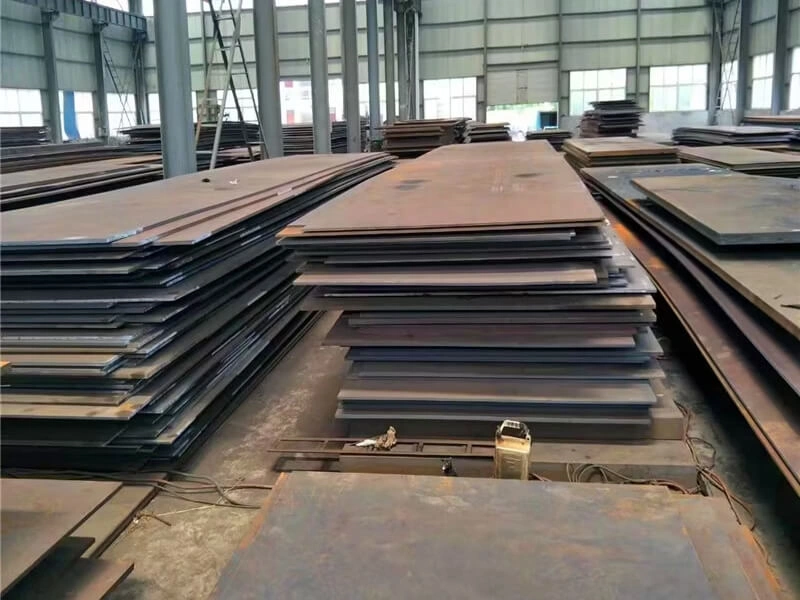
Chasing a country’s reputation can lead to over-specification and unnecessary cost. The goal is to match the steel’s capabilities to the service demands. Let’s examine the leaders in key marine-related categories.
A Realist’s Guide to Global Steel Quality Leaders
Quality must be defined before it can be measured. Here’s how leading steel-producing nations stack up in categories relevant to marine and offshore.
1. Specialty & Ultra-High-Performance Steels:
- Leaders: Japan, Germany, Sweden, Austria.
- Why: These countries have focused on high-value niches. They produce steels with exceptional cleanliness (low inclusions), precise heat treatment, and advanced metallurgy. Think of steel for bearings, turbine blades, high-end tooling, and specialty pressure vessels.
- Marine Application: Critical rotating parts (shafts, gears), special forgings for offshore, and highly corrosive service alloys.
2. Advanced Shipbuilding Plate (High Volume):
- Leaders: South Korea, China (Top Tier), Japan.
- Why: South Korea (POSCO) and Japan (Nippon Steel) supply the world’s largest shipyards. They have perfected the production of high-toughness, weldable plates (AH/DH/EH grades) at massive scale. Top Chinese mills (Baowu, etc.) have invested heavily to compete directly in this market and now produce plate that meets the same classification rules.
- Marine Application: The primary hull structure of commercial vessels. This is the bulk of marine steel by weight.
3. Offshore & Heavy Plate (Thick, High-Strength):
- Leaders: Germany (Dillinger), France, Italy, China (Top Tier), South Korea.
- Why: European mills like Dillinger have a long tradition in heavy plate for offshore platforms, with guaranteed through-thickness properties (Z-quality). Chinese and Korean mills have rapidly developed capability in API 2W/2H grades for offshore.
- Marine Application: Jacket legs, nodes, and other critical offshore platform components.
4. Stainless & Corrosion-Resistant Alloys:
- Leaders: Global players exist. Outokumpu (Finland), Aperam (Europe), Tsingshan (China – volume), Sandvik (Sweden – specialty).
- Why: Finland’s Outokumpu is a technology leader in stainless. China’s Tsingshan is the volume leader, producing vast amounts of 300-series stainless, including quality material.
The Procurement Implication:
For a shipbuilder in Vietnam:
- If they need 10,000 tons of AH36 plate for hulls, they will likely source from China or South Korea based on cost and availability.
- If they need 50 tons of special forgings for a propeller shaft, they might source from Japan or Germany.
The table below summarizes this fit-for-purpose approach:
| Application | "Best" Country(s) Based On… | Rationale |
|---|---|---|
| Bulk Commercial Ship Plates | China, South Korea | Unbeatable cost-quality-scale balance for the specified grades. |
| Critical Offshore Node Plates | Germany, EU, or top-tier China/Korea | Tradition and proven performance vs. cost-competitive alternative. |
| Special Stainless for Seawater Pumps | EU (Outokumpu) or certified Chinese mill | Brand trust vs. verified quality at lower cost. |
| High-Purity Steel for Special Components | Japan, Germany, Sweden | Unmatched reputation and capability in niche, high-value alloys. |
We position ourselves in the bulk commercial ship plate and sections category. We connect global buyers to the Chinese (and Korean) mills that excel in this specific, high-volume segment. We don’t claim to sell the world’s "best" specialty steel; we sell the world’s most cost-effective, certified steel for standard marine applications.
Can I trust stainless steel from China?
You need 316L stainless for marine fittings. The price from China is tempting, but stories of grade substitution (304 sold as 316) make you nervous. Trust must be earned through verification, not given based on a low price.
Yes, you can trust stainless steel from China, but you must implement a verification process. Trustworthy material comes from reputable mills1 (like Tsingshan, TISCO) and is verified via a genuine Mill Test Certificate (MTC)2 and, crucially, a Positive Material Identification (PMI) test on-site before shipment. This physical test confirms the critical Molybdenum content that distinguishes 316 from 304.
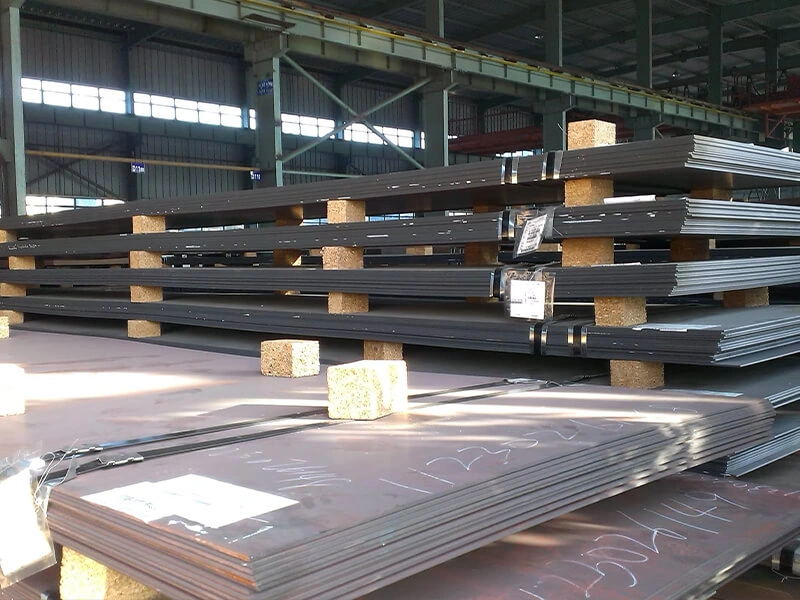
The risk is not that China can’t produce good 316L; it can and does at massive scale. The risk is in the supply chain—encountering a dishonest trader who misrepresents material. Your procurement process3 must be designed to filter out this risk.
From Trust to Verification: A Procurement Protocol
Replace the question "Can I trust?" with "How can I verify?" This shifts the burden from the supplier’s promises to objective evidence.
The Source Matters: Mill vs. Trader
- Reputable Chinese Mills: Companies like Tsingshan, TISCO (Taiyuan Iron and Steel), Baosteel produce vast quantities of legitimate 300-series stainless. They have brand value to protect.
- The Trader Risk: A small trading company might buy cheap, unmarked 304 from a small mill, print a fake 316L MTC, and sell it. This is where the problem occurs.
The Three-Layer Verification System:
- Layer 1: Documentary Verification (MTC)
- Demand a Mill Test Certificate 3.1 (EN 10204) from a known mill.
- Check the chemical composition table for Molybdenum (Mo)4. It should be 2.0-3.0% for 316/L.
- Verify the heat number and mill stamp.
- Layer 2: Physical Verification (PMI – Non-Negotiable)
- Hire a third-party inspector5 (SGS, Bureau Veritas, Intertek) to perform a Positive Material Identification test at the supplier’s warehouse before loading.
- A handheld XRF gun gives an instant readout of the chemistry. It will clearly show the presence or absence of Molybdenum.
- This test costs a few hundred dollars but can save tens of thousands in failed components.
- Layer 3: Sample Testing (For Maximum Assurance)
- For the first order with a new supplier, purchase a small sample and send it to an independent lab for full chemical and mechanical analysis.
How a Professional Chinese Supplier Facilitates Trust:
A reliable supplier will:
- Proactively name their source mill.
- Provide legitimate MTCs without hesitation.
- Encourage and facilitate third-party PMI inspection. They have nothing to hide.
- Possibly offer their own PMI report from a contracted inspection agency.
Comparison of Procurement Approaches:
| Approach | Actions | Level of Trust/Risk |
|---|---|---|
| Blind Trust (High Risk) | Accept supplier’s word and a basic certificate. | Very Low. High chance of receiving 304. |
| Basic Due Diligence (Medium Risk) | Check MTC, supplier reputation, maybe visit. | Moderate. Depends on document authenticity. |
| Verification Protocol (Low Risk) | MTC + Mandatory Third-Party PMI before shipment. | High. Independent physical proof of chemistry. |
| Maximum Assurance (Very Low Risk) | Sample testing + PMI + mill audit. | Very High, but time-consuming and costly. |
Our policy is to support Layer 2 verification. We offer SGS inspection services. We know that for rational buyers in the Middle East or Southeast Asia, the confidence from a PMI report is worth far more than its cost. It transforms the transaction from a gamble into a technical, verified purchase.
Why is Chinese steel1 so cheap?
A European quote for steel plate is $1,200/ton. A Chinese quote for the same grade is $800/ton. The $400 difference seems too large to be real. Is it lower quality, or are there legitimate reasons? Understanding the cost drivers2 is key to assessing value.
Chinese steel1 is cheaper primarily due to lower production costs (labor, energy), massive economies of scale, government support3 for industrial base, and highly competitive domestic market dynamics4. Additionally, top-tier mills use modern, efficient integrated plants (BF-BOF) with lower raw material costs due to volume purchasing. This allows them to offer internationally competitive prices while maintaining quality.

The price difference is real and structural. However, it’s crucial to distinguish between the low cost of quality production and the dangerously low price of substandard material. Let’s dissect the legitimate reasons for lower cost.
The Anatomy of Cost Advantage: Scale, Efficiency, and Inputs
China’s steel industry has built a formidable cost advantage over decades. This advantage comes from several interconnected factors.
1. Scale and Vertical Integration:
- China produces over half of the world’s steel. This volume allows for incredible economies of scale in everything from purchasing iron ore to shipping finished products.
- Large, integrated steel complexes5 (like Baowu’s plants) control the entire process from ore to finished coil on one site, minimizing intermediate transport and handling costs.
2. Lower Input and Operational Costs:
- Labor Costs: Significantly lower than in Europe or North America.
- Energy Costs: While rising, often still lower. Many mills have captive power plants.
- Raw Material Access: Chinese companies have large equity stakes in global iron ore and coal mines, securing supply and influencing prices.
- Technology: Modern Chinese mills are new. They incorporate the latest, most efficient technology (e.g., large blast furnaces, continuous casting), which reduces energy and material waste per ton of steel.
3. Domestic Market Dynamics and Government Role:
- Fierce Competition: Thousands of mills compete domestically, driving down margins and pushing efficiency.
- Industrial Policy: The steel sector has been a strategic priority. Past government support3 helped build the world’s largest and most modern production base, though this is now shifting towards consolidation and quality.
4. The "Cheap" vs. "Competitively Priced" Distinction:
This is the critical point for buyers.
- Competitively Priced Quality Steel: From top-tier integrated mills. Their cost structure allows them to sell certified AH36 at $800/ton with a healthy margin, while a European mill’s cost structure requires $1,200/ton.
- Dangerously Cheap Steel: From small, uncertified mills using inferior scrap, poor process control, and no testing. This steel might be offered at $600/ton. It may not meet chemistry or mechanical specs. This is the "cheap" steel that gives the industry a bad name.
A Cost Breakdown Illustration (Simplified):
| Cost Component | European Integrated Mill (€/ton) | Top-Tier Chinese Integrated Mill (€/ton) | Notes |
|---|---|---|---|
| Iron Ore & Coking Coal | 300 | 280 | Similar global price, but Chinese mills may get volume discounts. |
| Energy & Utilities | 150 | 100 | Lower energy costs in China. |
| Labor & Overhead | 200 | 80 | Significant difference in wage rates. |
| Depreciation & Finance | 100 | 80 | Newer Chinese assets may have higher depreciation but lower financing costs. |
| Regulatory & Carbon Costs | 100 | 20 | Stricter environmental compliance in Europe adds cost. |
| Total Production Cost | 850 | 560 | The fundamental cost gap. |
| Margin & Sales | 350 | 240 | Margins added to reach market price. |
| Estimated Market Price | 1,200 | 800 | Resulting price to customer. |
The Buyer’s Conclusion:
A significantly lower Chinese price is not automatically a red flag. It can be the legitimate outcome of a different cost structure. The red flag is a price far below other Chinese quotes for the same spec. That indicates a different, likely substandard, source.
Our value proposition is based on this legitimate cost advantage. We source from the top-tier mills whose costs are €560/ton, not from the substandard mills at €400/ton. We pass on the competitive pricing from the efficient producers, not the suspicious pricing from the bottom of the market. This is how we deliver "competitive factory price" alongside "stable quality."
Conclusion
The choice between Chinese and European marine steel supply involves a trade-off between cost efficiency and perceived risk, with both regions capable of producing high-quality material when sourced from certified, reputable mills with proper verification.
-
Explore this link to understand the factors contributing to the low pricing of Chinese steel and its implications. ↩ ↩ ↩ ↩
-
This resource will provide insights into the various cost drivers that make Chinese steel competitively priced. ↩ ↩ ↩
-
Explore the role of government policies in shaping the steel industry and its pricing structures. ↩ ↩ ↩ ↩
-
Understanding the competitive landscape in China can shed light on pricing strategies and market behavior. ↩ ↩ ↩
-
Learn about integrated steel complexes and how they enhance efficiency and reduce costs in steel production. ↩ ↩ ↩
-
This process is key to understanding how Chinese steel achieves cost efficiency and quality control. ↩
-
Third-party inspections ensure that steel products meet required standards, enhancing trust in the supply chain. ↩