
Are you designing ships that meet future emission rules? Bulb flat steel is no longer just an option; it is becoming a strategic necessity. Ships need to be lighter and stronger at the same time, and traditional materials often can’t deliver both.
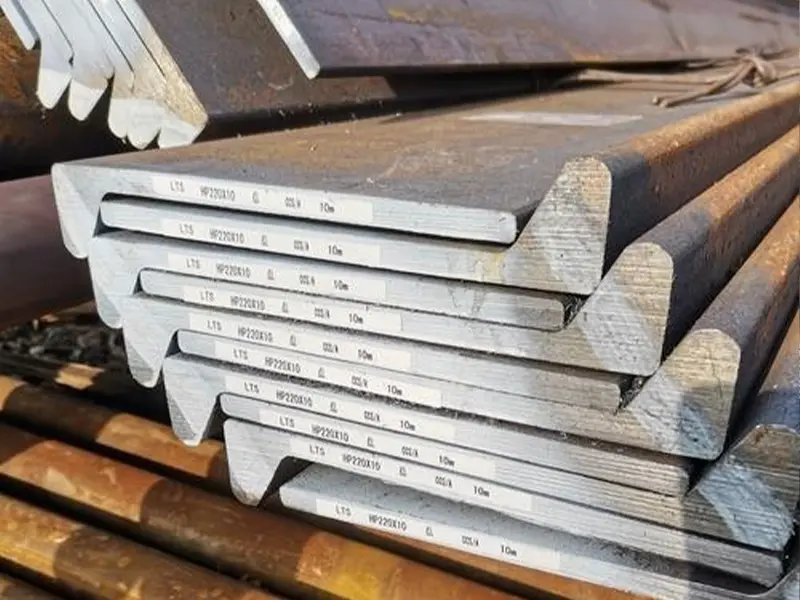
Bulb flat steel is critical for next-generation ships because it enables lightweight and strong hull structures. Its efficient "T" shape provides excellent stiffness, reducing the weight of stiffening systems. This directly helps shipbuilders meet strict new efficiency and emissions regulations like the IMO’s EEXI and CII requirements.
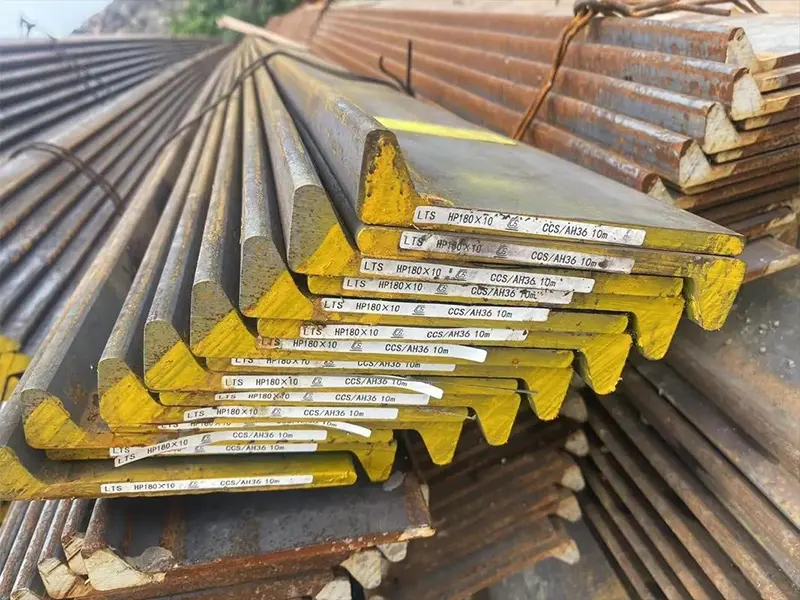
The connection between bulb flats and future ships is clear. But to understand why this matters for your long-term planning, we need to look at the bigger picture. The future of shipbuilding is tied directly to the future of steel itself. We must ask bigger questions about where materials are heading, what trends are shaping the next two years, and what the world will need decades from now. Let’s explore these questions to build a complete view.
What is the future of steel?
Are you worried that steel might become obsolete? The material is not disappearing. Instead, it is transforming into something smarter and more specialized. The future belongs to steel that is stronger, greener, and more adaptable.
The future of steel lies in advanced high-strength grades1, sustainable "green" production methods, and smart manufacturing. Steel will become a high-tech material, tailored for specific applications like lightweight ships. It will focus on performance, environmental impact, and integration with digital design tools.
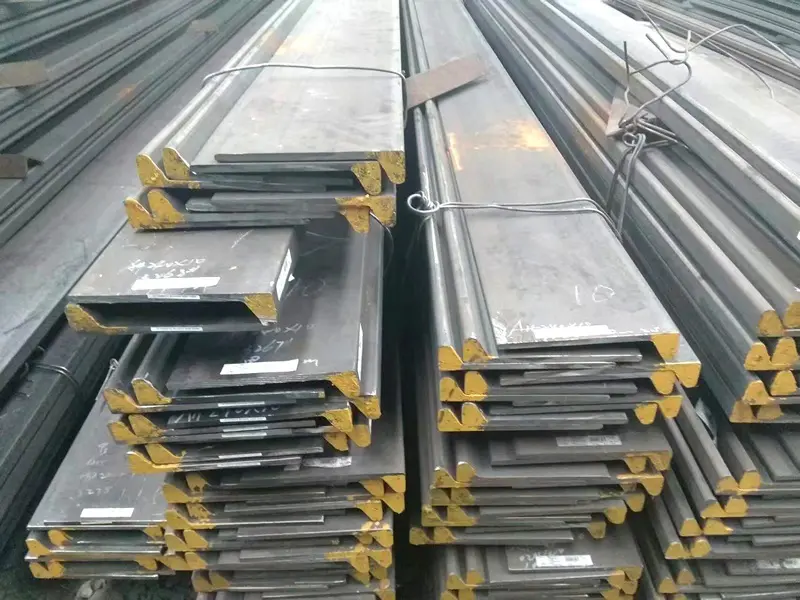
From Commodity to Engineered Solution: The Three Pillars of Future Steel
Saying "the future is advanced and green" is easy. We need to break down what that actually means for buyers, designers, and suppliers. I see three interconnected pillars driving this change.
First, performance-driven material science2. The steel of the future is not just a lump of iron and carbon. It is a precisely engineered product. We are moving beyond generic grades like S235. The focus is on developing steels with exceptional strength-to-weight ratios, improved toughness at extreme temperatures, and better fatigue resistance. For shipbuilding, this means steels that allow for thinner plates without sacrificing strength. Bulb flats made from these new grades will be even more efficient. This evolution is not a distant dream. Mills are already producing these advanced grades. The challenge for buyers is accessing them reliably and understanding their new specifications and welding procedures.
Second, the green imperative. This is the most powerful force changing the industry. "Green steel" refers to steel produced with a significantly lower carbon footprint. There are two main paths. One uses hydrogen instead of coal to reduce iron ore. The other uses electric arc furnaces (EAFs)3 that recycle scrap metal. Both methods can cut CO2 emissions by over 70%. By 2030, major buyers in Europe and for international projects will likely demand steel with a certified green pedigree. This creates a new market dynamic. Price will still matter, but carbon content will become a key purchasing criterion. For a supplier like us, this means building partnerships with mills that are investing in green technology now.
Third, digital integration and smart production4. The future steel plant is digital. Sensors monitor every stage of production. This data ensures consistent quality. It also enables full traceability. Imagine scanning a QR code on a bundle of bulb flats and seeing its entire history: the melt chemistry, the rolling temperature, the test results. This level of transparency builds immense trust. It also feeds into digital ship design tools (like 3D BIM models), allowing for more accurate simulations and optimizations.
Here is a comparison of the traditional steel model versus the future model:
| Aspect | Traditional Steel Model | Future Steel Model |
|---|---|---|
| Primary Driver | Cost per ton, basic mechanical properties. | Total cost of ownership, including performance and environmental cost. |
| Production Focus | High volume, standardized grades. | Flexible, tailored production runs for specific applications. |
| Key Purchasing Criteria | Price, delivery time, basic certification. | Price, carbon footprint certification, technical data package, traceability. |
| Supplier Role | Commodity vendor. | Technical partner and solution provider. |
This future requires us all to adapt. We are not just selling steel; we are providing a certified, high-performance material solution. Our support for SGS inspection is a step in this direction. It provides the independent verification that the material meets its promised specs, which is the foundation of trust in this new era.
What is the steel trend in 2025?
Are you planning your 2025 material procurement based on last year’s prices and lead times? The market is shifting rapidly. Key trends in 2025 will test the agility of your supply chain and the depth of your supplier relationships.
The dominant steel trend in 2025 will be supply chain regionalization and resilience1. Buyers will favor reliable partners in stable trade corridors over chasing the lowest spot price. Alongside this, demand for higher-grade, corrosion-resistant steels2 for specialized applications will continue to rise, pushing prices for these premium products.
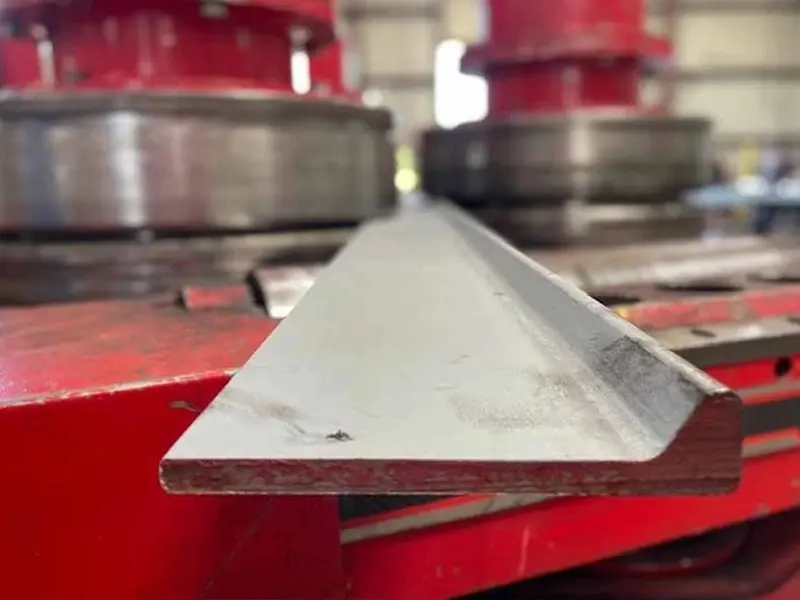
2025: The Year of Supply Chain Realism and Technical Demand
The post-pandemic world taught everyone a harsh lesson: a cheap, fragile supply chain is very expensive when it breaks. The trends for 2025 reflect a mature, risk-averse approach to procurement.
The number one trend is regionalization and friend-shoring. Companies are simplifying their supply webs. They want fewer, more trusted partners located in politically and logistically stable regions. For marine steel, this strengthens established routes like East Asia to Southeast Asia and the Middle East. Buyers are willing to pay a slight premium for security of supply and predictable lead times. This trend benefits suppliers with a solid reputation for reliability and clear communication—exactly the pain point our client Gulf Metal Solutions had with their previous suppliers. They chose us not just for price, but because we offered a dedicated English-speaking contact and reliable shipping to Dammam. In 2025, this service model will be the standard, not the exception.
The second trend is technical product differentiation3. The market is splitting. There is standard structural steel, and there is application-specific steel. Demand for the latter is growing faster. In shipbuilding, this means more orders for steels with enhanced corrosion resistance (for ballast tanks), extra-high toughness (for Arctic vessels), and of course, high-strength steels for weight reduction. Bulb flats follow this same trend. A shipyard might use standard S235 bulb flats for non-critical areas but specify S355 or even S420 grades for the hull’s high-stress zones. This requires suppliers to have a broad product range and the technical knowledge to advise on the correct grade.
A third, underlying trend is continued cost pressure from energy and logistics4. While demand may be solid, the cost of producing and shipping steel remains high. Mill energy costs, port fees, and freight rates are volatile. This means steel prices will not collapse. They will find a new, higher floor. Smart buyers will use strategies like forward contracts and consolidated shipping5 to manage these costs.
For businesses like ours, 2025 is about demonstrating stability. Our long-term cooperation with certified mills gives us allocation security. Our location in Shandong, a major industrial and port region, offers logistical efficiency. We translate this stability into reliable delivery promises6 for our clients. In a year focused on resilience, this is our most valuable offering.
What will replace steel?
Are you hearing about "wonder materials" that will make steel obsolete for ships? Don’t believe the hype for the foreseeable future. For primary hull structures, no material can match steel’s unique combination of strength, cost, repairability, and recyclability.
No material is positioned to fully replace steel in ship hull construction1 in the coming decades. However, composites and aluminum will see increased use in superstructures and specific components to reduce weight. Steel’s role will evolve, but it will remain the backbone of large commercial vessels due to its unmatched performance-to-cost ratio and established industry ecosystem.
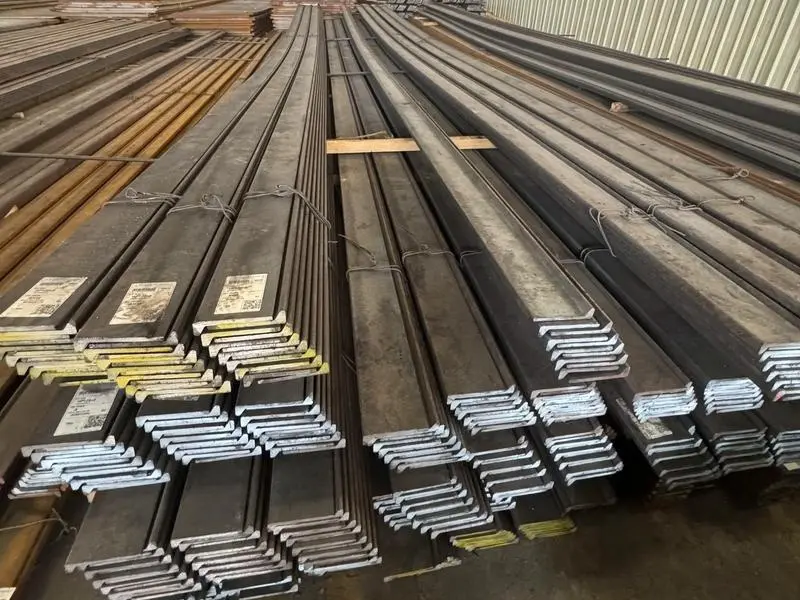
A Practical Look at Competing Materials: Complements, Not Replacements
The question of replacement comes up often, usually driven by news of advanced composites in aerospace or automotive. For commercial shipbuilding, the reality is more pragmatic. Let’s compare steel with its main competitors.
Advanced Composites (like carbon fiber reinforced polymers):
- Pros: Extremely light and strong, corrosion-resistant.
- Cons: Prohibitively expensive for large structures. Difficult and costly to repair at sea. Recycling is complex. Fire resistance is a major safety concern.
- Reality: Used for small, high-performance vessels (like naval patrol boats) and non-structural parts (like fairings) on large ships. They will not replace steel plates2 in a hull.
Aluminum Alloys:
- Pros: Much lighter than steel, good corrosion resistance.
- Cons: About three times more expensive per ton. Lower strength and stiffness, requiring bulkier sections. Much lower melting point, raising serious fire safety issues for fuel-carrying vessels. Welding is more specialized.
- Reality: Excellent for passenger ship superstructures (to lower the center of gravity) and for LNG carrier containment systems. It is a complementary material, not a replacement.
The real threat to traditional steel is not another material. It is advanced steel itself. New grades of steel are the "replacement" for old grades. A modern high-strength steel3 plate can be 20-30% thinner than a conventional plate while carrying the same load. This is where the real weight savings happen. Bulb flats made from these advanced steels are part of this same evolution.
Furthermore, the marine industry ecosystem4 is built around steel. Shipyards have decades of experience cutting, bending, and welding it. Classification societies have extensive rules for steel construction. There is a global network of suppliers and repair facilities. Switching the primary material for hulls would require rebuilding this entire ecosystem, which is economically unfeasible.
My view is clear. Our business is not threatened by composites. It is challenged and energized by the need for better steel. Our focus is on supplying the advanced, corrosion-resistant, and high-strength steel3s that the market demands. We help our clients "replace" their old steel specifications with newer, better-performing ones.
What is the demand for steel in 2050?
Is your business strategy prepared for a world that is decarbonizing? The demand for steel in 2050 will look very different from today. It will be less about sheer volume and more about the right type of steel for a new industrial landscape.
Global steel demand in 2050 is expected to remain high, but growth will slow. The demand mix will shift dramatically. Traditional construction steel demand may plateau, but demand for high-grade, specialized steel for renewable energy infrastructure (offshore wind, hydrogen), green transportation, and carbon capture projects will see explosive growth.
2050: A Rebalanced World Driven by Climate Solutions
Predicting 2050 involves looking at mega-trends. The central theme is the global effort to reach net-zero emissions. This will reshape steel demand in two fundamental ways.
First, the end-use sectors will change. Today, construction and traditional heavy industry are the biggest consumers. By 2050, the biggest growth drivers will be:
- Renewable Energy Infrastructure1: This is a massive steel consumer. A single offshore wind turbine foundation can use over 1,000 tons of steel. Building thousands of these, plus the grid infrastructure, will require immense quantities of high-performance plate and sections2.
- Green Hydrogen Economy3: Producing, storing, and transporting hydrogen needs new infrastructure—electrolyzers, pipelines, storage tanks—all requiring specialized steels resistant to hydrogen embrittlement.
- Carbon Capture and Storage (CCS)4: Capturing CO2 from industrial plants and transporting it for storage requires a vast network of pipes and tanks, again using specific steel grades.
- Electric Vehicles and New Transport5: While cars may use less steel per unit, the expansion of global mass transit (rail, electric buses) and new logistics networks will drive demand.
Second, the type of steel demanded will evolve. The steel for a wind farm jacket is not the same as for a building beam. It needs higher strength, better fatigue life, and superior corrosion resistance. This plays directly into the strengths of products like bulb flat steel6, which are essential for these complex, load-bearing structures. The marine industry will also transform. Ships will likely use alternative fuels like ammonia or hydrogen. Their storage and handling systems will need new steel alloys. Ship designs will prioritize efficiency even more, locking in the need for lightweight, high-strength materials.
What does this mean for a supplier today? It means we must look beyond the current shipbuilding cycle. We need to understand the material requirements of these emerging sectors. It means building relationships with mills that are investing in R&D for these future applications. When a client asks us today about steel for a port project, we see it as a step towards future projects in offshore wind support or hydrogen export terminals. Our role is evolving from a marine steel supplier to a supplier of critical materials for the energy transition.
Conclusion
Bulb flat steel is a key enabler for efficient ships today and a bridge to the infrastructure of tomorrow. The future of steel is not about less, but about smarter, greener, and more specialized material.
-
Explore how renewable energy infrastructure will reshape steel demand and drive growth in specialized steel markets. ↩ ↩ ↩ ↩
-
Find out about the importance of high-performance steel products in meeting future industrial demands. ↩ ↩ ↩ ↩
-
Learn about the infrastructure needs of the green hydrogen economy and its implications for steel production. ↩ ↩ ↩ ↩ ↩
-
Discover how CCS technology will influence the types of steel required for sustainable industrial practices. ↩ ↩ ↩ ↩
-
Understand the evolving needs of transportation and its impact on the steel industry as electric vehicles gain traction. ↩ ↩
-
Explore the unique properties of bulb flat steel and its critical role in future construction and infrastructure projects. ↩ ↩