
You are sourcing marine steel plate for a new shipbuilding project. You look at global prices. You compare offers from different countries. One name appears in almost every conversation: China. Understanding China’s role is not optional. It is essential. It shapes the entire market, from prices to availability to quality standards.
China plays a dominant role in the global marine steel plate market as the world’s largest producer and exporter of steel. Chinese mills produce millions of tons of certified marine plate annually, supplying shipyards across Asia, the Middle East, and beyond. This scale creates competitive pricing but also requires buyers to carefully select partners who can deliver consistent quality and certification.
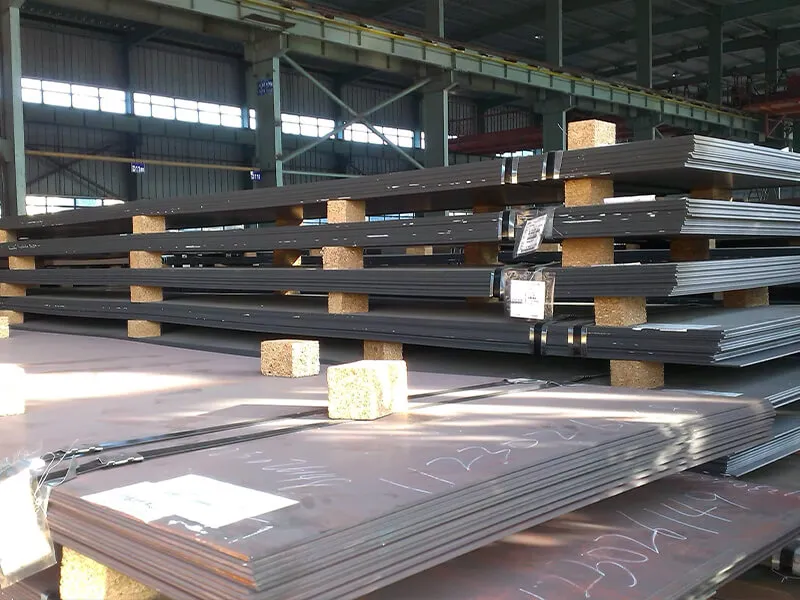
The scale of China’s steel industry is hard to grasp. It produces more steel than the rest of the world combined. To understand its role, we need to look at the numbers. Every buyer asks about price. But price is just one piece of the story.
What is the price of steel in 1 kg?
You are comparing quotes. One supplier offers $0.50 per kg. Another offers $0.65. Which is the better deal? The answer depends on what is included in that price. Is it for ordinary steel or marine grade? Is it EXW1 or delivered? Is certification included? China’s role in the market means you can find a wide range of prices. The key is knowing what you are buying.
The price of steel per kg varies widely based on grade, form, and market conditions. For ordinary carbon steel2 plate (Q235, A36) in China, domestic prices are around 0.46 USD per kg (3,327 yuan/ton) as of early 2026 . Export prices are typically higher. Marine grades like AH36 command a premium. Stainless steel is much higher, with SS 304 at 1.10-1.35 USD/kg and SS 316 at 1.70-2.15 USD/kg .
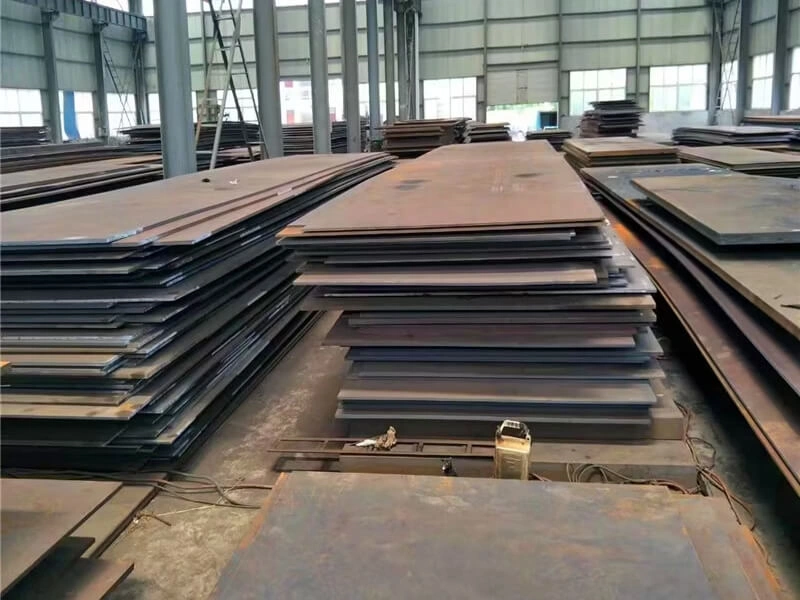
Understanding the Price Spectrum in China’s Market
China’s vast production capacity creates a wide price range. Here is what you need to know.
1. The Baseline: Ordinary Carbon Steel.
- Domestic Price: Ordinary medium plate (Q235, 20mm) was priced at 3,327 yuan/ton in late January 2026 . That is about 0.46 USD/kg at current exchange rates .
- Export Price (FOB3): Export prices are typically higher, reflecting different market dynamics. For similar grades (SS400, A36), FOB3 China prices are often in the range of 0.52-0.58 USD/kg , depending on the port and quantity.
- Why the Difference? Domestic and export markets are separate. Domestic prices are influenced by local demand and government policy. Export prices must compete globally.
2. The Marine Grade Premium.
Marine grades (Grade A, AH36, DH36) are not the same as ordinary steel. They require:
- Tighter Chemistry: Controlled carbon equivalent for weldability.
- Impact Testing: Guaranteed toughness at specified temperatures.
- Classification Certification: ABS, LR, DNV, or other society approval.
These requirements add cost. The premium for marine grade over ordinary steel can be 10-20% or more , depending on the grade and certification.
3. The Stainless Steel Difference.
Stainless steel is a completely different product family.
- SS 304: The common grade, with 18% chromium and 8% nickel. Price: 1.10-1.35 USD/kg .
- SS 316: The marine grade, with molybdenum for saltwater resistance. Price: 1.70-2.15 USD/kg .
- The Nickel Factor: Nickel accounts for over half the raw material cost of stainless. When nickel prices move, stainless prices follow.
4. What the Price Includes.
A price quote must specify the basis:
- EXW1 (Ex-Works): Price at the mill. You arrange all logistics.
- FOB3 (Free On Board): Price includes delivery to port and loading.
- CIF4 (Cost, Insurance, Freight): Price includes delivery to your port.
- Grade and Certification: Marine grades with class certificates cost more.
- Processing: Shot-blasting, priming, or cutting add cost.
My Insight from the Field
A client in Mexico once received a quote from a Chinese supplier at $0.48/kg for "marine plate." It seemed too good to be true. It was. When they asked for the specification, the supplier admitted it was ordinary A36 steel, not certified marine grade. The client almost placed the order, thinking they had found a bargain. We explained that using non-certified steel in a classed vessel would lead to rejection by the surveyor. They thanked us and placed their order with us for certified material at a slightly higher but genuine price. This taught me that in China’s market, you can find any price. The trick is knowing what you are actually getting.
Which country is no. 1 in steel production?
You hear about steel production in many countries: India, Japan, the United States. But one country dominates the numbers. Understanding who produces the most steel explains where global supply originates and why China’s role is so central to the marine market.
China is the undisputed number one country in steel production. In 2023, China produced over 1.019 billion metric tons of crude steel, accounting for more than 54% of global production1 . The next largest producer, India, produced about 140 million tons, less than one-seventh of China’s output . This massive scale underpins China’s role as the world’s primary supplier of marine steel plate.

The Scale and Implications of China’s Dominance
The numbers are staggering. Here is what they mean for the marine market.
| 1. The Production Numbers. | Country | 2023 Crude Steel Production (million tons) | Share of Global Total |
|---|---|---|---|
| China | 1,019 | 54.1% | |
| India | 140 | 7.4% | |
| Japan | 87 | 4.6% | |
| United States | 81 | 4.3% | |
| Russia | 76 | 4.0% | |
| South Korea | 67 | 3.6% | |
| Rest of World | ~414 | 22.0% | |
| Global Total | ~1,884 | 100% |
2. Why This Scale Matters for Marine Plate.
- Capacity for Specialization: With such massive production, China has mills that specialize in everything, including marine-grade plates2. This means buyers can find certified marine steel from multiple sources.
- Economies of Scale: Large-scale production reduces costs. Chinese mills can produce marine plate at competitive prices while maintaining quality.
- Export Availability: Even with huge domestic demand, China’s scale allows for substantial exports. This makes it a reliable source for shipyards worldwide.
3. The Quality Question.
With great scale comes variation. Not all Chinese steel is equal.
- Certified Mills: Many Chinese mills are approved by major classification societies (ABS, LR, DNV, etc.). They produce marine plate to the highest standards.
- Non-Certified Mills: Other mills produce steel for domestic construction and general fabrication. Their products are not suitable for classed vessels.
- The Buyer’s Task: Identify and partner with the certified mills3. This is where a knowledgeable supplier adds value.
4. The Future Outlook.
China’s steel production is expected to remain dominant, though growth may slow as the economy transitions. The focus is shifting toward higher-quality, specialized products4. This is good news for marine buyers seeking reliable sources of certified plate.
My Insight from the Field
A client in Vietnam once asked, "Why should I buy from China when I could buy from India or Japan?" We explained: China’s scale means more options, competitive pricing, and the ability to handle large orders. But we also emphasized that the key is not the country, but the mill. We showed them the list of Chinese mills approved by ABS and DNV. They were impressed by the number and quality. They placed a trial order and have been a regular client ever since. The lesson: China’s number one position gives buyers choice, but they need guidance to make the right choice.
How much is 1 ton of steel?
You are building a budget for a new vessel. The total steel requirement is 5,000 tons. At current prices, what will it cost? The answer depends on what kind of steel, from where, and with what certification. China’s role in the market means you have options at different price points. Understanding them helps you budget accurately.
The price of 1 metric ton of steel1 varies significantly by product and destination. In China, ordinary plate (Q235) is about $460 USD per ton domestic . Export prices for similar grades (A36, SS400) are typically $520-580 per ton FOB . Marine grades with certification2 cost more. Delivered prices (CIF) add freight and insurance. As of early 2026, US plate prices were around $1,090-1,190 per ton , reflecting different market conditions .
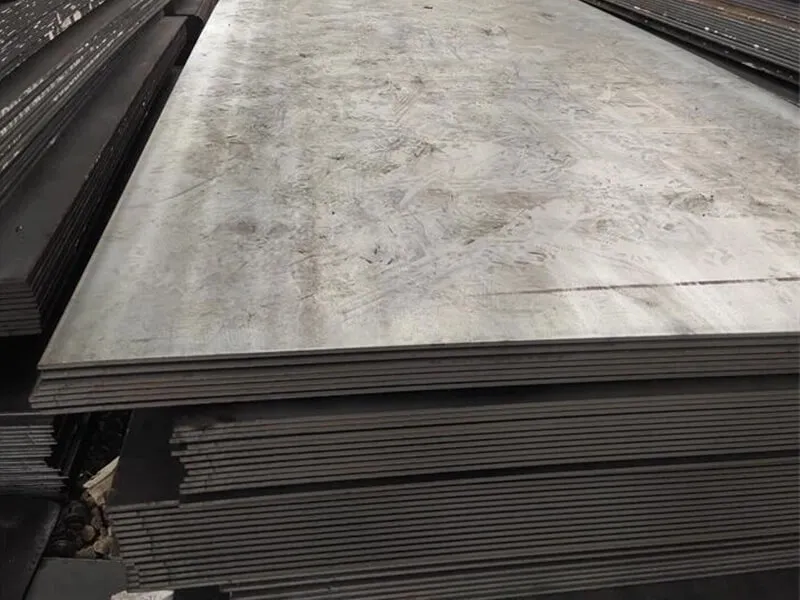
Breaking Down the Cost of a Ton
When you ask "how much is 1 ton," you need to specify many variables.
| 1. Price by Product Type (Indicative Ranges). | Product | Price Range (USD/ton) | Notes |
|---|---|---|---|
| Ordinary Plate (Q235, China domestic) | ~460 | February 2026 price | |
| Ordinary Plate (A36/SS400, FOB China) | 520-580 | Depends on port and quantity | |
| Ship Plate (Grade A, FOB China) | 600-700 | Estimate, includes basic marine certification | |
| High-Strength Marine Plate (AH36, FOB China) | 650-800 | Premium for higher strength and toughness | |
| US Plate (domestic) | 1,090-1,190 | Early 2026 price | |
| SS 304 Plate (FOB China) | 1,100-1,350 | Based on ₹180-220/kg | |
| SS 316 Plate (FOB China) | 1,700-2,150 | Based on ₹280-350/kg |
2. The Cost of Certification.
Marine-grade steel is not just about chemistry. It is about traceability and verification.
- Mill Test Certificate (MTC)3: Included in the base price.
- Classification Society Certificate4 (ABS, LR, DNV): Adds cost. The mill must be approved by the society, and each plate is surveyed.
- Third-Party Inspection (SGS, BV): Optional but recommended. Adds $10-20 per ton, but provides independent verification.
3. The Freight Factor.
A ton of steel at the mill is not a ton at your yard. Freight adds cost5.
- To Southeast Asia (Vietnam, Philippines): $20-40 per ton.
- To Middle East (Saudi Arabia, Qatar): $40-70 per ton.
- To Europe (Romania): $50-80 per ton.
- To Mexico: $60-100 per ton.
4. Currency and Payment.
- USD Pricing: Most international steel trade is in US dollars. If your local currency weakens, your cost in local currency goes up.
- Payment Terms: Letters of credit add bank fees. TT payments may have transfer costs. These can add 1-3% to the total cost.
My Insight from the Field
A client in Romania once asked for a CIF quote for 1,000 tons of AH36 plate6. Our price was $720/ton. They found another quote at $680/ton FOB. They thought we were expensive. We explained that our price included freight, insurance, and all documentation. The other quote was ex-mill, meaning they would have to arrange shipping themselves. When they added freight, insurance, and the hassle of finding a ship, the total was over $750/ton. They placed the order with us. The lesson: always compare delivered prices, not just FOB prices. A ton at the mill is not a ton at your yard.
What is the rate of SS plate per kg?
You need stainless steel plate1 for marine fittings. The application is critical. Corrosion resistance is essential. The price per kg matters, but not as much as getting the right grade. China produces vast quantities of stainless plate, from basic 304 to specialized 316L and duplex grades. Understanding the pricing helps you select the right material for the job.
The rate of stainless steel plate1 per kg in China varies by grade and market conditions. For SS 304 plate2, FOB China prices are approximately $1.35 per kg (based on ₹220/kg) . For SS 316 plate3, the marine-grade option, prices are around $2.15 per kg (based on ₹350/kg) . These prices reflect the higher alloy content, especially nickel and molybdenum, in grade 316.

Navigating Stainless Steel Pricing
Stainless steel is a complex product family. Here is what buyers need to know.
| 1. The Grade Matrix. | Grade | Key Alloys | Corrosion Resistance | Typical Price (USD/kg FOB China) |
|---|---|---|---|---|
| SS 304 | 18% Cr, 8% Ni | Good in fresh water, limited in saltwater | 1.10 – 1.35 | |
| SS 316 | 16% Cr, 10% Ni, 2% Mo | Excellent in saltwater | 1.70 – 2.15 | |
| SS 316L | Same as 316, lower carbon | Better weldability, same corrosion resistance4 | Slight premium over 316 | |
| Duplex 22055 | 22% Cr, 5% Ni, 3% Mo | Superior strength and corrosion resistance4 | 3.00 – 4.00 |
2. Why 316 Costs More Than 304.
- Nickel Content: 316 has slightly more nickel (10% vs 8%).
- Molybdenum: This is the key. Molybdenum costs significantly more than nickel and provides the enhanced resistance to chlorides (salt) that makes 316 the marine grade.
- Market Dynamics: When molybdenum prices rise, the premium for 316 expands.
3. Form and Finish.
- Hot-Rolled Plate: The standard form for thicker material. Lower cost.
- Cold-Rolled Sheet: Thinner, with better surface finish. Higher cost.
- 2B Finish: Standard mill finish.
- No. 4 Polish: Polished finish for architectural applications. Adds cost.
4. Quantity and Sourcing.
- Volume Discounts: Larger orders get better per-kg pricing. A 20-ton order will have a lower price than a 2-ton order.
- Mill vs. Trader: Direct from a mill (if you have the volume) is cheapest. Traders add a margin but offer flexibility on quantity.
- Stock vs. Production: Stock items are cheaper and faster. Custom sizes require production and take longer.
My Insight from the Field
A client in Saudi Arabia once asked us to quote SS 304 plate2 for a seawater application. We asked: "Is this in direct contact with seawater?" They said yes. We explained that 304 would likely pit and corrode within a few years. We recommended 316L. The price was higher, but the lifespan would be decades, not years. They changed the specification. This conversation saved them from a costly failure. The lesson: the "rate" is not just a number. It reflects the material’s suitability for the job. Paying more for the right grade is cheaper than replacing failed material.
Conclusion
China’s role in the global marine steel plate market is defined by its massive production scale, competitive pricing, and the availability of certified marine grades. Success for buyers lies in partnering with suppliers who can navigate this vast market to deliver quality, certified material.
-
Explore this link to find reliable suppliers for stainless steel plates, ensuring you get quality materials for your projects. ↩ ↩ ↩ ↩ ↩ ↩
-
This resource will provide you with current market prices for SS 304 plates, helping you budget effectively. ↩ ↩ ↩ ↩ ↩
-
Understanding the reasons behind the price difference can help you make informed purchasing decisions. ↩ ↩ ↩ ↩ ↩ ↩
-
This link will guide you to materials that offer superior corrosion resistance, crucial for marine environments. ↩ ↩ ↩ ↩ ↩
-
Learn about the benefits of Duplex 2205, which may be ideal for your construction needs due to its strength and resistance. ↩ ↩
-
Get insights on CIF quotes and how they compare to FOB prices for better budgeting. ↩