
You are looking at the design for a new generation of vessels. They are larger, lighter, and more efficient than ever before. The hull forms are complex. The structural demands are extreme. And throughout the design, one simple shape appears again and again: the L. L-shaped steel is not a new product, but its role in next-generation ships is more critical than ever.
L-shaped steel, primarily in the form of marine angles, plays a fundamental role in next-generation ship structures. It provides the essential framing, stiffening, and connections that allow ships to be strong yet light. As ships grow larger and designs become more optimized, the demand for high-strength, precisely dimensioned L-shaped steel increases. It is the hidden skeleton that makes modern shipbuilding possible.
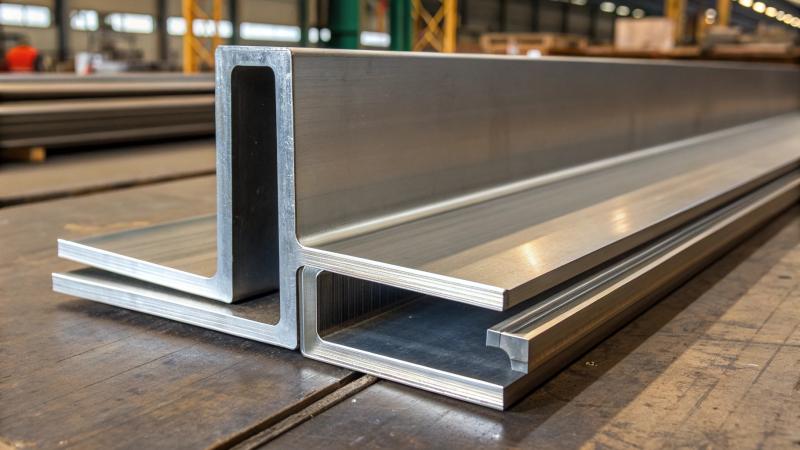
The L-shape is simple, but its applications are diverse. To understand its role in future ships, we need to understand its purpose, its forms, and its names. Let’s start with the fundamental question.
What is the purpose of the L angle1?
You are walking through a shipyard. Everywhere you look, you see L-shaped steel being welded into place. On the hull, on the decks, inside the bulkheads. What is it doing? What purpose does this simple shape serve? The answer explains why it is indispensable.
The purpose of an L angle1 (also called angle steel) in shipbuilding is threefold: framing2, stiffening3, and connecting4. As framing2, angles create the structural skeleton of the ship, forming the ribs and beams. As stiffeners, they are welded to plates to prevent buckling under load. As connections, they join different structural members together at brackets and intersections. In essence, L angle1s provide the reinforcement that allows thin steel plates to form a strong, rigid hull.
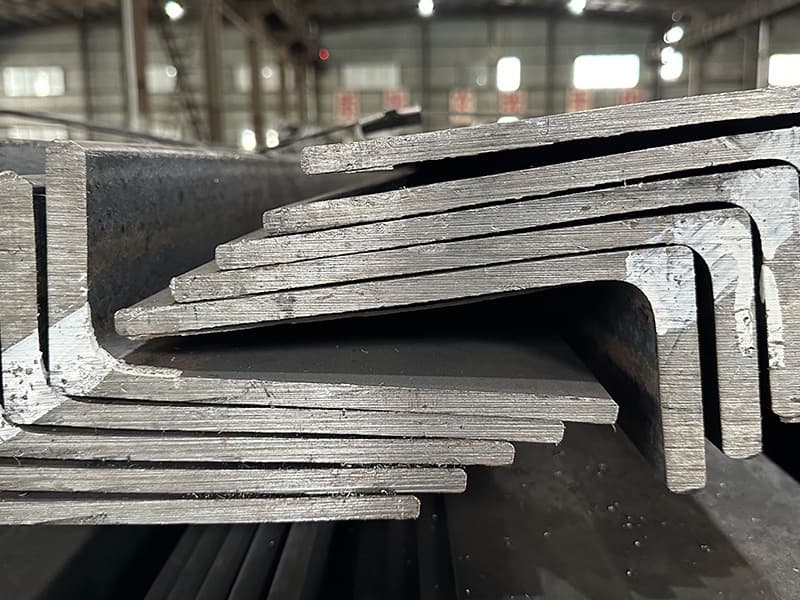
The Three Roles of the L Angle
Each role is critical to the ship’s integrity.
1. Framing: The Skeleton.
- Transverse Frames: These run across the ship’s width, like ribs on a human. They give the hull its shape and resist external water pressure. Large L angle1s or bulb flats are often used for this.
- Longitudinal Stiffeners: These run along the ship’s length, attached to the hull plating. They work with the transverse frames to create a grid that stiffens the entire structure.
2. Stiffening: Preventing Buckling.
- The Problem: A flat steel plate, by itself, will buckle under pressure. Think of stepping on an empty soda can.
- The Solution: Weld L angle1s to the plate. They act like the ridges on a soda can, preventing buckling and allowing the plate to be much thinner than if it were unsupported.
- Weight Saving: This is the key. Without stiffeners, hull plates would need to be enormously thick and heavy. Stiffeners allow ships to be light and efficient.
3. Connecting: Joining the Pieces.
- Brackets: Where two structural members meet (e.g., a frame meeting a beam), an L-shaped bracket is often used to reinforce the joint. This distributes stress and prevents failure.
- End Connections: The ends of stiffeners are often connected to other structures using L-shaped details.
4. The Evolution in Next-Generation Ships.
- Higher Strength: New ships use higher-strength steels5 (AH36, DH36) for angles, allowing smaller, lighter sections to carry the same load.
- Optimized Design: Computer analysis allows designers to place angles exactly where needed, minimizing weight while maximizing strength.
- Automated Fabrication: Robots now weld angles to plates, increasing speed and consistency.
My Insight from the Field
A naval architect once explained to me, "The hull plates are the skin. The L angle1s are the bones. Without the bones, the skin is just a limp pile of steel." This simple analogy stuck with me. When a shipyard orders L angle1s, they are ordering the skeleton of their vessel. The quality of that skeleton determines the strength and longevity of the whole ship.
What is the L-shaped piece of steel?
You are looking at a fabrication drawing. It shows an L-shaped piece of steel at a critical joint. Is this the same as a rolled L angle? Not necessarily. In modern shipbuilding, L-shaped pieces can be either rolled sections or fabricated bracket1s. Knowing the difference helps you specify correctly.
An L-shaped piece of steel can refer to two different things. First, it is a rolled angle section2, manufactured in a steel mill and used as a continuous stiffener3 or frame. Second, it is a fabricated bracket1, cut from a steel plate and used as a local connection or reinforcement. Both are L-shaped, but they are produced differently and serve different purposes. The rolled section is for long, continuous runs. The fabricated bracket1 is for discrete, highly stressed connections.
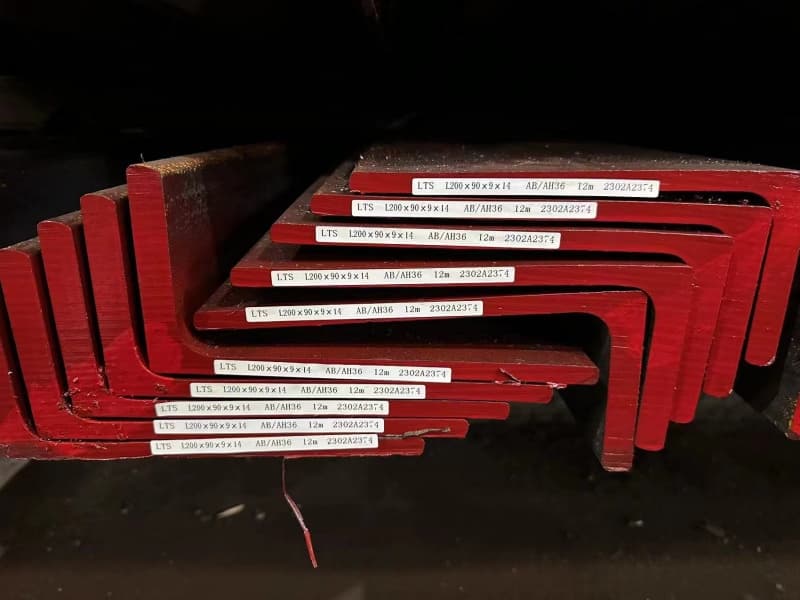
Rolled vs. Fabricated: Choosing the Right L-Shape
Each type has its place in next-generation ships4.
1. Rolled Angle Sections.
- Production: Hot-rolled in a steel mill to a precise profile.
- Properties: Consistent mechanical properties throughout. Certified with Mill Test Certificates.
- Use: Long, continuous stiffener3s (e.g., longitudinal stiffeners running the length of the hull). Frames (e.g., transverse ribs). They are efficient for long runs.
- Advantages: Lower cost per meter for long lengths. Consistent quality. Readily available in standard sizes.
2. Fabricated Brackets (L-Shaped Pieces).
- Production: Cut from steel plate (often using plasma or laser) and sometimes bent or welded to form an L-shape.
- Properties: Properties are those of the original plate. The corner may be a bend radius or a welded joint.
- Use: Local connections where a frame meets a beam. Reinforcement at the ends of stiffeners. Equipment foundations. They are used where a complex shape or local reinforcement is needed.
- Advantages: Can be made in any size or shape. Can be optimized for local loads.
| 3. Which to Choose? | Factor | Rolled Angle | Fabricated Bracket |
|---|---|---|---|
| Length | Long, continuous | Short, discrete | |
| Cost for Long Runs | Lower | Higher | |
| Customization | Limited to standard sizes | Infinite | |
| Strength | Consistent, certified | Depends on plate and fabrication | |
| Lead Time | From stock or mill production | From plate stock, quick for small quantities |
4. Next-Generation Trends.
- Optimization: Designers are using more fabricated bracket1s in highly stressed areas, where a standard rolled angle might not fit perfectly.
- Automation: Robotic cutting and welding make fabricated bracket1s more cost-effective.
- Hybrid Approaches: Some designs use rolled angles for the main runs and fabricated bracket1s at the ends, combining efficiency with customization.
My Insight from the Field
A shipyard in Thailand was designing a new container ship. They used rolled AH36 angles for all the main hull stiffeners. But at the ends of these stiffeners, where they attached to bulkheads, they used fabricated bracket1s cut from the same grade of plate. This hybrid approach gave them the efficiency of rolled sections for the long runs and the customization of fabricated pieces for the critical connections. It was a smart, cost-effective design.
What is the L-shaped metal used in construction?
You are in a meeting with a client who is new to shipbuilding. They ask, "Is this the same L-shaped metal I see in building construction?" The answer is yes and no. Understanding the similarities and differences helps explain why marine L-shaped steel1 is special.
L-shaped metal, in the form of steel angles, is widely used in construction for framing, bracing, and supports. However, the L-shaped steel1 used in shipbuilding is different. It is made to marine-grade specifications2, with controlled chemistry for weldability3, guaranteed toughness for low-temperature performance, and certification by classification societies4. While the shape is the same, the material requirements are much more stringent for marine applications.
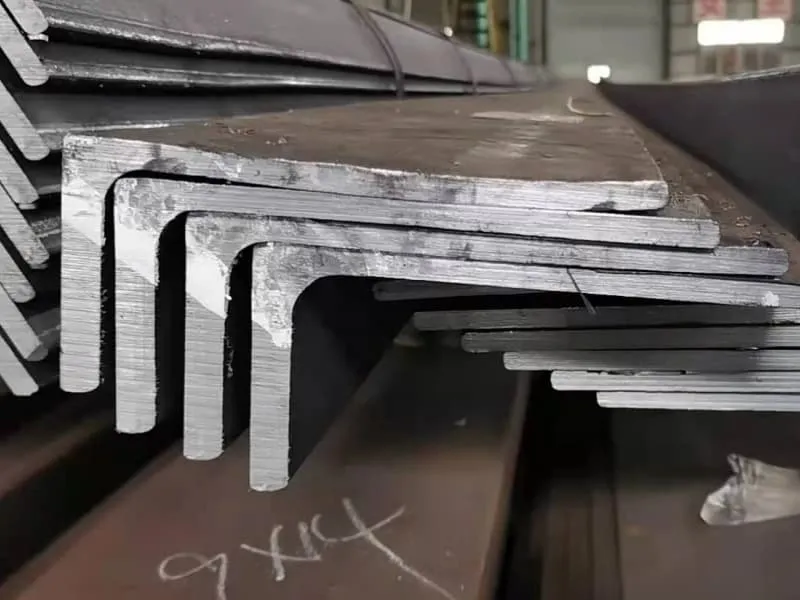
Construction Angles vs. Marine Angles: Key Differences
The shape is the same. The material is not.
1. Similarities.
- Shape: Both are L-shaped sections with two legs at 90 degrees.
- Basic Function: Both provide structural support5 and connections.
- Production: Both are hot-rolled in steel mills.
| 2. Differences. | Feature | Construction Angle (e.g., A36) | Marine Angle (e.g., AH36) |
|---|---|---|---|
| Steel Grade | Standard carbon steel | High-strength low-alloy (HSLA) steel | |
| Yield Strength | 250 MPa (A36) | 355 MPa (AH36) | |
| Toughness | Not specified | Impact-tested at specified temperatures (0°C, -20°C, etc.) | |
| Weldability | General | Controlled carbon equivalent for better weldability3 | |
| Certification | Mill Test Certificate | Classification Society Certificate (ABS, LR, DNV) | |
| Traceability | Basic | Full traceability to heat and mill | |
| Application | Buildings, bridges, general fabrication | Ship hulls, offshore structures |
3. Why the Difference Matters.
- Safety at Sea: A ship faces wave loads, cold temperatures, and corrosive saltwater. Construction-grade steel may become brittle and fail. Marine-grade steel is engineered for these conditions.
- Class Approval: Classification societies require certified marine steel for the primary structure. Using construction-grade steel would result in the vessel being rejected.
- Longevity: Marine-grade steel is designed to last the 20-30 year life of a vessel.
4. Can You Substitute?
Never substitute construction-grade steel for marine-grade in a classed vessel. The consequences are severe: rejection by the surveyor, potential structural failure, and legal liability.
My Insight from the Field
A small shipyard in the Philippines once tried to save money by using construction-grade angles for non-critical interior framing. The class surveyor spotted it during an inspection. He ordered all the non-compliant material removed, at the shipyard’s expense. The cost of the rework was ten times the saving. The lesson: marine rules exist for a reason. Follow them.
What is L-shaped steel called?
You are writing a procurement specification. What term should you use? Angle steel? L-section1? Marine angle? The name matters because it signals the quality and application. Using the right name ensures you get the right product.
L-shaped steel is most commonly called angle steel2 or angle bar in general contexts. In technical drawings and standards, it is referred to as an L-section1 or angle section. When specifying for marine use, the term marine angle steel3l](https://cnmarinesteel.com/why-l-shaped-steel-is-ideal-for-ship-frame-construction/)[^2] or ship angle steel4l](https://cnmarinesteel.com/why-l-shaped-steel-is-ideal-for-ship-frame-construction/)[^2] is used to indicate that the material meets classification society requirements. All these terms refer to the same basic L-shaped product, but the modifiers ("marine," "ship") indicate a higher grade and certification.

A Guide to Naming Conventions
Using the right name in the right context prevents errors.
| 1. Common Names and Their Contexts. | Term | Context | What It Implies |
|---|---|---|---|
| Angle Steel | General construction, fabrication | Basic L-shaped steel, grade may vary. | |
| Angle Bar | Same as angle steel2 | Often used interchangeably. | |
| L-Section | Technical drawings, standards | Precise, dimensional specification follows. | |
| Angle Section | Engineering codes, standards | Same as L-section1. | |
| Marine Angle Steel | Shipbuilding, offshore procurement | Steel is marine-grade, certified by class society. | |
| Ship Angle Steel | Same as marine angle steel3l](https://cnmarinesteel.com/why-l-shaped-steel-is-ideal-for-ship-frame-construction/)[^2] | Same. | |
| L-Shaped Steel | Casual conversation, non-specialists | Descriptive, but not technical. |
2. How to Specify.
For a marine application, your specification should include:
- Shape: Angle steel or L-section1.
- Application Modifier: Marine grade.
- Standard: The dimensional standard5 (e.g., EN 10056).
- Grade: The steel grade with classification (e.g., DH36 with ABS certification).
- Dimensions: Leg lengths and thickness (e.g., 150 x 90 x 12 mm).
Example Specification:
"Marine angle steel2, L-section1 150 x 90 x 12 mm, to EN 10056, Grade DH366 with ABS certification, 12-meter random lengths."
3. Why Precision Matters.
If you simply order "L-shaped steel," you might receive:
- Construction-grade A36, not marine-grade DH36.
- Unequal angle when you needed equal, or vice versa.
- No certification, or the wrong certification.
- Dimensions that do not match your design.
My Insight from the Field
A client in Romania once sent us an inquiry for "L-shaped steel, 150x90x12, DH36." This was good, but we asked one more question: "Which standard? EN 10056?" They confirmed yes. This simple clarification ensured we supplied material with the exact dimensions and tolerances they expected. If we had assumed a different standard, the dimensions might have been slightly off, causing fit-up problems. This is why we always ask for the standard. It is a small detail that prevents big problems.
Conclusion
L-shaped steel, in the form of marine angles, is the hidden skeleton of next-generation ships. Its roles in framing, stiffening, and connecting are fundamental. Understanding its forms, names, and the difference between construction and marine grades is essential for anyone involved in shipbuilding procurement.
-
Learn about the significance of L-section in technical drawings and how it impacts engineering standards. ↩ ↩ ↩ ↩ ↩ ↩ ↩ ↩ ↩ ↩ ↩ ↩ ↩ ↩ ↩ ↩ ↩ ↩ ↩ ↩ ↩
-
Explore this link to understand the applications and specifications of angle steel in various industries. ↩ ↩ ↩ ↩ ↩ ↩ ↩
-
Discover the importance of marine angle steel in shipbuilding and offshore projects, ensuring quality and compliance. ↩ ↩ ↩ ↩ ↩ ↩ ↩
-
Find out how ship angle steel meets specific marine standards and why it matters for maritime construction. ↩ ↩ ↩ ↩
-
Understanding dimensional standards is crucial for procurement; explore this link for detailed insights. ↩ ↩ ↩
-
Learn about the properties and applications of Grade DH36 steel, especially in marine environments. ↩