
You finally placed that order for marine steel plate. But now, you are waiting. And waiting. The days turn into weeks, and your project schedule starts to slip. You start to wonder if the goods will ever arrive.
The total delivery time for marine steel plate from China depends on three main things: the mill’s production schedule, the time it takes to get the plate to the port, and the actual sea freight transit time. It is not just one number. It is a chain of events. For example, production can take 10-15 days [citation:1], and sea freight to the US West Coast can take another 25-32 days [citation:2].
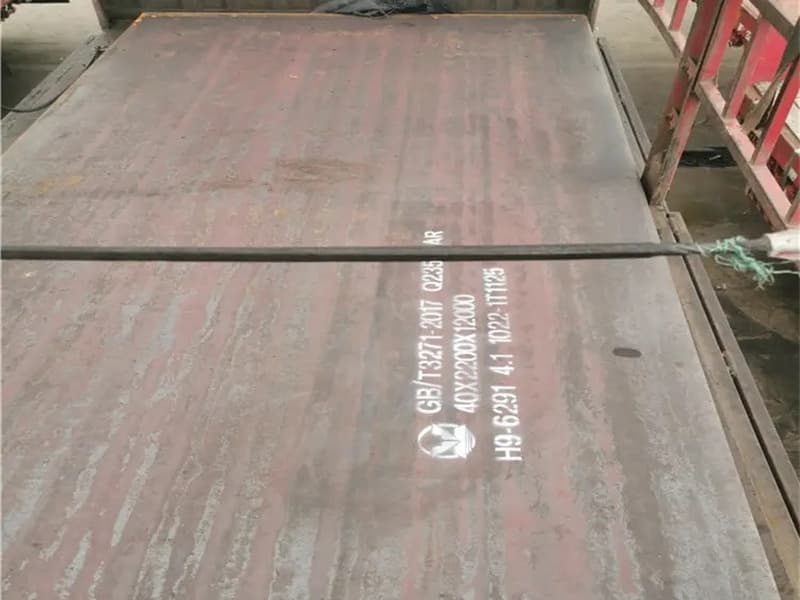
You might think the process stops once the steel is made. But that is just the middle of the story. Many buyers focus only on the ocean part. They forget about the steps before the ship even sails. Let me walk you through the whole journey. I will explain each stage that affects your delivery time. This way, you will know exactly what questions to ask your next supplier.
Why does shipping take so long from China?
You see a ship leave Shanghai, and you think it will be in Houston in a few weeks. But then, it takes much longer. You start to get frustrated. You wonder if your supplier even shipped it on time.
Shipping from China takes time because of three big factors: port congestion1 at departure or arrival, the specific ocean route taken, and waiting times for customs clearance2 at both ends. A direct route from Jinzhou to Los Angeles might take 25-32 days, but if your port is on the East Coast, like New York, the trip can stretch to 35-42 days [citation:2].

Let us break down the shipping stage into more detail. It is not just about the days at sea. Many things can add time to this part of the journey.
Why Your Cargo Might Be Delayed at Sea
The ocean freight part of your delivery time is the most variable. I have seen shipments arrive early, and I have seen them stuck for weeks. Here is a simple look at what controls the speed.
| Factor | Impact on Delivery Time | Example or Data [citation:2] |
|---|---|---|
| Port of Departure | Some Chinese ports are faster due to better tech. | Jinzhou Port upgraded in 2025, boosting container capacity by 25%. |
| Shipping Route | Direct routes are faster than those with stops. | Jinzhou to Seattle: 22-28 days. Jinzhou to NY: 35-42 days. |
| Weather & Season | Typhoons in the Pacific can cause major delays. | Peak typhoon season (Summer/Fall) can add days or weeks. |
| US Port Congestion | Your cargo might arrive fast but wait to be unloaded. | LA/LB ports have random UVA scanning on 20% of containers, which slows things down. |
| Carrier Choice | Different shipping lines have different schedules. | COSCO, ONE, and Evergreen all have varying transit times and reliability. |
So, when you ask "why is shipping so slow?", you have to look at the whole picture. A delay is rarely just one thing. It is often a combination of route, weather, and waiting for a free berth at the port. The key is to build these potential delays into your project plan from the start. A good supplier will help you track these things in real-time using carrier portals [citation:2].
Is US steel1 better than Chinese steel?
Many buyers come to me with this idea in their heads. They think steel made in the US or Europe is simply better. They believe "made in China" means lower quality. This doubt makes them hesitate. They worry about the performance of the plates in their ships or oil tanks.
The truth is, "better" depends on what you need. China and the US have different standard systems, but both produce high-quality steel. Chinese steel2 mills often follow GB standards, while US mills follow ASTM or AISI standards [citation:1][citation:3]. The quality is not about the country. It is about the specific standard and the mill’s capability.
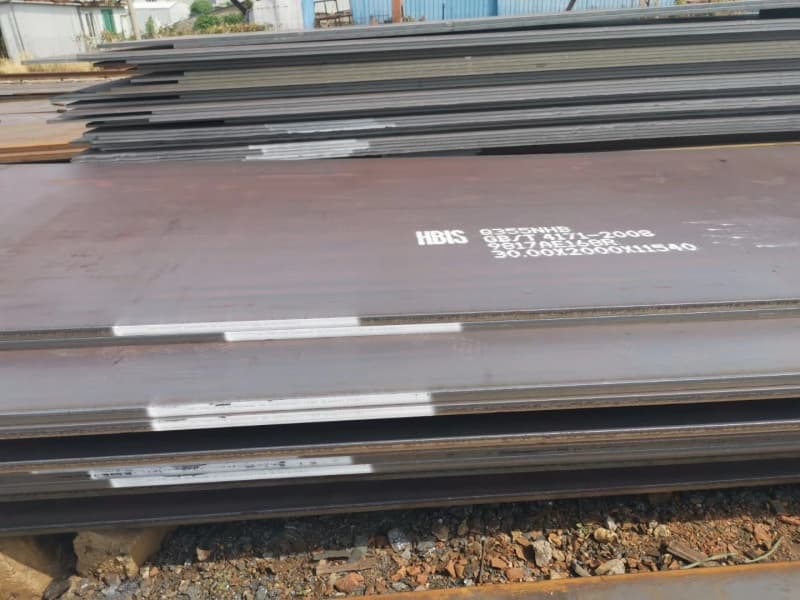
To help you see this clearly, let us look at how steel production and quality compare. It is not a simple "better or worse" situation.
Comparing Production and Quality
The real difference is not quality, but specialization and process. Let me show you.
- Production Methods: China makes a huge amount of steel using blast furnaces and its ample coal reserves. The USA often uses electric arc furnaces, which recycle scrap metal [citation:8]. Both methods can create top-tier steel. The US method is good for sustainability, while China’s scale often means more competitive pricing.
- Quality and Standards: The idea that US steel is "better" often comes from its use in specific high-stakes industries like defense and aerospace [citation:8]. China, on the other hand, is a world leader in producing high-strength low-alloy (HSLA) steels3 for ships and infrastructure [citation:8]. A marine steel plate made to ABS or CCS standards in China is engineered to perform exactly as it should for a hull. We work with mills that produce steel certified by CCS, BV, LR, DNV-GL, and ABS [citation:1]. This means the steel meets international rules.
- Cost vs. Performance: US steel can be excellent for niche, high-performance uses. But for commercial shipbuilding and large-scale projects, Chinese steel offers a strong balance of quality and cost. The key is choosing the right supplier. A reliable mill will offer SGS inspection support4. This lets you, the buyer, verify the quality before it ships. This third-party check removes the guesswork.
In the end, your focus should be on the certification and the mill’s reputation. A buyer from Saudi Arabia once told me our quality was the most consistent they had received. It is not about the flag on the map. It is about the care in the process.
How long does it take for shipping from China?
You are planning a big project. You need to know exactly when the steel will arrive. A vague answer like "a few weeks" is not enough. You need a realistic schedule so you can plan your fabrication and labor.
For marine steel plate1, the total time from order to arrival at a major US port is usually between 45 and 70 days. This breaks down to about 10-20 days for production [citation:1][citation:10], 7-14 days for inland transport to the port and consolidation, and then 22-42 days for the sea voyage, depending on whether you are shipping to the West Coast or East Coast [citation:2].
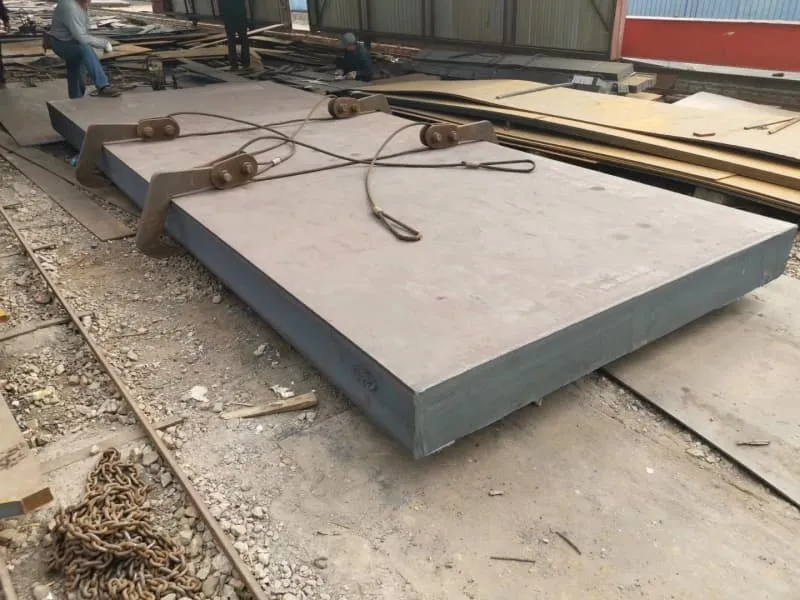
Let’s dive deeper into this timeline. It helps to see it in stages. This way, you can track where your order is and spot potential delays early.
The Step-by-Step Timeline to Your Door
Every stage adds days to the clock. Here is a more detailed breakdown of where that time goes.
- Production Time (10-20 days): This is the first step. If the mill has your grade in stock, it can be faster. If it is a special order, it takes longer. For example, hot-rolled ship plates from some suppliers have a delivery time of 10-15 days [citation:1]. Others might quote 12-21 days [citation:10]. We keep a close relationship with certified mills in China. This helps us get faster production slots for our clients.
- Inland Transportation2 (2-7 days): Once the steel is made, it needs to get to the port. Factories are often inland. For instance, if the steel is made in Shandong, it might be trucked to a major port like Tianjin or Qingdao. This move takes time. New rail links in China have cut this inland time by up to 18% in 2025 [citation:2], which is a big help.
- Consolidation and Port Holding3 (5-7 days): This is a hidden time sink. Your steel might arrive at the port, but it waits for the next available ship. If you are shipping LCL (less than a container load), it needs to be consolidated with other cargo, which adds 5-7 days [citation:2]. The ship’s schedule is fixed. If your cargo misses the cutoff, it waits for the next one.
- Ocean Transit (22-42 days): This is the part most people know. A direct ship from a northern Chinese port like Jinzhou to Los Angeles takes about 25-32 days. Going all the way to New York adds another 10 days or so, taking 35-42 days [citation:2].
- US Customs and Delivery4 (2-5 days): After the ship docks, the cargo must clear customs. Preparing the right documents—like the commercial invoice, packing list, and ISF filing—ahead of time is key [citation:2]. If your papers are correct, this step is quick. If not, it can add big delays.
So, when you ask for a timeline, add up all these steps. A supplier who gives you just the ocean time is not giving you the full picture.
Where does China import steel from?
It sounds strange, right? China is the world’s biggest steelmaker. Why would it need to buy steel from other places? You might wonder if this affects your order. If China buys steel elsewhere, does that mean it cannot make enough for you?
Yes, China is the top steel producer, but it still imports specific raw materials and semi-finished products to feed its own mills. This is not about a shortage. It is about economics and efficiency. China imports things like iron ore1 and, importantly, steel slabs2 (semi-finished steel3) from other countries to process further.
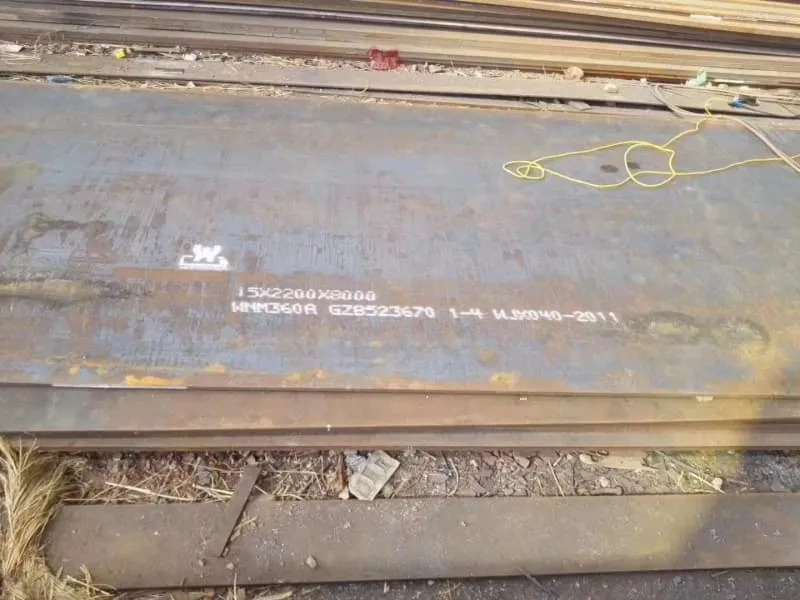
Let’s look at where these imports come from and what they mean for you.
Why China Imports Steel Materials
Understanding this helps you see the bigger picture of the global steel market4. It can also explain price changes.
- Raw Material Imports (Iron Ore): China does not have enough high-quality iron ore for all its needs. It imports massive amounts from countries like Australia and Brazil. If something disrupts this supply, like a storm in Australia, it can affect steel production costs and schedules globally.
- Semi-Finished Imports (Steel Billets and Slabs): China also imports semi-finished steel. A key source for this is Iran. Iran is a major exporter of steel billets and slabs [citation:4]. In 2025, over 60% of Iran’s steel exports were in this semi-finished form [citation:4]. Chinese mills buy these slabs and then roll them into finished products like plates or sheets.
- Impact on Delivery and Price: Why does this matter to you? If there is a conflict in the Middle East, like the one affecting the Strait of Hormuz, it can disrupt the flow of these semi-finished goods from Iran [citation:4]. This could tighten the supply of slabs in China. If it is harder for Chinese mills to get these raw materials, it could potentially push up prices or stretch out production times for certain products.
- The Bigger Picture: This import activity shows that China’s steel industry is deeply connected to the world. It is not an island. Global events matter. For example, tariffs or trade policies in the US, like the Section 301 duties on Chinese steel, also shape these trade flows [citation:2]. A smart buyer watches these global trends. They help you understand why prices move and why demand might suddenly shift.
So, when you order marine steel plate from China, you are tapping into a global supply chain. The steel in your plate might have started as iron ore from Australia or a slab from Iran. This global network is designed to be efficient. But it also means that events far away can sometimes affect your delivery time.
Conclusion
Delivery time is not just about a boat speed. It is a chain of production, inland travel, and ocean transit. Knowing each step helps you plan better.
-
Explore this link to understand the key countries supplying iron ore to China, impacting global steel production. ↩ ↩ ↩ ↩
-
Learn about the significance of steel slabs in China’s steel production and how they affect the market. ↩ ↩ ↩ ↩
-
Discover the role of semi-finished steel in manufacturing and its impact on the global steel supply chain. ↩ ↩ ↩
-
Gain insights into the dynamics of the global steel market and how it influences pricing and supply. ↩ ↩ ↩