
Choosing the wrong steel plate can sink a project before it even starts. I’ve seen plates crack during fabrication because their internal structure couldn’t handle the stress. The key to unlocking a plate’s full potential often lies not in its chemistry alone, but in its heat treatment.
Heat treatment involves controlled heating and cooling of steel to change its physical and mechanical properties. For marine plates, common treatments include normalizing, quenching & tempering (Q&T), and thermo-mechanical control process (TMCP). The "best" treatment depends entirely on the required balance of strength, toughness, and weldability for the specific marine application.
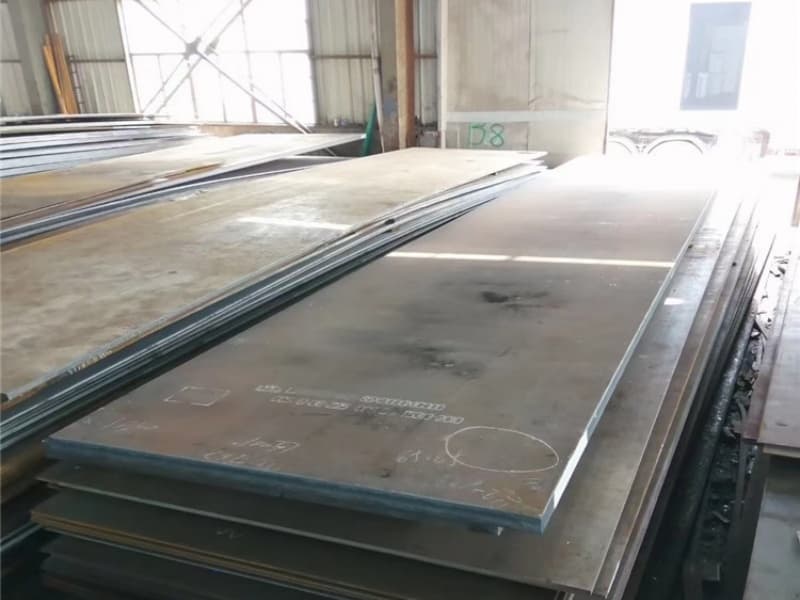
Think of heat treatment as the final, crucial instruction given to the steel. It tells the metal’s internal crystals how to arrange themselves. A plate with the perfect chemistry can still fail if it receives the wrong instructions. For buyers and fabricators, understanding these processes is the difference between specifying a commodity and engineering a solution. Let’s explore the treatments that define performance at sea.
What is the heat treatment of steel plate?
Imagine buying steel that is too hard to cut or too soft to bear load. Without proper heat treatment, this is a real risk. The process is fundamental to achieving the properties listed on your mill certificate.
Heat treatment of a steel plate is a series of controlled thermal operations. We heat the plate to a specific high temperature, hold it there for a set time, and then cool it at a controlled rate. This process does not change the plate’s shape significantly, but it dramatically alters its internal microstructure. This change in microstructure directly changes the plate’s strength, hardness, toughness, and ductility.
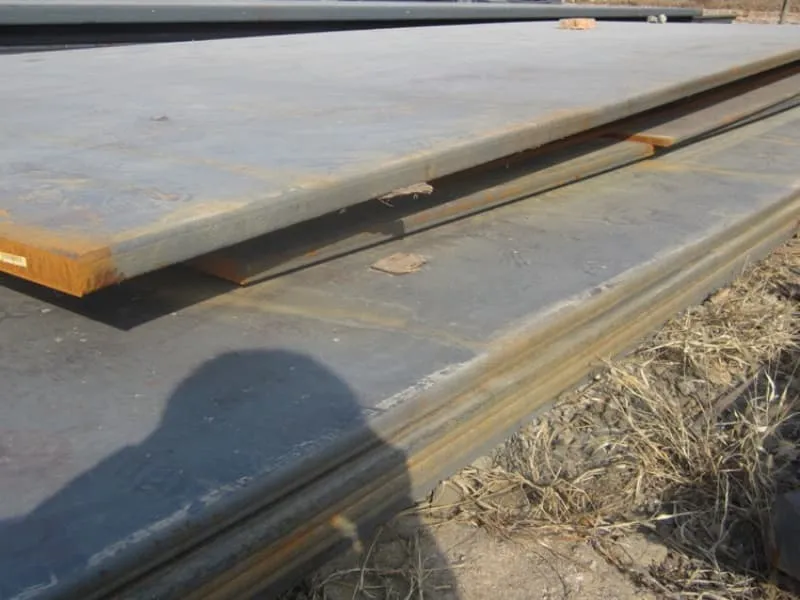
The Science and Purpose Behind Heat Treating Marine Steel
Heat treatment is not a single action but a precise language we use to communicate with the steel. At its core, it is about manipulating the arrangement of iron and carbon atoms within the solid metal. For marine applications, the goal is never just to make the steel hard or soft. The goal is to achieve a very specific and reliable set of properties that ensure safety, longevity, and ease of fabrication in a harsh environment.
The Basic Principles: Phases and Transformations
To understand heat treatment, you must first understand two key concepts: phases and transformation.
-
Phases: At different temperatures, the iron-carbon system exists in different atomic arrangements called phases. The most important ones are:
- Austenite: This is a high-temperature phase (above about 720°C for mild steel). In this phase, carbon atoms are dissolved uniformly in the iron crystal lattice. Austenite is soft and ductile.
- Ferrite and Cementite: These are the low-temperature phases. Ferrite is almost pure, soft iron. Cementite is a hard, brittle compound of iron and carbon (Fe3C). In most structural steels, these two mix to form a layered structure called pearlite.
-
Transformation: When we heat steel into the austenite range, we "reset" its structure. How we then cool it determines what new microstructure forms. Slow cooling allows austenite to transform into the soft ferrite and pearlite. Very rapid cooling (quenching) traps the carbon, forcing a transformation into extremely hard but brittle phases like martensite. Subsequent reheating (tempering) then modifies this martensite to achieve a good balance of strength and toughness.
Why We Heat Treat Marine Plates Specifically:
The requirements for a ship’s hull, an offshore platform leg, or a large storage tank are unique. Heat treatment allows mills to produce plates that meet these rigorous demands in a cost-effective way.
- To Relieve Internal Stresses: After rolling, plates can have locked-in stresses. A simple heat treatment like stress relieving heats the plate to a moderate temperature (below the transformation point) and slowly cools it. This relaxes the metal, preventing distortion during later cutting or welding. This is crucial for precision fabrication.
- To Homogenize the Structure: The rolling process can create a non-uniform microstructure, especially in thicker plates. Normalizing heats the plate to become fully austenitic and then cools it in still air. This refines the grain size, making it uniform throughout the plate’s thickness. This improves toughness and gives more consistent mechanical properties, which is why normalized plates are often specified for critical applications.
- To Achieve High Strength-to-Weight Ratios: For applications where weight savings are critical, such as on high-speed vessels or the upper decks of offshore platforms, very high strength is needed. Quenching and Tempering (Q&T) is used here. The plate is quenched to form martensite (high strength) and then tempered to restore some toughness. This process can yield strengths double or triple that of conventional as-rolled steels.
- To Ensure Weldability Without Sacrificing Strength: This is the genius of modern processes like the Thermo-Mechanical Control Process (TMCP). While not a traditional furnace treatment, TMCP is a controlled thermal process. The plate is rolled in a specific temperature range and then rapidly cooled. This creates a very fine-grained, strong, and exceptionally tough structure with a low carbon equivalent. This means the plate is both strong and easy to weld—a perfect combination for efficient shipbuilding. For our clients like Gulf Metal Solutions, who value both quality and fabrication speed, TMCP plates are often the ideal solution.
In summary, heat treatment is the essential step that translates a steel plate’s chemical potential into guaranteed, reliable performance. It is the bridge between the mill’s chemistry lab and the shipbuilder’s blueprints.
What is the best heat treatment1 for steel?
Asking for the "best" heat treatment1 is like asking for the best tool. It depends entirely on the job. For a standard ship hull, the best treatment prioritizes toughness and weldability. For a submarine hull, the best treatment maximizes strength under immense pressure.
There is no single "best" heat treatment1 for all steel. The optimal process is determined by the final application’s requirements. For general marine structural plates2 like Grade A through E, normalizing3 often provides an excellent balance. For the highest strength needs, such as in special military or offshore applications, quenching and tempering4 (Q&T) is typically chosen.
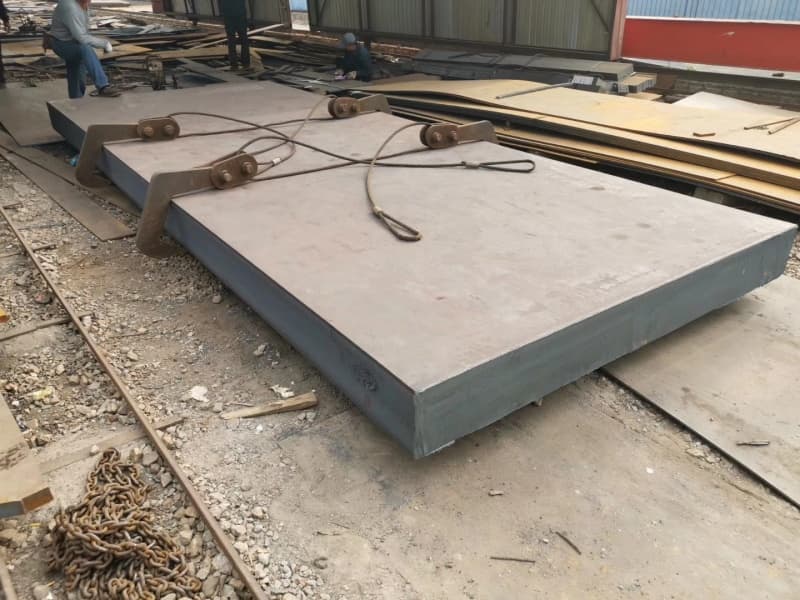
Choosing the Right Tool: A Critical Evaluation for Marine Applications
Declaring one heat treatment1 as universally "best" is a misconception that can lead to costly over-engineering or dangerous under-performance. The correct approach is to match the treatment to a detailed set of functional requirements. For marine steel buyers, this decision is guided by classification society rules, design specifications, and practical fabrication needs. Let’s break down the decision-making process.
Key Decision Factors:
When we advise clients on selecting a heat-treated plate, we focus on four primary factors:
- Required Mechanical Properties: What are the minimum yield and tensile strengths? What Charpy V-Notch toughness5 is required, and at what temperature (e.g., -20°C, -40°C)?
- Thickness of the Plate: Thicker plates cool more slowly from the rolling temperature. This can lead to a coarser, less uniform microstructure at the core. Heat treatment like normalizing3 is often mandatory for plates over a certain thickness (e.g., 40mm or 50mm) to ensure consistent properties from surface to center.
- Fabrication Method, Especially Welding: Will the plate undergo extensive welding? Processes that result in a high carbon equivalent (like some Q&T steels) require strict welding procedures. TMCP or normalized plates generally offer better weldability.
- Cost and Lead Time: Heat treatment adds processing steps, energy, and time at the mill. An as-rolled or TMCP plate is usually more cost-effective and faster to produce than a normalized or Q&T plate, provided it meets the spec.
Analysis of Common Marine Plate Conditions:
Here is a table comparing the common "delivery conditions6" for marine steel plates, which directly reflect their heat treatment1 or processing route:
| Delivery Condition | Typical Process | Key Advantages | Key Disadvantages | Ideal Marine Application |
|---|---|---|---|---|
| As-Rolled (AR) | Rolled at high temperature and allowed to cool in air. | Lowest cost, fastest production. Good for standard applications. | Properties can be less uniform, especially in thicker plates. Toughness may be lower. | Non-critical internal structures, smaller vessels, thinner plates where specifications allow. |
| Normalized (N) | Heated to ~900°C to form austenite, cooled in still air. | Excellent toughness and property uniformity. Refined grain structure. Good weldability. | Higher cost and longer lead time than AR. Slightly lower yield strength than TMCP for same grade. | Critical hull structures, thicker plates (e.g., >40mm), offshore nodes, areas subject to high dynamic stress. Often required by class rules. |
| Thermo-Mechanical Control Process7 (TMCP) | Precisely controlled rolling in a lower temp range + accelerated cooling. | High strength and exceptional toughness with low carbon equivalent (excellent weldability). Good for thick plates. | Process is complex and requires mill expertise. Chemical composition is specific. | Modern shipbuilding (AH/DH/EH36/40), large container ships, LNG carrier membranes, where high strength and easy welding are both needed. |
| Quenched & Tempered (Q&T) | Heated, rapidly quenched in water/oil, then reheated (tempered). | Very high strength levels (500 MPa yield and above). Good strength-to-weight ratio. | Highest cost. Can have higher CE, requiring careful welding. Risk of distortion. | Special high-stress components: submarine hulls, offshore platform leg braces, military vessel armor, crane booms. |
The Verdict for Most Marine Buyers:
For the majority of commercial shipbuilding and offshore projects—think oil tankers, bulk carriers, container ships—the most common and often "best" choices are Normalized or TMCP plates.
- Normalized is the time-tested, reliable choice. It is specified when the design calls for proven toughness and homogeneity. It is the safe, conservative selection that fabricators trust.
- TMCP represents modern metallurgical advancement. It is often the best choice when the design pushes for weight reduction (using higher strength steels) without complicating the welding process. It offers performance and fabrication efficiency.
The "best" treatment is the one that meets all project specifications—from the classification society stamp to the welder’s practical experience—at the most reasonable total cost. A good supplier doesn’t just sell plates; they help you navigate this selection to find that optimal point.
What are the methods of heat treatment of steel?
The methods vary from simple, slow oven treatments to complex, computer-controlled cycles. Each method applies the core principles of heating and cooling in a specific way to achieve a distinct result. Knowing these methods helps you decode mill certificates and technical data sheets.
The primary methods for steel plate heat treatment include Annealing, Normalizing, Quenching, Tempering, and Stress Relieving. These are often used in combination, such as Quenching and Tempering (Q&T). Additionally, the Thermo-Mechanical Control Process (TMCP) is a critical modern method that integrates controlled rolling with thermal treatment.
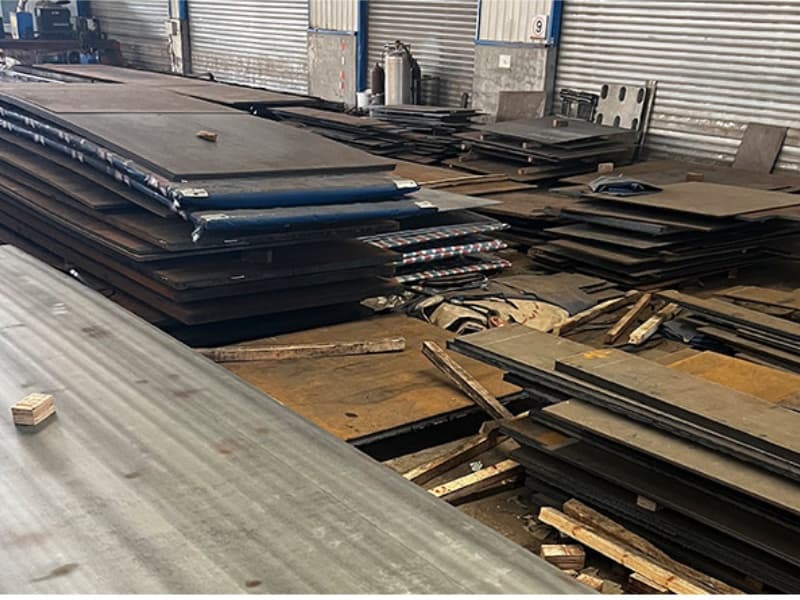
A Detailed Guide to the Metallurgical Toolbox
Understanding the specific methods is like learning the vocabulary of steel processing. Each term describes a distinct recipe of time, temperature, and cooling rate. For marine plates, we are typically dealing with a subset of these methods tailored for large, thick sections. Let’s define each one and explain its purpose in a marine context.
1. Annealing
This is a broad term for treatments that soften steel and improve its ductility. The full process involves heating the steel into the austenite region (full annealing) or just below it (process annealing), holding it, and then cooling it very slowly, usually inside the furnace itself.
- Purpose: To relieve internal stresses, soften the steel for machining, or refine a coarse grain structure. It produces the softest and most ductile condition.
- Marine Relevance: Not common for final delivery of structural marine plates, as it results in low strength. It might be used for repair work or for specific forgings that will be machined before use.
2. Normalizing
As discussed, this involves heating to the austenitizing temperature (typically 880-950°C) followed by cooling in still air. The cooling rate is faster than in annealing but slower than in quenching.
- Purpose: To refine the grain size after rolling or forging, to homogenize the microstructure, and to improve toughness and mechanical property consistency. It is a standard treatment for carbon and low-alloy steel plates.
- Marine Relevance: Extremely high. Normalized plates (marked ‘N’ on certs) are a staple for critical, thick-section marine structures. They offer a reliable balance of strength and toughness.
3. Quenching
This is the rapid cooling of steel from the austenitizing temperature. The plate is quickly submerged in a quenching medium—water, oil, or polymer. Water quenching is the most severe, producing the highest hardness (martensite) but also the greatest risk of cracking and distortion.
- Purpose: To achieve maximum hardness and strength by forming martensite. However, in this state, the steel is too brittle for structural use.
- Marine Relevance: Never used alone on structural plates. It is always followed by…
4. Tempering
Tempering is always performed after quenching. The quenched (martensitic) steel is reheated to a temperature below the lower transformation point (typically between 400-650°C), held, and then cooled. This reduces brittleness and relieves quenching stresses.
- Purpose: To sacrifice a small amount of the hardness from quenching in exchange for a large gain in toughness and ductility. It creates a stable, strong, and tough microstructure called tempered martensite.
- Marine Relevance: The combination Quenching and Tempering (Q&T) is used for high-strength marine steels (e.g., ASTM A514, some EH690 plates). It is essential for applications where saving weight is critical.
5. Stress Relieving
This is a lower-temperature process (typically 550-650°C). The steel is heated to below the transformation range, held long enough to reduce residual stresses, and then slowly cooled.
- Purpose: To remove internal stresses from welding, machining, or cold forming without significantly changing the microstructure or mechanical properties.
- Marine Relevance: Very common in fabrication workshops. After welding large assemblies (like a hull section), stress relieving may be specified to prevent distortion or stress-corrosion cracking in service.
6. Thermo-Mechanical Control Process (TMCP)
This is not a furnace treatment but an integrated rolling and cooling process. It represents the pinnacle of modern plate production.
- Process: The slab is rolled in a precise, lower temperature range to deform the austenite grains. Immediately after rolling, the plate is subjected to accelerated cooling (ACC) with high-pressure water jets. This "locks in" a very fine-grained ferritic microstructure.
- Purpose: To achieve high strength and toughness through grain refinement and micro-alloy precipitation, while keeping the carbon content (and thus Carbon Equivalent) low.
- Marine Relevance: Dominant in modern high-strength shipbuilding. TMCP plates (e.g., many AH36/DH36/EH36) offer superior weldability and toughness compared to conventionally produced plates of the same strength.
For a project manager or purchaser, these methods are not just technical jargon. They are specifications that directly impact cost, lead time, fabrication plans, and the final integrity of the structure. Specifying "Normalized" versus "As-Rolled" or "TMCP" is a fundamental engineering decision.
What are the 4 types of heat treating processes?
While many methods exist, they can be grouped into four fundamental process types based on their objective. These are Hardening, Annealing1, Normalizing2, and Tempering3. Each type follows a specific heating and cooling pattern to achieve a distinct set of properties in the steel.
The four foundational types are: 1) Annealing1 (soften), 2) Normalizing2 (refine and homogenize), 3) Hardening/Quenching4 (maximize hardness), and 4) Tempering3 (reduce brittleness after hardening). In practice, these are often combined in sequences like "quench and temper" to achieve complex property sets for demanding applications.
The Four Pillars of Heat Treatment: Objectives and Industrial Application
Grouping the myriad techniques into these four pillars provides a clear mental model. It’s important to understand that these are not just different temperatures; they are different objectives for the final state of the metal. For industrial buyers, this framework helps when communicating with engineers or reviewing treatment specifications on orders.
Let’s examine each pillar in detail, with a focus on how they relate to the production and use of marine steel plates.
1. Annealing1 – The Process of Softening and Stress Relief
The core objective here is to produce a soft, ductile, and low-stress condition. Annealing1 involves the slowest possible cooling, usually in the furnace.
- Industrial Process5: A plate or component is loaded into a large furnace (often a car-bottom or pit furnace for plates). It is heated to the target temperature (which varies by steel type), soaked for a long time to ensure even heat throughout the thick section, and then the furnace power is turned off, allowing the steel to cool slowly with the furnace. This can take many hours or even days.
- Resulting Microstructure6: Coarse pearlite and ferrite. This is the most stable, equilibrium structure.
- Marine Context: While full annealing is rare for structural plates, sub-critical annealing or stress relieving (a form of annealing) is very common. For example, after cold-forming a thick plate into a curved hull section, a shipyard may perform a local stress relief heat treatment to prevent cracking.
2. Normalizing2 – The Process of Refinement and Homogenization
The objective is to refine the grain size and create a uniform, predictable microstructure. Cooling is in still air, which is faster than furnace cooling.
- Industrial Process5: Plates are heated in a rolling hearth or walking beam furnace. After reaching the austenitizing temperature, they are discharged from the furnace and laid out separately on a cooling bed to ensure free air circulation on all sides. For consistent results, the cooling bed is often in a covered area to avoid wind effects. Computer models determine the cooling time before the plate can be handled.
- Resulting Microstructure6: Fine, uniform pearlite and ferrite. The grains are much smaller and more regular than in as-rolled or annealed conditions.
- Marine Context: This is a standard, high-volume process. When you order "Normalized DH36" plates, this is the exact process the mill will follow. It is a benchmark for quality and consistency.
3. Hardening (Quenching) – The Process of Achieving Maximum Hardness
The objective is to create the hardest possible state, martensite, by preventing the diffusion-based transformation to softer phases.
- Industrial Process5 for Plates: After austenitizing, the plate is rapidly transferred to a quenching station. For plates, this is almost always a high-pressure water spray system (water quenching) or sometimes an oil or polymer quench for alloy steels prone to cracking. The system has rows of nozzles above and below the plate to ensure even, rapid cooling. The quench must be intense and uniform to prevent warping.
- Resulting Microstructure6: Martensite. This is a hard, brittle, and stressed condition.
- Marine Context: Quenching is never an end state. It is the first, aggressive step in creating Quenched & Tempered (Q&T) steel7. The mill’s ability to quench a thick plate uniformly without causing cracks is a mark of high technical capability.
4. Tempering3 – The Process of Trading Hardness for Toughness
The objective is to improve the toughness and ductility of quenched (martensitic) steel by allowing controlled microstructural relaxation.
- Industrial Process5: The quenched plate is placed back into a furnace at a carefully chosen tempering temperature (e.g., 600°C). The temperature is lower than the hardening temperature. The plate is held for a specified time—often 1-2 hours per inch of thickness. It is then cooled, usually in air. The tempering temperature is the single most critical parameter; a difference of 20°C can significantly change the final yield strength.
- Resulting Microstructure6: Tempered martensite. This is a complex structure of fine carbides in a ferritic matrix, offering an outstanding combination of strength and toughness.
- Marine Context: This is the final step in producing Q&T plates. The mill certificate will list both the quench medium and the tempering temperature. This data is part of the plate’s pedigree and is essential for traceability.
Understanding these four pillars allows you to see any heat treatment specification as a combination of these basic goals. A "normalized" plate has been refined. A "quenched and tempered" plate has been hardened and then toughened. This framework demystifies the technical data and empowers you to make informed purchasing decisions.
Conclusion
Heat treatment transforms steel’s inherent potential into guaranteed performance. For marine plates, choosing the right process—normalizing, TMCP, or Q&T—is a critical decision that balances strength, toughness, weldability, and cost for a safe, durable structure.
-
Explore the annealing process to understand how it softens metals and relieves stress, crucial for various industrial applications. ↩ ↩ ↩ ↩ ↩ ↩ ↩ ↩ ↩
-
Learn about normalizing to see how it refines grain size and creates uniform microstructures, essential for quality steel production. ↩ ↩ ↩ ↩
-
Investigate tempering to learn how it improves toughness and ductility in hardened steel, balancing strength and flexibility. ↩ ↩ ↩ ↩ ↩
-
Discover the hardening process to understand how it maximizes hardness in steel, vital for creating durable materials. ↩ ↩
-
Explore various industrial processes in heat treating steel to understand their applications and significance in manufacturing. ↩ ↩ ↩ ↩ ↩
-
Delve into the role of microstructure in determining the properties of steel, crucial for engineers and manufacturers. ↩ ↩ ↩ ↩ ↩
-
Learn about Q&T steel to grasp its significance in achieving high strength and toughness for demanding applications. ↩ ↩