
You are planning a new shipbuilding project for 2026. The budget is set. The design is nearly complete. Then you start checking steel prices. They are moving. Up and down. Uncertainty is the only constant. Sourcing marine steel plate next year will require more than just sending out RFQs. It will require strategy, knowledge, and the right partnerships.
Buyers sourcing marine steel plate in 2026 should consider five key factors: 1) Market price trends and volatility. 2) Steel grade selection based on vessel type and operating environment. 3) The choice between hot-rolled (HR) and cold-rolled (CR) products for different applications. 4) Stainless steel grade selection (304 vs 316) for corrosion-resistant components. 5) Supplier reliability, including mill certification and third-party inspection support.
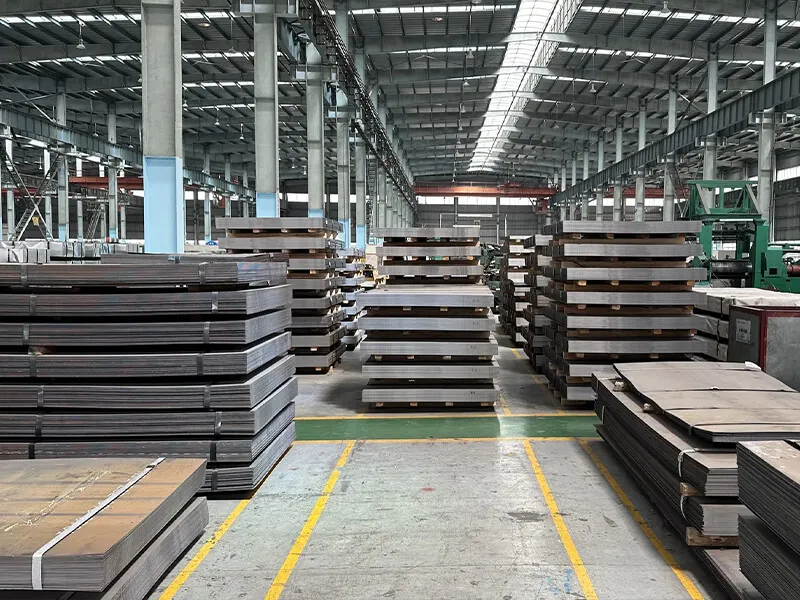
The market in 2026 will not be the same as 2025. Prices will fluctuate. Supply chains will adjust. New trade policies may emerge. To navigate this, you need to understand the forces at work. Let’s start with the question every buyer is asking.
Will steel prices1 go up in 2026?
You are finalizing your 2026 budget. The steel line item is the biggest unknown. Should you lock in prices now or wait? The answer depends on multiple factors. No one can predict the future with certainty. But understanding the market forces helps you make an informed decision.
Steel prices in 2026 are expected to be volatile, with potential upward pressure from raw material costs2 and demand, but also potential softening from economic factors. Key drivers include iron ore and coking coal prices, global demand3 from construction and shipbuilding, energy costs4, trade policies5, and currency fluctuations6. Buyers should monitor these factors and consider flexible procurement strategies like framework agreements with phased releases.
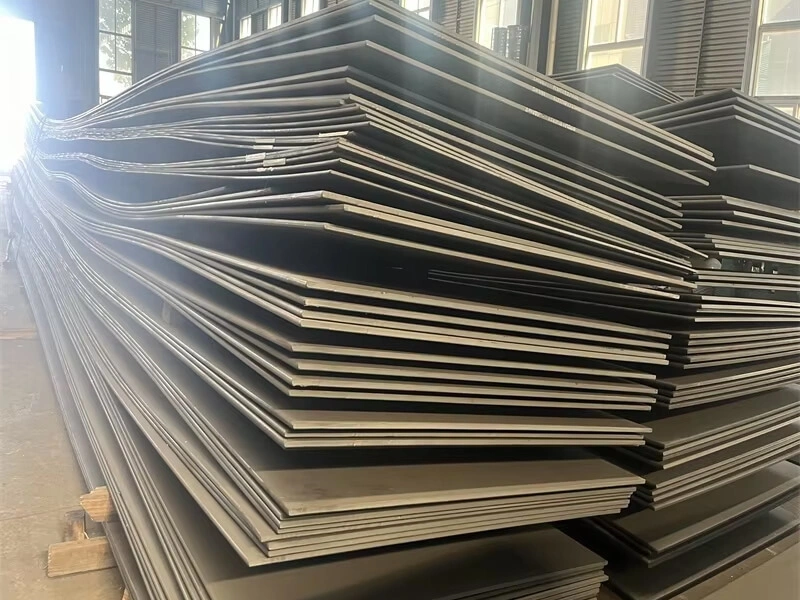
The Forces Shaping 2026 Steel Prices
Understanding the drivers helps you anticipate market moves.
1. Raw Material Costs: The Foundation.
- Iron Ore: The primary input. Prices are influenced by mining output in Australia and Brazil, and demand from China. Any supply disruption pushes prices up.
- Coking Coal: Used in blast furnaces. Prices are volatile and linked to energy markets.
- Scrap Metal: For electric arc furnace (EAF) production, scrap prices matter. As EAF capacity grows, scrap demand increases.
- Nickel and Molybdenum: For stainless and alloy steels. Nickel, in particular, is highly volatile. In 2025, nickel prices were around $15,000-16,000 per ton, but they can spike .
2. Demand Factors.
- Global Shipbuilding: The shipping recovery is driving new vessel orders. This increases demand for marine plate.
- Construction and Infrastructure: Major economies’ infrastructure spending affects overall steel demand.
- Energy Transition: Offshore wind and other renewable projects are creating new, steel-intensive demand.
3. Supply Factors.
- Mill Capacity Utilization: If mills are running near capacity, prices rise. If they have excess capacity, prices may soften.
- Trade Policies: Tariffs, anti-dumping duties, and safeguard measures can restrict supply and raise prices in specific regions. India’s 2025 safeguard duty on steel is an example .
- Energy Costs: Steelmaking is energy-intensive. High energy prices increase production costs.
4. Regional Variations.
- China: The world’s largest producer and consumer. China’s domestic policies have global ripple effects. In early 2026, Chinese domestic plate prices were around 3,327 yuan/ton (~$460) .
- India: Prices surged in 2025 due to safeguard duties, making Indian steel less competitive for exports but raising domestic prices .
- US: US plate prices were around $1,090-1,190 per ton in early 2026, significantly higher than Asian prices .
5. Currency Fluctuations.
Steel is traded globally in US dollars. If your local currency weakens against the dollar, your cost in local currency goes up, even if the dollar price stays the same.
My Insight from the Field
A client in Pakistan asked us in late 2025 whether to order steel for a 2026 project or wait. We couldn’t predict the future, but we could advise. We suggested a two-part strategy: order a portion now to secure material and budget certainty, and wait on the rest to see how prices moved. This balanced the risk. They ordered 40% in Q4 2025 and scheduled the remaining 60% for Q2 2026. When prices rose slightly in early 2026, they had already locked in half their material at the lower price. This flexible approach is what we recommend to all clients facing uncertain markets.
What are the grades of marine steel plates1?
You open a specification. It calls for "DH362" plate. Another section calls for "Grade A." What do these mean? Choosing the wrong grade can lead to structural failure or unnecessary cost. Understanding the grading system is essential for any marine steel buyer.
Marine steel plates are graded by strength and toughness. Normal strength grades3 (A, B, D, E) have a minimum yield strength4 of 235 MPa. High strength grades5 (AH32, DH32, EH32, FH32, AH36, DH362, EH36, FH36) have yield strength4s of 315 MPa (32) or 355 MPa (36). The letter indicates impact test temperature6: A (0°C), D (-20°C), E (-40°C), F (-60°C). The choice depends on the vessel’s design and operating environment.
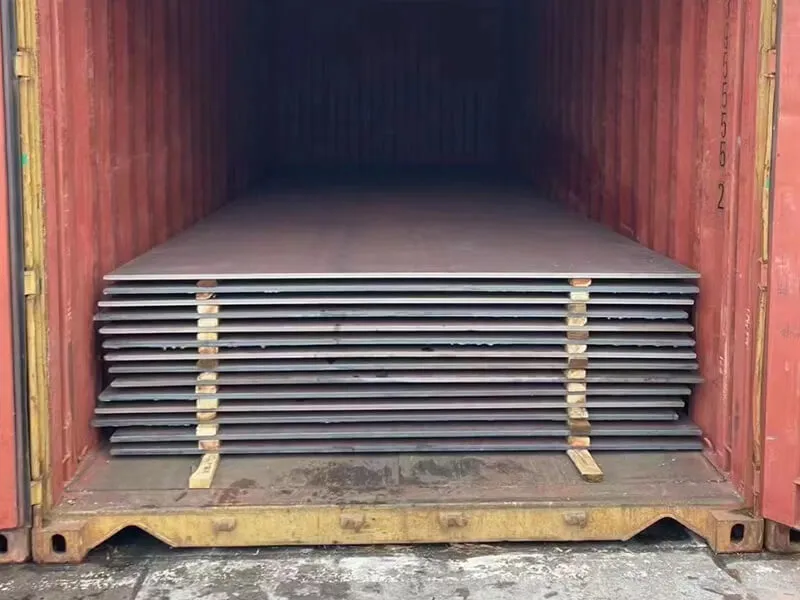
A Buyer’s Guide to Marine Steel Grades
Here is what each part of the grade designation means.
1. The Strength Number.
The number indicates the minimum yield strength4 in kilograms per square millimeter (kgf/mm²) or, more commonly now, in megapascals (MPa).
- No number (Grades A, B, D, E): Normal strength, 235 MPa.
- 32 (AH32, DH32, etc.): Higher strength, 315 MPa.
- 36 (AH36, DH362, etc.): Higher strength, 355 MPa.
- 40 (AH40, DH40, etc.): Higher strength, 390 MPa.
2. The Toughness Letter.
The letter indicates the temperature at which the steel has been impact-tested.
- A: Tested at 0°C. Suitable for warm climates.
- B: Tested at 0°C, but with different chemistry than A. Less common.
- D: Tested at -20°C. Standard for most ocean-going vessels.
- E: Tested at -40°C. For vessels operating in very cold waters.
- F: Tested at -60°C. For Arctic and extreme cold environments.
3. The "H" for High Strength.
The "H" in grades like AH36 indicates it is a high-strength steel. Normal strength grades3 (A, D, E) do not have the "H."
4. Table: Common Marine Grades and Their Applications.
| Grade | Yield Strength | Impact Test Temp | Typical Application |
|---|---|---|---|
| Grade A | 235 MPa | Not required | Internal structures, mild environments. |
| Grade D | 235 MPa | -20°C | Hull plating for general ocean-going ships. |
| Grade E | 235 MPa | -40°C | Critical areas in large ships, cold routes. |
| AH36 | 355 MPa | 0°C | High-strength, weight-saving designs in warm climates. |
| DH362 | 355 MPa | -20°C | Most common high-strength grade for ocean-going vessels. |
| EH36 | 355 MPa | -40°C | High-strength for very cold climates. |
| FH36 | 355 MPa | -60°C | Arctic vessels. |
5. How to Choose.
- Step 1: Determine the required strength from the structural design. This is the naval architect’s job.
- Step 2: Determine the minimum service temperature from the vessel’s operating route.
- Step 3: Select the grade that meets both requirements. For example, a container ship trading globally might use DH362 for the main hull.
- Step 4: Check availability and cost. AH36 is more common and slightly cheaper than DH362, but may not be acceptable for cold routes.
My Insight from the Field
A client in Thailand was building a series of small cargo vessels for domestic routes. The design called for DH362. We asked about the operating area. They said the vessels would never leave tropical waters. We suggested that AH36 would be sufficient and cheaper. They checked with their class society and confirmed AH36 was acceptable. They saved money on every vessel. This is the value of understanding grades. Sometimes, the specified grade is more than you need.
Which is better, CR or HR?
You are ordering steel for a ship’s interior. The specification says "CR sheet." Another part says "HR plate." What is the difference? Which is better? The answer depends on what you are building. Hot-rolled and cold-rolled steel have different properties and different uses.
Neither CR (cold-rolled) nor HR (hot-rolled) is universally "better." They are different products for different applications. Hot-rolled (HR) steel is the standard for thick plates and structural sections. It has a scaled surface and is used where appearance is not critical. Cold-rolled (CR) steel is thinner, has a smoother surface finish, tighter tolerances, and is used for visible components and where precise dimensions matter. For marine structural plates, HR is the standard. For interior panels and fittings, CR may be preferred.
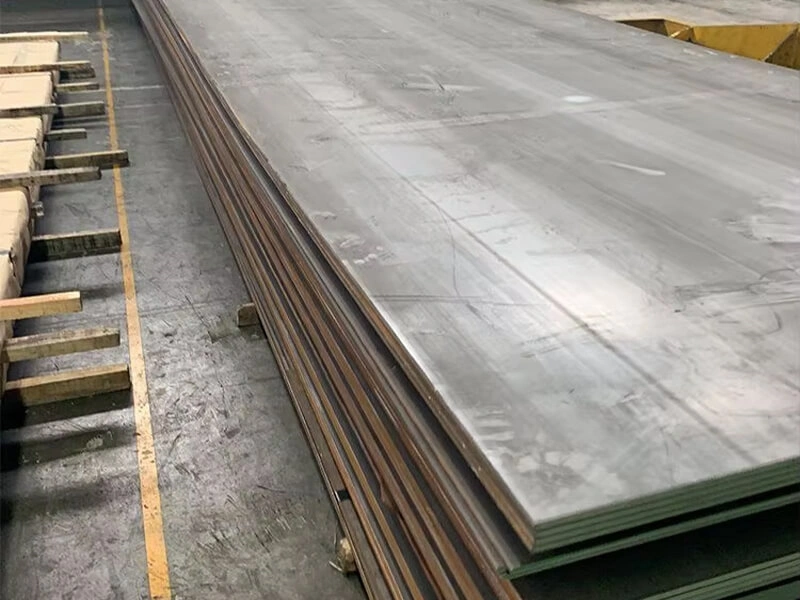
HR vs CR: A Buyer’s Guide
Understanding the differences helps you specify correctly.
1. The Production Process.
- Hot-Rolled (HR)1: Steel is heated above its recrystallization temperature and passed through rollers. It cools naturally, leaving a scaled surface. Tolerances are less precise.
- Cold-Rolled (CR)2: Hot-rolled steel is further processed at room temperature. It is passed through rollers to achieve a smoother surface, tighter tolerances, and improved mechanical properties. It is essentially HR steel that has been "finished" cold.
| 2. Key Differences. | Feature | Hot-Rolled (HR)1 | Cold-Rolled (CR)2 |
|---|---|---|---|
| Surface Finish | Scaled, rough | Smooth, clean | |
| Dimensional Tolerance3 | Wider | Tighter | |
| Thickness Range | Typically > 3mm | Typically < 3mm (sheet) | |
| Mechanical Properties4 | As-rolled | Slightly higher strength from cold work | |
| Cost5 | Lower | Higher | |
| Primary Use | Structural plates, beams, heavy sections | Panels, visible components, precision parts |
3. Applications in Shipbuilding6.
- HR for Structure: Hull plates, deck plates, bulkheads, frames, stiffeners. These are all hot-rolled. The surface will be coated, so appearance does not matter.
- CR for Interiors: Cabin panels, doors, furniture, ductwork. These need a good surface finish and precise dimensions.
- HR for Fabrication: Brackets, foundations, and other fabricated items are typically made from HR plate or section.
4. Which to Choose.
- For structural strength: HR is the standard. CR is not typically available in the thick plates needed for hulls.
- For appearance: CR is better. It can be painted or used as-is for a clean look.
- For precision: CR offers tighter tolerances.
- For cost: HR is cheaper. Do not pay for CR if you do not need its properties.
My Insight from the Field
A client in Malaysia once ordered "steel plate" for interior paneling. They received HR plate with a scaled surface. They were unhappy with the appearance and had to spend extra on grinding and filling before painting. They should have ordered CR sheet. Now, their specifications clearly state "CR sheet" for interiors and "HR plate" for structure. This simple distinction saves them time and money.
Which is better, 304 or 316 stainless steel1 marine grade?
You are specifying stainless steel for a new vessel. The eternal question: 304 or 316? The answer is clear for marine applications, but the cost difference makes buyers hesitate. Understanding the long-term consequences helps you make the right choice.
For marine use, 316 stainless steel1 is better than 304. The addition of molybdenum2 in 316 provides superior resistance to corrosion from saltwater, preventing the pitting and crevice corrosion that plague 304 in marine environments. While 304 may be acceptable for interior, dry applications, 316 is the standard for any component exposed to seawater or marine atmosphere. The higher initial cost of 316 is justified by its significantly longer service life.
%[304 vs 316 stainless steel marine comparison](https://cnmarinesteel.com/wp-content/uploads/2026/01/Marine-steel-plate-25.webp "304 vs 316 Stainless Marine")
Making the Right Choice for Marine Stainless
Here is a detailed comparison to guide your decision.
| 1. The Chemistry Difference. | Element | 304 Stainless | 316 Stainless | Why It Matters |
|---|---|---|---|---|
| Chromium (Cr) | 18-20% | 16-18% | Forms protective oxide layer. | |
| Nickel (Ni) | 8-10.5% | 10-14% | Stabilizes the structure. | |
| Molybdenum (Mo) | 0% | 2-3% | Key differentiator. Resists chloride pitting. | |
| Pitting Resistance Equivalent (PRE) | ~18-20 | ~24-26 | Higher is better for resisting pitting. |
| 2. Performance Comparison. | Environment | 304 Performance | 316 Performance |
|---|---|---|---|
| Freshwater | Excellent | Excellent | |
| Coastal Atmosphere | Good, may show some staining | Excellent | |
| Direct Seawater Splash | Poor, will pit within months to years | Good, will last for decades with proper design | |
| Continuous Seawater Immersion | Very poor, rapid pitting | Good, but requires good design to avoid crevices | |
| Interior, Dry | Excellent | Excellent (over-specification) |
3. Cost Consideration.
316 typically costs 50-70% more than 304. For a small project, the absolute cost difference may be manageable. For a large one, it is significant. But consider the lifecycle cost3. A 304 component that fails in 2 years and needs replacement at twice the labor cost is far more expensive than a 316 component that lasts 20 years.
4. When to Use Each.
- Use 316 for: All exterior components (railings, ladders, fittings), seawater piping systems, components in engine rooms with salt-laden air, anywhere that will see saltwater.
- Use 304 for: Interior furniture, galley equipment (not in direct salt exposure), freshwater systems, architectural trim in climate-controlled spaces.
5. Exceptions and Special Cases.
- Duplex Stainless4 (e.g., 2205): For high-strength applications or more aggressive environments than 316 can handle.
- 316L: The "L" stands for low carbon. It is better for welding, as it resists sensitization and intergranular corrosion.
My Insight from the Field
A shipowner in the Middle East once insisted on 304 for all exterior fittings to save money on a new vessel. The shipyard warned him. He did not listen. Within three years, the railings were rusting and pitting. He had to replace them at his own expense, at a cost far exceeding the original saving. He later told me, "I learned that cheap stainless is the most expensive stainless." Now, he specifies 316 for everything exposed to the elements. This is a lesson many learn the hard way.
Conclusion
Sourcing marine steel plate in 2026 requires attention to market trends, grade selection, and material specifications. By understanding prices, grades, HR vs CR, and stainless options, buyers can make informed decisions that balance cost, performance, and longevity.
-
Explore the advantages of 316 stainless steel, especially its corrosion resistance, crucial for marine environments. ↩ ↩ ↩ ↩ ↩ ↩
-
Learn how molybdenum enhances the durability of stainless steel, particularly in marine settings. ↩ ↩ ↩ ↩ ↩ ↩ ↩ ↩ ↩ ↩ ↩
-
Discover how lifecycle costs can impact your decision on stainless steel for long-term projects. ↩ ↩ ↩ ↩ ↩
-
Explore Duplex Stainless steel as a potential alternative for high-strength marine applications. ↩ ↩ ↩ ↩ ↩ ↩
-
Explore the cost differences between HR and CR steel to make informed purchasing decisions. ↩ ↩ ↩
-
Gain insights into how different steel types are utilized in shipbuilding for optimal performance. ↩ ↩ ↩