
I have seen many buyers get stuck because they don’t check the mill certificate carefully. Then the shipyard rejects the steel. That costs time and money.
Shipyards check four main things on a bulb flat steel mill certificate: the chemical mix, the strength numbers, the exact shape and surface, and the traceability with heat numbers. If any of these is missing or wrong, they will say no.
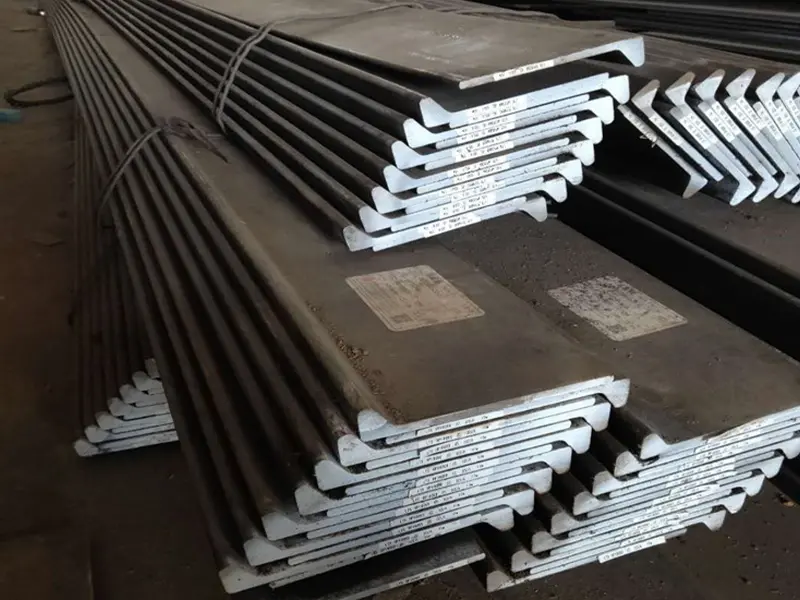
You might think all mill certificates are the same. But I learned the hard way that shipyards have very sharp eyes. Let me walk you through what really matters. I will use real examples from my work with a customer in Saudi Arabia.
What About Chemical Composition & Grain Structure Compliance?
Many buyers just look at the steel grade and move on. That is a mistake. Shipyards care about the exact chemicals inside the steel.
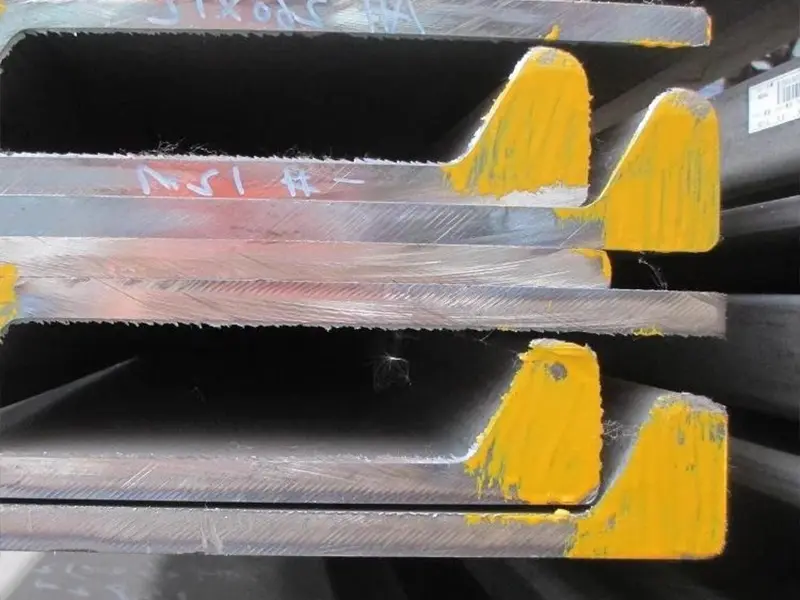
The certificate must show carbon, manganese, silicon, phosphorus, sulfur, and sometimes alloy elements. Shipyards also check the grain structure1. Fine grain steel is stronger for shipbuilding. If the certificate does not say “fine grain” or “normalized,” the shipyard will ask for more tests.
Why does grain structure matter more than people think?
Let me break it down. Steel is not just one solid block. It is made of tiny crystals called grains. When the steel is hot rolled and then cooled, the grain size changes. Small grains make the steel tougher. Big grains make it brittle.
Shipyards build vessels that face waves, salt, and heavy loads. If the steel has big grains, cracks can start and spread fast. That is dangerous.
For bulb flat steel, the shape itself creates stress points. The bulb part (the thick round edge) and the flat web need to work together. If the grain structure is not uniform, the steel can warp or crack during welding.
What to check on the certificate:
| Item | What the shipyard expects | What can go wrong |
|---|---|---|
| Carbon (C) | Below 0.21% for most grades | Too high = hard to weld, brittle |
| Manganese (Mn) | 0.80% to 1.60% | Too low = weak; too high = cracks |
| Phosphorus (P) | Max 0.035% | High P = cold cracking |
| Sulfur (S) | Max 0.035% | High S = hot cracking |
| Grain size | 5 or finer (ASTM) | Coarse grain = lower impact strength |
| Normalizing | Yes or No | If not normalized, shipyard may reject |
I once sent a batch of bulb flat steel to a buyer in Vietnam. The mill certificate looked fine. But the shipyard tested a sample and found the grain size was only 3. They rejected the whole container. Now I always ask the mill for a separate grain size test report.
How do you avoid this problem?
Three simple steps. First, ask the mill for the “heat analysis” report, not just the product analysis. Second, look for the words “fine grain practice” or “fully killed fine grain.” Third, if the steel is for Arctic or cold weather vessels, ask for impact test values at -20°C or -40°C.
Remember: shipyards have their own labs. They will cut a small piece from your bulb flat steel and test it. If their numbers do not match the certificate, they will charge you for the test and then reject the steel. That hurts both your reputation and your wallet.
How Do Mechanical Properties – Yield, Tensile & Impact Values – Affect Shipbuilding?
Some sellers think: “The steel is strong enough. Why do I need all these numbers?” But shipyards need proof. They cannot guess.
Shipyards require three mechanical values on every mill certificate: yield strength1 (where the steel starts to bend permanently), tensile strength2 (where it breaks), and impact energy3 (how much shock it can take). For bulb flat steel4, yield strength is the most critical because the bulb shape must hold its form under load.
Why yield strength matters more than tensile for bulb flat steel?
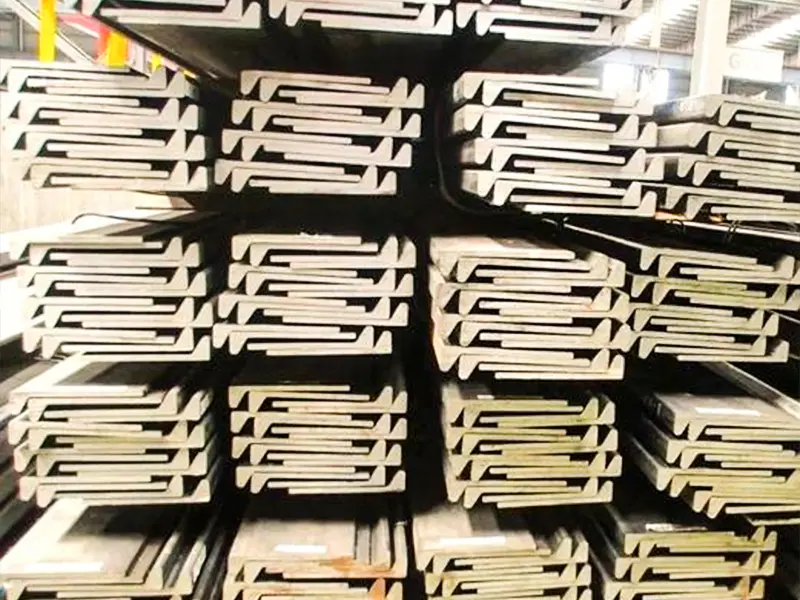
Think of a ship’s hull. The bulb flat steel is often used as stiffeners. They run along the inside of the hull plates. When the ship goes through rough water, the hull bends. The stiffeners must bend a little but not stay bent. Yield strength tells you the point where the steel will not spring back.
If the yield strength is lower than what the design says, the stiffeners will deform permanently. That changes the shape of the hull. Then the ship might not pass its sea trials.
For example, grade A36 bulb flat steel has a minimum yield of 36,000 psi (about 250 MPa). Grade AH36 has 51,000 psi (355 MPa). If your certificate says AH36 but the yield test shows only 340 MPa, the shipyard will reject it.
A real case from my customer in Saudi Arabia
Gulf Metal Solutions ordered marine steel plate5 and angle steel from me. They were building parts for an oil tanker. The first supplier before me sent certificates that looked fine. But the shipyard tested the steel. The yield strength was 10% lower than the certificate claimed. That supplier lost the whole contract.
When they found me on Google, they asked for third-party inspection6 by SGS before shipment. I agreed. We tested every heat. The results matched the mill certificates perfectly. That is how we built trust.
What about tensile strength and impact values?
Tensile strength is the maximum stress the steel can take before breaking. For bulb flat steel, it is usually 1.3 to 1.5 times the yield strength. If the ratio is too low, the steel is too brittle. If too high, it may be too hard to weld.
Impact values are measured with a Charpy V-notch test. The certificate will show joules at a certain temperature. For normal shipbuilding, it is 27J at 0°C. For colder routes, it is 27J at -20°C or -40°C.
Quick checklist for mechanical properties:
| Property | Grade A | Grade AH32 | Grade AH36 |
|---|---|---|---|
| Yield min (MPa) | 235 | 315 | 355 |
| Tensile (MPa) | 400-520 | 440-590 | 490-620 |
| Impact (J) at 0°C | 27 (only for thickness >12.5mm) | 34 | 34 |
If your bulb flat steel is thicker than 25mm, shipyards often require through-thickness impact tests (Z-direction). The certificate will show Z25, Z35, or nothing. Ask for it.
Why Are Dimensional Tolerances & Surface Quality Verification Critical?
I have seen a whole shipment of bulb flat steel returned because the bulb height was off by 2mm. Two millimeters! But the shipyard was right. They follow strict rules.
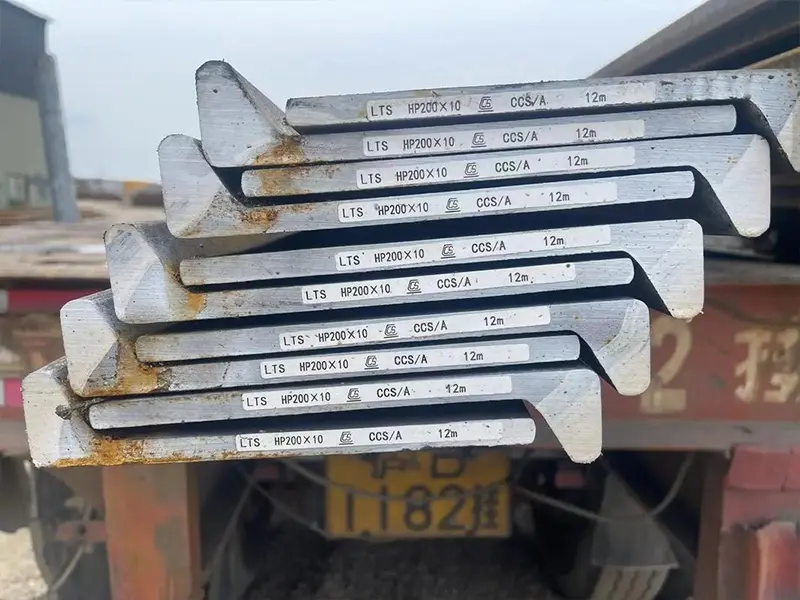
Shipyards measure the bulb flat steel’s height, width, web thickness, bulb radius, and straightness. They also check for cracks, pits, scale, and rust. The standard is usually JIS G 3192 or EN 10034. If any dimension is outside the tolerance, the steel cannot be used for the designed position.
The hidden danger of surface defects
Most people worry about dimensions. But surface quality1 is just as tricky. Let me explain.
Bulb flat steel is made by rolling. Sometimes the mill’s rollers leave marks. Or the steel cools unevenly. You might see small cracks called “seams” or “laps.” These are not just cosmetic. They become stress points when the shipyard welds the steel to the hull plate.
During welding, a small surface crack can grow into a big crack. That is called “crack propagation2.” In a ship, that can lead to hull failure.
What does a good surface look like?
No deep scratches. No overlapping metal. No clusters of small pits. The mill certificate should have a note that says “surface condition: as rolled, free from harmful defects.” Some certificates even include a picture of the surface. I always ask for that.
Dimensional tolerances you must know
I will give you the numbers from JIS G 3192 (most common for bulb flat steel). But check with your shipyard first. They may use a different standard.
| Dimension | Tolerance (for size 100 to 200) |
|---|---|
| Height (H) | ± 2.0 mm |
| Web thickness (t) | ± 0.3 mm |
| Bulb height (h) | ± 0.5 mm |
| Bulb width (b) | ± 0.8 mm |
| Straightness | ≤ 4 mm per 2 meters |
| Twist | ≤ 2 mm per 2 meters |
I remember one order to Pakistan. The mill certificate said the steel was straight. But when my customer unloaded the container, they saw a clear bend. The steel had been stacked badly on the truck. The shipyard refused to take it. Now I always add a clause: “straightness to be checked at loading port by third party.”
How to avoid dimensional rejection?
Two things. First, ask the mill for a “dimensional inspection report3” with actual measurements from three points on each piece. Second, if the order is large (over 100 tons), hire SGS or similar to measure before loading. It costs a few hundred dollars. But one rejected container costs thousands.
What Is the Role of Traceability, Heat Number & Third-Party Certification?
This is the part that new buyers often ignore. They look at the big numbers – strength, chemistry – but forget the small print. Big mistake.
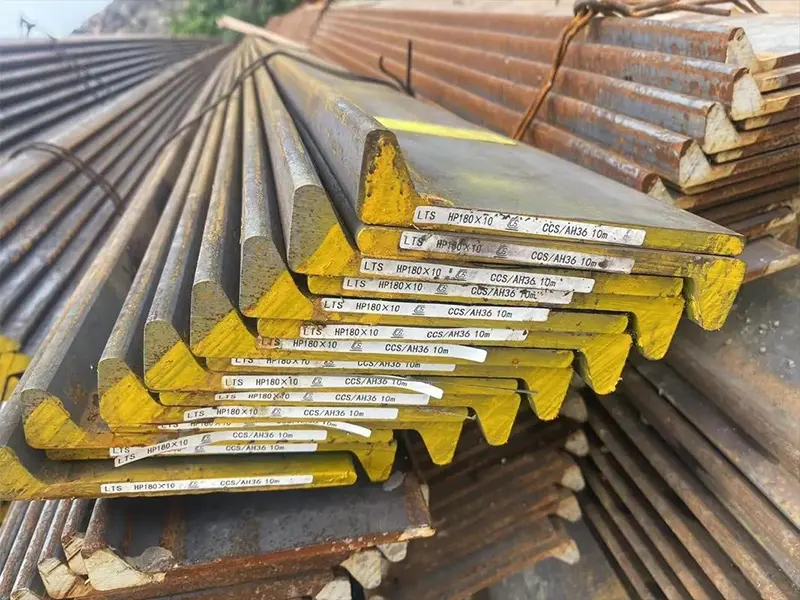
Shipyards need each piece of bulb flat steel to have a heat number1 stamped on it. That number must match the mill certificate2. The certificate also needs a third-party stamp like DNV, ABS, LR, or BV for marine use. Without traceability, the shipyard cannot certify the vessel. The whole project stops.
Why traceability is not just paperwork
Imagine a ship has a problem after two years at sea. The owner asks: “Which batch of steel was used for this part?” If you cannot trace back to the heat number, you cannot find the root cause. That is a legal risk.
Shipyards avoid this risk by checking every heat number before they cut the steel. They have a simple rule: no heat number, no cutting.
What a good traceability system3 looks like
Each piece of bulb flat steel gets a stamped heat number (usually on the web, near the end). The mill certificate lists that heat number along with all test results. Then the shipyard records that heat number in their construction log.
If a third party like DNV is involved, they also sign off on each heat. Their stamp means they have witnessed the testing.
I learned this lesson with a customer in the Philippines. They ordered 50 tons of bulb flat steel for a container ship. The mill certificate had a heat number. But the steel pieces had a different number stamped. The mill made a mistake. The shipyard rejected everything. We had to air-freight new steel. That was expensive.
Third-party certification – which one do you need?
Not all certificates are equal. A “mill certificate” (also called EN 10204 Type 2.2 or 3.1) is just the mill’s own statement. For shipbuilding, you often need a Type 3.2 certificate4. That means a third-party inspector (from a classification society5) has checked the tests.
Common classification societies for bulb flat steel:
| Society | Abbreviation | Common for |
|---|---|---|
| American Bureau of Shipping | ABS | USA, international |
| Lloyd’s Register | LR | UK, Europe, Asia |
| Det Norske Veritas | DNV | Norway, global |
| Bureau Veritas | BV | France, global |
| ClassNK | NK | Japan |
| Korean Register | KR | Korea |
| China Classification Society | CCS | China |
I work with mills that have multiple approvals. For my Saudi customer, we used ABS and DNV certificates. That gave them flexibility for different projects.
How to check if a certificate is real?
Fake certificates exist. I have seen them. Here is what I do:
- Call the classification society. Give them the certificate number. They can verify it in seconds.
- Look for small mistakes. Wrong dates, wrong heat number format, missing stamps.
- Ask for the original PDF from the mill’s email domain, not a forwarded copy.
If the price is too good to be true, the certificate might be fake. Remember that.
Conclusion
Check the chemistry, the strength, the shape, and the traceability. That is what shipyards really look for.
-
Understanding heat numbers is crucial for ensuring traceability and compliance in steel certification. ↩ ↩ ↩ ↩
-
Learn about mill certificates and their role in verifying the quality of steel materials. ↩ ↩ ↩
-
Discover the components of an effective traceability system that ensures quality and compliance. ↩ ↩ ↩
-
Understand the significance of Type 3.2 certificates in providing third-party verification for steel quality. ↩ ↩
-
Find out how classification societies ensure the safety and quality of steel used in shipbuilding. ↩ ↩
-
Third-party inspections ensure compliance with standards, building trust and reliability in material quality. ↩