
Have you ever wondered what gives a ship’s structure its incredible strength and rigidity? The answer often lies in a simple but crucial component hidden beneath the plates.
L-shaped steel, also called angle bar or marine angle steel, is a long structural steel section with two legs forming a 90-degree angle. In shipbuilding, it provides crucial reinforcement to hull plates, supports deck structures, and creates strong framing systems that withstand ocean forces and heavy loads.
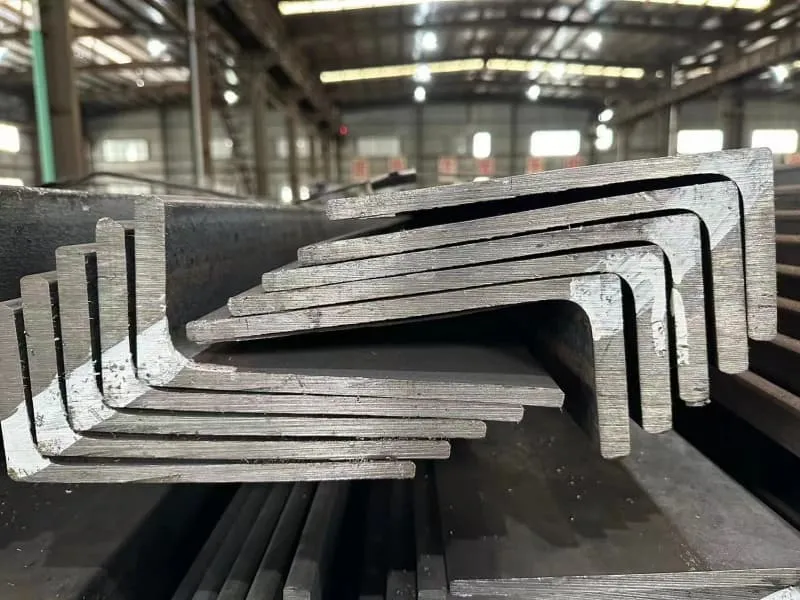
This fundamental component works quietly behind the scenes. Let me show you why it’s indispensable in marine construction.
What is L-shape steel material?
Walk through any shipyard and you’ll see workers handling long metal bars with a distinctive right-angle shape. These are L-shaped steel1 sections, and they form the hidden skeleton that gives ships their structural integrity.
L-shape steel is a hot-rolled structural section2 with two perpendicular legs of equal or unequal length, forming a 90-degree angle. For marine applications, it’s manufactured from high-strength steel grades like AH36 or DH36 with certified impact toughness3 and corrosion resistance for harsh ocean environments.

Comprehensive Analysis of L-Shaped Steel Materials
L-shaped steel1 represents one of the most fundamental structural shapes in engineering. The material composition and manufacturing process determine its performance in demanding marine applications. Marine-grade L-shaped steel1 undergoes strict quality control to meet classification society standards.
The manufacturing process typically involves hot rolling, where heated steel billets pass through successive rolls that gradually form the L-shape. This process refines the steel’s grain structure, enhancing its mechanical properties. Some specialized applications may use cold-formed angles, but hot-rolled sections provide superior strength for primary ship structures.
The material specifications for marine L-shaped steel1 include specific requirements:
- Chemical Composition: Controlled levels of carbon, manganese, silicon, and micro-alloying elements
- Mechanical Properties: Minimum yield strength, tensile strength, and elongation percentages
- Impact Toughness: Certified Charpy V-Notch values at specified temperatures
- Surface Quality: Freedom from defects that could initiate corrosion or cracking
Marine L-shaped steel1 must demonstrate excellent weldability4 since it’s extensively welded to hull plates and other structural members. The carbon equivalent value is carefully controlled to prevent welding issues. Proper preheating and welding procedures are essential to maintain the material’s properties in the heat-affected zones.
Common marine grades for L-shaped steel1 include:
- Normal Strength: Grade A, B, D, E (235 MPa yield strength)
- High Strength: AH32, AH36, DH32, DH36 (315-355 MPa yield strength)
- Special Grades: Grades with enhanced corrosion resistance or Z-direction properties
Here’s a comparison of typical marine L-shaped steel1 specifications:
| Property | Normal Strength Grade | High Strength Grade |
|---|---|---|
| Yield Strength | 235 MPa | 315-355 MPa |
| Impact Test Temperature | -20°C to -40°C | -20°to -40°C |
| Typical Applications | Secondary structures, interior framing | Primary hull frames, deck supports |
| Weight Efficiency | Standard strength-to-weight | Improved strength-to-weight ratio |
We supply L-shaped steel1 to shipyards across Southeast Asia and the Middle East. Recently, a client in Vietnam needed DH36-grade L-shaped steel1 for their new container ship series. The material required full ABS certification with impact testing at -20°C to ensure performance in various climate conditions during international voyages
What kind of steel is used in shipbuilding?
Selecting the right steel for shipbuilding isn’t just about strength. The material must survive constant saltwater exposure, temperature variations, and dynamic loading throughout the vessel’s lifetime.
Shipbuilding uses high-strength, low-alloy steels1 certified by classification societies2 like ABS, DNV, or LR. Common grades include AH36, DH36, and EH36, which offer excellent toughness, corrosion resistance3, and weldability4. These steels maintain structural integrity in harsh marine environments and withstand impact loads.

Detailed Overview of Shipbuilding Steel Types
The steel used in shipbuilding represents some of the most rigorously tested and quality-controlled materials in the construction industry. These steels are specifically engineered to address the unique challenges of marine service, including corrosion, fatigue, and impact loading.
The fundamental requirement for shipbuilding steel is balanced properties. It needs high strength to withstand hull bending moments and water pressure, but it also requires good toughness to resist brittle fracture in cold waters. Additionally, excellent weldability4 is essential since ship construction involves extensive welding operations.
Classification societies define specific steel grades for different applications:
- Hull Structural Steel: Grades A through E for normal strength, AH through FH for high strength
- Through-Thickness Steel: Grades with improved Z-direction properties for highly stressed connections
- Special Application Steel: Grades for rudders, propeller shafts, and other specialized components
The manufacturing process significantly influences the steel’s properties:
- As-Rolled: Basic production for less critical applications
- Normalized: Heat-treated for improved toughness and more consistent properties
- TMCP: Thermo-Mechanical Controlled Processed5 for optimal combination of strength and toughness
Chemical composition is carefully controlled to achieve the desired properties while maintaining good weldability4. Elements like carbon, manganese, and micro-alloys are balanced to provide strength without compromising other characteristics. Sulfur and phosphorus levels are kept low to ensure good toughness and weldability4.
Here’s a breakdown of shipbuilding steel by application area:
| Application | Typical Steel Grades | Key Requirements |
|---|---|---|
| Hull Plating | AH36, DH36, EH36 | High strength, good toughness, corrosion resistance3 |
| Deck Structures | AH32, AH36, DH36 | Strength, fatigue resistance, weldability4 |
| Internal Framing | A, B, D, AH32 | Good formability, weldability4, cost efficiency |
| Ice-Class Vessels | EH36, FH36 | Exceptional low-temperature toughness |
Our mills in Shandong produce shipbuilding steel under ABS, DNV, and LR approval. We recently supplied EH36-grade plates and sections for an ice-breaking vessel bound for Russian Arctic operations. The steel required certified impact toughness6 at -60°C to ensure safety in the extreme cold conditions.
What is the L-shaped piece of metal used in construction?
In both marine and land-based construction, you’ll frequently encounter L-shaped metal sections1 serving as the backbone of structural frameworks. Their simple geometry provides remarkable strength and versatility.
The L-shaped piece of metal is angle steel or angle iron2, used primarily for structural support3, bracing, and framing. In shipbuilding, it reinforces hull plates, supports decks, and creates stiffening frames. In construction, it forms building frames, supports beams, and provides edge reinforcement.

Comprehensive Guide to L-Shaped Steel Applications
L-shaped steel sections serve as fundamental building blocks across multiple industries. Their 90-degree cross-section provides an optimal balance of strength, stiffness, and connection versatility. The applications vary significantly between marine and terrestrial construction, though the basic principles remain similar.
In shipbuilding, L-shaped steel performs critical structural functions:
- Stiffener Framing: Attached to hull plates to prevent buckling from water pressure
- Deck Support: Provides lateral support to deck plates and distributes cargo loads
- Bulkhead Reinforcement: Strengthens watertight partitions between compartments
- Foundation Support: Forms bases for machinery and equipment installation
The marine application4 demands specific considerations:
- Corrosion Protection: Often requires additional coatings or cathodic protection
- Fatigue Resistance: Must withstand cyclic loading from waves and machinery
- Impact Performance: Needs to absorb energy without brittle fracture
- Weld Quality: Requires high-integrity welds to maintain watertight integrity
In building construction, L-shaped steel serves different but equally important purposes:
- Structural Framing: Forms part of building skeletons and support systems
- Connection Elements: Joins different structural members together
- Edge Reinforcement: Strengthens concrete slabs and masonry walls
- Support Brackets: Provides mounting points for equipment and fixtures
The table below compares marine and construction applications:
| Application Area | Primary Functions | Special Requirements |
|---|---|---|
| Shipbuilding | Hull stiffening, deck support, bulkhead framing | Corrosion resistance, impact toughness, classification certification |
| Building Construction | Structural framing, connections, bracing systems | Load capacity, fire resistance, architectural compatibility |
| Bridge Construction | Bracing members, connection elements, support frames | Fatigue resistance, weld quality, environmental durability |
We supply L-shaped steel to both marine and construction clients. A project in Saudi Arabia required large quantities of L-shaped steel for a port terminal construction. The material needed to withstand the corrosive marine atmosphere while providing the structural strength for heavy crane operations.
What is L in structural steel?
The letter "L" in structural steel terminology carries specific meaning that helps engineers and fabricators quickly identify the shape and properties of steel sections they’re working with.
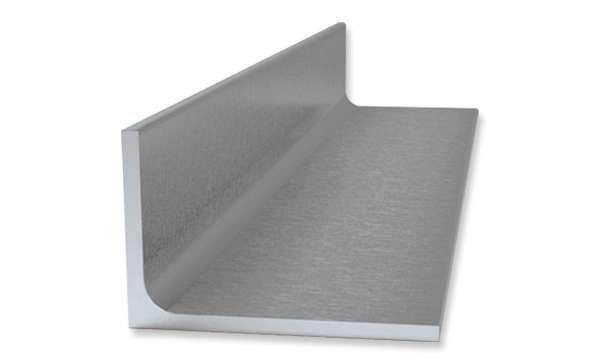
In structural steel, "L" designates angle sections1 with two legs forming a 90-degree angle. The designation includes dimensions and thickness (e.g., L150×100×10 means 150mm & 100mm legs with 10mm thickness). For marine applications2, it also indicates certification to specific grade requirements like ABS AH36.
Understanding L Designation in Structural Steel Systems
The "L" designation forms part of a standardized system for identifying structural steel shapes. This system allows engineers, designers, and fabricators to communicate clearly about material requirements. The designation provides essential information about the section’s geometry and sometimes its material properties.
The basic designation format for L-shaped steel follows predictable patterns:
- Equal Angles: L followed by leg length and thickness (e.g., L100×100×12)
- Unequal Angles: L followed by both leg lengths and thickness (e.g., L150×100×10)
- Metric vs Imperial: Different regions use different measurement systems
- Additional Designations: May include material grade3 or special properties
For marine applications2, the designation becomes more comprehensive:
- Section Size: Defines the physical dimensions for structural calculations
- Material Grade: Specifies mechanical properties and quality requirements
- Classification Society: Indicates the certifying organization
- Special Properties: Notes any additional requirements like Z-quality or normalized condition
The designation system helps with several practical aspects:
- Material Ordering: Ensures correct specifications are purchased
- Structural Calculations: Provides data for strength and stability analysis
- Fabrication Planning: Guides cutting, welding, and installation processes
- Quality Control: Establishes standards for inspection and acceptance
In ship classification society4 rules, L-shaped steel receives particular attention:
- ABS Rules: Specify testing and certification requirements
- DNV Standards: Define manufacturing and quality control procedures
- LR Regulations: Outline approval processes and documentation needs
- Common Requirements: All societies mandate impact testing and chemical analysis
Here’s how L designation5s translate to practical applications:
| Designation | Interpretation | Typical Marine Application |
|---|---|---|
| L200×200×16 | Equal angle, 200mm legs, 16mm thick | Primary hull frames for large vessels |
| L150×90×12 | Unequal angle, 150mm & 90mm legs, 12mm thick | Deck stiffeners, bulkhead supports |
| L100×100×10 ABS AH36 | Equal angle with classification certification | Critical structural members requiring certification |
We recently processed a large order for L120×120×10 DH36 angles for a series of bulk carriers. The designation told us everything we needed: the dimensions, the thickness, and the required material properties. This clarity ensured we delivered exactly what the shipyard needed for their construction schedule.
Conclusion
L-shaped steel plays a vital role in shipbuilding, providing the structural framework that keeps vessels strong and seaworthy. Understanding its properties and applications ensures proper selection and usage.
-
Explore the concept of angle sections to grasp their importance in structural design and applications. ↩ ↩ ↩ ↩ ↩ ↩ ↩ ↩ ↩ ↩ ↩ ↩
-
Discover how angle sections are tailored for marine use, ensuring safety and compliance in shipbuilding. ↩ ↩ ↩ ↩ ↩
-
Learn about material grades to understand their impact on the strength and durability of steel structures. ↩ ↩ ↩ ↩ ↩
-
Explore the role of classification societies in ensuring quality and safety standards in steel construction. ↩ ↩ ↩ ↩ ↩ ↩ ↩ ↩ ↩
-
Understanding the L designation is crucial for engineers and fabricators to ensure accurate material specifications. ↩ ↩
-
Learn why impact toughness is crucial for shipbuilding, especially in extreme conditions. ↩