
Have you ever wondered what keeps massive ships from breaking apart in rough seas? The secret lies in a special material used throughout the vessel’s structure. This material must be incredibly strong and resistant to the ocean’s harsh conditions. Without it, modern shipping and naval architecture would not be possible.
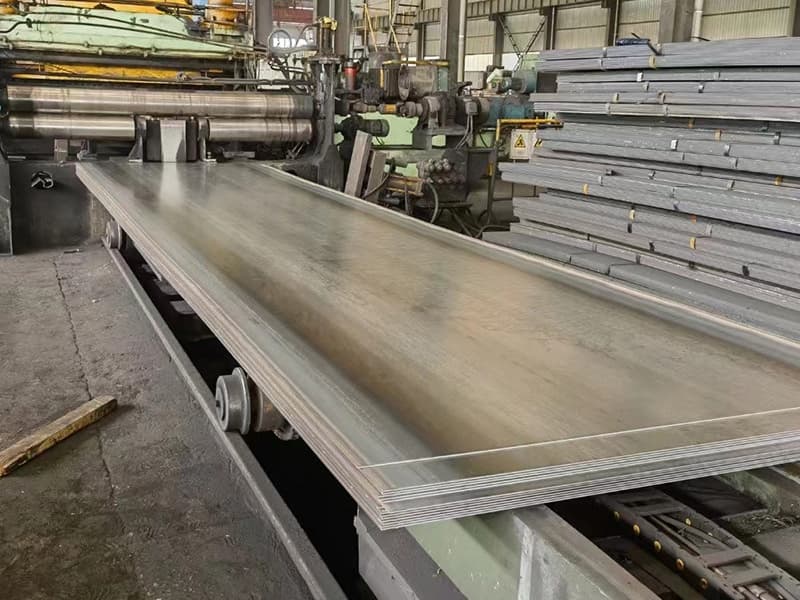
Marine steel plate is a high-strength, low-alloy steel specifically designed for building ship hulls and offshore structures. It is essential because it offers superior toughness and excellent corrosion resistance in seawater environments. This ensures the structural integrity and long-term safety of ships, from small barges to large container vessels and aircraft carriers.
Choosing the right steel is the most critical decision in shipbuilding. The wrong material can lead to catastrophic failures. Let’s explore the specifics of marine plates and why they are the backbone of maritime engineering.
What is a marine plate1?
Imagine a giant metal puzzle where every piece must withstand immense pressure and constant attack from saltwater. That’s the reality of building a ship. A marine plate1 is a foundational piece of this puzzle, forming the very skin and skeleton of the vessel.
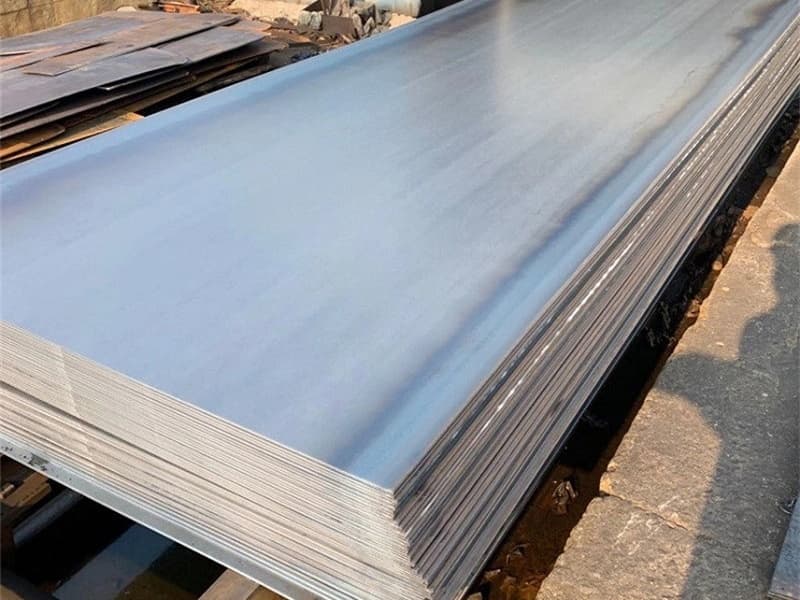
A marine plate1, or shipbuilding plate, is a rolled steel sheet manufactured to meet strict classification society standards. These standards, set by groups like Lloyd’s Register and ABS, ensure the steel has the necessary properties for marine use, including specific yield strength, impact toughness at low temperatures, and corrosion resistance2.
Diving Deeper into Marine Plates
A marine plate1 is not your average construction steel. It is a highly engineered product. The marine environment is one of the most aggressive natural environments for materials. The combination of saltwater, oxygen, and wave stress creates a perfect storm for corrosion and metal fatigue. Ordinary steel would rust away quickly, compromising the ship’s safety and leading to expensive repairs.
The key differentiator for marine plate1s is their certification. They are produced under the supervision and approval of international classification societies3. Think of these societies as the global safety regulators for the maritime industry. When a steel mill produces a batch of marine plate1s, it must provide a Mill Sheet or Certificate of Conformance4. This document proves the steel meets the required grade for a specific project.
Here is a comparison of marine plate1s versus ordinary steel plates:
| Property | Marine Plate | Ordinary Steel Plate |
|---|---|---|
| Corrosion Resistance | Very High. Alloyed to resist saltwater. | Low. Prone to rapid rusting. |
| Impact Toughness | Excellent, even at sub-zero temperatures. | Can become brittle in cold environments. |
| Quality Control | Strictly controlled and certified by classification societies3. | General industrial standards apply. |
| Primary Use | Ship hulls, offshore platforms, docks. | Building frames, general construction. |
From my experience working with clients in Saudi Arabia and Vietnam, the certification is non-negotiable. A project contractor once told me they rejected an entire shipment because the certification documents were not in perfect order. They cannot risk using uncertified steel, as it voids the ship’s insurance and classification. The plates are used for the entire submerged part of the hull, the deck, and the internal structural members. Their quality directly determines the vessel’s lifespan and operational safety. We always ensure our marine plate1s come with full traceability and necessary certifications for our clients’ peace of mind.
What kind of steel is used in shipbuilding?
You are designing a ship that will travel from the freezing Arctic to tropical waters. The steel you choose must perform reliably in all these conditions. It cannot become brittle and crack in the cold, nor can it soften and weaken under the hot sun.
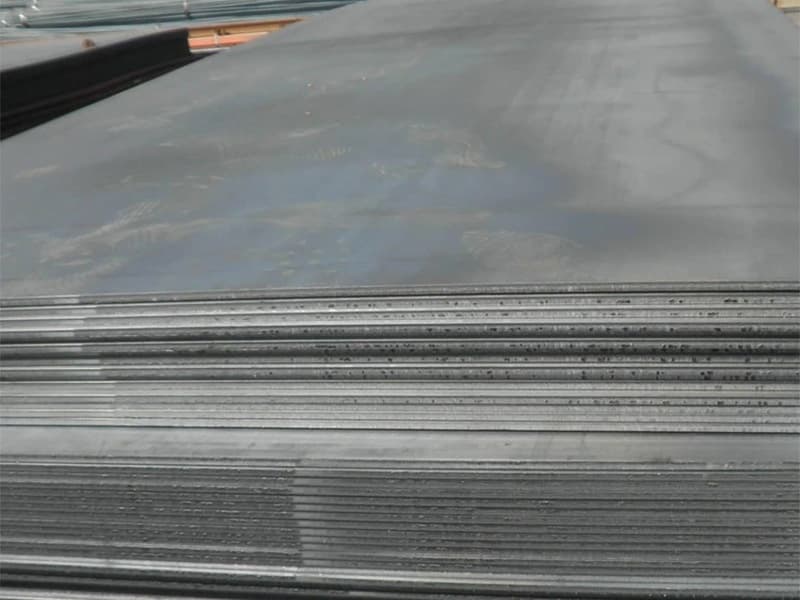
The primary steel used in shipbuilding is high-strength, low-alloy (HSLA) steel1. The most common grades are defined by classification societies, such as ABS Grade A, B, D, E, and AH, DH, EH for higher strength. These steels typically have carefully balanced amounts of carbon, manganese, silicon, and micro-alloying elements.
The Specifics of Shipbuilding Steel
The choice of steel is a precise science. The most basic property is yield strength2, which is the stress level at which the steel begins to deform permanently. For shipbuilding, we need a high yield strength2 to handle the heavy loads of cargo and the powerful forces of the waves.
However, strength alone is not enough. A critical property is toughness, especially at low temperatures. In cold seas, standard steel can behave like glass and shatter upon impact. Shipbuilding steels are tested for their Charpy V-Notch impact value3 at temperatures as low as -40°C or -60°C for Arctic-grade vessels. This ensures the steel can absorb energy and resist cracking.
The chemical composition is carefully controlled:
- Carbon (C): Provides strength, but too much carbon reduces weldability and toughness. The amount is kept relatively low.
- Manganese (Mn): Increases strength and improves hardenability. It also helps to deoxidize the steel.
- Silicon (Si): Used primarily as a deoxidizer during the steelmaking process.
- Micro-alloys (e.g., Ni, Nb, V): Small additions of elements like Nickel (Ni) improve low-temperature toughness. Niobium (Nb) and Vanadium (V) help to refine the grain structure and increase strength.
Here is a breakdown of common shipbuilding steel categories:
| Category | Key Characteristics | Typical Applications |
|---|---|---|
| Normal Strength Steel (A, B, D, E) | Good overall properties, cost-effective. | Hull plating for smaller vessels, internal structures on larger ships. |
| High Strength Steel (AH, DH, EH, FH) | Higher yield strength2, allowing for thinner, lighter plates. | Main hull of large container ships and bulk carriers to reduce weight. |
| Arctic Grade Steel4 | Exceptional impact toughness at extremely low temperatures. | Icebreakers, offshore drilling rigs, vessels operating in polar regions. |
In our business, we see a high demand for AH32 and AH36 grades5 from clients building large container ships. They need the higher strength to maximize cargo capacity without increasing the ship’s own weight. We work closely with certified mills to ensure the chemical and mechanical properties are exactly as specified. For a client in the Philippines building fishing boats, Grade A steel is often sufficient and more economical. Matching the right steel grade to the specific application is a key part of the service we provide.
What is the purpose of a steel plate?
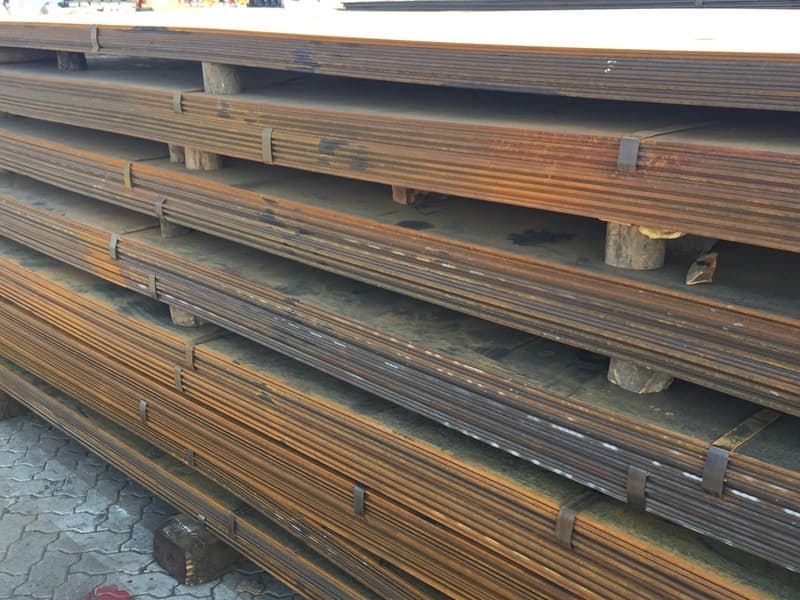
Think of a ship’s hull as a giant steel box that must be both strong and watertight. The steel plates1 are the large, flat pieces that are welded together to form the walls, floor, and roof of this box. They create the barrier between the ocean and everything inside the ship.
The primary purpose of a steel plate in shipbuilding is to form the watertight envelope2 of the vessel’s hull. It provides the structural strength3 to withstand hydrostatic pressure (the pressure from the water outside) and the dynamic loads from waves and cargo. It is the first line of defense against the marine environment.
The Multifaceted Role of Steel Plates
The purpose of steel plates1 goes far beyond just being a barrier. They are integral to the ship’s overall structural system. The hull is a complex beam, and the plates are part of this beam that must resist global bending forces. When a ship rides over a wave, the hull bends. The plates on the bottom are in tension, while the plates on the deck are in compression.
Different plates on the ship serve different purposes and are subjected to different stresses:
- Bottom Shell Plating4: This is the most critical part. It faces the highest water pressure and is prone to corrosion. It must be thick and highly resistant.
- Side Shell Plating: This plating resists the lateral pressure of the water and impacts from docks or floating objects.
- Deck Plating: The deck is under compression and tension from the ship’s bending. It also carries the loads of containers or other cargo.
- Bulkhead Plating5: These plates form the internal walls of the ship, creating watertight compartments. This is a vital safety feature. If one compartment is breached, the others can keep the ship afloat.
The thickness of the plates is not uniform throughout the ship. It is calculated by naval architects6 based on the location and stress. The bottom and the strength deck (the main deck) typically use the thickest plates. The table below illustrates this:
| Plate Location | Primary Function | Key Stresses & Considerations |
|---|---|---|
| Bottom Shell | Forms the base; contains cargo; resists water pressure. | High hydrostatic pressure, corrosion, slamming from waves. |
| Side Shell | Maintains the ship’s shape and provides side resistance. | Lateral water pressure, local impact, corrosion. |
| Deck | Provides the main working area and supports cargo. | Global bending (tension/compression), local cargo loads, weather. |
| Bulkhead | Divides the hull into compartments for stability and safety. | Water pressure in case of flooding, supporting adjacent structure. |
We recently supplied a large quantity of thick deck plating for a bulk carrier project in Vietnam. The client was very specific about the flatness and surface quality of the plates. Any warping could make it difficult to achieve proper weld alignment and secure the container fittings. This highlights how the purpose of the plate directly influences its required physical and mechanical properties.
What grade is marine steel plate?
You have a blueprint for a new oil tanker. The plans don’t just say "use steel." They specify exact steel grades for every single part of the hull. This grade is a precise code that tells you everything you need to know about the material’s capabilities.
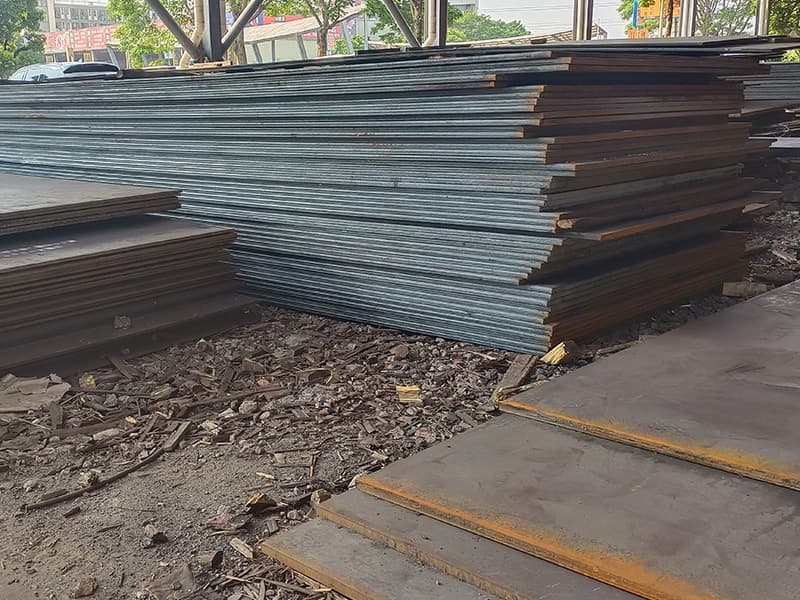
Marine steel plate grades are standardized codes, primarily from classification societies1 like ABS, LR, DNV, and GL, or from international standards like EN 10025. Common grades include ABS A, B, D, E2 and the higher-strength AH32, AH36, DH36, EH36. The grade defines the yield strength3, impact test temperature4, and chemical composition.
A Detailed Look at Marine Steel Grading
The grading system is a universal language for shipbuilders, designers, and suppliers. It ensures everyone is on the same page regarding material performance. Let’s break down the common ABS (American Bureau of Shipping) grades as an example.
The letter in the grade often indicates the required impact test temperature4:
- Grade A: No impact testing required for most thicknesses.
- Grade B: Impact testing may be required at room temperature.
- Grade D: Impact testing required at -20°C.
- Grade E: Impact testing required at -40°C.
- Grade F: Impact testing required at -60°C (for Arctic applications).
The prefix "H" stands for High Strength. So, while Grade A has a yield strength3 of 235 MPa, Grade AH32 has a yield strength3 of 315 MPa. The number "32" represents the minimum yield strength3 in kgf/mm² (approximately 315 MPa).
Choosing the correct grade is a balance of performance, cost, and regulation. Using a higher grade than necessary is wasteful, while using a lower grade is dangerous and illegal. The classification society rules dictate the minimum grades required for different structural members based on the ship’s size, type, and intended service route.
Here is a summary of common grades and their applications:
| Grade | Minimum Yield Strength | Impact Test Temperature | Typical Use Case |
|---|---|---|---|
| ABS A / B | 235 MPa | Room Temperature | Internal structures, non-critical parts of smaller vessels. |
| ABS D | 235 MPa | -20°C | Hull plating for ships operating in cool climates. |
| ABS E / EH32/36 | 235 / 315-355 MPa | -40°C | Main hull of large ocean-going vessels, deck plating. |
| ABS F / FH32/36 | 235 / 315-355 MPa | -60°C | Ice-going vessels, offshore structures in polar regions. |
One of our long-term partners in Mexico consistently orders ABS Grade DH365 for their series of container ships. They operate in both Pacific and Atlantic routes, where they can encounter cold weather. The Grade D with its -20°C toughness, combined with the high strength of "36", provides the perfect balance for their needs. We make sure to maintain a stable supply chain for these specific grades to support their production schedule.
Conclusion
Marine steel plate is the unsung hero of shipbuilding. Its specialized properties of strength, toughness, and corrosion resistance are what make safe and efficient global maritime trade possible.
-
Gain insights into classification societies and their role in maintaining safety and standards in marine construction. ↩ ↩ ↩ ↩ ↩ ↩ ↩ ↩ ↩ ↩ ↩ ↩
-
Explore the specifications of ABS grades to ensure compliance with industry standards in shipbuilding. ↩ ↩ ↩ ↩ ↩ ↩
-
Learn about yield strength to understand how it affects the performance and safety of marine structures. ↩ ↩ ↩ ↩ ↩ ↩ ↩ ↩
-
Discover the importance of impact test temperature in ensuring the durability of marine steel in various climates. ↩ ↩ ↩ ↩ ↩
-
Find out why ABS Grade DH36 is preferred for container ships operating in cold weather. ↩ ↩ ↩
-
Gain insights into the considerations naval architects make for effective and safe ship hull designs. ↩