
I have spent years talking with shipbuilders and project contractors. One question keeps coming up: how do we pick the right bulb flat steel for the most demanding parts of a vessel without overpaying or compromising safety?
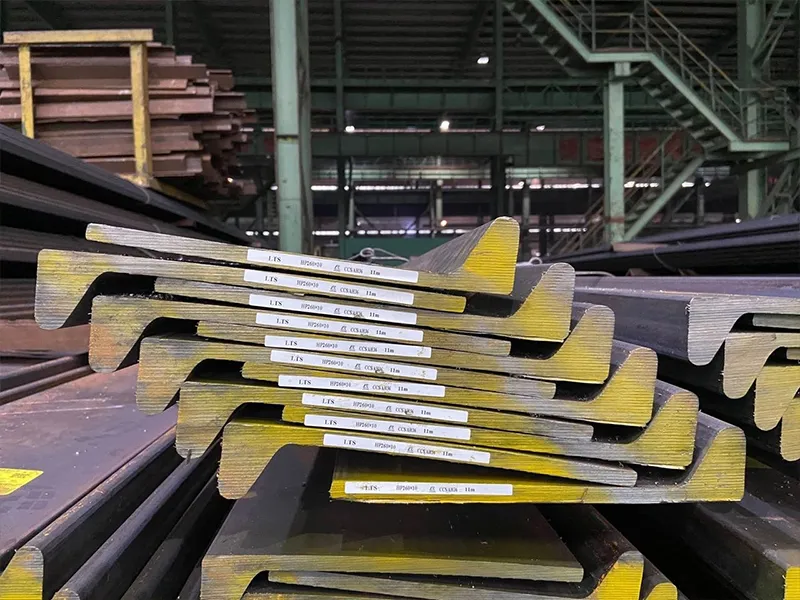
The right way to select bulb flat steel for high-stress hull areas involves three steps. First, you must follow classification society rules for steel grade and impact toughness. Second, you need to compare high-strength steel against ordinary steel for your specific load requirements. Third, you have to consider corrosion protection and welding procedures as part of the material choice, not as an afterthought [citation:6].
Many buyers focus only on the price per ton. That is a mistake. In my experience working with fabricators from Vietnam to Mexico, the cheapest material often leads to the most expensive problems. Let me walk you through how we solve this at our company, step by step.
Understanding Classification Society Rules for Bulb Flat Steel in Critical Zones?
I remember a client from Qatar who called me in a panic. His shipment of marine steel had arrived, but the third-party inspector rejected it. Why? The mill certificate did not match the grade required for the vessel’s high-stress zone. This situation happens more often than you think.
[^1] with classification stamps](https://cnmarinesteel.com/wp-content/uploads/2026/01/Flat-steel-ball119.webp)
Classification societies1 like ABS, DNV, and LR are not just bureaucratic hurdles. They exist to prevent failures at sea. Their rules dictate the types of steel you must use in the assembly of hull structures. The steel must show high levels of buckling and fatigue performance. It must also handle corrosion over time [citation:6].
The Temperature Factor You Cannot Ignore
One of the most critical parts of the rules involves temperature. If your vessel will operate in cold climates, you cannot use standard steel. Here is how the grades break down:
| Grade | Minimum Service Temperature2 | Typical Application |
|---|---|---|
| Grade A | 0°C | Warm water routes, interior structures |
| Grade B | 0°C | General use, moderate climates |
| Grade D | -20°C | Cold water voyages, winter conditions |
| Grade E | -40°C | Extreme cold, ice-class vessels |
| Grade F | -60°C | Polar class, specialized icebreakers |
I share this table with every new buyer. A contractor in Romania once thanked me for this advice. He initially planned to buy Grade A for a project going into the Black Sea in winter. We switched him to Grade D, and the material passed inspection without any issues [citation:6].
The rules also address thickness. Classification societies recommend that you minimize the use of reduced-thickness, high-strength steel3 in some areas. However, if an ordinary steel plate needs to be thicker than 30 mm, you should switch to high-strength steel. This choice avoids heavy welding and simplifies the entire construction process [citation:6].
Comparative Analysis: High-Strength vs. Ordinary Strength Bulb Flats for Hull Reinforcement?
I often speak with buyers who think stronger steel is always better. That is not true. You have to match the material to the job. Let me break down the real differences based on what I see in the market.
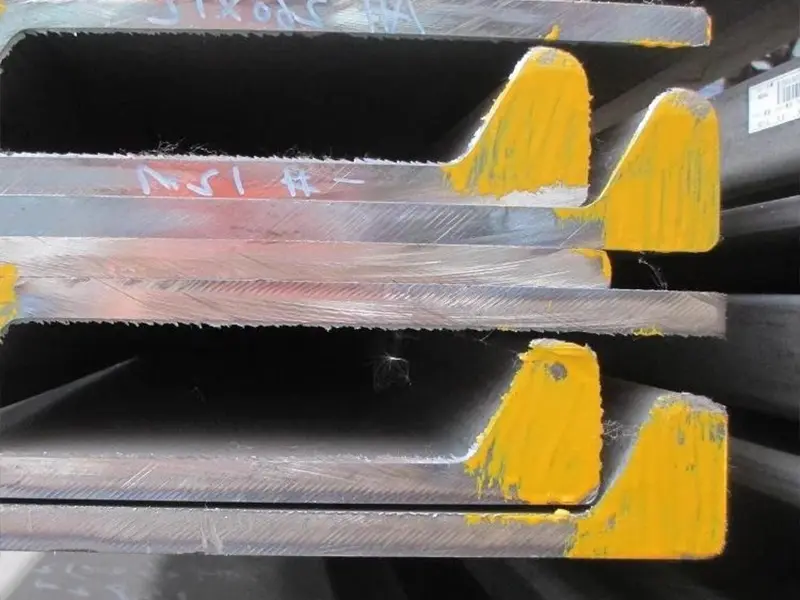
High-strength bulb flats, like AH36, DH36, or EH36 grades, offer superior tensile and yield strength. They allow for slimmer profiles. This reduces the overall weight of the vessel. Less weight means better fuel efficiency and more cargo capacity. These grades are essential for large cargo ships, offshore platforms, and naval vessels [citation:4].
Ordinary strength steel, like Grade A or S235, is more cost-effective. It is easier to weld and form. It works perfectly for general hull framing and standard deck supports where the loads are not extreme [citation:10].
Making the Right Choice for Your Project
How do you decide? You need to look at the specific application. Here is a guide I use with my team:
- For hull girders and heavy decks4: Choose high-strength steel. The increased load-bearing capacity is necessary here. It prevents deformation under immense stress [citation:4].
- For side frames in bulk carriers: High-strength steel is often the best choice. It helps the hull withstand the pressure from heavy cargo like iron ore [citation:10].
- For general framing in mid-sized commercial ships: Ordinary steel is usually sufficient and more economical [citation:4].
- For internal structures and small vessels: Ordinary steel saves money without sacrificing safety [citation:1].
I once worked with a buyer in Pakistan who was building a series of small cargo vessels. He wanted to use high-strength steel for everything "just to be safe." I showed him the cost difference1 and explained where the real stresses were. By switching to ordinary steel for the internal framing, he saved over 12% on his material budget. He used those savings to buy better corrosion protection for the hull. That was a smarter move.
Corrosion Resistance and Durability: Selecting Materials for Ballast Tanks and High-Stress Interfaces?
The sea is a hostile environment. Saltwater, humidity, and constant chemical exposure attack steel every second. If you ignore corrosion resistance4, your vessel will spend more time in dry dock for repairs than at sea making money.
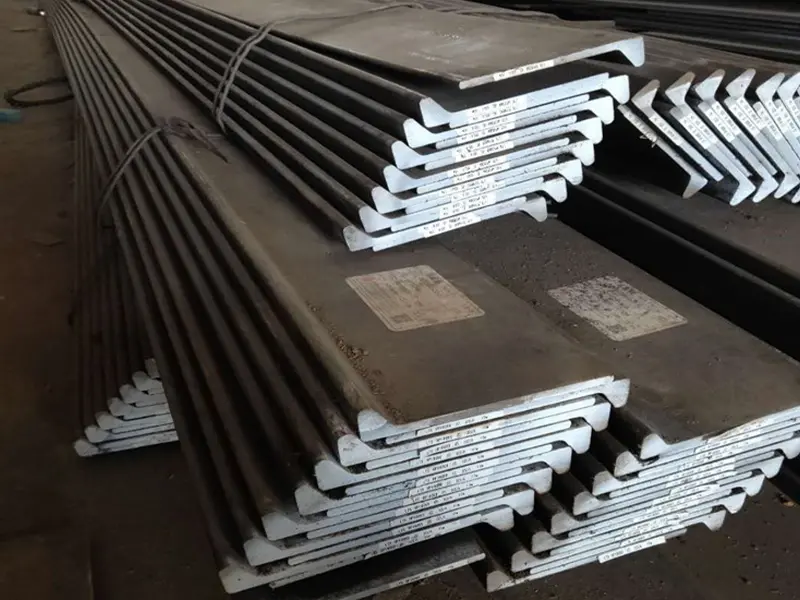
Ballast tanks are the most aggressive zones on a ship. They are constantly filled and emptied with seawater. The steel here needs more than just strength. It needs a robust defense system.
Material Choices and Protection Systems
You have two main lines of defense. First, you select the base material. Second, you apply a protection system.
Low-alloy steels are a great choice for demanding areas. They contain small amounts of manganese, nickel, or chromium. These elements boost the steel’s natural resistance to corrosion and fatigue. They are ideal for offshore rigs, ice-class ships, and critical structural zones [citation:10].
For ballast tanks and high-stress interfaces, you cannot rely on the steel alone. You must add protection. Here are the common methods we specify:
- Coal Tar Epoxy1: This offers excellent water resistance. It is durable and works well in areas that stay wet for long periods [citation:10].
- Zinc Spray (Thermal Spraying): This provides two types of protection. It acts as a barrier, and it also works as a sacrificial anode. If the coating gets scratched, the zinc around the scratch corrodes first, saving the steel. This is ideal for high-stress zones [citation:10].
- Marine-Grade Paints2: These are multi-layer systems. They include primers and topcoats designed to resist UV damage, salt spray, and physical wear [citation:10].
I always tell my clients in Saudi Arabia and Malaysia that the coating is part of the product. A buyer in Mexico once ordered marine plates and asked for the cheapest coating. I advised against it. I explained that in the humid Gulf climate, a cheap coating would fail in two years. He listened and chose a better system. That vessel is still going strong with no major corrosion issues.
Remember, proper material selection and surface treatment are essential. Neglecting corrosion protection can lead to premature failure and costly repairs. Always follow the guidelines from classification societies [citation:10].
Optimizing Welding Procedures for Advanced Bulb Flat Steels in Shipbuilding?
You can buy the best steel in the world. But if your welding is poor, the joint becomes the weakest point. I have seen this happen too many times. A fabricator in Myanmar once showed me a cracked weld on some bulb flat steel4. The steel was perfect. The welding procedure was the problem.
[^2] process on marine bulb flat steel](https://cnmarinesteel.com/wp-content/uploads/2026/01/Flat-steel-ball113.webp)
Traditional manual welding of marine bulb flat steel has issues. It is slow. The quality can be unstable. Welders get tired, and the heat input varies. This leads to defects [citation:3].
Moving to Advanced Welding Methods
There is a better way. Recent research shows that flash welding is a highly efficient method for joining bulb flats like DH32 steel. This process is automated. It produces joints that look good and have no cracks or porosity [citation:3].
The results are impressive. In tests on 160×9 mm DH32 bulb flats, the welded joints reached an average tensile strength2 of 469.7 MPa. This meets all standard requirements. The key is controlling the feed rate during the welding process. When you get the parameters right, the joint is strong and reliable [citation:5].
Here are some practical tips for welding advanced bulb flats:
| Step | Action | Why It Matters |
|---|---|---|
| Preparation | Inspect and clean the welding faces. Remove any rust or oxidation. | Rust and impurities can cause the weld to de-solder later, creating a safety hazard [citation:9]. |
| Positioning | Use anti-toppling devices to hold the bulb flat vertically on the steel plate. | This ensures accuracy. Old methods using diagonal braces are slow and hard to adjust [citation:7]. |
| Process | For high-strength steels, consider automated processes3 like flash welding. | It ensures consistent heat input and avoids the defects of manual welding [citation:3]. |
| Inspection | Perform spot welding first for initial fixation. Check alignment before final welding. | It is easier to adjust a small spot weld than a full seam. This saves time and material [citation:7]. |
I share this information with all my clients, especially the large importers in the Philippines and Thailand. They have big teams of welders. By improving their procedures, they save money and build better ships. One project manager told me that switching to a better positioning system cut his assembly time for bulb flats by 20%. That is real value.
Conclusion
Selecting the right bulb flat steel for high-stress areas means following classification rules, choosing the correct strength grade, protecting against corrosion, and using proper welding methods to ensure long-term safety and performance.
-
Explore how flash welding enhances efficiency and quality in shipbuilding, ensuring stronger joints and reduced defects. ↩ ↩ ↩
-
Understand why tensile strength is critical for welded joints, ensuring safety and durability in marine applications. ↩ ↩ ↩
-
Discover the impact of automation on welding processes, leading to better quality and efficiency in shipbuilding. ↩ ↩
-
Learn about the applications and advantages of bulb flat steel in shipbuilding, crucial for structural integrity. ↩ ↩ ↩