
I remember a call I got last year from a buyer in Qatar. He was frustrated. His shipment of marine steel plates from another supplier was delayed for the third time. The quality didn’t match the mill certificate. He asked me, "Is it really this hard to find a reliable exporter?"
leading paragraph:
Finding a steel plate supplier feels risky. You worry about quality delays and hidden costs. The wrong choice can stop your whole project.
snippet paragraph:
A reliable marine steel plate exporter in 2025 is a partner with direct mill access, strict quality control, and fast communication. They offer flexible MOQs, support third-party inspections like SGS, and understand international shipping. They don’t just sell steel; they deliver peace of mind.

Transition Paragraph:
You might think all steel suppliers are the same. But after working in this industry for years and shipping thousands of tons to places like Vietnam, Mexico, and Saudi Arabia, I have learned that the little things make the biggest difference. Let me break down what you really need to know.
What are the grades of marine steel plate?
leading paragraph:
Walking through a shipyard, you see plates everywhere. But each one has a specific job. Using the wrong grade is like using house paint on an oil tanker. It just won’t work.
snippet paragraph:
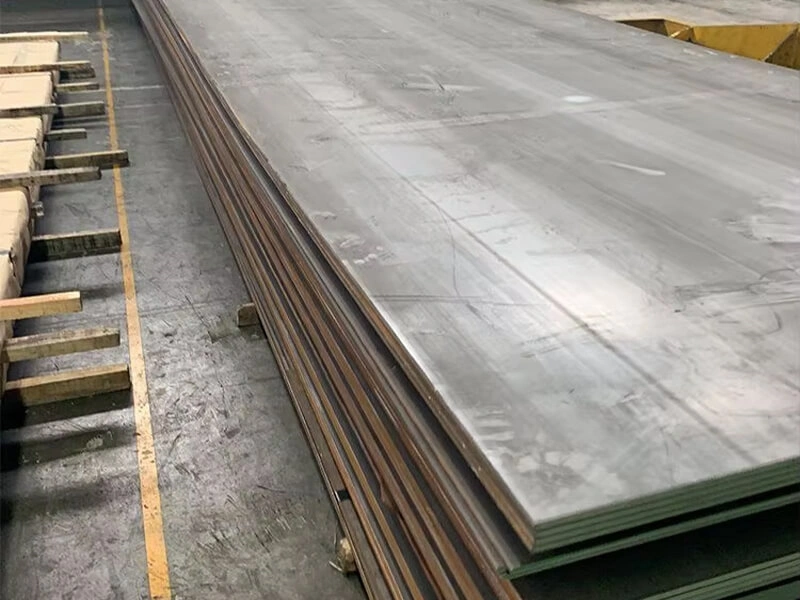
Marine steel plates are divided into general strength, high strength, and low-temperature toughness grades. Common grades include A, B, D, E for general strength, and AH32, DH36, EH40 for high strength. The grade tells you the steel’s strength and how it handles cold temperatures.
Dive deeper Paragraph:
When I first started visiting mills in China, I was confused by all the letters and numbers. A, B, D, E, AH, DH, EH. It looked like alphabet soup. But understanding these grades is not just technical talk. It is the difference between a ship that lasts 30 years and one that has problems in its first year.
Most classification societies1 follow rules from the International Association of Classification Societies (IACS). These rules are the standard. Marine steel plates are sorted into two main groups based on their minimum yield strength2.
General Strength Steel
These are the most common grades. They have a minimum yield strength of 235 MPa. The grade names are A, B, D, and E. The main difference between them is their impact toughness3 at different temperatures.
| Grade | Impact Test Temperature | Typical Use Case |
|---|---|---|
| Grade A | No impact test required | Interior structures, parts not exposed to extreme cold |
| Grade B | 0°C | Moderate climates, hull sections with less stress |
| Grade D | -20°C | Critical hull parts for ships operating in colder waters |
| Grade E | -40°C | Arctic and ice-class vessels, very high-stress areas |
I once helped a client from the Philippines who was building a ferry. He initially ordered Grade A for the entire hull. But the ferry route went into deeper, cooler waters at night. We sat down and I showed him the difference. He switched to Grade D for the bottom plates. It was a smart move. It added safety without a huge cost increase.
High Strength Steel
These grades are stronger. They have yield strengths starting at 315 MPa. They allow shipbuilders to use thinner plates. This makes the ship lighter and more fuel efficient. The names start with AH, DH, EH, or FH. The number, like 32, 36, or 40, tells you the strength level.
- AH32 / DH32 / EH32: Yield strength of 315 MPa. Good for general hull construction where you want to save weight.
- AH36 / DH36 / EH36: Yield strength of 355 MPa. This is the workhorse for modern shipbuilding. We ship a lot of this to Mexico and Saudi Arabia for large projects.
- AH40 / DH40 / EH40 / FH40: Yield strength of 390 MPa. Used for high-stress parts like the upper decks of large container ships and offshore platforms.
The letter before the number tells you the toughness. AH is tested at 0°C, DH at -20°C, EH at -40°C, and FH at -60°C. For a client in Romania building a ship for the Black Sea, we used a mix of DH36 and EH36. The EH36 was for the bow area, which takes the most impact from waves. It is about matching the steel to the real-world job it must do.
What are the properties of marine grade steel?
leading paragraph:
Steel for ships must survive a tough life. Salt water, heavy loads, and freezing temperatures are normal. If the steel lacks the right properties, the ship fails.
snippet paragraph:
Marine grade steel must have four key properties: high strength to carry heavy loads, excellent weldability1 for easy construction, good toughness2 to resist cracking in cold water, and strong corrosion resistance3 to handle the salty sea environment.

Dive deeper Paragraph:
Over the years, I have seen many projects where buyers only focused on one thing. Often, it was just the price per ton. But steel is a material. Its value is in its properties. If one property is missing, the steel is not really marine grade. It is just a cheap piece of metal.
Let me walk you through the four main properties. I always explain these to new clients, especially when they ask why our price is sometimes higher than others.
1. Strength and Yield Ratio
Strength is the steel’s ability to handle force without bending permanently. We talk about yield strength and tensile strength. For example, AH36 has a minimum yield strength of 355 MPa. But the ratio between yield and tensile strength is also important. For shipbuilding, this ratio is usually controlled. It ensures the steel can stretch a little before it breaks. This gives a warning before failure. It is a safety feature built into the chemistry.
2. Weldability
Shipbuilders join plates together. If the steel is hard to weld, it slows down production and costs more money. Good marine steel has a low Carbon Equivalent (Ceq)4. This is a formula based on the steel’s chemistry. Elements like carbon, manganese, and chromium affect how the steel reacts to heat from welding. A low Ceq means the steel welds easily without cracking. It saves time and labor. I always tell my team to share the mill test certificates with clients. They need to see the Ceq value. It matters as much as the strength.
3. Toughness and Ductility
This is about the steel’s behavior in cold conditions. Ships sail all over the world. The water temperature changes. Steel can become brittle when it is cold. If it is brittle, it can crack suddenly under stress. That is dangerous. Toughness is the steel’s ability to absorb energy and deform without fracturing. This is tested with a Charpy V-notch impact test. The test happens at specific temperatures. For Grade E steel, this test is at -40°C. The steel must bend and stretch, not snap. This property is non-negotiable for any vessel going into northern waters.
4. Corrosion Resistance
Salt water is enemy number one. Marine steel is designed to rust in a uniform way, not in deep pits. Manufacturers add elements like copper and chromium to help with this. The steel forms a protective rust layer that slows down further corrosion. For some projects, clients ask for extra corrosion resistance. We can arrange for special coatings or even source steel with higher levels of alloying elements. But the base chemistry of true marine steel is already set up to fight the sea.
Who makes steel for ships?
leading paragraph:
I get this question a lot from buyers in Pakistan and Myanmar. They see names from different countries. They want to know who they can trust to actually make the steel, not just sell it.
snippet paragraph:
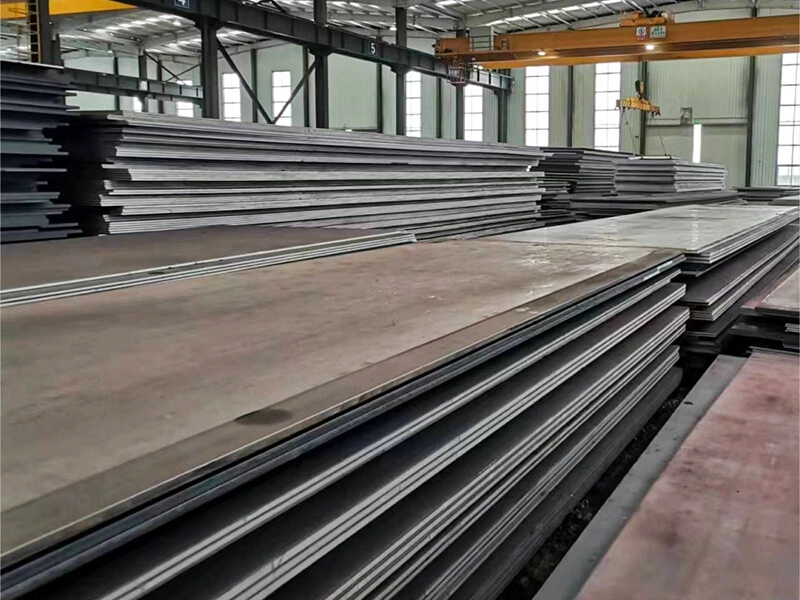
Steel for ships comes from large, certified mills1 around the world. Major producers are in China, Japan, and South Korea. These mills are approved by classification societies like DNV, ABS, and LR. As an exporter, our job is to work with these mills to provide the steel to you.
Dive deeper Paragraph:
When I started in this business, I thought all steel came from one place. I soon learned it is a global industry with big players. Understanding who makes the steel helps you understand the quality you are buying.
The top steelmaking countries for ship plates are South Korea, Japan, and China. Each has a reputation.
- South Korea: Companies like POSCO2 are world leaders. They make very high-quality steel, especially for the largest ships. Their technology is top level.
- Japan: Mills like Nippon Steel and JFE have a long history. Their quality control is famous. They are very consistent. Japanese steel is trusted everywhere.
- China: This is where most of my work is. Mills like Baowu Steel, Ansteel, and Shagang produce millions of tons of marine steel3 every year. They have modern equipment. The quality has improved a lot in the last ten years. They are certified by all the major classification societies.
But here is the key point for you, the buyer. You do not buy directly from a massive mill like POSCO or Baowu if you need 200 tons. These mills work on huge contracts. They supply the big shipyards directly. That is where we come in. Our role as an exporter is to bridge the gap.
We have long-term cooperation agreements with certified mills. We take your order, and we book the production slot with the mill. We handle the quality checks, the logistics, and the paperwork. So, when you ask "Who makes the steel?", the answer is a certified mill. But the person who gets it to your port, on time, with the right certificates, is your exporter. We are the link in the chain.
In 2025, the steel market is changing. There is more focus on green steel and carbon emissions. Big mills are investing in electric arc furnaces. But the core remains the same. The steel must come from a mill with a valid license from the classification society you need. Always ask for the mill’s license number. We keep all our mill certificates on file. We are happy to share them. It proves where the steel comes from.
Who manufactures the best steel?
leading paragraph:
Everyone wants the "best" steel. But I have learned that "best" does not mean the same thing to everyone. A shipbuilder in Thailand has different needs than a contractor in Saudi Arabia.
snippet paragraph:
The "best" steel comes from mills that consistently meet the specific grade and toughness requirements for your project. It is not about one brand. It is about a reliable manufacturing process, strict testing, and proper certification from bodies like ABS, DNV, or BV. Consistency is better than a big name.
[^1] with a clipboard and measurement tool](https://cnmarinesteel.com/wp-content/uploads/2026/01/Marine-steel-plate-36.webp)
Dive deeper Paragraph:
This is the million-dollar question. I have visited many mills. I have seen steel made in different provinces in China. I have talked to clients who have used steel from all over Asia. My view on the "best" manufacturer has changed over time.
Early in my career, I thought the best steel came from the most expensive mill. I thought a famous name guaranteed everything. But then I worked with a client in Mexico. He was building a series of oil tankers. He used steel from a very famous Japanese mill. It was great steel. But the lead time was long, and the cost was very high. He came to us for his next project. We sourced from a Chinese mill with all the same certifications. The steel passed SGS inspection2. The client tested it. The performance was the same for his application. The price was better. The delivery was faster.
This experience changed how I think about "best." Now, I believe the best steel manufacturer is the one who does three things right.
1. Consistent Quality Control3
A good mill tests every single plate. They do not just test one out of every ten. They have machines that scan the plate for internal flaws. They check the surface. They run the mechanical tests. The "best" mill is the one where the quality from the first plate of the order matches the last plate. This consistency is what saves you time and trouble in your workshop.
2. Proper Certification and Traceability4
The best mills have valid licenses from all the major classification societies. You can look up their license numbers. You can see that their process is audited. They also provide full traceability. Every plate has a number. That number links back to the heat of steel it came from. You can see the exact chemical composition and mechanical properties for that specific plate. This is critical for shipbuilding. You need this for your own records and for the surveyors.
3. Flexibility and Understanding of Export5
This is a practical point. Some mills are hard to work with for export orders. They are set up for the domestic market. The best mills for an exporter like us are the ones that understand international business. They accept international payment terms. They understand the need for English-language certificates. They allow third-party inspectors like SGS into their facility. They pack the steel properly for a long sea voyage.
So, do I have one favorite mill? No. I have a list of partner mills. I choose the one that is best for the specific project. If a client in Qatar needs EH36 for a very cold environment, I go to a mill with a strong history of low-temperature toughness. If a client in Vietnam needs a large volume of Grade A quickly, I go to a mill known for fast production. The "best" steel is the steel that fits your project perfectly, arrives on time, and passes inspection without any stress for you. That is what we aim to deliver.
Conclusion
Finding a reliable marine steel plate exporter in 2025 is about trust and consistency. Look for a partner who knows the grades, guarantees the properties, works with certified mills, and communicates clearly. It makes your job easier and your projects stronger.
-
Gain insights into the best practices for inspecting marine steel plates to ensure they meet your project’s requirements. ↩ ↩ ↩
-
Discover how SGS inspection ensures the quality and safety of steel products before they reach your project. ↩ ↩ ↩ ↩
-
Understanding consistent quality control is crucial for ensuring the reliability of steel products in your projects. ↩ ↩ ↩ ↩
-
Explore the significance of certification and traceability to ensure the steel meets industry standards and regulations. ↩ ↩
-
Learn how flexibility in export processes can enhance your experience when sourcing steel internationally. ↩