
Leading paragraph:
Offshore wind foundations face waves, salt, and heavy loads. A steel failure can cost millions.
Snippet paragraph:
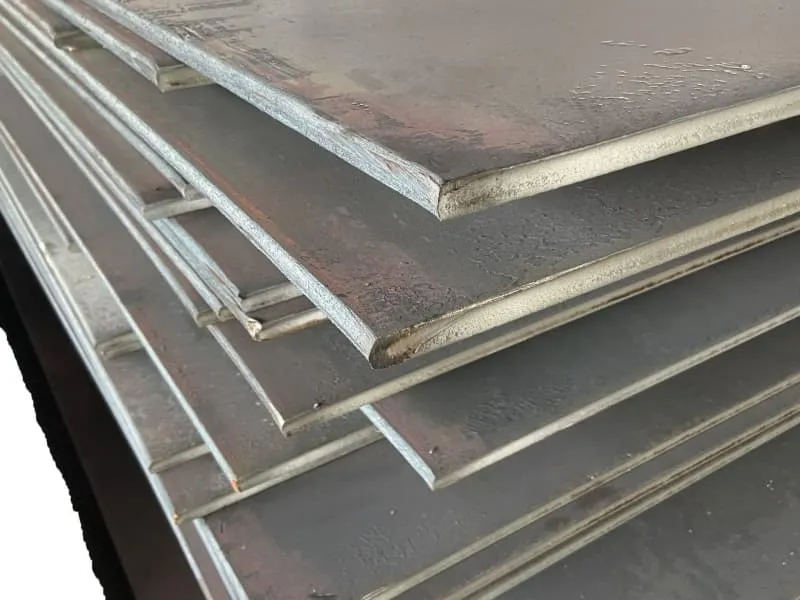
Marine steel plates for offshore wind must have high strength, low temperature toughness, and excellent weldability. Grades like DH36, EH36, and S355G10+M are common. They resist cracking and corrosion. This keeps the foundation stable for 25+ years.
Transition paragraph:
I’m Zora Guo from CN Marine Steel. We work with certified mills in China. Our plates go to projects in Saudi Arabia, Vietnam, and Mexico. Let me walk you through the real requirements. I will also share what I learned from helping a Saudi distributor, Gulf Metal Solutions.
What Key Material Properties Make Marine Steel Plates Suitable for Offshore Wind Foundations?
Leading paragraph:
Not every steel plate can sit under the sea for decades. Some crack. Some rust too fast. Some just bend.
Snippet paragraph:
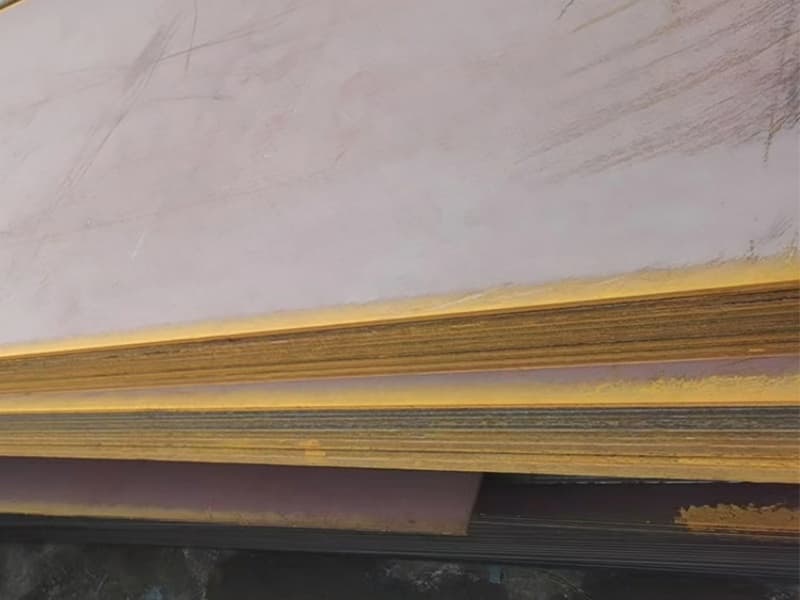
The right marine steel plate needs high yield strength1 (355 MPa or more), good impact toughness2 at -20°C to -40°C, and a carbon equivalent low enough for easy welding. These three properties stop brittle fracture and keep the structure safe.
Dive deeper paragraph:
Let me break down each property. You don’t need to be a metallurgist. But you do need to ask your supplier the right questions.
1. Yield strength
This is the force needed to permanently bend the steel. Offshore wind foundations carry heavy wind and wave loads. The steel must not deform. Most projects ask for 355 MPa minimum. Some go up to 460 MPa for larger turbines. I always check the mill certificate. A good plate will show a clear yield point.
2. Impact toughness
The North Sea is cold. Even the Arabian Gulf gets cool at night in winter. Cold makes steel brittle. A sudden wave hit can cause a crack. That crack can run across the whole plate. So we test the steel at low temperatures. The standard is often -20°C or -40°C. The test result is in Joules. A good marine plate gives at least 40 Joules at -20°C. For Arctic areas, you need 60 Joules at -40°C.
3. Carbon equivalent (CEV)
This number tells you how easy the steel is to weld. High carbon means hard to weld. Hard welding leads to cracks near the weld. Offshore foundations have many long welds. You cannot afford cracks. So you want a CEV below 0.38% for most grades. Some advanced grades go up to 0.42% but need preheating.
Here is a simple table to compare common offshore grades:
| Grade | Yield (MPa) | Impact test temp | CEV (max) | Typical use |
|---|---|---|---|---|
| DH36 | 355 | -20°C | 0.38% | Monopile transition pieces |
| EH36 | 355 | -40°C | 0.38% | Jacket legs in cold water |
| S355G10+M | 355 | -40°C | 0.40% | High fatigue areas like flanges |
| S460ML | 460 | -40°C | 0.44% | Large diameter monopiles |
4. Through-thickness properties (Z-direction)
This is a hidden requirement. When you weld thick plates, the cooling can pull the plate apart in the thickness direction. That creates lamellar tearing. A good marine plate has Z25 or Z35 rating. It means the steel can stretch 25% or 35% in the thickness direction before breaking.
I remember a call from a contractor in Vietnam. He bought cheap plates without checking Z-direction. After welding, he saw cracks along the flange. The whole batch was useless. He lost three weeks. After that, he started ordering from us. We always provide full test reports including Z-properties.
So when you ask for marine steel plates, do not just say “DH36”. Say “DH36 with Z25, impact tested at -20°C, and CEV below 0.38%.” That small change saves big trouble.
How Do Corrosion Resistance Strategies Protect Steel Plates in Harsh Marine Environments?
Leading paragraph:
Salt water eats steel like acid. A 25mm plate can lose 5mm in five years without protection.
Snippet paragraph:
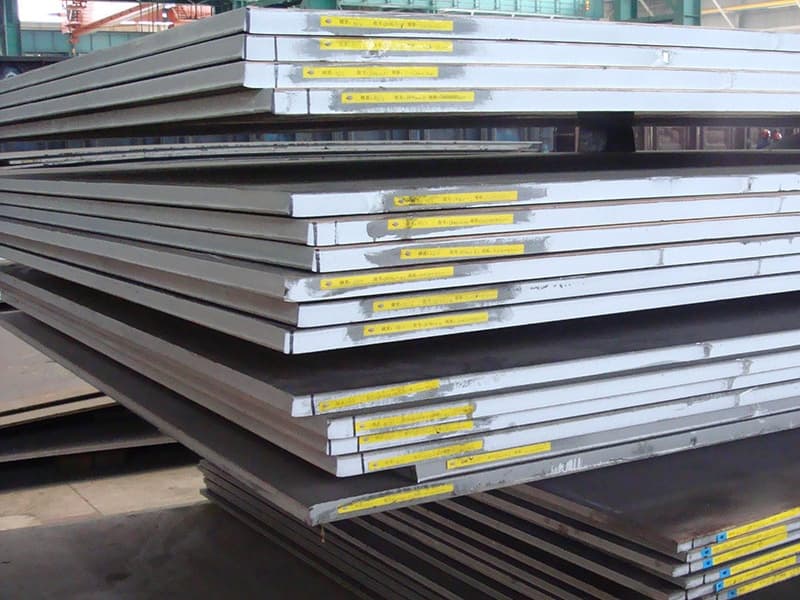
You protect marine steel plates with three layers: a corrosion allowance1 (extra thickness), a high-performance coating (epoxy or thermal spray), and cathodic protection2 (sacrificial anodes3). Together they keep the foundation safe for 25+ years.
Dive deeper paragraph:
Let me explain each strategy. Many buyers only think about the steel grade. But the corrosion protection is just as important.
Strategy 1: Corrosion allowance
This is simple. You add extra steel thickness to the plate. The salt water will slowly eat the outside layer. But the inside stays strong. For example, a monopile needs 50mm thickness for strength. You add 4mm extra for corrosion. So you order 54mm plate. The extra 4mm is the “allowance”. Over 25 years, it might lose 2-3mm. You still have enough left.
How much allowance? In the Arabian Gulf, the water is warm and salty. Corrosion is faster. I often suggest 4-6mm. In colder areas like the North Sea, 3-4mm is enough.
Strategy 2: Protective coatings
The coating stops water from touching the steel. Two types work well offshore.
- Epoxy coatings are thick and hard. They are applied in layers. Total thickness around 300-500 microns. Epoxy is good for the splash zone where waves hit.
- Thermal spray aluminum (TSA) is even better. You spray molten aluminum onto the steel. The aluminum forms a tight bond. It lasts 20+ years without maintenance. The cost is higher. But for big projects, it pays off.
Strategy 3: Cathodic protection
No coating is perfect. Small scratches will happen. That is where cathodic protection helps. You attach sacrificial anodes to the steel. The anodes are made of zinc or aluminum. They corrode instead of the steel.
Think of it as a bodyguard. The anode gives up its electrons. The steel keeps its electrons. So the steel does not rust. You just need to replace the anodes every 10-15 years.
Here is a quick guide for choosing the right combination:
| Zone | Corrosion risk | Recommended protection |
|---|---|---|
| Atmospheric (above water) | Low to medium | Epoxy coating only, 300 microns |
| Splash zone (waves) | Very high | Epoxy + extra allowance (5-6mm) + anodes |
| Immersed (under water) | Medium | Epoxy coating + anodes |
| Buried in seabed | Low | Coating only (or bare with thick allowance) |
One mistake I see often: buyers order plates with good corrosion allowance but no coating. They think “extra thickness is enough”. It is not. The corrosion does not happen evenly. It forms pits. A pit can go through 10mm in two years. That pit becomes a crack starter. So always combine allowance with coating and anodes.
When we shipped plates to Gulf Metal Solutions in Saudi Arabia, they asked for S355G10+M with 5mm corrosion allowance and a three-layer epoxy system. We arranged third-party inspection from SGS. The coating thickness was checked at 50 points. All passed. That is how you do it right.
What Are the Welding and Fabrication Best Practices for Offshore Wind Foundation Steel Plates?
Leading paragraph:
A bad weld on a monopile can snap in a storm. That storm does not care about your delivery schedule.
Snippet paragraph:
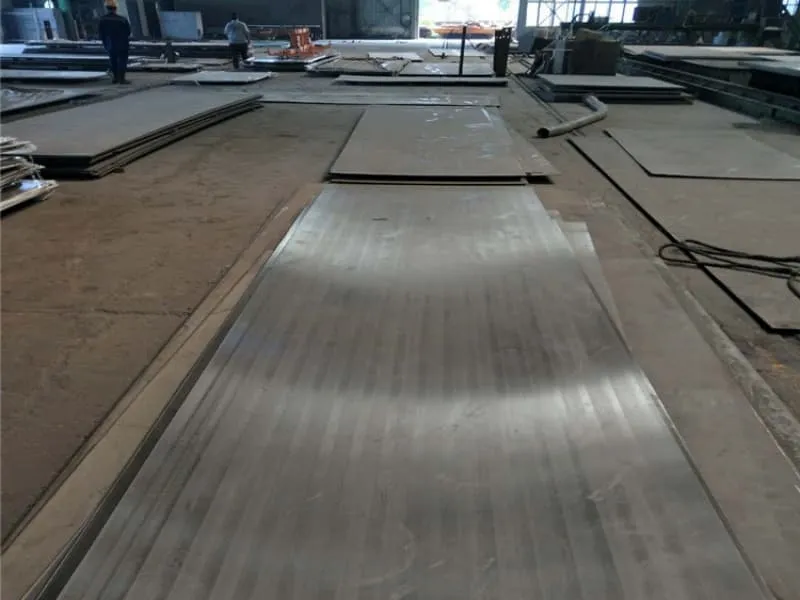
Use low-hydrogen welding processes1, preheat the plate to 50-100°C, control interpass temperature2, and follow a qualified welding procedure. Post-weld heat treatment (PWHT)3 removes residual stress. This stops cracks and fatigue failure.
Dive deeper paragraph:
I am not a welder. But I have watched enough fabricators fail. Let me give you the rules that work.
Rule 1: Choose the right welding process
Offshore wind plates are thick (30mm to 150mm). You need deep penetration. Two processes are common.
- Submerged arc welding (SAW)4 is automatic. It gives clean, strong welds. It works best for long straight seams on monopiles.
- Flux-cored arc welding (FCAW)5 is semi-automatic. It is good for field welding and joints that are not straight.
Do not use manual stick welding (SMAW) for main seams. It is too slow and the quality varies.
Rule 2: Control the heat
High strength marine steel is sensitive to heat. Too much heat makes the steel soft. Too little heat makes it hard and crack.
You must preheat the plate before welding. The preheat temperature depends on the thickness and carbon equivalent. For DH36 plates over 40mm thick, I suggest 50°C preheat. For EH36 or S460, go to 75-100°C.
Also control the “interpass temperature”. This is the temperature between each weld pass. Keep it below 200°C. If it gets too hot, stop and let it cool.
Rule 3: Use low-hydrogen consumables
Hydrogen is the enemy. It gets trapped in the weld metal. Then it causes tiny cracks called “hydrogen-induced cracking”. These cracks grow over time. One day the weld just breaks.
So you must use low-hydrogen electrodes and fluxes. Store them in a heated cabinet. Take them out only when ready to weld. If an electrode gets wet, throw it away.
Rule 4: Post-weld heat treatment (PWHT)
After welding, the area around the weld is full of stress. The steel wants to pull itself apart. PWHT fixes that. You heat the whole welded area to around 580°C for one hour per inch of thickness. Then you cool it slowly.
PWHT is expensive. But for thick plates (over 40mm) or high-strength grades, you cannot skip it. I have seen a 50mm EH36 plate crack after only 6 months in the North Sea. The fabricator did not do PWHT. The crack started from the weld toe.
Here is a simple checklist for your fabrication team:
| Step | Action | Tool / method |
|---|---|---|
| 1 | Cut plate to size | Plasma or laser cutting |
| 2 | Bevel edges | Grinding or machining |
| 3 | Preheat to specified temp | Induction or gas torch |
| 4 | Weld using qualified procedure | SAW or FCAW, low-hydrogen flux |
| 5 | Monitor interpass temp | Infrared thermometer |
| 6 | Perform PWHT (if required) | Furnace or local heating |
| 7 | Inspect with UT or MT | Ultrasonic or magnetic particle |
We once supplied 800 tons of EH36 plates to a fabricator in the Philippines. They followed our welding guidelines exactly. The project passed all third-party inspections. The client told me: “Your steel welds like a dream.” That came from good material and good practice.
If you are a distributor like Gulf Metal Solutions, make sure your end customers get this checklist. It saves them from field failures.
How to Select the Right Marine Steel Plate for Monopile and Jacket Foundations? A Case Study
Leading paragraph:
Choosing the wrong plate for a monopile versus a jacket can double your cost. Or worse, make the structure unsafe.
Snippet paragraph:
Monopiles1 use thick, high-strength plates2 (50-100mm, S355 or S460) for bending strength. Jackets use thinner plates (20-40mm, DH36 or EH36) with high fatigue resistance3. Match the grade to the load type and water depth.
Dive deeper paragraph:
Let me use a real case. A few months ago, a project contractor in Qatar asked me for help. He had two wind farm sites. One in shallow water (15m deep) using monopiles. One in deeper water (40m deep) using jacket foundations. He did not know if the same steel plate would work for both.
I explained the difference step by step.
Monopile foundations
A monopile is a single large tube. It goes straight into the seabed. The wind pushes the turbine. That force tries to bend the monopile like a straw. So the steel needs high yield strength to resist bending.
The plate thickness is large, often 60mm to 100mm. The main challenge is welding thick plates without cracks. Also, the monopile’s bottom section is buried in sand. That part does not need high corrosion resistance. But the splash zone needs extra coating.
Recommended grade for monopile: S355G10+M or S460ML. Thickness: 50-100mm. Impact test at -20°C or -40°C. Z35 through-thickness.
Jacket foundations4
A jacket is a lattice frame made of many small pipes and angles. It looks like an offshore oil platform. The loads are different. The jacket does not bend much. But the many welded joints get repeated stress from waves. That is called “fatigue”.
So the steel needs good fatigue strength. That comes from clean steel with few inclusions. Also, the plate is thinner, usually 20mm to 40mm. Thinner plates are easier to weld. But you have many more welds. So weldability5 is very important.
Recommended grade for jacket: DH36 or EH36. Thickness: 20-40mm. Impact test at -20°C (DH36) or -40°C (EH36). Z25 is enough.
Here is a side-by-side comparison:
| Feature | Monopile | Jacket |
|---|---|---|
| Typical water depth | 0-30m | 30-60m |
| Main load type | Bending | Fatigue |
| Plate thickness | 50-100mm | 20-40mm |
| Recommended grade | S355G10+M / S460ML | DH36 / EH36 |
| Toughness requirement | -20°C or -40°C | -20°C (DH) or -40°C (EH) |
| Through-thickness | Z35 needed | Z25 enough |
| Number of welds | Few (long seams) | Many (nodes) |
| Corrosion focus | Splash zone | Full immersion |
The contractor in Qatar decided to use S355G10+M for the monopiles and EH36 for the jackets. He ordered from us because we could supply both grades from the same mill. That saved him shipping costs.
We also helped him with documentation. Each plate came with a mill certificate6, EN10204 3.2, and we arranged SGS inspection. He told me later: “Your team answered my emails in two hours. The plates arrived at Hamad Port without any surface rust. The packaging was the best we have seen.”
That feedback means a lot to me. Because I know many buyers worry about Chinese suppliers. They think quality is unstable. But when you work with a dedicated partner like CN Marine Steel, you get consistent quality.
So my advice to you: Write down your water depth, foundation type, and load conditions. Then match the grade from the table above. And always ask for third-party inspection. It costs a little more. But it gives you peace of mind.
Conclusion
Strong marine steel plates, good corrosion protection, careful welding, and the right grade for monopile or jacket keep offshore wind foundations safe for 25 years.
-
Explore the benefits of Monopiles for offshore structures, including cost efficiency and structural integrity. ↩ ↩ ↩ ↩
-
Discover the importance of high-strength plates in ensuring the safety and durability of marine structures. ↩ ↩ ↩ ↩
-
Understand the significance of fatigue resistance in prolonging the lifespan of marine structures under stress. ↩ ↩ ↩
-
Learn about the unique features of Jacket foundations and their suitability for various marine environments. ↩ ↩
-
Gain insights into how weldability impacts the construction and maintenance of marine foundations. ↩ ↩
-
Find out how mill certificates ensure quality and compliance in steel supply for construction projects. ↩