
Do you know what keeps a massive oil tanker safe in a storm? It is not just the design. It is the steel. Choosing the wrong grade can lead to disaster.
The steel grades approved for modern ship hull structures are primarily defined by classification societies like ABS, DNV, and LR. These grades are divided into two main categories: general strength steel (Grades A, B, D, E) and high strength steel (Grades AH, DH, EH, FH) with yield points ranging from 235 MPa to 390 MPa and above [citation:10]. The specific grade required depends on the ship’s design, the structural member’s location, and the operating temperatures it will face [citation:2].
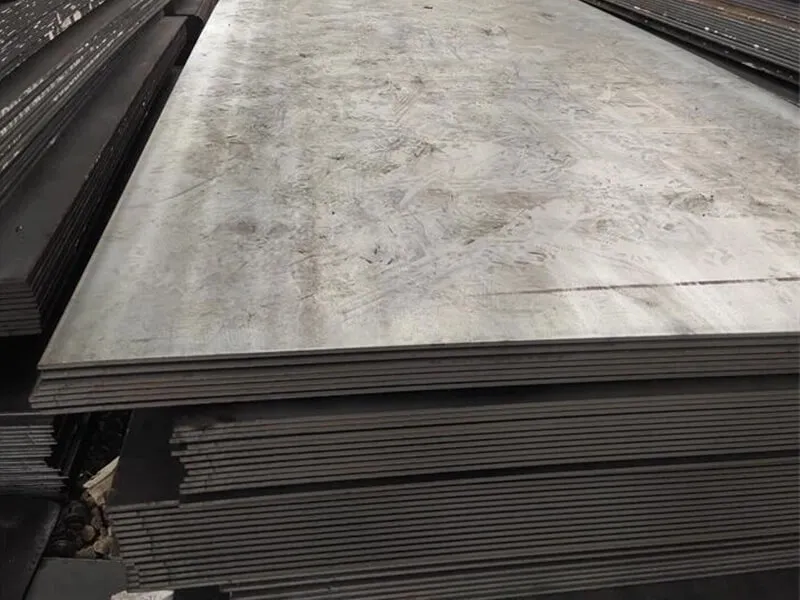
When you are sourcing steel for a project, you need more than just a name. You need to know exactly what works. Many buyers come to me confused by all the letters and numbers. They see "Grade A" and "AH36" and wonder which one their contractor really needs. Let me break this down for you. I will explain the different types, so you can order with confidence.
What steel is used for ship hulls?
I remember talking to a buyer from Mexico last year. He was frustrated. His previous supplier sent him plates, but the surface finish was poor. He told me, "We had to reject half the shipment." The problem started with the wrong steel choice. So, what steel should you use?
Ship hulls are made from carbon-manganese steels1 that are specifically designed for welding and harsh marine environments [citation:7]. The most common types are "mild" steels for general use and "high-strength low-alloy" (HSLA) steels for areas that need to handle more stress, like the top of the hull or the bottom of the ship [citation:9].
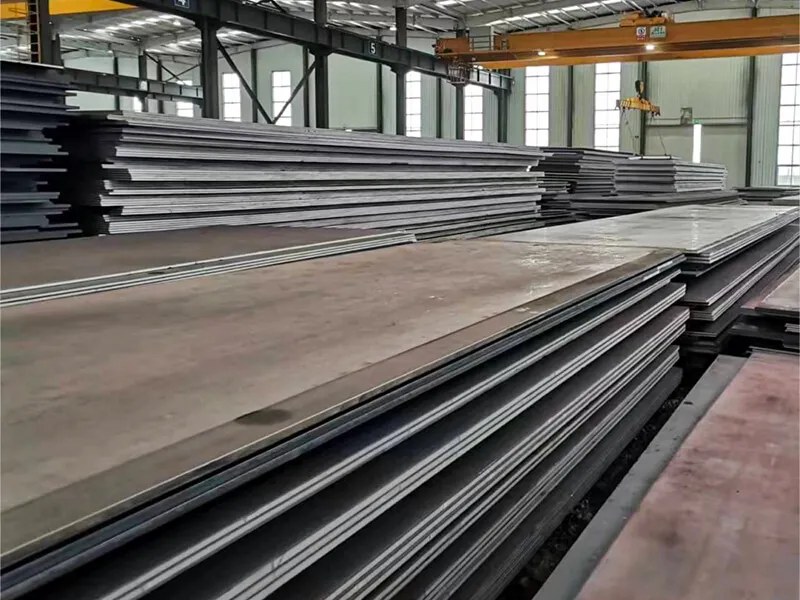
Breaking Down the Steel Types
To really understand this, we need to look at the two main families of steel used in shipbuilding. They are not the same. Choosing between them affects your cost, the weight of the ship, and how long it will last.
General Strength Steel2 vs. High Strength Steel3
The table below shows the key differences. This is what I use when helping clients like you decide on their inventory.
| Feature | General Strength Steel | High Strength Steel |
|---|---|---|
| Grades | A, B, D, E | AH, DH, EH, FH (e.g., AH32, DH36, EH40) [citation:10] |
| Yield Strength | Minimum 235 MPa [citation:10] | Minimum 315 MPa to 390 MPa+ [citation:7][citation:10] |
| Typical Use | Less critical, lighter stressed parts of the hull | High-stress areas like the keel, deck, and upper sides |
| Cost | Lower | Higher |
| Benefits | Good weldability, widely available | Higher strength-to-weight ratio, allows for thinner plates |
The choice here is often a balancing act. For example, using high strength steel like DH36 in the top part of a ship allows you to use a thinner plate. This reduces the total weight of the vessel. A lighter ship can carry more cargo. It also uses less fuel. However, you pay more for the steel itself.
But it is not just about strength. The steel also has to handle cold temperatures. If your client is building a ship that will sail in the North Atlantic, the steel needs to be tough in freezing water. This is where the letters come in [citation:2].
- Grade A and B: These are for warmer climates or less critical parts.
- Grade D4: This steel is impact-tested at -20°C. It is for areas that face colder conditions [citation:2].
- Grade E5: Tested at -40°C, this is for the most critical parts of ships operating in very cold waters [citation:2].
- Grade F: This is the toughest, tested at -60°C, often used for offshore installations in Arctic regions [citation:2][citation:10].
When you ask "What steel is used?", you must also ask "Where is the ship going?" A buyer in Saudi Arabia might only need Grade A or B for a local dhow. But a buyer in Romania building a ship for a Russian client will need DH or EH grades. We always ask this question to make sure we quote the right material.
What are the grades of hull steel?
You might see a grade like "AH361" and wonder what it all means. It looks like a secret code. I had a client from Pakistan once ask me, "Zora, what is the difference between A36 and AH36? They look the same to me." They are not the same. Let me give you the key.
Hull steel grades are defined by a combination of their strength (the number) and their toughness or quality (the letter) [citation:7][citation:10]. The letter (A, D, E, F) tells you the steel’s impact resistance at low temperatures. The number (32, 36, 40) tells you the minimum yield strength2 in kilograms per square millimeter, which roughly translates to 315, 355, and 390 MPa [citation:7][citation:10].
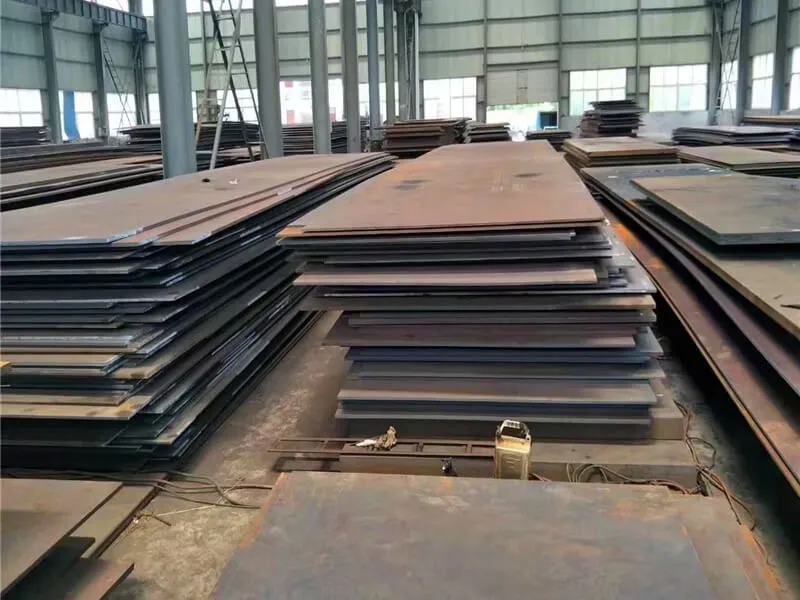
Cracking the Code: The Naming System
Let’s use a real-world example. A buyer in Qatar might need DH363 for a project. Here is how we decode it:
- The First Letter (Toughness): "D" means this steel is tested to be tough at -20°C. It will not become brittle and crack in cold weather [citation:2].
- The Second Letter (Strength Level): "H" stands for "High Strength." This separates it from the general strength steels (A, B, D, E) [citation:10].
- The Number (Strength): "36" means the minimum yield strength is 355 MPa [citation:10]. (The number 36 comes from an older unit of measurement).
So, DH36 is a high-strength steel with a yield point of 355 MPa, guaranteed to perform in temperatures as low as -20°C.
The Impact of Manufacturing: Q&T vs. TMCP
Beyond the grade, how the steel is made matters a lot. There are two main modern processes. A recent study compared them and found big differences [citation:1].
-
Quenched and Tempered (Q&T) Steel4:
- Process: The steel is heated and then quickly cooled (quenched), followed by reheating (tempering) [citation:1].
- Result: It has the highest strength and the best resistance to corrosion [citation:1].
- Trade-off: It is less ductile, meaning it does not stretch as much before breaking [citation:1]. This is often used for very specialized, high-strength applications.
-
Thermo-Mechanical Controlled Processed (TMCP) Steel5:
- Process: This uses very precise temperature control during rolling [citation:1].
- Result: It meets all the strict standards for shipbuilding. It has a fantastic balance of strength, the ability to bend (ductility), and the ability to absorb impact energy [citation:1]. In fact, in the study, the TMCP steel (EH36) was the best all-around performer for ship construction [citation:1].
- Why it matters: For most of my clients, like project contractors in Malaysia or fabricators in the Philippines, TMCP steel like EH36 is the optimal choice. It is reliable, tough, and welds well.
So, when you are looking at grades, remember that the letter and number are just the start. You also need to know if it is TMCP, normalized, or Q&T. This affects how it performs in your client’s shipyard.
Which is better, S2751 or S3552?
A new buyer from Thailand once asked me this. He was used to buying structural steel for buildings. He thought S355 was always the best choice. But for a ship, the "best" steel depends entirely on where and how it is used. There is no single "better" option.
In the context of shipbuilding, S355 is generally considered "better" than S275 because it is stronger. S355 has a minimum yield strength of 355 MPa, while S275 has 275 MPa [citation:6]. This higher strength allows for the use of thinner plates, saving weight. However, S275 might be perfectly adequate for internal structures that face less stress.
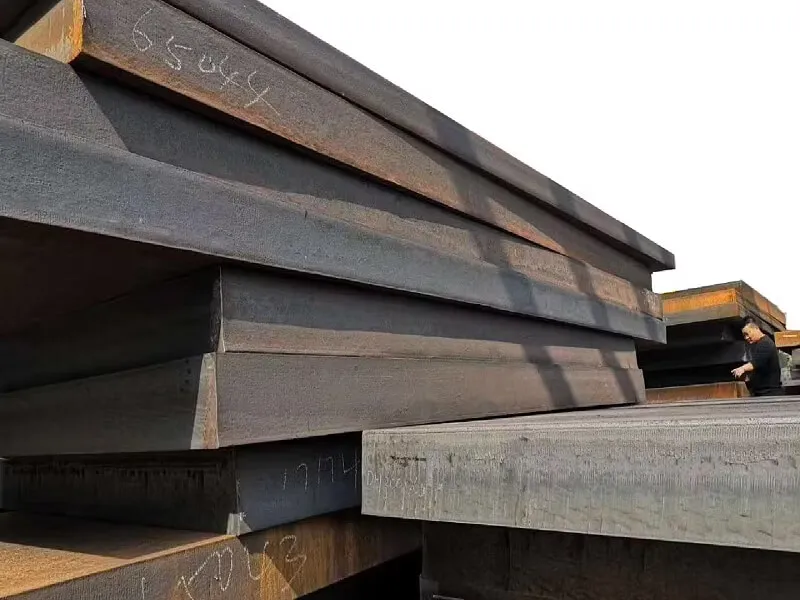
Performance Under Pressure
A 2024 study tested these two grades in structural connections. They wanted to see how they held up under load [citation:3]. The results were clear.
- S355 withstood a maximum load of 19.9 kN.
- S275 withstood a maximum load of 18.6 kN [citation:3].
That means the S355 connection was about 7% stronger in that test.
But strength is not everything. Weldability3 is critical in shipbuilding. Both S275 and S355 are considered very weldable. However, S355, with its higher carbon equivalent, might require more care, like pre-heating, in thick sections to prevent cracking. S275 is often more forgiving for simpler workshops.
Cost vs. Performance4
For you, as a wholesale buyer, the decision often comes down to the final application.
- Choose S275 if: The part is not structural, like a non-critical bracket or an internal partition. It will save your client money.
- Choose S355 if: The part is a load-bearing member, like a deck plate or a bulkhead. The extra cost is justified by the safety and performance.
I always advise my clients to check the shipyard’s specifications. If the designer calls for S355, you cannot substitute S275 just to save a few dollars. It could compromise the vessel’s safety. On the other hand, if the spec says "mild steel," S275 is often a perfect and cost-effective match.
What grade of steel is used for structural steel?
This is a broad question. In our world of marine construction, "structural steel" is everywhere. It is in the frames, the beams, and the stiffeners that hold the hull plates together. The answer is simple, but the details are important.
For the main structural framework of a ship or offshore installation, we typically use the same grades we use for the hull plating: the high-strength grades like AH32, DH36, and EH40 [citation:10]. For specific shapes, like our Marine Angle Steel or Bulb Flat Steel, these are almost always made from these certified marine grades.
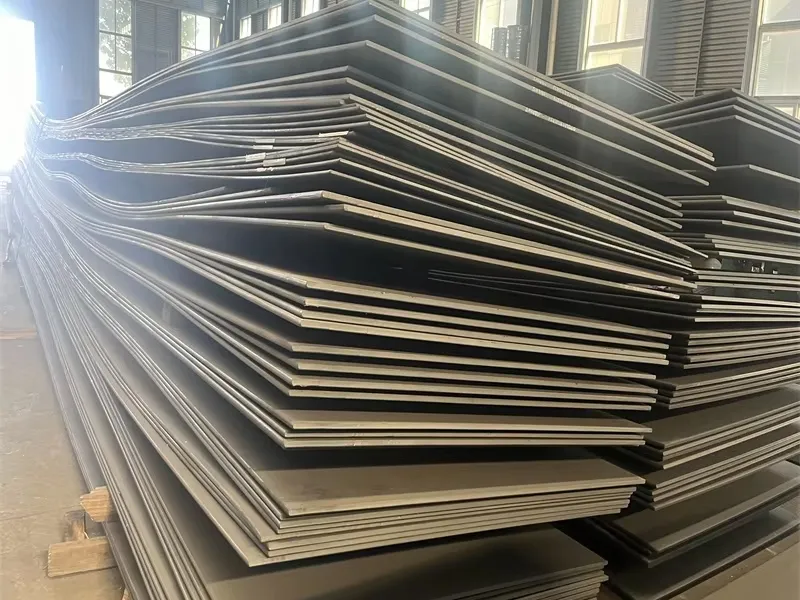
From Plate to Profile
The steel for structural shapes must meet the same strict standards as the plates. A bulk carrier built in Vietnam, for example, will use DH36 plates for the hull and also DH36 angle bars for the stiffeners. This consistency is key.
There is also a European standard, EN 100251, which defines structural steels like S235, S275, and S355 [citation:6]. You will often see these grades specified for offshore platform topsides or other marine structures that are not part of the water-tight hull.
Why Certification is Non-Negotiable
This is where my insight as a supplier comes in. When you buy structural steel for a marine project, the grade is just one part. The certification is just as important. A buyer from Saudi Arabia once told me his biggest pain point was inconsistent quality. He would get a mill certificate saying it was Grade A, but the steel looked different every time.
That is why we only work with certified mills2. Every batch of our marine steel plate and angle steel comes with full mill certificates, and we always offer SGS inspection support3. This means when you order DH36 from us, you know it is DH36. The chemical composition will be right, and the mechanical properties will be right. The carbon content will be low, usually below 0.18%, to ensure it welds properly [citation:1][citation:10]. The manganese will be carefully controlled to add strength [citation:1]. This is what "structural steel" for a ship really means. It is a promise of performance, backed by a paper trail.
Conclusion
Choosing the right steel grade for ship hulls is about matching the material to the environment and the stress. Remember the letters A, D, E, and F for toughness, and the numbers 32, 36, and 40 for strength.
-
Learn about the EN 10025 standard to grasp the specifications and classifications of structural steels used in various industries. ↩ ↩ ↩ ↩
-
Discover why sourcing from certified mills ensures quality and consistency in structural steel for marine projects. ↩ ↩ ↩ ↩
-
Find out how SGS inspection support enhances the reliability of steel certification and ensures compliance with industry standards. ↩ ↩ ↩ ↩
-
Discover strategies to optimize your steel choices based on cost and performance for various applications. ↩ ↩ ↩
-
Discover the benefits of TMCP steel for shipbuilding and why it’s favored for its balance of strength and ductility. ↩ ↩