
Your bulb flat steel arrives, but the real test of its quality isn’t just a visual check. The most important evidence comes with the paperwork. I’ve seen shipments rejected because the MTC was incomplete, causing costly project delays for a client in the Philippines.
You must check the Mill Test Certificate (MTC) for bulb flat steel to verify the material grade, heat number, chemical composition, mechanical properties (yield/tensile strength), impact test results (for marine grades), and that it matches the product markings and your purchase order specifications. This document is your legal proof of quality and compliance.
For our B2B clients in shipbuilding and marine construction, the MTC is not a formality. It’s the material’s passport. A proper check separates reliable suppliers from risky ones. Let’s break down exactly what to look for, starting with understanding the document itself.
What does a mill test certificate look like?
Imagine receiving a handwritten note claiming your steel is grade AH36. You would not trust it. A proper MTC has a specific, professional format that gives you confidence. A contractor in Saudi Arabia once received a suspiciously simple "certificate" that turned out to be fake.
A legitimate Mill Test Certificate is a formal document, usually on the mill’s official letterhead. It contains structured tables with the mill’s name, customer and order details, product description (size, grade, heat number), and detailed test results for chemical composition and mechanical properties. It often includes stamps, signatures, and a unique certificate number.
Anatomy of a Standard MTC: Section by Section
While designs vary by mill, all credible MTCs share common sections. Think of it as a medical report for your steel.
1. The Header: Identity and Traceability
This section establishes the document’s origin and links it to your order.
- Mill/Producer Name & Logo: Clearly identifies the manufacturing mill (e.g., Shandong Steel Group). This is crucial. You are buying from this mill, not just a trader.
- Certificate Title: Clearly states "Mill Test Certificate," "Test Report," or "Material Certificate."
- Certificate Number: A unique ID for tracking and verification. You can reference this number if you have questions.
- Issue Date: When the certificate was produced.
2. Order & Customer Information
This links the steel to your commercial transaction.
- Purchase Order Number: Your PO# or your supplier’s PO# to the mill.
- Customer Name: This could be your company or your supplier’s company if they ordered directly.
- Consignee: The final receiver of the goods (often you).
3. Product Description & Identification
This describes the physical material tested.
- Product: e.g., "Bulb Flat Steel," "Hot Rolled Steel Bar."
- Grade: The material standard (e.g., "ASTM A36," "ABS Grade AH36," "EN 10025 S355J2").
- Dimensions: The profile size (e.g., "Bulb Flat 200 x 10 mm").
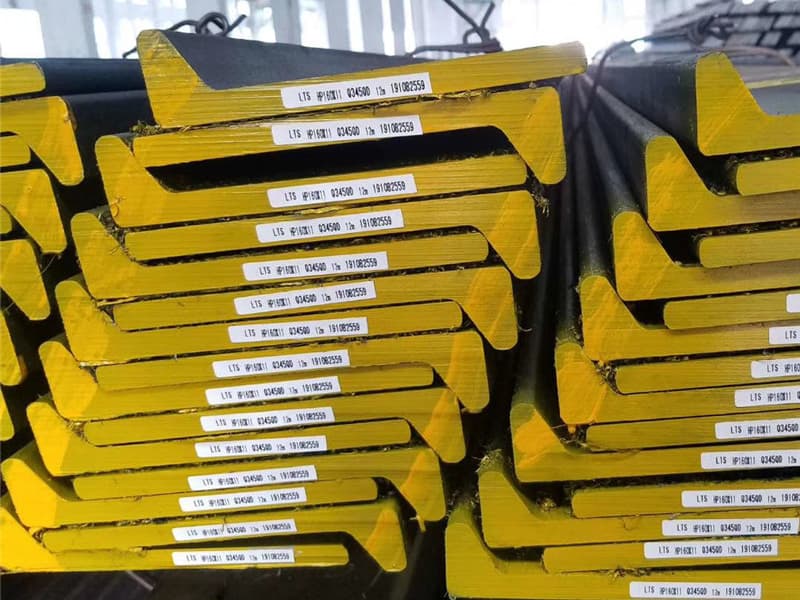
- Heat Number / Melt Number / Cast Number: This is the single most important traceability code. It identifies the specific batch of molten steel from which your material came.
4. The Test Results (The Core)
This is the evidence of quality.
- Chemical Composition Table: Lists elements like Carbon (C), Manganese (Mn), Silicon (Si), Phosphorus (P), Sulfur (S), and sometimes others. Each will have a "Result" column and a "Standard Requirement" column for the grade.
- Mechanical Properties Table: Lists:
- Yield Strength (Rp0.2): The stress at which the steel begins to deform permanently. Must meet the grade minimum.
- Tensile Strength (Rm): The maximum stress the steel can withstand before breaking.
- Elongation (A5 or A50): The percentage the steel stretches before fracture, indicating ductility.
- Impact Test Results (for marine/structural grades): Shows the energy absorbed (in Joules) in a Charpy V-notch test at a specified temperature (e.g., -20°C). This proves toughness.
5. The Footer: Authentication
- Statement of Compliance: A sentence declaring the material conforms to the stated standard.
- Authorized Signature & Stamp: A quality manager’s signature and the mill’s official stamp. This makes it an official document.
Here is a visual guide to the key areas:
| MTC Section | What to Find There | Why It Matters to You |
|---|---|---|
| Header | Mill Name, Cert. Number, Date. | Confirms the source and provides a reference for queries. |
| Product Info | Grade, Size, Heat Number. | Must match exactly what you ordered and what is marked on the steel. |
| Chemical Analysis | C, Mn, Si, P, S percentages. | Verifies weldability and corrosion resistance. High P/S can cause brittleness. |
| Mechanical Properties | Yield Strength, Tensile, Elongation. | Proof the steel has the strength you paid for. |
| Impact Test | Joules @ Temperature (e.g., 80J @ -20°C). | For marine steel, this is critical for safety in cold environments. |
| Stamp/Signature | Mill’s official mark. | Authenticates the document. A scanned signature is acceptable for copies. |
When we send MTCs to clients in Vietnam or Mexico, we ensure they are clear, complete, and in English. This transparency is part of the "stable quality" our clients, like Gulf Metal Solutions, require. But what standards define what should be in this report?
What is the standard of Mill Test Report?
You might get different-looking MTCs from different mills. This can be confusing. However, they are all guided by overarching international standards that define the minimum required information. A shipyard in Romania rejected a report because it lacked impact test data, which was mandatory for their ABS-grade steel.
There is no single universal format, but the content of a Mill Test Report is governed by material standards (like ASTM A6, EN 10204) and classification society rules (like ABS, LR). The standard ensures the report includes mandatory data: heat number, chemical analysis, mechanical test results, and a statement of compliance with the ordered specification. The format is less important than the completeness of this required data.
The Governing Rules: Material Specs and Certification Types
The "standard" for the report comes from two places: the material standard for the steel itself, and the certification standard for the document.
1. The Material Standard (Defines WHAT is tested)
This is the standard you ordered, e.g.:
- ASTM A36: Standard Specification for Carbon Structural Steel.
- ABS Rules for Materials & Welding: For AH36 steel.
- EN 10025-2: For S355J2 steel.
These standards specify the limits for chemistry and the minimum values for mechanical properties. The MTC must show test results that fall within these limits.
2. The Certification Standard (Defines the TYPE of document)
EN 10204 is a key European standard that classifies inspection documents. It helps you understand the level of assurance:
- EN 10204 Type 2.1: A "Statement of Compliance" issued by the mill’s own production department. It declares conformity but does not list specific test results.
- EN 10204 Type 2.2: A "Test Report" with specific test data (chemical, mechanical) taken from mill records. It is issued by the mill’s authorized inspection representative. This is the most common and accepted type for general steel orders.
- EN 10204 Type 3.1 & 3.2: An "Inspection Certificate" where an independent, third-party inspector (not employed by the mill) verifies the tests and results. This provides the highest level of assurance and is often required for critical nuclear, aerospace, or pressure vessel applications.
What a Compliant MTC Must Include (The Checklist):
Regardless of the standard name, a proper MTC for bulb flat steel must have:
- Traceability: Unique heat number linking the report to the physical product.
- Full Chemical Analysis: For all elements specified in the material standard.
- Complete Mechanical Tests: Yield strength, tensile strength, elongation.
- Supplementary Tests if Required: For marine grades, this is the Charpy Impact Test at the specified temperature.
- Statement of Conformity: A clear declaration that the material meets the requirements of the stated standard (e.g., ASTM A36, ABS AH36).
Comparison of Common Certification Levels:
| Document Type | Who Issues It? | Information Provided | Typical Use Case |
|---|---|---|---|
| Commercial Invoice / Packing List | Seller/Supplier | Only quantity, description, value. | Not a quality certificate. For customs and payment only. |
| EN 10204 2.1 (Statement) | Mill’s Production Dept. | Declares conformity, no test data. | Less critical applications; basic verification. |
| EN 10204 2.2 (Test Report) – MOST COMMON | Mill’s Quality Dept. | Specific test results for the heat/ batch. | Standard for marine & structural steel. Provides the necessary proof for shipyards and fabricators. |
| EN 10204 3.1/3.2 (Inspection Cert.) | Independent 3rd Party (e.g., Surveyor) | Test results verified and certified by an external authority. | For the most critical applications (e.g., offshore platforms, nuclear). |
For our export clients, we always provide an EN 10204 2.2 equivalent MTC (or better) as a minimum. It contains the specific data from the heat that produced their bulb flats. This meets the requirements of even the most results-driven buyers. Now, let’s clarify the common terminology around this document.
What is a MTC mill test certificate?
The terms "MTC," "mill certificate," "test report," and "material certificate" are used all the time, often interchangeably. This can cause confusion about what you are actually receiving. A wholesaler in Thailand once argued they didn’t get an "MTC," but they had received a perfectly valid "Test Report" with all the data.
An MTC (Mill Test Certificate) is an official document from the steel producer that provides verified test results for a specific batch of material. It certifies that the steel meets the chemical and mechanical requirements of a published standard (like ASTM or ABS). It is the primary quality assurance document that travels with the steel from the mill to the end user. It is not a guarantee from the trader or supplier, but from the original manufacturer.
Demystifying the Terminology and Purpose
Understanding what an MTC is—and what it is not—is fundamental to being an informed buyer.
Core Definition: A Record of Verified Properties
An MTC is not a promotional brochure. It is a factual record of tests performed on the steel while it was being made. The mill tests samples from each "heat" (batch of molten steel). They record the results. When the steel from that heat is rolled into products (like bulb flats), the mill issues the MTC for that heat.
Why the MTC is Non-Negotiable:
- Proof of Conformity: It is your evidence that the material is what the supplier claims. If you ordered ABS AH36 bulb flats, the MTC must show chemistry and strength values within the ABS AH36 limits.
- Traceability for Safety: In the unlikely event of a failure, the heat number on the MTC allows you to trace the problem back to the specific production batch. This is critical for recalls or investigations.
- Requirement for Fabrication: Welding procedure specifications (WPS) rely on the steel’s known chemistry. Your welding team needs the MTC to set their machines correctly and avoid weld cracks.
- Classification Society & Client Approval: Shipyards and project owners will audit the MTCs before approving the steel for use.
What an MTC is NOT:
- It is not a certificate from the trading company. The trading company (like us) supplies it, but it must be issued by the mill.
- It is not a guarantee of dimensional accuracy. The MTC certifies the material properties. Dimensional checks are separate, though some MTCs may list nominal sizes.
- It is not a replacement for your own incoming inspection. You must still check that the delivered steel’s markings match the heat number on the MTC.
The Document Chain of Custody:
| Document | Issued By | Purpose & Relation to MTC |
|---|---|---|
| Mill Test Certificate (MTC) | Steel Producing Mill | The source of truth. Certifies material properties for a specific heat. |
| Certificate of Conformity (CoC) | Often the Supplier/Exporter | A declaration that the supplied goods (including packaging, docs) conform to the contract. It references the MTC. |
| Third-Party Inspection Report (e.g., SGS) | Independent Inspection Company | Verifies that the goods on-site match the order and the MTC. It does not replace the MTC. |
When clients ask us for an MTC, we immediately provide the original or a certified true copy from our partner mill. This fast response and clear documentation build the trust that our client from Saudi Arabia valued so highly. The heart of this traceability is a single code: the heat number.
What is the heat number1 on a mill certificate?
You have the MTC and the steel. How do you prove they belong together? The heat number1 is the crucial link. I once helped a client in Qatar resolve a dispute because the heat number1 on a few bundles didn’t match the MTC, proving they were from a different, unapproved batch.
The heat number1 (also called melt or cast number) is a unique alphanumeric code assigned to a single batch of molten steel in the furnace. On the Mill Test Certificate2, it identifies the exact origin of the tested material. On the steel itself, it is marked on each bundle or piece, creating an unbreakable link between the physical product and its certified properties. It is the DNA of your steel batch.
The Critical Role of the Heat Number in Quality Assurance
The heat number1 is the cornerstone of material traceability3. From the mill to your project, it tells the story of that steel.
How a Heat Number is Created and Used:
- At the Melt Shop: When raw materials are melted in a furnace (Electric Arc Furnace or Basic Oxygen Furnace), that batch of liquid steel is given a unique identifier—the heat number1.
- Sampling and Testing: While the steel is still molten, samples are taken. These samples are analyzed for chemical composition4. The results are recorded against this heat number1.
- Casting and Rolling: The molten steel from that heat is cast into slabs or blooms. These are then rolled into final products like bulb flats. Throughout this process, the material is tracked by its heat number1.
- Marking the Product: Before shipment, the mill paints or stamps the heat number1 (along with the grade and size) on the steel bundles or pieces.
- Issuing the MTC: The mill generates the MTC for that specific heat number1, reporting all the test results from step 2.
Why You MUST Verify the Heat Number Match:
This is a simple but vital step in your delivery inspection.
- Step 1: When the steel arrives, find the painted heat number1 on the bundles.
- Step 2: Open the MTC and find the heat number1 listed in the "Product Identification" section.
- Step 3: They must be identical. If they are different, it means the MTC in your hand is for a different batch of steel. The steel you received is not certified by that document.
What if the Numbers Don’t Match?
This is a serious non-conformance. Possible reasons:
- Mixed Batches: Your shipment contains steel from more than one heat. You should have an MTC for each heat number1 present.
- Document Error: The wrong MTC was sent. You need to request the correct one.
- Substitution: An uncertified or different grade of steel was shipped.
Your action is clear: Do not accept the material. Contact your supplier immediately with photos of the mismatched markings. A reputable supplier will resolve this quickly.
Information Tied to the Heat Number:
When you have the correct heat number1, you can access or confirm a complete history:
| Information Point | How it’s Linked to the Heat Number |
|---|---|
| Chemical Composition | The MTC shows the exact chemistry for this heat. |
| Mechanical Properties | The tensile and yield strength results are for this heat. |
| Impact Test Results | The Charpy values are for samples from this heat. |
| Production Date & Shift | The mill’s internal logs record when this heat was made. |
| Raw Material Source | Advanced mills can trace which raw materials went into this heat. |
For our clients, this traceability is part of the "SGS inspection support5" we offer. An SGS inspector will specifically check that the heat number1s on the steel match the MTCs before approving shipment from our warehouse. This final verification closes the loop, ensuring that the certified quality on paper is the exact quality you receive in your yard in Malaysia, Mexico, or anywhere else.
Conclusion
A thorough check of the Mill Test Certificate—focusing on grade, heat number, test results, and their match to the physical steel—is the definitive step to ensure your bulb flat steel meets all required specifications for safety and performance.
-
Understanding the heat number is essential for ensuring material traceability and quality assurance in steel production. ↩ ↩ ↩ ↩ ↩ ↩ ↩ ↩ ↩ ↩ ↩ ↩ ↩ ↩ ↩
-
Explore the details of a Mill Test Certificate to understand how it verifies the quality and origin of steel products. ↩
-
Material traceability ensures compliance and safety in construction, making it crucial for project success. ↩
-
Learn about the testing processes for chemical composition to ensure the quality and safety of steel products. ↩
-
Find out how SGS inspection support enhances quality assurance and compliance in steel supply chains. ↩