
When you order marine steel plates, you expect them to arrive as specified. But I have seen too many projects delayed because the certificates did not match the material. One wrong document can stop an entire ship build.
Certification consistency matters because it proves your steel meets the exact requirements of the design, the class society, and the final inspection. Without it, you risk rejection, rework, and serious safety concerns.
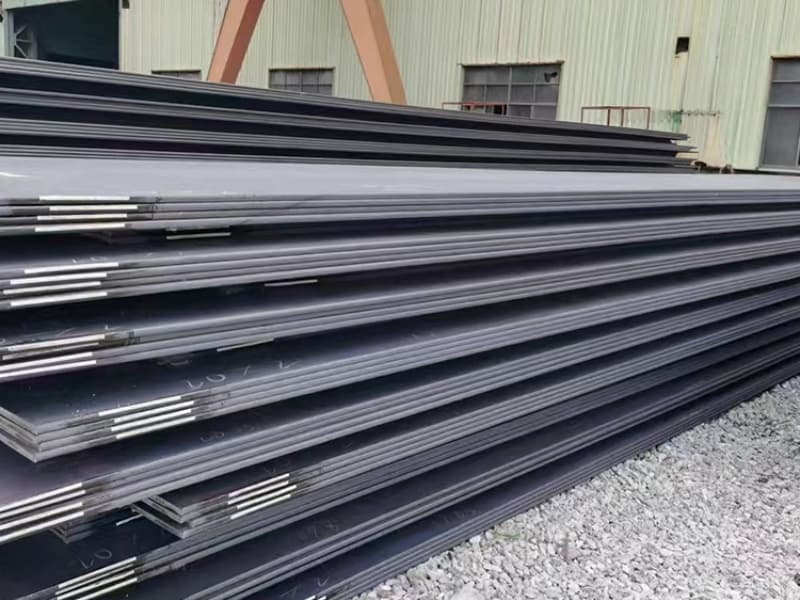
You might think all steel certificates are the same. But in my daily work helping clients from Vietnam to Mexico, I see the confusion caused by mismatched paperwork. That is why I want to break down the key questions I hear most often. These answers come from my own experience supplying plates to shipyards and fabricators around the world.
Why is it important to identify the relevant ISO standard1 for certification?
Imagine you receive a container of steel plates, and the certificate shows a standard you do not recognize. The port holds your cargo, and your client refuses payment. This is not a rare story.
Identifying the correct ISO standard is important because it connects your material to a globally accepted language of quality. It ensures the steel meets the mechanical properties and chemical composition required for marine use.
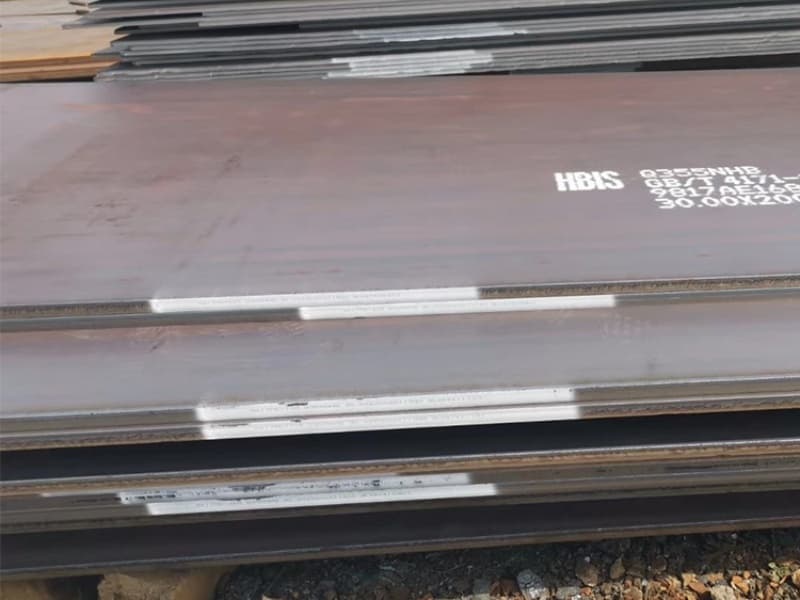
What does "ISO standard" really mean for marine steel?
When I talk to buyers, many assume one ISO certificate covers everything. That is not true. In the marine industry, we deal with multiple standards that work together. Let me break down the ones I check for every order.
First, there is the management standard, like ISO 90012. This shows the mill has a quality management system. But it does not guarantee the steel grade itself. For that, we need product standards3. For marine plates, these are often set by classification societies, but they reference ISO or equivalent standards (like EN, ASTM, or JIS).
The key connection: The certificate you receive must show the steel was tested according to a recognized product standard, and the mill must be approved by the relevant class society (like ABS, DNV, LR, or BV).
In my orders, I always confirm three things:
- Mill Approval4: Is the mill approved by the buyer’s required class society?
- Product Standard: Does the certificate state the correct grade and standard (e.g., Grade A to ASTM A131)?
- Traceability5: Can the heat number on the plate be traced back to the certificate?
I learned this lesson years ago when a client in Pakistan almost rejected a shipment because the certificate format was different. We had to spend days proving the steel was correct. Now, we send a sample certificate for approval before we even cut the steel.
Why consistency across multiple certificates matters
When you order steel for one project, you might receive several shipments. If the certification standards change between shipments, it creates a nightmare for your quality control team.
Consider this example from a real project:
| Shipment | Mill Used | Certificate Standard | Issue Found |
|---|---|---|---|
| 1 | Mill A | ASTM A131 | Accepted |
| 2 | Mill B (our sub-supplier) | GB/T 712 (Chinese standard, but not clearly cross-referenced) | Rejected by inspector because they only recognized ASTM |
The steel chemistry was almost identical. But because the certificate did not state the equivalent ASTM grade clearly, the project stalled. This is why I work only with mills that understand international requirements. They issue certificates that cross-reference the required standard, so there is no confusion.
At our company, we handle this by:
- Pre-shipment checks: We review the certificate draft with the client.
- SGS support6: We can have a third party verify the steel against the certificate before it leaves China.
- Standardized documentation: We use a format that highlights the class society approval and the product standard.
This attention to certification consistency is exactly what Gulf Metal Solutions in Saudi Arabia appreciated. They had faced delays before with unclear paperwork. With us, they got clear, consistent certificates from day one.
What are the grades of marine steel plates1?
You walk into a steel yard, and you see plates marked A, B, D, AH32, DH36. It looks like alphabet soup. Pick the wrong one, and your weld could crack in cold water.
Marine steel plates are graded by their strength and their ability to withstand impact at different temperatures. The grades range from ordinary strength (A, B, D, E) to higher strength (AH32, DH36, EH40, and so on).
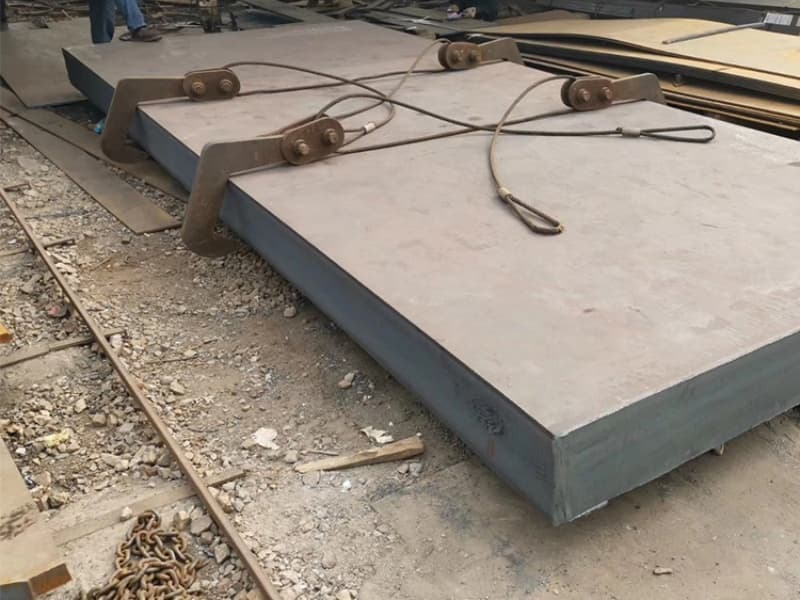
A deeper look into marine steel grades
I often explain grades to my clients by comparing them to clothing sizes. You have small, medium, large (ordinary strength), and then you have specialized fits for extreme conditions (higher strength). But in steel, the "size" is about tensile strength and toughness.
Ordinary Strength Grades:
These are the most common. They are used for parts of the ship that do not face the highest stress.
- Grade A: The baseline. Good for internal structures. No impact test required.
- Grade B: Slightly tougher than A. Used where more confidence is needed.
- Grade D: Requires impact testing at 0°C. Used for shell plates and other critical areas.
- Grade E: The toughest in this group. Tested at -40°C. For the most critical areas like bilge strokes.
Higher Strength Grades:
These have "H" in their name and a number indicating minimum yield strength2 (in ksi).
- Grade AH32, DH32, EH32: Yield strength of 315 MPa. The letter before H (A, D, E) again indicates the impact test temperature3.
- Grade AH36, DH36, EH36: Yield strength of 355 MPa. This is a very popular choice for modern shipbuilding.
- Grade AH40, DH40, EH40: Even higher strength, at 390 MPa.
Here is a simple table I use with clients:
| Grade Designation | Yield Strength (min, MPa) | Impact Test Temperature | Typical Use |
|---|---|---|---|
| A | 235 | Not required | Decks, superstructures |
| B | 235 | Not required | Inner bottom |
| D | 235 | 0°C | Shell, strength deck |
| E | 235 | -40°C | Critical structural parts |
| AH36 | 355 | 0°C | Hull structure, offshore |
| DH36 | 355 | -20°C | Same, but for colder areas |
| EH36 | 355 | -40°C | Ice-class vessels, North Sea |
How we help clients choose the right grade
When a project manager from a shipyard calls me, they usually know the grade. But sometimes, a fabricator in the Philippines might be bidding on a project and ask for advice. I share what I have learned from supplying plates for bulk carriers and oil tankers.
The choice depends on:
- Design Requirements: The engineering drawings specify the grade. Do not guess.
- Classification Society4: The class (DNV, ABS, etc.) has rules for which grade must be used in which part of the vessel.
- Service Temperature: Will the ship sail in tropical waters or the North Atlantic? This dictates the impact test temperature (A, D, or E).
- Thickness: Thicker plates often require a higher grade or better toughness (e.g., D or E) to ensure through-thickness properties.
For Gulf Metal Solutions, they regularly order AH36 for structural projects. They trust us to supply plates that are certified to the correct grade by the mill, with full traceability. We keep stock of common grades like A, B, and AH36 in our Liaocheng warehouse so we can ship fast.
What are the 4 classification of steel?
You ask a metallurgist this question, and they start talking about crystal structures. You ask a shipbuilder, and they talk about strength. The truth is, steel classification can be confusing because there are different ways to group it.
The four main classifications of steel, based on chemical composition1, are: carbon steel, alloy steel, stainless steel, and tool steel. For marine applications, we are almost always dealing with carbon steel or high-strength low-alloy (HSLA) steel.
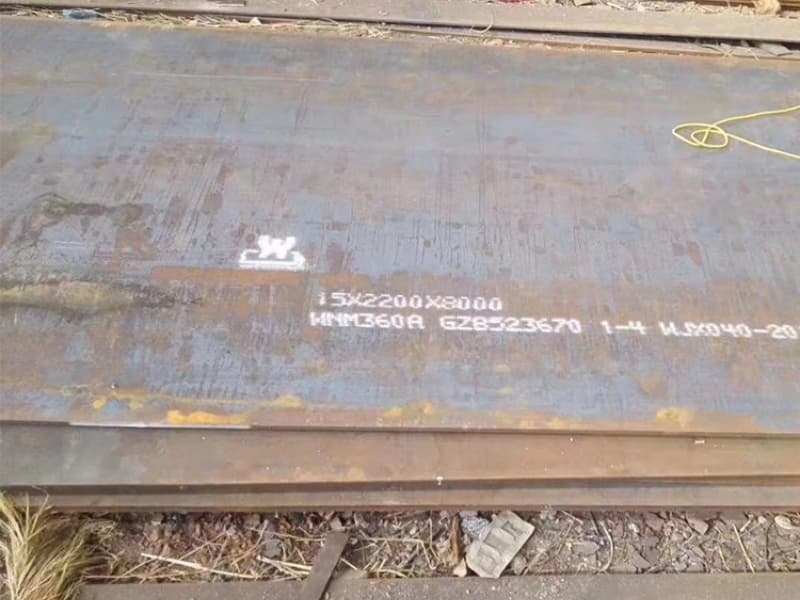
Breaking down the four classifications for practical use
In my daily conversations, I rarely talk about tool steel. But it helps to understand the big picture so you know why marine steel behaves the way it does. Let’s look at each one.
1. Carbon Steel2
This is the workhorse. It contains iron and carbon, with small amounts of other elements. Marine plates like Grade A are carbon steel. The carbon content affects hardness and weldability. For ship plates, we keep carbon low (usually below 0.23%) so it welds easily.
2. Alloy Steel3
Here, we add elements like chromium, nickel, or molybdenum to improve specific properties. The high-strength marine grades (AH36, DH36) are considered HSLA steels – a type of alloy steel. They have small additions of elements like manganese, niobium, or vanadium to boost strength without making the steel brittle.
3. Stainless Steel4
This contains at least 10.5% chromium, which forms a protective layer against rust. You rarely build the whole hull from stainless because it is too expensive. But you might use it for cargo tanks in chemical tankers or for fittings. We do not focus on stainless at our company, but we know where it fits.
4. Tool Steel5
This is designed to make tools and dies. It is hard, wear-resistant, and often contains tungsten or molybdenum. You will not find it in a ship’s hull. I mention it only for completeness.
Why this matters for your order:
When you order marine plates, you are usually ordering carbon steel or HSLA. The key difference is in the chemical composition1 and the rolling process.
Here is a simple comparison table:
| Classification | Main Alloying Elements | Typical Use in Marine | Weldability | Cost |
|---|---|---|---|---|
| Carbon Steel | Carbon, Manganese | Hull plates (Grade A, B) | Excellent | Low |
| HSLA (Alloy) | Manganese, Niobium, Vanadium | High-strength structures (AH36, DH36) | Good | Medium |
| Stainless Steel | Chromium, Nickel | Tanks, piping, fittings | Good | High |
| Tool Steel | Tungsten, Molybdenum | Not used in ship structure | Poor | Very High |
How classification affects the steel you receive
From a practical standpoint, the classification determines the mill’s production route. For HSLA grades, the mill must carefully control the rolling temperature (thermo-mechanical controlled processing, or TMCP) to achieve the strength. This is different from rolling ordinary carbon steel.
I have visited mills in China that produce both types. The TMCP line is more advanced. This is why, when a client needs EH36 for a project in Qatar, I make sure the mill we use has the capability to produce it consistently. We have long-term cooperation with mills that are certified for these advanced processes.
Our typical client, like Gulf Metal Solutions, often needs a mix. They might order Grade A for non-critical parts and AH36 for the main structure. We consolidate these orders and ensure the certificates clearly state the classification and the standard met. This saves them the trouble of dealing with multiple mills.
What is the difference between HR and HRPO steel?
A few years ago, a client in Romania called me, worried. The steel plates arrived, but they looked different from the last batch. One had a dark, bluish surface. The other was bright and shiny. He thought something was wrong.
The difference is simple: HR means hot rolled, with a mill scale surface. HRPO means hot rolled, pickled, and oiled. The dark surface is the scale. The bright surface is the bare steel, protected by a thin layer of oil.
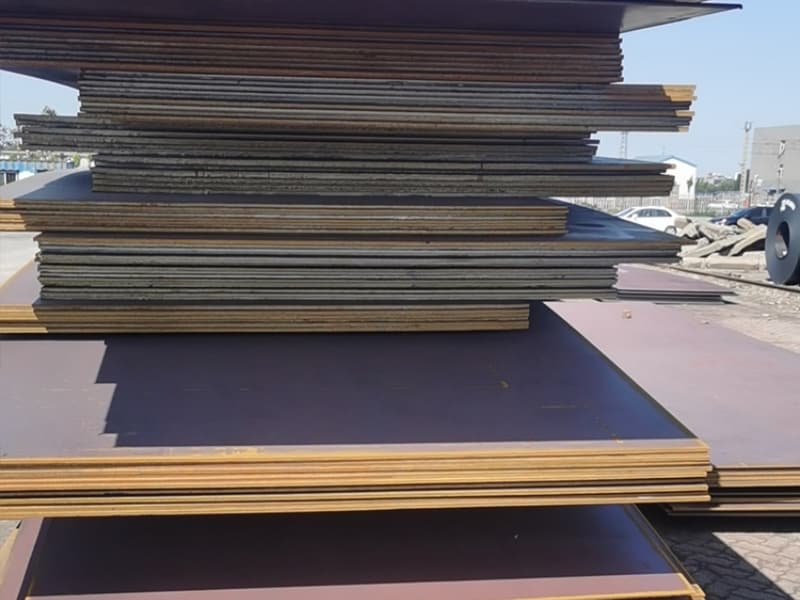
Understanding HR and HRPO in the context of marine plates1
In my work, most marine plates are ordered as HR (hot rolled). Here is why, and when HRPO might be used.
Hot Rolled (HR)2:
When steel is rolled at high temperature, a layer of iron oxide (scale) forms on the surface. This scale is dark and flaky. For shipbuilding, this is usually acceptable because the plates will be blasted (shot-blasted) to remove the scale before painting. The blasting creates a profile for the paint to stick.
Hot Rolled Pickled and Oiled (HRPO)3:
After hot rolling, the plate is run through an acid bath (pickling) to remove the scale. Then it is oiled to prevent rust from forming on the clean surface. HRPO steel is ready to use without blasting, for applications where surface finish4 matters immediately.
Here is a quick comparison:
| Feature | HR (Hot Rolled) | HRPO (Pickled & Oiled) |
|---|---|---|
| Surface | Dark mill scale | Clean, metallic, grey |
| Rust protection | Scale offers temporary protection | Oil layer needed to prevent rust |
| Cost | Lower | Higher (due to extra process) |
| Typical use | Ship hull plates, structural steel | Automotive parts, applications needing clean surface immediately |
| Storage | Can be stored outside short-term | Needs indoor storage |
When does it matter for your marine order?
For 90% of ship plates, HR is the standard. The shipyard will blast the plates anyway. So paying extra for HRPO is not necessary.
But there are exceptions. I had a client in Malaysia who was making small boat components. They did not have a blasting facility. They needed the steel to be clean so they could cut, form, and paint it directly. For them, HRPO was the right choice. We supplied it with a light oil film to protect it during shipping to Port Klang.
Another situation is when plates are stored for a long time before use. The scale on HR plates can sometimes trap moisture and cause pitting corrosion5 under the scale. In humid climates like Myanmar or the Philippines, this is a risk. Some clients prefer HRPO so they can inspect the surface immediately and apply their own primer.
Our approach:
We ask every client: "How will you process the surface?" Based on their answer, we recommend HR or HRPO. For Gulf Metal Solutions in Saudi Arabia, they have their own blasting shop. They order HR plates from us. The consistent quality of our HR surface finish was something they noted in their feedback. They said our packaging was the best they had received, which protects the HR surface during the desert transit to Dammam.
We also support SGS inspection at our warehouse. The inspector can check the surface condition of HR or HRPO before shipment. This gives our clients confidence, especially when they have been burned before by poor surface quality from other suppliers.
Conclusion
Certification consistency and understanding steel basics are not just paperwork. They are the foundation of a safe, efficient project. From choosing the right grade to knowing your HR from HRPO, every detail matters. I help my clients navigate these details so their steel arrives right, every time.
-
Learn about marine plates, their types, and specifications to ensure you choose the right material for shipbuilding and marine applications. ↩ ↩ ↩ ↩ ↩
-
Explore this link to understand the properties and uses of Hot Rolled steel, essential for various construction and manufacturing processes. ↩ ↩ ↩ ↩
-
Discover the benefits of HRPO steel, including its surface finish and applications, crucial for industries requiring high-quality steel. ↩ ↩ ↩ ↩
-
Delve into the significance of surface finish in steel applications, which can impact performance, durability, and aesthetic quality. ↩ ↩ ↩ ↩
-
Explore this resource to learn about pitting corrosion, its causes, and prevention methods to protect your steel investments. ↩ ↩ ↩
-
SGS support provides third-party verification, enhancing trust and reliability in the certification process. ↩