
You order steel plates that seem to meet all the right specifications. The price is good. The delivery date works. Then the class surveyor arrives and rejects everything. Your project stops.
Classification society approval is a mandatory certification that verifies steel plates meet the rigorous safety and quality standards required for classed vessels and offshore structures. Without it, your steel cannot be used in any vessel that needs a class certificate. Rejection means rework, delays, and potentially millions in lost revenue.
I am Zora Guo from cnmarinesteel.com. I have supplied marine steel plates to shipyards around the world. I have seen buyers lose entire shipments because they did not understand class approval requirements. Let me explain why this matters and how to get it right.
What Is Classification Society Approval and Why Is It Mandatory for Classed Vessels and Offshore Structures?
A classification society is an independent organization that sets technical standards for the design, construction, and maintenance of ships and offshore structures. ABS, DNV and LR are the most recognized societies worldwide. Their approval is not a suggestion — it is a legal requirement for any vessel that will operate under a class certificate.
Classification society approval means that an independent surveyor has verified that the steel mill’s manufacturing processes, quality control systems, and finished products meet the society’s rules. The mill must undergo annual audits and testing to maintain approval. When you buy class‑approved steel, you are buying steel that has been independently verified to meet the required chemical composition, mechanical properties, and traceability standards. Without this approval, the steel cannot be used in a classed vessel. The class surveyor will simply refuse to accept it. There is no negotiation.
Let me explain how approval works.
The Approval Process
To obtain class society approval, a steel mill must undergo a rigorous verification process. DNV, for example, requires manufacturers to demonstrate that they have suitable facilities for manufacturing, testing, and inspection, that manufacturing is carried out by qualified personnel, and that constant monitoring of product quality has been established. This is normally done during a test program supervised by a surveyor.
The mill must submit a request for approval, including detailed information about their processes and test plans. The society then audits the mill, witnesses testing, and issues a works approval certificate. The approval is valid for a specific period and must be renewed regularly.
Why It Is Mandatory
For any vessel that will be classed — which includes most commercial ships, offshore platforms, and naval vessels — the steel must come from an approved mill. The class surveyor will check the mill certificate and the stamp on each plate. If the mill is not approved, the steel is rejected. There is no workaround.
The refusal or withdrawal of a class certificate means that the ship is considered to be in danger of structural, system, or equipment failure. Shipowners cannot operate a vessel without a valid class certificate. Insurance, flag state registration, and port entry all depend on it.
Different Societies, Different Rules
Not all class approvals are interchangeable. A plate approved by CCS cannot be used for an ABS‑classed vessel. If your project requires ABS, you must buy steel from a mill with ABS approval. The same applies to DNV and LR.
Each society has its own requirements. ABS may require retesting of mechanical properties even if ASTM A131 already includes them. DNV often mandates through-thickness testing for thick plates. LR imposes stricter traceability and testing, requiring ultrasonic testing for all plates over 15mm.
Which Steel Products (Plates, Angles, Bulb Flats, L‑Sections) Require Class Approval and Which Do Not?
If it goes into a classed vessel’s structure, it needs class approval. If it is non‑structural, it may not.
All structural steel products used in classed vessels require class society approval. This includes marine steel plates, angle bars, bulb flats, and L‑sections. Non‑structural items like handrails, gratings, and temporary supports may not need approval, but any steel that carries load — hull plating, frames, stiffeners, decks, bulkheads — must be class‑approved. The rule is simple: if the steel is welded into the ship’s structure, it needs approval.
Let me clarify what needs approval.
Structural Steel Products That Require Class Approval
| Product | Requires class approval? | Why |
|---|---|---|
| Marine steel plates | Yes | Hull structure, decks, bulkheads |
| Angle bars (L‑sections) | Yes | Framing, stiffening, load distribution |
| Bulb flats | Yes | Stiffening, especially in tankers and bulkers |
| Flat bars (structural) | Yes | Secondary stiffening |
| Sections and bars | Yes | Any structural application |
Approved manufacturers of steel plates, strip, sections, and bars must comply with the society’s rules for manufacture, testing, and certification of materials.
What Does Not Require Class Approval
Non‑structural steel used in temporary works, scaffolding, or non‑load‑bearing components typically does not need class approval. However, if you are unsure, ask your class surveyor before ordering. It is better to ask than to scrap a shipment.
A Real Example
A shipyard in Vietnam ordered angle bars for deck stiffening. The supplier said the steel met AH36 specifications. But the mill was not LR‑approved. The project required LR classification. The angle bars were rejected. The shipyard had to reorder from an approved mill. The delay cost them 6 weeks and $50,000 in idle labor.
What Are the Consequences of Using Non‑Approved Steel – Rejection, Rework, Delays, and Liability?
Using non‑approved steel is not a minor mistake. It is a project‑stopping error with serious financial and legal consequences.
The consequences of using non‑approved steel are severe. First, rejection — the class surveyor will refuse to accept the steel. Second, rework — any structural elements already fabricated with non‑approved steel must be cut out and replaced. Third, delays — reordering approved steel takes 8‑12 weeks, during which your project stops. Fourth, liability — if non‑approved steel causes a structural failure, the shipyard and the steel supplier may face legal action, including civil penalties. In some cases, using non‑approved steel can void the vessel’s insurance. The cost of non‑approved steel is never just the cost of the steel — it is the cost of the delay, the rework, and the risk.
Let me break down each consequence.
Rejection — The Class Surveyor Stops the Project
When the class surveyor arrives, they will check every plate’s stamp and every mill certificate. If the mill is not approved, the steel is rejected. The surveyor will not accept "the steel meets the grade" as a substitute for proper approval. The steel cannot be used.
Rework — Cutting Out and Replacing
If non‑approved steel has already been cut, welded, or installed, it must be removed. This means cutting out structural elements that were already fabricated. The cost of rework is high — often higher than the cost of the steel itself.
Delays — The Production Line Stops
Reordering approved steel takes time. The mill must roll new plates, test them, and ship them. This cycle takes 8‑12 weeks. During that time, your production line stops. Workers sit idle. Cranes wait. The project schedule slips.
Liability — The Legal Risk
Using non‑approved steel is not just a quality issue — it is a legal issue. If a vessel built with non‑approved steel suffers a structural failure, the shipyard and the steel supplier may face civil penalties. In some jurisdictions, the classification society itself may face penalties if it is not approved by the relevant authorities. The refusal or withdrawal of a class certificate means that the ship’s integrity cannot be assured.
A Real Example
A shipyard in Malaysia received 300 tons of AH36 plates. The mill certificate showed the correct grade and test results. But the mill was not ABS‑approved. The shipyard had already cut and welded 50 tons into hull blocks. The class surveyor rejected the entire shipment. The shipyard had to cut out the welded blocks, scrap the steel, and reorder from an approved mill. The total cost: $400,000 in steel replacement, $200,000 in rework labor, and 3 months of project delay.
How to Verify Mill Approval Certificates and Avoid Counterfeit or Expired Class Approvals?
The mill shows you a certificate. It looks real. But is it? And is it still valid?
To verify mill approval certificates, follow a three‑step process. First, check the certificate itself — look for the class society logo, the works approval number, and the surveyor’s signature or electronic stamp. Second, verify the certificate online — each society publishes a list of approved mills on its website. Search for the mill name and confirm the approval is current. Third, check the steel itself — each plate must have a clear stamp showing the heat number, grade, and class society. The stamp must match the certificate. If any step fails, do not accept the steel.
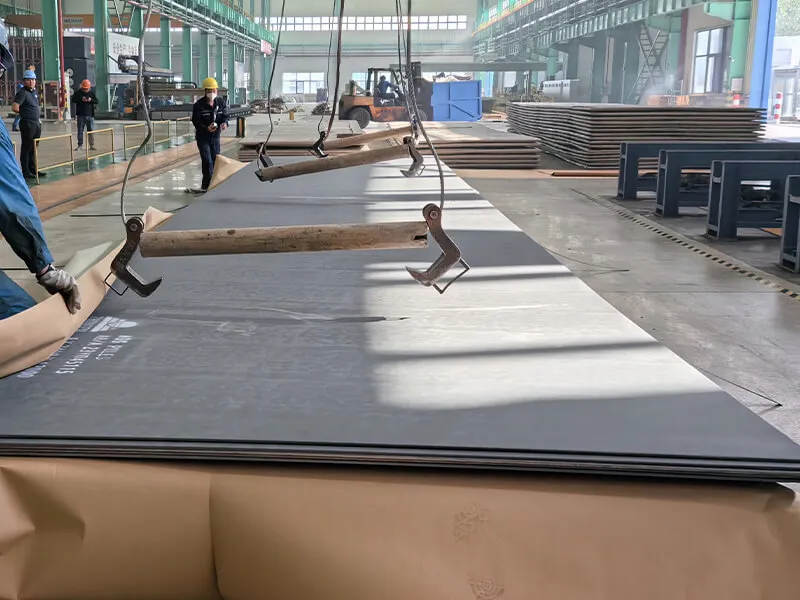
Let me walk you through the verification process.
Step 1 — Check the Certificate
The mill test certificate (MTC) must have several key elements:
- Class society logo and approval number — Clear logo (ABS, DNV, LR, CCS, etc.) and works approval number or surveyor authorization
- Heat number and batch number — Unique identifiers that must match the stamp on the plates
- Chemical composition — Percentages of C, Si, Mn, P, S, etc., meeting class limits
- Mechanical properties — Actual values for yield, tensile, elongation, and impact
- Surveyor stamp — Critical: must have the class surveyor’s signature or electronic stamp and date
- Traceability statement — Clear statement that the material matches the plates and complies with class rules
If the certificate is missing any of these elements, it is not valid.
Step 2 — Verify the Certificate Online
Each class society publishes a list of approved mills on its website. DNV, for example, maintains a list of approved manufacturers so that potential customers can easily find them. Search for the mill name and confirm:
- The mill is on the list
- The approval covers the product type (plates, sections, etc.)
- The approval is still current (not expired)
- The approval covers the specific grade you need
Do not trust a photocopy. Verify it yourself.
Step 3 — Check the Steel Itself
When the steel arrives, check every plate. Each plate must have a clear stamp showing the heat number, grade, and class society. The stamp must match the certificate.
If the stamp is missing, illegible, or does not match the certificate, reject the plate. Do not accept "the stamp is under the paint" or "we will send a corrected certificate later."
A Real Example
A buyer in Saudi Arabia received a shipment of DH36 plates with what looked like a valid ABS certificate. The buyer checked the ABS online list. The mill was not on it. The buyer called ABS. The certificate was counterfeit. The buyer rejected the entire shipment and avoided a costly mistake. The supplier had forged the certificate.
Conclusion
Classification society approval is mandatory for all structural steel used in classed vessels and offshore structures. Non‑approved steel causes rejection, rework, delays, and liability. Verify mill certificates by checking the document, confirming online, and inspecting the steel stamps. A few minutes of verification can save months of delay.