
Your shipyard is waiting for steel. The supplier says "8 weeks." The mill says "10 weeks." The freight forwarder says "12 weeks." Nobody gives you the same answer.
Marine steel plate production from order placement to delivery typically takes 14‑22 weeks for standard grades and sizes. The total breaks down into four phases: order confirmation and mill scheduling (2‑4 weeks), rolling and heat treatment (2‑4 weeks), testing and certification (2‑4 weeks), and shipping and logistics (4‑10 weeks). Each phase has its own variables.
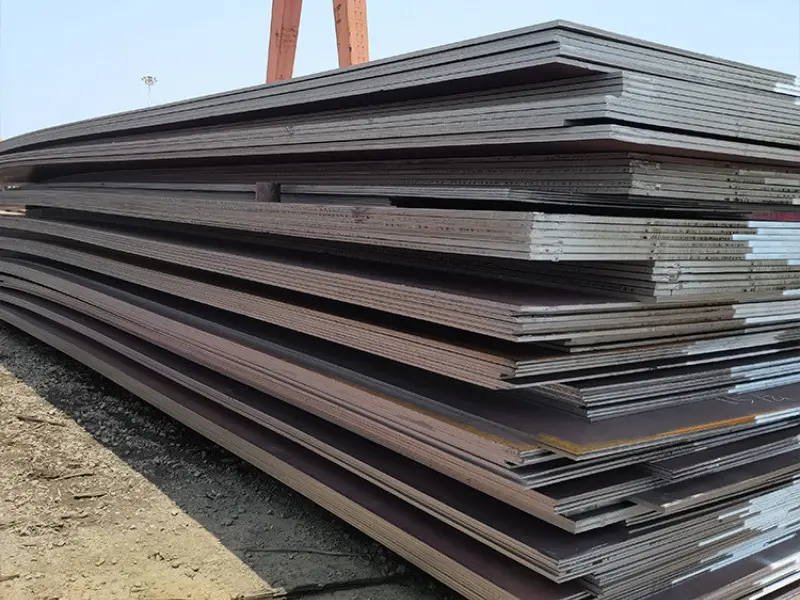
I am Zora Guo from cnmarinesteel.com. I have shipped thousands of tons of marine steel plates. The question I get most is: "How long will it take?" The answer is never simple. But let me give you a realistic breakdown so you can plan your project properly.
What Is the Typical Lead Time from Order Placement to Mill Production Start for Marine Steel Plates?
You place an order. The mill confirms it. But production does not start the next day. There is a queue.
From order placement to the start of rolling, you typically wait 2‑4 weeks. The first step is specification confirmation — you and the mill agree on grade, thickness, dimensions, tolerances, and class society requirements. This takes 1‑3 days if your specs are clear, longer if there is back‑and‑forth. Then the mill allocates raw materials — steel slabs or billets — which takes 2‑5 days depending on availability. The biggest variable is mill scheduling. If the mill is busy, your order joins the queue. Steel mills operate on production campaigns. They do not roll every size every week. If your order misses a campaign window, you wait for the next one — often 2‑4 weeks.
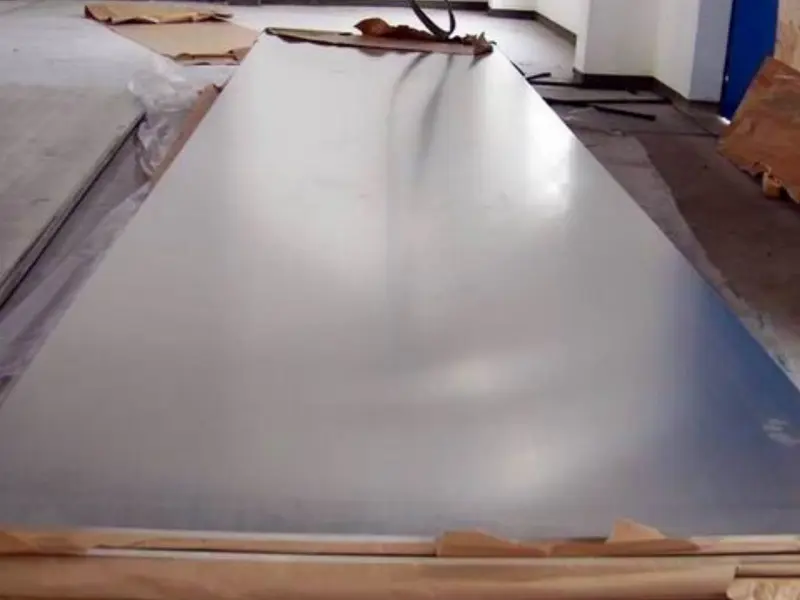
Let me walk you through the pre‑production phase.
Spec Confirmation — Get It Right the First Time
The fastest way to delay your order is to have unclear specifications. Every change or clarification adds days.
What needs to be confirmed:
- Grade (A, AH32, AH36, DH36, etc.)
- Thickness and tolerance
- Length and width
- Class society (ABS, DNV, LR, CCS)
- Mill certificate type (3.1 or 3.2)
- Delivery state (hot‑rolled, TMCP, normalized, etc.)
If you have a clear checklist, this takes 1‑3 days. If you are vague, it can take a week or more.
Raw Material Allocation — The Hidden Delay
The mill must have steel slabs or billets available for your order. If they are in stock, allocation takes 2‑5 days. If the mill needs to order raw materials, add 2‑4 weeks.
Mill Scheduling — The Queue
Steel mills run on production campaigns. A campaign might be "2 weeks of AH36 plates, then 1 week of DH36, then 2 weeks of special grades." If your order arrives after the campaign has started, you wait for the next one.
Current mill scheduling reality: Some mills have orders booked through 2028. In a busy market, the queue is long. Steel mills are operating at high capacity, with production of shipbuilding plates expected to exceed 20 million tons in 2024.
A Real Example
A customer in Vietnam placed an order for 500 tons of AH36 plates. The specs were clear. The mill had slabs in stock. But the mill’s production schedule for AH36 was already full for the next 3 weeks. The order waited 3 weeks before rolling started. Total production time: 10 weeks instead of 7.
How Long Does Rolling, Heat Treatment, and Cutting Actually Take for Different Plate Thicknesses and Grades?
Once the mill starts rolling your plates, the actual production is surprisingly fast. The steel slab goes through the rolling mill in hours, not days.
The rolling process itself takes 2‑5 days for a typical order. A slab is heated to 1,150‑1,250°C, then passed through roughing and finishing stands to reach the required thickness. Modern TMCP (Thermo‑Mechanical Control Process) technology can complete the rolling cycle in 2‑3 days, compared to 4‑5 days for traditional processes. Heat treatment adds 1‑3 days depending on the grade — normalized plates take longer than hot‑rolled. Cutting to length and edge trimming add another 1‑2 days. The total rolling and finishing phase is typically 2‑4 weeks for most orders.
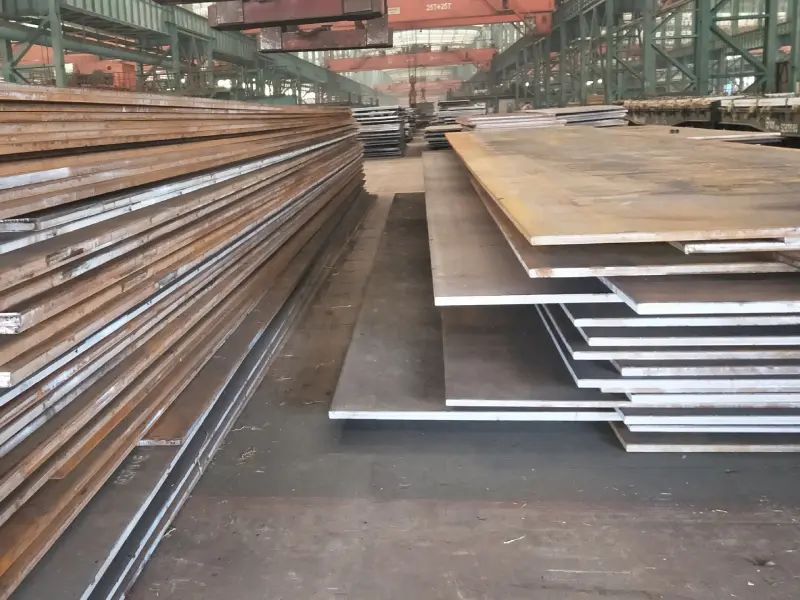
Let me break down each step.
The Rolling Process
The steel slab is heated in a reheat furnace. Then it passes through a roughing mill and a finishing mill to reach the required thickness. The entire rolling cycle for a batch of plates takes hours, not days. But the mill may not roll your order continuously — it shares the rolling line with other orders.
TMCP technology: Modern mills use TMCP (Thermo‑Mechanical Control Process) to produce high‑strength plates without expensive heat treatment. TMCP can reduce the rolling cycle from 4‑5 days to 2‑3 days.
Heat Treatment — Grade Dependent
Not all plates need heat treatment. But higher grades often do.
| Delivery state | Time added | Typical grades |
|---|---|---|
| Hot‑rolled (AR) | 0 days | Grade A, some AH32 |
| Normalized (N) | 2‑3 days | DH36, EH36, thicker plates |
| TMCP | 0‑1 days | AH36, DH36 (modern mills) |
| Quenched and tempered (QT) | 3‑5 days | Special high‑strength grades |
Cutting and Finishing
After rolling, the plates are cut to length, edges trimmed, and surfaces inspected. This adds 1‑3 days.
The 110‑Day Benchmark
One major Chinese steel producer reported that through optimized production and custom delivery, the total cycle from production to processing was controlled at about 110 days, better than the industry average of 150 days. That includes production, testing, and processing — not just rolling.
A Real Example
A customer ordered EH36 plates with normalized heat treatment. The rolling took 3 days. Normalizing added 2 days. Cutting and finishing added 2 days. Total rolling and finishing: 7 days. But the mill only rolled EH36 once every 3 weeks, so the order waited 2 weeks for the campaign. Total from rolling start to finished plates: 3 weeks.
Why Do Testing, Certification, and Third‑Party Inspection Add Weeks to the Production Timeline?
The plates are rolled. They look good. But they cannot ship until they are tested and certified. This phase is often underestimated.
Testing and certification typically add 2‑4 weeks to the production timeline. For every heat of steel, samples must be cut and tested for chemical composition, mechanical properties (yield, tensile, elongation), and Charpy impact. Third‑party inspection by SGS, Bureau Veritas, or a class surveyor adds 1‑2 weeks — the inspector must visit the mill, witness testing, and issue a report. EN 10204 3.2 certification, required for many marine projects, requires third‑party verification of every test. Mills with long inspection queues or slow documentation can add even more time.
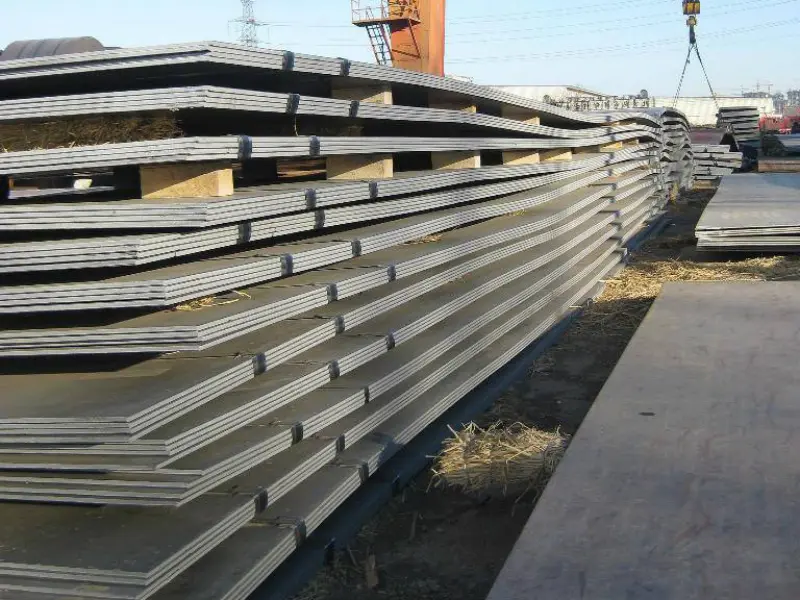
Let me detail each component.
Mill Self‑Testing — The First Layer
For every heat of steel, the mill must test:
- Chemical composition (spectrometer analysis)
- Tensile properties (yield strength, tensile strength, elongation)
- Charpy impact (energy absorbed at specified temperature)
- Ultrasonic testing (for internal defects)
Testing takes 2‑5 days, but the samples must be cut from the rolled plates first. If the mill has a busy lab, add waiting time.
Third‑Party Inspection — The Critical Delay
Many marine steel orders require third‑party inspection. The inspector must:
- Review the mill’s internal test results
- Select random samples for independent testing
- Witness the tests at an accredited lab
- Issue a report
Timeline: The exporter must submit inspection requests at least 3 working days before the inspection date. The inspection itself takes 1‑3 days. The report is issued 1‑2 days later. Total third‑party inspection time: 1‑2 weeks.
EN 10204 3.2 Certification — The Highest Standard
3.2 certification means a third party has verified the test results. This is required for many class‑approved projects. The process adds 1‑2 weeks because the inspector must witness testing and sign off on every certificate.
Documentation — The Final Hurdle
Even after testing is complete, the mill must issue the mill test certificates (MTCs). Each certificate must show:
If there are errors in the documentation, the certificates must be reissued. This adds days or weeks.
A Real Example
A customer in Saudi Arabia ordered 300 tons of DH36 plates with 3.2 certification. The mill finished rolling in 4 weeks. Testing took 1 week. The class surveyor was busy and could not visit for 2 weeks. After the visit, the report took 1 week. Total testing and certification: 4 weeks. The plates were ready to ship 8 weeks after the order was placed.
How Do Shipping, Port Handling, and Inland Transport Extend the Total Delivery Time Beyond Mill Production?
The plates are finished. The certificates are ready. Now they must travel to your yard. This phase is the most unpredictable.
Shipping, port handling, and inland transport add 4‑10 weeks to total delivery time. Sea freight from China to Southeast Asia takes 2‑3 weeks; to the Middle East, 3‑4 weeks; to Europe, 4‑6 weeks. Port congestion can add 1‑3 weeks of waiting. Customs clearance adds 1‑2 weeks. Inland transport from the port to your yard adds 1‑2 weeks. In total, the logistics phase often exceeds the production phase. Some buyers have experienced logistics delays of 3‑4 months during peak congestion periods.
Let me break down each logistics component.
Sea Freight — The Longest Leg
Sea freight times vary significantly by destination.
| Destination | Sea freight time |
|---|---|
| Southeast Asia (Vietnam, Malaysia) | 2‑3 weeks |
| Middle East (Saudi Arabia, UAE) | 3‑4 weeks |
| Europe (Netherlands, UK) | 4‑6 weeks |
| Americas (US, Brazil) | 5‑7 weeks |
Some mills offer direct shipping that reduces transit time. For example, one mill reduced shipping to Korea from 15+ days to 5‑7 days by using direct routes instead of transshipment.
Port Handling — The Unpredictable Delay
Ports are often congested. A vessel can wait 3‑5 days for a berth. In severe cases, 2‑3 weeks.
Common port delays:
- Berth congestion
- Crane availability
- Labor shortages
- Weather
- Customs holds
Customs Clearance — The Paperwork Gate
Customs clearance takes 1‑2 weeks if everything is in order. If documents are missing or incorrect, it can take 3‑4 weeks.
What customs checks:
- Packing list matches the shipment
- Mill certificates are complete
- Commercial invoice is accurate
- Certificate of origin is valid
Inland Transport — The Final Mile
After customs, the steel must travel by truck or rail to your yard. This adds 1‑2 weeks.
| Distance | Transport time |
|---|---|
| Under 200 km | 1‑2 days |
| 200‑500 km | 2‑4 days |
| 500‑1,000 km | 5‑7 days |
| Over 1,000 km | 1‑2 weeks |
Total Logistics Time — A Real Example
A customer in Europe ordered steel from China. Production took 8 weeks. Sea freight took 5 weeks. Port handling added 2 weeks. Customs took 1 week. Inland transport took 1 week. Total: 17 weeks from order to delivery.
Conclusion
Marine steel plate production takes 14‑22 weeks total. Breaking it down: order confirmation and scheduling (2‑4 weeks), rolling and heat treatment (2‑4 weeks), testing and certification (2‑4 weeks), and shipping and logistics (4‑10 weeks). Plan your project with these realistic timelines in mind.