
Your project is delayed because plates arrived, but the bulb flats are stuck in another port. You manage five different suppliers, five sets of paperwork, and five potential points of failure. This fragmented model is breaking down. The future belongs to suppliers who offer a complete, synchronized material ecosystem.
Integrated marine steel solutions combine the supply of all required materials—plates, sections, profiles—with value-added services like technical support, logistics, and quality assurance into a single, streamlined partnership. This model reduces complexity, cuts total cost, ensures compatibility, and provides a single point of accountability, making it the inevitable choice for efficient shipyards and fabricators.
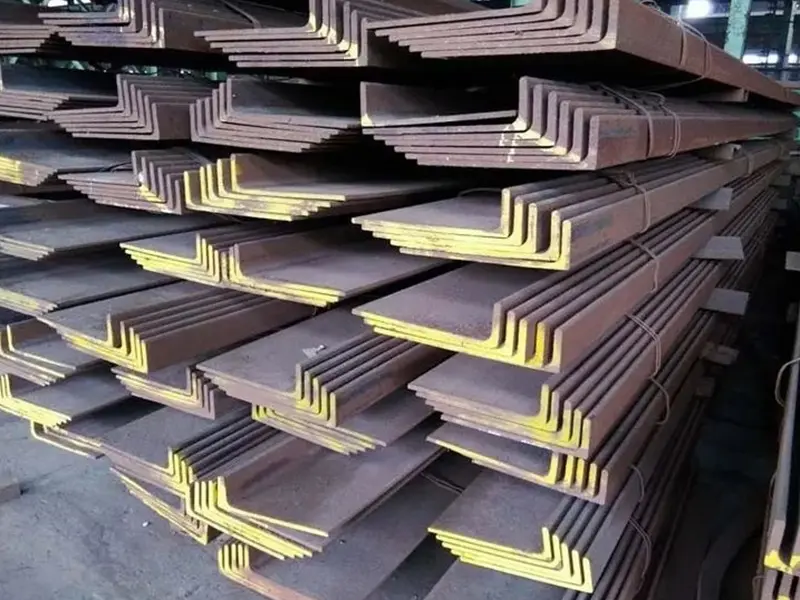
Fragmentation creates hidden costs and risks that erode profit margins. Integration creates resilience, efficiency, and strategic advantage. Let’s examine why this holistic approach is not just an option, but the logical evolution of marine procurement.
Why is steel1 important in marine technology?
To understand why integrated solutions2 matter, you must first understand why steel itself is irreplaceable. It is not just a material; it is the foundational enabler of the entire industry. Any weakness in its supply chain directly threatens the industry’s ability to function.
Steel is the backbone of marine technology because no other material offers the same optimal balance of high strength, good toughness, excellent weldability, and cost-effectiveness at the massive scales required. It enables the construction of large, safe, and seaworthy vessels and offshore structures that can withstand extreme ocean forces for decades.
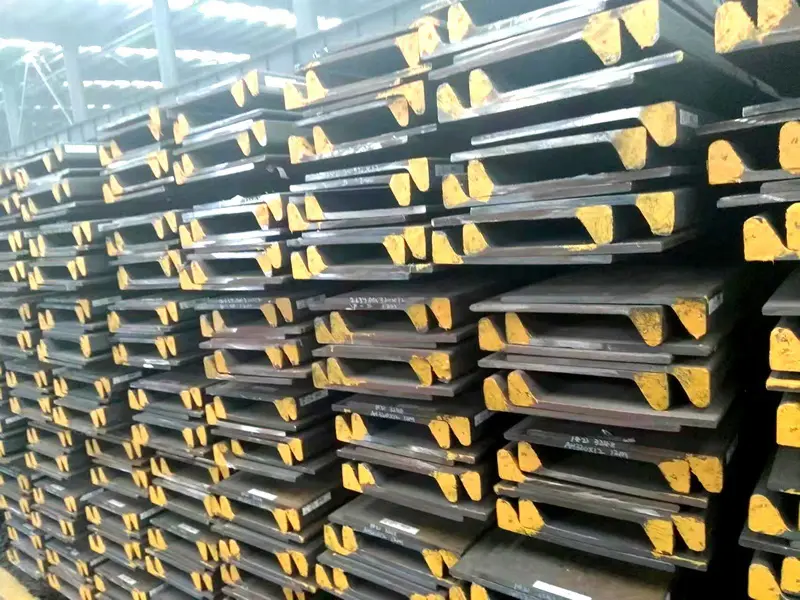
If steel1 is this critical, then the system that delivers it must be equally robust. A fragmented, unreliable supply chain3 for such a strategic material is a systemic risk. Integration addresses this risk at its core.
The Strategic Imperative: Securing the Foundation
The importance of steel1 creates a non-negotiable requirement: its supply must be guaranteed, consistent, and technically sound. Integration directly supports these requirements.
How Fragmentation Undermines Steel’s Role:
- Inconsistent Quality: Sourcing plates from Mill A and sections from Mill B risks metallurgical incompatibility or varying weldability4.
- Unreliable Timing: Desynchronized deliveries from multiple suppliers disrupt the just-in-time sequence of shipbuilding.
- Technical Disconnects: No single supplier has a complete view of the material’s application, leading to specification errors.
- Accountability Gaps: When a problem occurs, suppliers blame each other, leaving the shipyard to manage the crisis.
How Integration Reinforces Steel’s Role:
An integrated solution treats the entire steel1 package as a single, coherent system.
- Guaranteed Compatibility: All materials come from coordinated sources with matched specifications (e.g., same grade, same heat treatment philosophy).
- Synchronized Logistics: Plates, bulb flats, and angles are produced and shipped to arrive together, keeping production flowing.
- Holistic Technical Support: One team understands how all the pieces fit into the final structure, enabling better fabrication advice.
- Unified Accountability: One partner is responsible for the complete material solution’s performance.
The Future Demand:
As ships become more complex and build schedules tighter, the tolerance for supply chain3 errors shrinks to zero. The shipyard of the future will not have the administrative bandwidth to manage a dozen material suppliers. It will rely on a few, deeply integrated partners who manage complexity on its behalf. This mirrors the trend in other industries (like automotive) where Tier 1 suppliers deliver complete subsystems, not individual parts.
Integration, therefore, is the necessary evolution of the supply chain3 to support steel1‘s continued, undisputed role as the marine industry’s primary material.
What is the integrated steel process1?
The term "integrated" can refer to the mill’s production method or the supplier’s service model. Both are relevant, and the future lies in combining the strengths of an integrated mill with an integrated service provider.
In steelmaking, the integrated steel process1 uses a blast furnace and basic oxygen furnace (BF-BOF) to produce steel from raw iron ore, coke, and limestone. In supply, an integrated solution2 refers to a supplier who provides a full range of products and services—from sourcing certified material to managing export logistics—as a single package, acting as the shipyard’s sole interface for all steel needs.
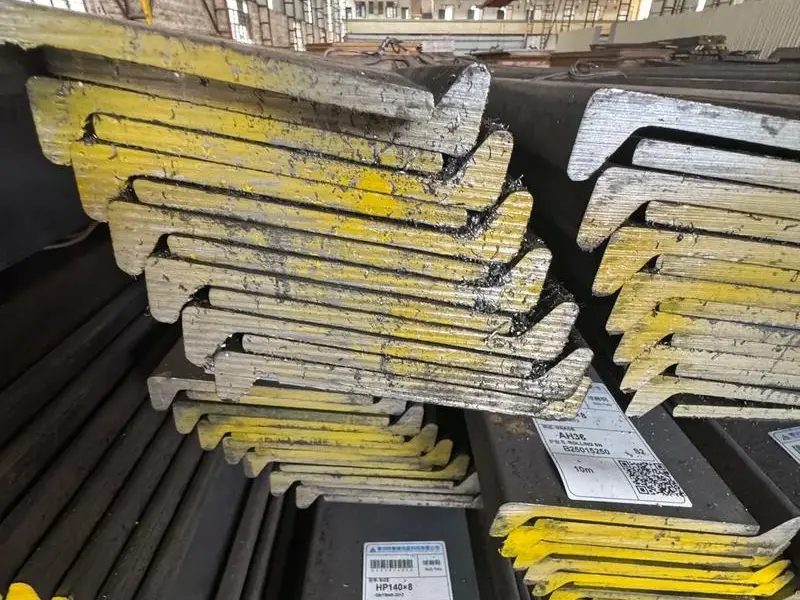
These two integrations are different but complementary. One ensures material quality at birth; the other ensures it arrives fit-for-purpose. The future-winning model leverages both.
Two Layers of Integration: A Powerful Combination
Understanding both layers explains why a simple trader cannot compete with a true integrated solution2 provider.
Layer 1: The Integrated Mill (Upstream Quality)
- Process: Iron Ore + Coking Coal -> Blast Furnace (Molten Iron) -> Basic Oxygen Furnace (Steel) -> Continuous Caster -> Rolling Mill.
- Advantages for Marine Steel:
- Superior Chemistry Control: Starting from virgin materials allows precise tuning for marine grade specs (low S, P, controlled CE).
- Scale and Consistency: Produces large, homogeneous batches ideal for shipbuilding’s massive plates.
- Future Relevance: Integrated mills are investing in green steel3 technologies (hydrogen reduction, CCUS) to decarbonize. This will be a key part of future ESG-compliant supply.
Layer 2: The Integrated Solution Provider (Downstream Service)
This is where the future is being shaped. This provider does more than buy and sell.
- Product Integration: Supplies the complete bill of materials: Plates, Bulb Flats, Angles, L-sections, and sometimes even fasteners or primers.
- Service Integration: Bundles the product with essential, value-adding services:
- Technical Sourcing: Matching project specs to the right mills and grades.
- Quality Orchestration: Managing certification, pre-shipment inspection (SGS), and traceability.
- Logistics Consolidation: Combining all items into optimized multi-modal shipments.
- Documentation Management: Providing a unified, compliant document package.
- After-Sales Support: Handling claims, providing material data for welders.
The Synergy:
A supplier with long-term cooperation with certified integrated mills4 (like our model) combines both layers. We channel the quality and scale of Layer 1 through the service and simplification of Layer 2. This creates a seamless pipeline from the molten heat to the shipyard’s cutting machine.
The Alternative: The Disintegrated (Traditional) Model:
The buyer acts as the integrator, managing multiple single-product suppliers. This requires immense internal expertise and overhead. As projects grow in complexity and global scope, this model becomes unsustainable. The integrated solution2 provider externalizes this complexity, becoming a dedicated extension of the shipyard’s procurement team.
What is the difference between marine steel and stainless steel1?
A fragmented supplier might push stainless steel1 where marine carbon steel2 is sufficient, or vice versa, to move inventory. An integrated partner provides objective guidance because they offer both, and their goal is the optimal solution, not the sale of a specific product.
Marine steel (like AH36) is carbon-manganese steel designed for primary structural strength and toughness; it requires coatings for corrosion protection. Stainless steel (like 316L) is an alloy steel with high Chromium (and often Nickel, Molybdenum) for inherent corrosion resistance; it is used for fittings, fasteners, and components where corrosion is the primary concern. They are complementary materials for different functions.
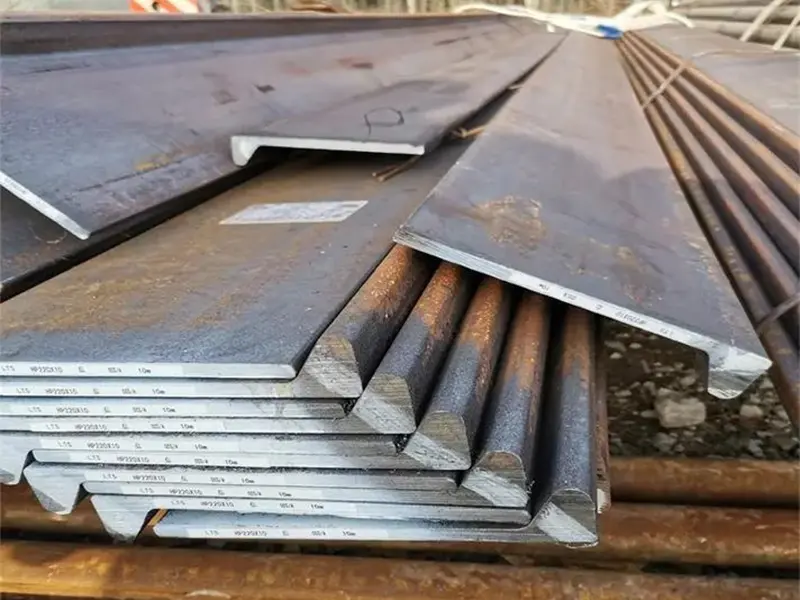
An integrated solution understands this complementarity. It doesn’t just sell one or the other; it provides the correct material system for the entire structure. This systemic view is a key advantage.
A Systems Approach to Material Selection
On a vessel, marine steel and stainless steel1 work together as part of a complete corrosion management system3. An integrated supplier4 optimizes this system.
The Role of Each Material in the System:
| Material | Primary Function | Typical Applications | Protection Method |
|---|---|---|---|
| Marine Carbon Steel (e.g., AH36) | Structural Load-Bearing. Provides the hull’s strength and global integrity. | Hull plating, decks, frames, girders, bulkheads. | External System: Coatings + Cathodic Protection (CP). |
| Stainless Steel (e.g., 316L) | Corrosion Resistance & Functionality. Used where coatings are impractical or where failure would be critical. | Deck fittings, handrails, pumps, valves, fasteners, piping. | Inherent Property: Passive chromium oxide layer. |
How Fragmented Sourcing Creates System Failure:
- Example: A shipyard buys cheap 304 stainless fasteners from one vendor and AH36 plate from another. The 304 fasteners corrode rapidly in the splash zone, failing long before the coated AH36 structure. The fastener failure jeopardizes the entire assembly.
- The Problem: The plate supplier doesn’t care about the fasteners. The fastener seller doesn’t understand the marine environment. The shipyard bears the system failure risk.
How an Integrated Solution Ensures System Integrity:
An integrated supplier4, offering both material families, ensures compatibility and correct specification.
- They advise: "For these deck fittings in direct salt spray, you need 316L, not 304, and here’s the PMI report to prove it."
- They coordinate: "The AH36 plate for the hull will be primed with a zinc-rich epoxy, which is compatible with the planned CP system and the 316L fittings."
- They guarantee: All materials are supplied with full traceability and appropriate certifications for their respective standards.
The Future Trend:
As regulatory pressure on lifecycle emissions5 grows, the choice between coated carbon steel and stainless steel1 will involve complex calculations of initial cost, maintenance intervals, and end-of-life recycling. An integrated partner with expertise across material types will be essential to navigate these decisions and deliver the most sustainable, cost-effective material system6, not just a pile of metal.
What is the best steel for the marine environment?
In a fragmented world, every supplier claims their product is "best." In an integrated model, the question is reframed: "What is the best combination of materials and services1 for this specific project’s performance, cost, and sustainability goals?"
There is no single "best" steel for all marine environments. The optimal choice is a tailored material system. For primary structure, it’s certified marine-grade steel (AH/DH/EH) with a robust coating/CP plan. For corrosion resistance, it’s stainless steel (316L, Duplex)2. The "best" solution integrates the right grades, forms, and protection methods into a coherent, reliably delivered package from a single accountable partner.
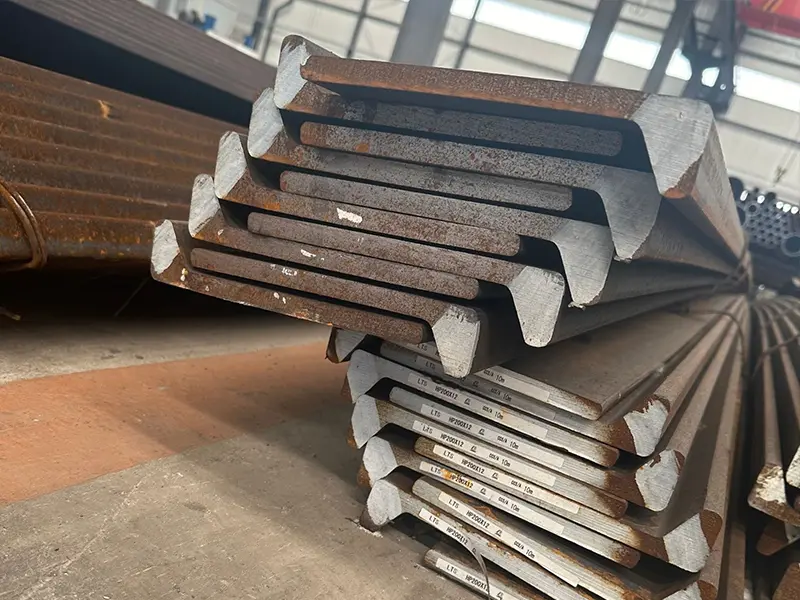
The future of marine procurement is not about buying the best commodity; it’s about buying the best outcome. Integrated solutions are uniquely positioned to deliver outcomes because they control more of the variables.
From Product-Centric to Outcome-Centric Procurement
The "best steel" is the one that arrives on time, fits perfectly, welds easily, and lasts the design life with minimal hassle. An integrated supplier is incentivized and equipped to deliver this outcome.
How Integrated Solutions Deliver the "Best" Outcome:
| Desired Outcome | Fragmented Supply Challenge | Integrated Solution Delivery |
|---|---|---|
| On-Time Project Start | Plates delayed, sections on time (or vice versa). Production stalls. | Synchronized Supply. All materials are scheduled and shipped to arrive together, keeping the critical path clear. |
| Lowest Total Cost | Low unit price but high logistics, rework, and delay costs. | Total Landed Cost Optimization. Consolidates shipping, prevents errors, ensures quality to avoid rework. |
| Guaranteed Quality & Compliance | Mismatched or fake certificates, no single point for claims. | End-to-End Quality Control. Manages certification from mill to yard, offers third-party inspection, one-point accountability. |
| Technical Support & Innovation | No supplier has full picture; innovation is siloed. | Holistic Engineering Support. Can advise on new high-strength steels, greener coatings, or alternative alloys across the entire BOM. |
| Supply Chain Resilience | One supplier failure breaks the chain. | Risk Mitigation through Redundancy & Relationships. Has backup sources within its network and deeper relationships to secure allocation during shortages. |
Case in Point: Our Client’s Journey.
The case study of Gulf Metal Solutions illustrates this shift. Their pain points were classic fragmentation issues: delayed responses, inconsistent quality, poor after-sales. Our integrated solution—dedicated rep, inspection support, full logistics service—solved these not by selling a "better product," but by providing a better system. The result was stable quality, reliable delivery, and a plan for future orders. They bought an outcome, not just steel.
The Future Proof:
As digitalization (IoT, blockchain) enters the supply chain, integrated providers will be the first to offer digital twins of material shipments, real-time carbon footprint tracking, and predictive logistics. This data-driven integration will further widen the gap between holistic solution providers and simple material sellers.
Choosing an integrated partner is an investment in simplifying your operations, derisking your projects, and future-proofing your supply chain. It is the logical, inevitable step for any shipyard or fabricator focused on long-term competitiveness.
Conclusion
Integrated marine steel solutions are the future because they reduce complexity, ensure material compatibility, optimize total cost, and provide single-point accountability, aligning perfectly with the shipbuilding industry’s need for reliability, efficiency, and strategic partnership.
-
Explore how tailored material systems can enhance project performance and sustainability. ↩ ↩ ↩ ↩ ↩ ↩ ↩ ↩ ↩ ↩ ↩ ↩
-
Discover why stainless steel is crucial for corrosion resistance in marine environments. ↩ ↩ ↩ ↩ ↩ ↩
-
Understand how a corrosion management system functions to protect marine structures from deterioration. ↩ ↩ ↩ ↩ ↩
-
Find out how integrated suppliers enhance material selection processes for better project outcomes. ↩ ↩ ↩ ↩
-
Explore the significance of lifecycle emissions in choosing materials for sustainable engineering solutions. ↩
-
Discover the concept of a material system and why it’s crucial for optimal performance in engineering projects. ↩