
Walk through any major shipyard. You will see mountains of steel plate. You will also see stacks of long, L-shaped steel bars. These bars are not an afterthought. They are the hidden skeleton that gives a massive ship its strength and shape. Understanding why this simple angle section is so fundamental reveals the practical engineering behind modern shipbuilding.
L-shaped steel, or marine angle steel, is ideal for ship frames because it offers an optimal balance of high strength-to-weight ratio, easy fabrication and welding, and versatile connection options. Its simple shape provides excellent structural stiffness as a stiffener or bracket, making it a cost-effective and reliable choice for constructing ship ribs, bulkheads, and supporting structures.
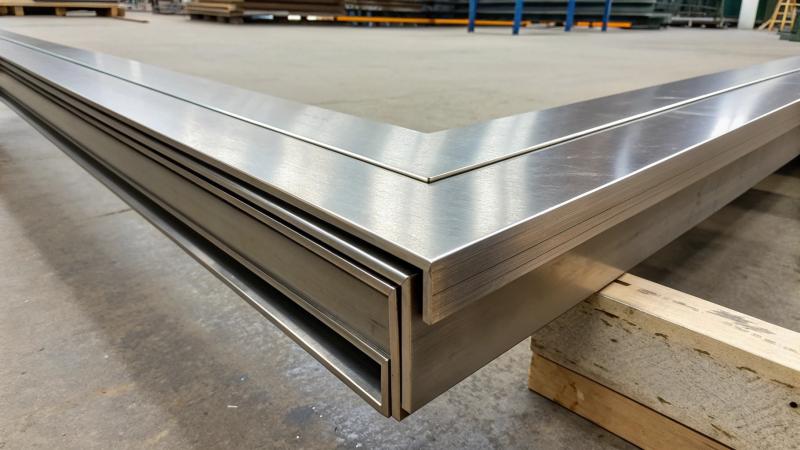
The choice of profile is as important as the choice of steel grade. While plates form the skin, sections like L-angles form the bones. To appreciate its role, we need to start with the bigger picture of what makes good shipbuilding steel, and then see where the L-shape fits perfectly.
What is the best steel for ship building?
Asking for the "best" steel for shipbuilding is like asking for the best tool. The answer depends on the job. There is no single champion. Instead, there is a system of materials chosen for specific roles based on a balance of strength, toughness, weldability1, and cost. The "best" steel is the one that meets the exact requirements of the classification society rules for a specific part of the ship, at a price that makes the project viable.
There is no single "best" steel. The optimal choice is structural steel certified to marine classification standards (like ABS, DNV). For hulls, high-strength low-alloy (HSLA) grades like AH32 or AH36 offer the best balance of strength and weight. For specific parts, corrosion-resistant steels or special sections like bulb flats and L-angles are selected for their functional advantages.
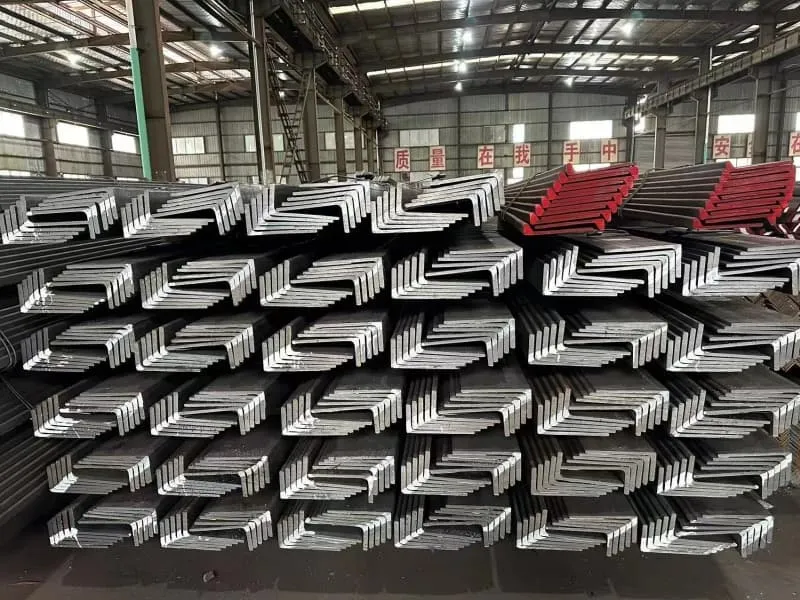
The concept of "best" is a moving target defined by project requirements. Let’s break down the selection criteria that determine what is best for a given application.
The Multi-Criteria Selection Matrix for Ship Steel
Choosing ship steel is not about picking the strongest or the cheapest. It is about optimizing several factors at once.
1. Compliance: The Non-Negotiable Foundation
The best steel is, first and foremost, certified steel2. It must have a Mill Test Certificate (MTC)3 proving it meets the rules of the appointed classification society (ABS, LR, DNV, etc.). Without this, it is not shipbuilding steel, regardless of its properties.
2. Performance Properties: Matching Material to Stress
Different parts of a ship face different challenges.
| Ship Part & Stress Type | Typical "Best" Steel Choice | Why It’s Chosen |
|---|---|---|
| Main Hull Plating (High tensile/bending stress) | High-Strength Steel (AH36, DH36)4 | Provides high yield strength (e.g., 355 MPa for AH36) allowing thinner, lighter plates. This saves weight and fuel. |
| Keel, Longitudinals (Extreme bending, primary strength) | Higher-Strength Steel (DH36, EH40) | These areas carry the greatest loads. Higher strength grades provide maximum structural integrity with efficient weight. |
| Frames, Brackets, Bulkheads (Compression, local stiffening) | Grade A, AH32, or specially rolled sections (L-Angles, Bulb Flats) | These parts need good stiffness and ease of connection. Rolled sections offer ready-made shapes with excellent section modulus. |
| Deck in Splash Zone (Corrosion fatigue) | Corrosion-Resistant Steel (e.g., ASTM A690) | Resists atmospheric corrosion better than standard grades, reducing maintenance costs. |
| Tanks for Corrosive Cargo | Stainless Steel (316L) or coated special steels | Necessary to withstand aggressive chemicals without degradation. |
3. Fabrication Efficiency: The Cost and Time Factor
The best steel must also be easy to work with.
- Weldability: Steel with a controlled, low Carbon Equivalent (CE) value is best. It welds easily without pre-heat or post-heat treatment in most cases, speeding construction.
- Formability: Some parts need to be curved or bent. The steel must have adequate ductility.
- Availability as Standard Sections: This is where profiles like L-shaped steel (angle bar) shine. They are rolled in standard sizes (e.g., 100x100x10mm). The shipyard can cut and weld them directly. This is much faster and cheaper than cutting complex shapes from thick plate.
4. Economic Viability: The Project Reality
"Best" must fit the budget. For 90% of commercial vessels (bulkers, tankers, containerships), the best value comes from using standard, certified HSLA plates (AH36) and standard sections5 (angles, bulb flats) from efficient large-scale mills. Exotic, ultra-high-strength steels are only "best" for specialized, high-performance vessels where their premium cost is justified.
For our client Gulf Metal Solutions, a project-based fabricator, the "best" steel is the one that arrives on time, with perfect certification, and consistent quality that their workshop can rely on. It is this practical reliability that makes a specific batch of AH36 plate or L-angle the "best" for their current project.
What is the use of L section steel1?
L section steel1, commonly called angle bar or angle iron, looks simple. It is a steel bar bent into a perfect 90-degree angle along its length. In shipbuilding, this simple shape is a multi-purpose workhorse. Its primary use is as a stiffener2 and a connecting bracket. It turns flat plates into rigid structures by adding strength along edges and corners where it is needed most.
In shipbuilding, L section steel is primarily used to fabricate frames (the ribs of the ship), stiffeners for decks and bulkheads, and connecting brackets between structural members. It provides crucial reinforcement against buckling and bending, transforming flat steel plates into rigid, load-bearing panels.
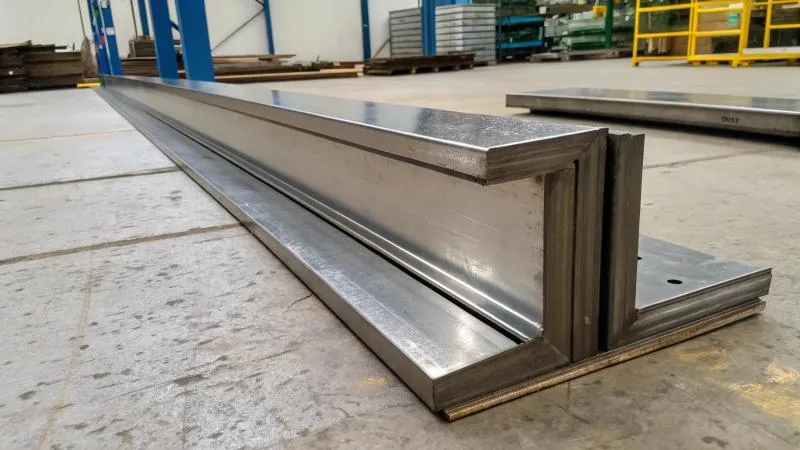
The L-shape is everywhere in a ship’s structure. Its uses are so fundamental that they often go unnoticed, but the ship would be weak without them.
The Essential Roles of L-Angle in a Ship’s Structure
We can categorize its uses based on the type of structural member it creates or reinforces.
1. As Primary and Secondary Stiffeners (The Most Common Use)
A large, flat steel plate is flexible. It can bend or buckle under pressure. To prevent this, stiffener2s are welded to it at regular intervals.
- How it works: The L-angle is welded along one leg to the plate. The other leg stands perpendicular, creating a "rib." This dramatically increases the plate’s resistance to bending (its section modulus3).
- Locations: You find L-angle stiffener2s on:
- Decks: Running longitudinally or transversely to support cargo loads.
- Bulkheads (walls): Providing stiffness to withstand water pressure in flooded compartments.
- Shell Plating: Often used as transverse frames4 (the ship’s ribs).
- Tank Walls: Preventing deformation under liquid pressure.
2. As Framing Members
L-angles are often used to build the ship’s skeleton itself.
- Transverse Frames: These are the ribs that give the ship its cross-sectional shape. They are often made from L-angles of specific sizes, cut and shaped to the hull’s curvature.
- Longitudinal Framing: In some ship designs, L-angles run the length of the ship as part of the longitudinal strength system.
3. As Brackets and Connection Gussets
This is another critical use. Steel structures need strong, reliable connections.
- Function: An L-angle bracket is cut into a triangular shape and welded to connect two members meeting at an angle (e.g., where a deck beam meets a bulkhead).
- Advantage: It is simple to fabricate from standard L-bar stock. It provides a large welding surface area, creating a very strong connection. The bracket transfers loads smoothly from one member to another.
4. As Edge Reinforcement and Trims
- Hatch Coamings: The raised edges around deck openings (hatches) are often built up using L-angles.
- Stair Stringers: The side supports for metal stairways are commonly L-sections.
- General Trim: Used to reinforce the edges of platforms, walkways, and other structures.
The Practical Supplier’s View: When Gulf Metal Solutions plans their next order for "ship L-shaped steel," they are ordering this versatile component. They might use it to fabricate custom brackets for a ship repair job or supply it as raw material to a shipyard. Our job is to provide it in the exact marine grade5 (e.g., ABS Grade A or AH32), with clean, square edges and a consistent surface finish so it welds perfectly. Its use is defined by its ready-made functionality—a perfect blend of strength and fabrication convenience.
What is the L in structural steel?
In the context of structural steel profiles, the "L" stands for Angle. It refers to the shape of the cross-section. An L-section1 looks like the letter "L", with two legs meeting at a 90-degree angle. It is formally called a steel angle2 or angle bar. The "L" designation is a standard shorthand in engineering drawings, material lists, and supplier catalogs to quickly identify this type of rolled steel section.
In structural steel terminology, the "L" designation refers to an Angle section. It is a rolled steel bar with two legs forming a 90-degree angle. It is specified by dimensions, such as L 150x100x12, meaning legs of 150mm and 100mm with a thickness of 12mm.
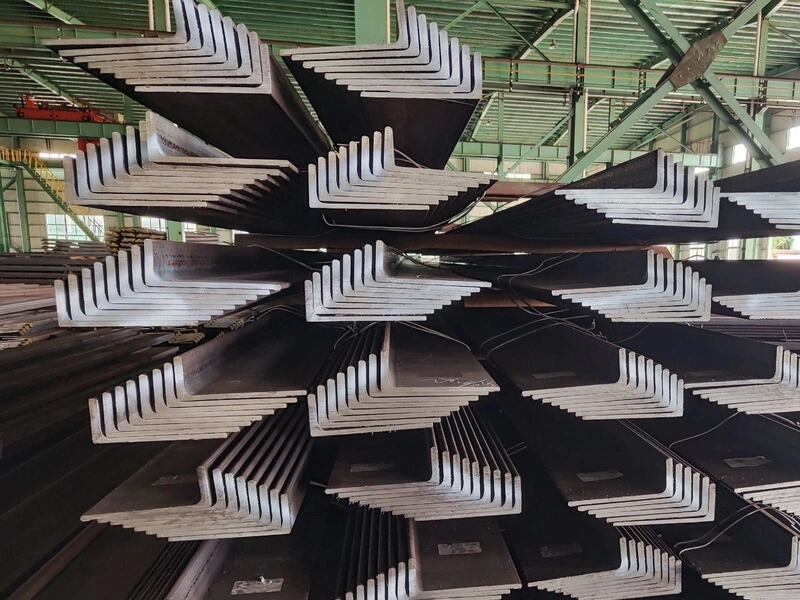
This simple naming convention carries all the technical information needed to specify the part. Understanding how to read an L-section spec is key to ordering the right material.
Decoding the L-Section: Dimensions, Properties, and Standards
When you see "L 200x200x16" on a ship drawing, it is a precise instruction. Let’s decode what that means and why it matters.
1. Dimensioning an L-Angle
The standard notation is: L [Leg1 Length] x [Leg2 Length] x [Thickness]
- Example: L 200x200x16
- 200mm: The length of the first leg (usually the longer leg if unequal).
- 200mm: The length of the second leg.
- 16mm: The thickness of the steel material for both legs.
- Equal vs. Unequal Angles:
- Equal Angle: Both legs are the same length (e.g., L 100x100x10). Common for symmetric stiffeners.
- Unequal Angle: Legs are different lengths (e.g., L 150x100x12). Used where one side needs more attachment surface or different stiffness.
2. Key Mechanical Properties Derived from the "L" Shape
The shape gives the angle its structural value.
- Section Modulus (Z)3: This is a measure of the section’s bending strength. For an L-angle welded along one leg, the standing leg provides the resistance. A larger leg or thicker material increases the Z, making it a stiffer stiffener.
- Radius of Gyration (r): A measure used in buckling calculations. The L-shape has different radii about its two principal axes, which affects how it will buckle under compression.
- Surface Area for Welding: One major advantage. The two flat inner surfaces provide excellent contact for fillet welds, creating strong connections.
3. Marine-Specific Standards and Tolerances
Marine L-angles are not commodity construction angles. They are produced to stricter standards.
- Material Grade: They must be rolled from marine-grade steel4 (e.g., ABS Grade A, AH32). The mill certificate proves this.
- Dimensional Tolerances: Standards like ASTM A6 define acceptable limits for leg length, straightness, twist, and leg angle (must be 90° ± a defined tolerance). Precise angles ensure proper fit-up during ship construction.
- Edge Condition: The edges are often slightly rounded (a "fillet") for safety and to reduce stress concentration. The surface must be free of scale and defects that could impair welding.
Why This Matters for Sourcing: When you order "L-shaped section steel" from us, you are not just ordering a shape. You are ordering a precision marine component. The "L" tells us the geometry. The accompanying grade specification (e.g., "to ABS AH32") tells us the material quality. Our role is to ensure the mill delivers both the correct shape within tight tolerances and the certified marine-grade material. A slight deviation in the 90-degree angle can cause major fit-up problems in the automated cutting and welding line of a modern shipyard. The "L" is therefore a promise of geometric and material integrity.
What kind of steel is used to build ships?
Ships are built primarily from carbon steel1 and high-strength low-alloy (HSLA) steel2, all manufactured to specific marine classification standards3. This is not the same steel used in buildings or bridges. Ship steel is a specialized product engineered for the unique combination of high strength, good toughness in cold temperatures, excellent weldability, and defined levels of corrosion resistance required for the marine environment.
Ships are built with carbon-manganese structural steels certified to marine rules. The most common types are ordinary strength grades (A, B) and high-strength grades (AH32, AH36, DH36). These are supplied as plates for the hull and as rolled sections (like bulb flats and L-angles) for the internal framing and stiffening system.
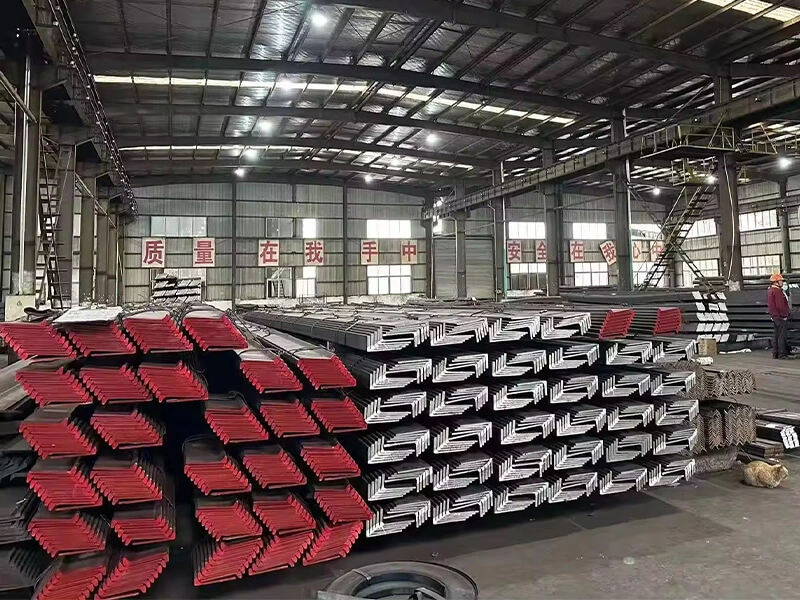
The steel in a ship is a system. Different kinds are used in different places, but they all share the common thread of marine certification. Let’s look at the full material palette.
The Shipbuilder’s Material Palette: Plates, Sections, and Special Steels
A ship’s structure can be broken down into the main material categories used.
1. Hull and Deck Plating (The Primary Material)
This is the largest volume of steel by weight.
- Material Type: Hot-rolled steel plate4. Thickness can range from 10mm to over 50mm.
- Common Grades: For most ocean-going vessels, High Strength Steel (HSS)5 like AH36 is the default choice. It provides the best strength-to-weight ratio.
- Standard Reference: Produced to standards like ABS Rules for Steel Plates or EN 10025.
2. Internal Structure: Profiles and Sections
This is where shapes like L-angles are used.
- Bulb Flat Steel: Perhaps the most important profile. It has a flat plate with a bulb (rounded edge) at one end. The bulb adds strength with minimal extra weight. It is the standard for longitudinal stiffeners running the length of the ship.
- L-Shaped Section Steel (Angle Bar): As discussed, used for frames, brackets, and secondary stiffeners.
- T-Bar, Flat Bar: Also used for various stiffening and detailing purposes.
- Material: These sections are rolled from the same marine-grade steels (AH32, AH36) as the plates.
3. Special Application Steels
For parts of the ship with unique demands.
- Corrosion-Resistant Steels: Grades like ASTM A690 are used in areas like upper decks and ballast tanks where corrosion is a major concern.
- Low-Temperature Steels: For ships operating in Arctic waters or carrying liquefied gases (LNG, LPG). These grades (e.g., AH36L, EH40L) are specially processed to retain toughness at temperatures as low as -60°C.
- Stainless Steels: Used for specific components: piping (316/316L), tank linings for chemical tankers, propeller shafts (often duplex grades), and kitchen equipment (304).
4. The Universal Requirement: Certification
No matter the kind, all ship steel shares one non-negotiable trait: it must be certified.
- Every plate and every bundle of L-angles must have a Mill Test Certificate (MTC)6 traceable to a specific heat of steel.
- The producing mill must be approved by the relevant classification society.
- The material is physically stamped with the grade, heat number, and class society mark.
Connecting to Our Business: Our product list—Marine Steel Plate, Marine Angle Steel, Bulb Flat Steel, L-shaped section steel—directly maps to this palette. We supply the certified components that shipyards and fabricators assemble. When Gulf Metal Solutions praised our "stable" quality and "best" packaging for ship plates, they were speaking to the heart of what makes marine steel reliable: consistent, well-documented, and protected material that arrives ready for work. The kind of steel used to build ships is, therefore, a kind that comes with a guarantee.
Conclusion
L-shaped steel is not just another material. It is a fundamental engineering solution that provides strength, simplifies construction, and reduces cost. Its ideal role in ship frame construction highlights a key principle: in shipbuilding, the smartest choice is often the simplest, most reliable, and most verifiable one.
-
Explore how carbon steel is essential for shipbuilding, providing strength and durability in marine environments. ↩ ↩ ↩ ↩ ↩
-
Learn about HSLA steel’s advantages in shipbuilding, including its strength and corrosion resistance. ↩ ↩ ↩ ↩ ↩ ↩
-
Understand the importance of marine classification standards in ensuring the safety and reliability of ships. ↩ ↩ ↩ ↩
-
Discover the role of hot-rolled steel plates in ship construction and their impact on structural integrity. ↩ ↩ ↩ ↩
-
Find out why High Strength Steel is the preferred choice for ship hulls and its benefits. ↩ ↩ ↩
-
Learn about the significance of MTCs in ensuring the quality and traceability of shipbuilding materials. ↩