
You see new steel profiles every year. Some look stronger or lighter. But shipyards still order marine angle steel in huge quantities. Why?
Marine angle steel remains essential because it offers the best balance of strength, weldability, and cost for ship hull framing. Its 90‑degree shape fits perfectly into corners and stiffens plates. No other profile works as well for general structural use across all ship types.
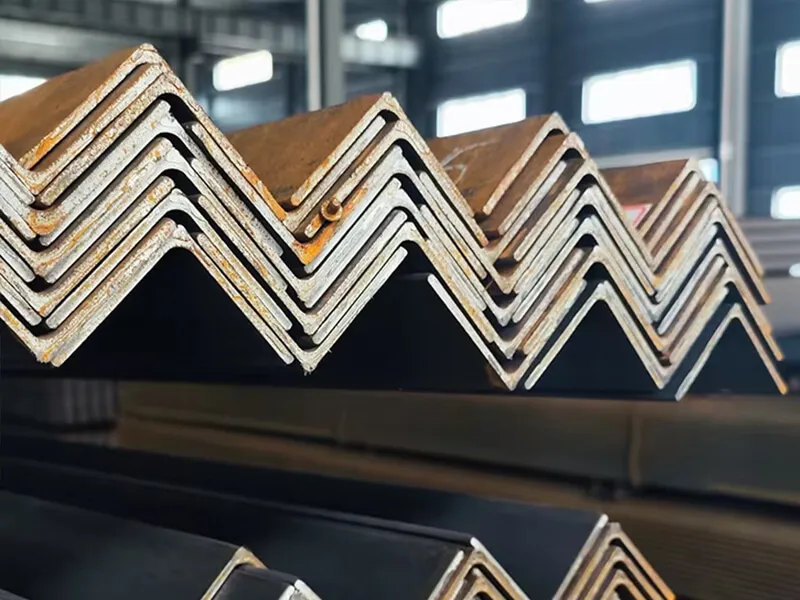
I am Zora Guo. My company supplies marine angle steel to shipyards and wholesalers in Vietnam, Saudi Arabia, and the Philippines. Many buyers ask me: “With all the new profiles, is angle steel still needed?” The answer is yes. Let me explain why this old shape remains a shipbuilding workhorse.
What Critical Structural Roles Does Marine Angle Steel Play in Hull Framing, Stiffening, and Load Distribution?
You look at a ship’s skeleton. You see many long beams and cross members. Some are flat, some are L‑shaped. The L‑shaped ones are angle steel.
Marine angle steel plays three critical roles. First, it works as frame members that support the outer hull plates. Second, it stiffens large flat areas like decks and bulkheads so they don’t buckle. Third, it distributes loads from cargo, waves, and machinery across the structure.
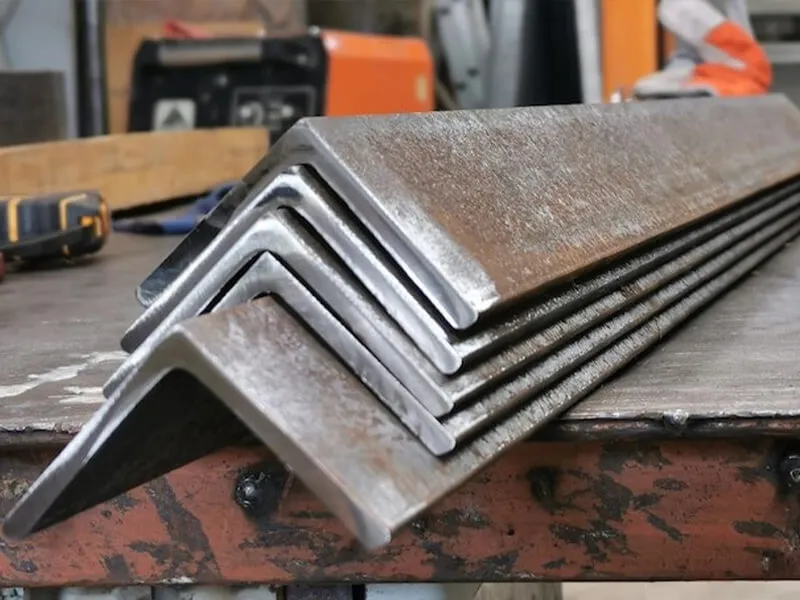
Let me break down each role with real examples from shipbuilding.
Role 1: Hull Framing (The Ship’s Ribs)
A ship’s hull is not just a thick steel plate. That plate would bend and flex too much. You need a framework behind it. The frames are like ribs. They run vertically or longitudinally. Marine angle steel is the most common shape for these ribs.
- The 90° corner fits neatly against the outer plate.
- One leg connects to the plate (welded along the edge).
- The other leg sticks out to give bending strength.
- This shape resists bending from water pressure better than a flat bar.
For example, on a bulk carrier, the side shell frames are often L150x90x12 or L200x100x14 angle steel. These frames run from the bottom to the deck. They keep the hull round and stiff.
Role 2: Stiffening Flat Surfaces (Decks and Bulkheads)
Large flat steel plates are weak. Push them from the side and they dent or buckle. So you weld stiffeners onto them. These stiffeners are usually angle steel.
Common stiffening applications:
- Deck plates – angle stiffeners run under the deck every 500‑800mm.
- Bulkheads (walls inside the ship) – vertical or horizontal angle stiffeners.
- Tank tops (the floor of cargo holds) – angles stiffen the plate against cargo loads.
I worked with a customer in Malaysia who built oil tankers. He told me: “For stiffening our deck, we tried using flat bars. They were cheaper. But the deck felt soft underfoot. We switched back to angle steel. The difference in stiffness was clear.”
Role 3: Load Distribution
Loads in a ship do not go straight down. They spread out. A heavy cargo in the hold pushes down on the tank top. That load then spreads to the side frames and then to the bottom shell. Angle steel helps transfer these loads.
How angle steel distributes loads:
- The leg welded to the plate carries tension or compression.
- The outstanding leg acts as a lever to spread the load.
- The corner radius (the fillet) reduces stress concentration.
Without proper load distribution, one area of the hull takes too much stress. Cracks start. Angle steel, placed in a grid pattern, spreads the load evenly.
Comparison of Structural Roles
| Role | What Angle Steel Does | Alternative Profile | Why Angle Is Better |
|---|---|---|---|
| Hull framing | Acts as ribs behind outer plate | Bulb flat | Angle gives better bending strength in two directions |
| Stiffening decks | Welded to plate to prevent buckling | Flat bar | Angle is stiffer for same weight |
| Load distribution | Spreads cargo and wave forces | Tee section (more expensive) | Angle is cheaper and easier to find |
How Does Angle Steel Compare with Other Profiles (Flat Bar, Bulb Flat, L‑Section) for Strength, Weight, and Cost?
You have choices. Flat bar is simple and cheap. Bulb flat is modern and efficient. L‑section is another name for angle steel. So how do you pick?
Compared to flat bar, angle steel is much stronger for the same weight. Compared to bulb flat, angle steel is cheaper and easier to weld, but bulb flat offers better strength‑to‑weight ratio in one direction. For general framing where loads come from multiple directions, angle steel wins on cost and availability.
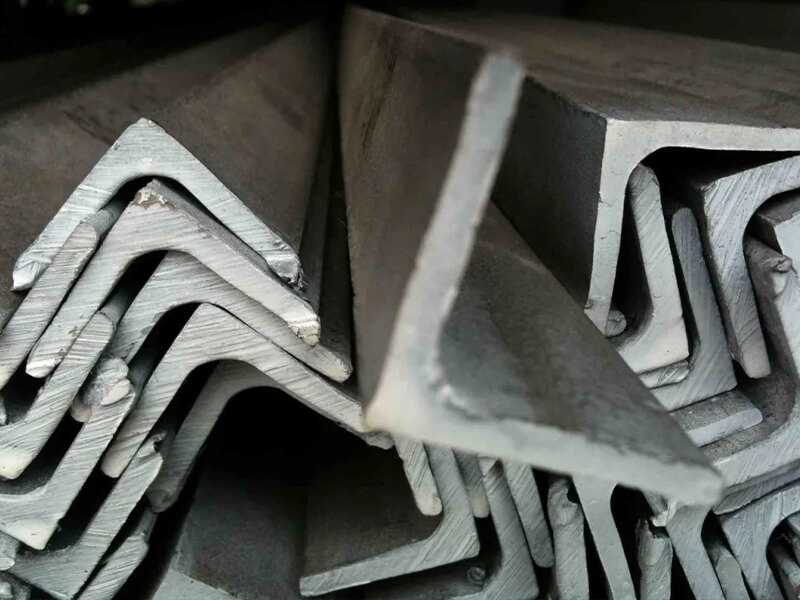
Let me give you a practical comparison. I use these numbers with my customers every week.
Strength Comparison (Same Weight)
Assume you have 10 kg per meter of steel. You can shape it as a flat bar, an angle, or a bulb flat.
| Profile | Dimensions (approx) | Section Modulus (cm³) | Relative Bending Strength |
|---|---|---|---|
| Flat bar | 100 x 12.7mm | 25 | 1.0 (baseline) |
| Equal angle | 90 x 90 x 8mm | 42 | 1.68 (68% stronger) |
| Bulb flat | HP 160 x 7.5 | 65 | 2.6 (160% stronger) |
So bulb flat is strongest for bending in one direction. Angle is stronger than flat bar. But angle also resists bending in the other direction (sideways). Bulb flat is weak sideways.
Weight and Cost Comparison
| Profile | Typical Cost per ton | Weldability | Availability | Best Use |
|---|---|---|---|---|
| Flat bar | Lowest (base) | Very easy (simple shape) | Everywhere | Light stiffeners, non‑critical |
| Angle steel | Low (10‑15% above flat bar) | Easy (good access to both legs) | Very high, all stock | General framing, decks, bulkheads |
| Bulb flat | Higher (20‑30% above flat bar) | Moderate (special welding technique) | Lower, long lead times | Optimum design, large ships |
What a Shipyard Owner Told Me
A customer in Vietnam runs a yard that builds 10‑12 fishing vessels per year. He tried using bulb flat for all his frames. He found that:
- Delivery took 3 months (angle steel was 4 weeks).
- Welders needed retraining (bulb flat has a tricky shape).
- The cost was 25% higher.
- The weight saving was only 8% for his small ships.
He went back to angle steel. He told me: “For my sized ships, angle steel is strong enough. The savings in price and lead time matter more than a few percent of weight.”
When to Choose Each Profile
| Your Situation | Recommended Profile | Why |
|---|---|---|
| Small ship (under 50m) | Angle steel | Good enough strength, cheap, fast delivery |
| Large ship (over 150m) | Bulb flat for longitudinal frames | Weight saving pays off |
| Deck stiffening | Angle steel (or bulb flat) | Both work, angle cheaper |
| Non‑structural parts | Flat bar | Cheap and simple |
| Tanker with strict weight limit | Bulb flat | Every ton saved is more cargo |
Why Does the Proven Combination of Strength, Weldability, and Availability Keep Angle Steel Indispensable in Shipyards?
You ask a shipyard buyer why he still uses angle steel. He says “It just works.” That is not a technical answer. But it is the truth.
Angle steel is indispensable because it combines three things that no other profile matches: predictable strength that engineers trust, easy weldability that fits any shipyard’s skills, and worldwide availability in all common sizes. You can get angle steel in any port city. You cannot always say that for bulb flat or special sections.

Let me expand on each of these three pillars.
Pillar 1: Proven Strength (100+ Years of Data)
Shipbuilders have used angle steel since iron ships replaced wood. That is over a century of real‑world performance. Every classification society has detailed rules for angle steel. The allowable stresses, the buckling formulas, the welding details – all are known and tested.
What “proven” means for you:
- No surprises. The steel behaves exactly as calculated.
- Design software has angle steel built in. You do not need special plugins.
- Repair yards know how to replace a damaged angle frame. Standard procedure.
I recall a conversation with a naval architect in Qatar. He told me: “I can design a ship using bulb flat. And I do for big tankers. But for 80% of my projects, I use angle steel. The time I save in design and checking is worth more than the small weight penalty.”
Pillar 2: Easy Weldability – Any Welder, Any Position
Welding angle steel is simple. The two legs give you good access. You can weld the inside corner (fillet weld) from one side. You can weld the outside corner from the other side.
Compare that to bulb flat. The bulbous head is round. You cannot easily weld the back side of the bulb. Special techniques and more experienced welders are needed.
Real impact on shipyards:
- A first‑year welder can weld an angle steel frame after one week of training.
- That same welder may need three months to weld bulb flat consistently well.
- Repair yards in remote ports may not have bulb flat specialists at all.
A customer in the Philippines repairs small cargo ships. He told me: “When I get a ship with bulb flat damage, I sometimes cut it out and replace with angle steel. Because my welders can do angle steel. Bulb flat would take twice as long.”
Pillar 3: Availability – In Stock Everywhere
I ship marine angle steel from Liaocheng, China to 15+ countries. But even if you do not buy from me, you can find angle steel in almost any steel port. Mills in China, Korea, Japan, India, Turkey, and Brazil all produce it.
Availability facts:
- Common sizes (L100x75x10, L125x80x12, L150x90x14) are stock items at most marine steel suppliers.
- Lead time for angle steel: 2‑4 weeks from order to delivery.
- Lead time for bulb flat: 6‑12 weeks often, because mills run fewer production campaigns.
For a shipyard that needs steel quickly to keep production moving, angle steel is the safe bet.
The Cost of Not Having Angle Steel
Imagine you design a ship using only bulb flat. The steel arrives late. Your production line stops. Workers stand idle. The cost of that delay is much higher than any weight saving. Angle steel’s reliability in supply chain keeps it essential.
How Do Classification Society Rules and Standard Structural Details Reinforce the Continued Use of Angle Steel?
You open the ABS rules for steel vessels. You see tables and tables of angle steel dimensions. You see approved connections. The rules make it easy to use angle steel. They make it harder to use non‑standard profiles.
Classification society rules (ABS, DNV, LR) include fully worked‑out design tables and connection details for marine angle steel. These rules have been refined over decades. Using angle steel means faster approval and less risk of rejection. Standard structural details in shipyard workshops are also built around angle steel.
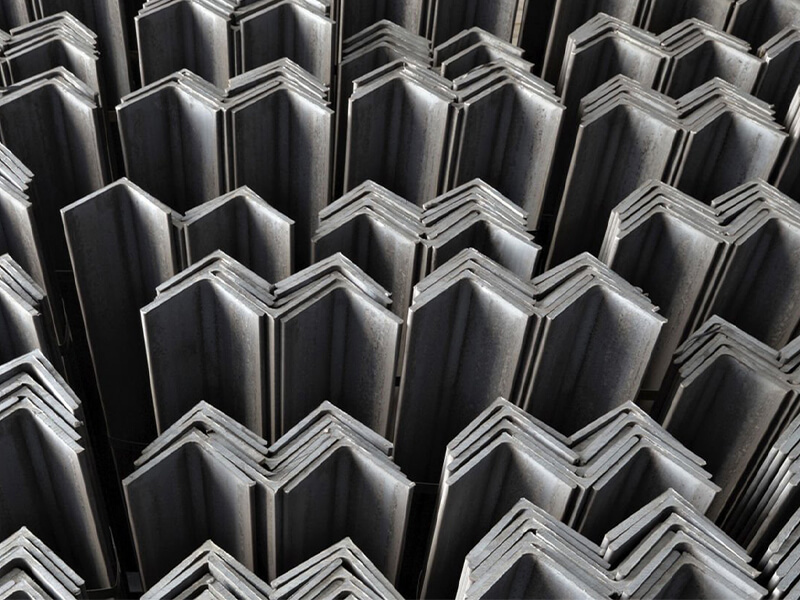
Let me show you how the rules favor angle steel.
Approved Dimensions Made Simple
Open the ABS “Rules for Building and Classing Steel Vessels”. You find a table that says: For a given frame spacing and hull plate thickness, use angle steel of this size. The designer does not need to calculate from scratch. Just look up the value.
| Frame Spacing (mm) | Plate Thickness (mm) | Recommended Angle Size |
|---|---|---|
| 600 | 10 | L100x75x8 |
| 700 | 12 | L125x80x10 |
| 800 | 14 | L150x90x12 |
| 900 | 16 | L200x100x14 |
For bulb flat, the rules are more complex. You need to calculate the required section modulus. Then find a bulb flat that matches. There is no simple lookup table for every situation.
Standard Connection Details
Shipyards have standard drawings for how to weld angle steel to plates, how to cut angle steel at corners, and how to join two angle steel frames. These details have been used for decades. They are proven to work.
Examples of standard details:
- End connection of an angle stiffener – a small cutout (sniped end) to avoid cracking.
- Intersection of two angle frames – one passes through, the other is cut and welded.
- Connection of angle to bulkhead – a lug or a direct weld.
These details are taught in welding schools. They are in every shipyard’s standard procedure book.
Approval Time and Risk
When a ship designer submits plans to a classification society for approval, the society checks every structural detail. If the designer uses angle steel with standard sizes and standard connections, the approval is fast. If the designer uses a non‑standard profile or a custom size, the society may ask for extra calculations or even model tests.
Time difference:
- Standard angle steel design: 2‑4 weeks for approval.
- Non‑standard profile: 6‑12 weeks, plus possible back‑and‑forth.
I have seen project delays because the designer chose a bulb flat size that was not in the society’s preferred list. The society asked for fatigue analysis. That took two months. The shipyard was not happy.
Real Example from a Tanker Project
A customer in Saudi Arabia (similar to Gulf Metal Solutions) was building four oil tankers. The original design used bulb flat for all longitudinal frames. The shipyard had limited bulb flat welding experience. The classification society asked for additional weld procedure qualifications. The project fell behind schedule.
The owner then asked: “Can we change to angle steel for the remaining three tankers?” The designer said yes. They resized the frames using standard angle steel from the ABS tables. The welders had no trouble. The approval came in three weeks. The last three tankers were delivered on time. That is the power of sticking with what the rules support.
Conclusion
Marine angle steel stays essential because it is strong enough, easy to weld, always available, and fully covered by class rules. No other profile matches all four.