
leading paragraph:
Your shipbuilding project stops because steel arrives late. Or the wrong grade. You lose money every day.
snippet paragraph:
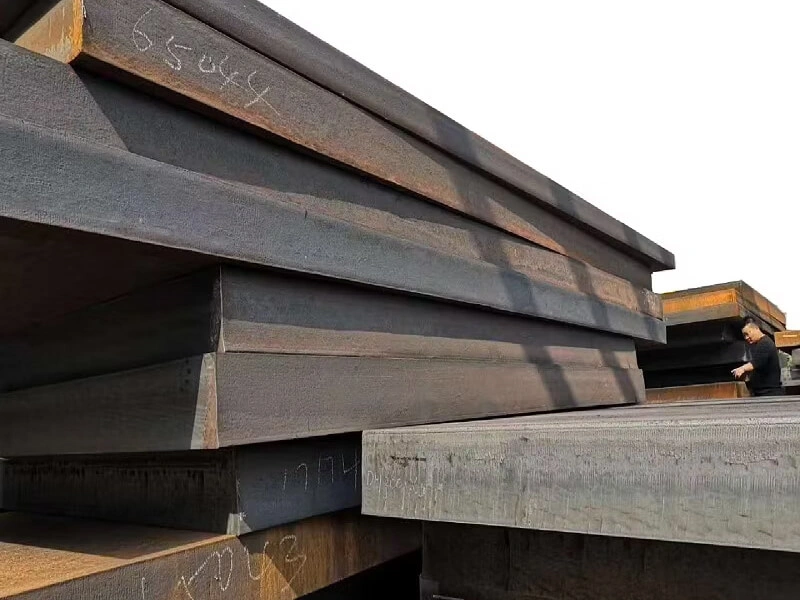
Project-based steel supply means a supplier plans, stocks, and delivers steel according to your build schedule. It is not spot buying. It is a partnership that keeps your marine project moving.
Transition Paragraph:
I am Zora Guo from Yichen. My company, cnmarinesteel.com, supplies marine steel to shipyards in Saudi Arabia, Vietnam, and the Philippines. I have seen projects fail because of bad steel sourcing. Let me show you why project-based supply is the answer.
What Is Project-Based Steel Supply and How Does It Differ from Spot Buying?
leading paragraph:
You need 500 tons of marine steel plate1. You call three local stockists. One has 100 tons. Another has 200. Nobody has everything.
snippet paragraph:
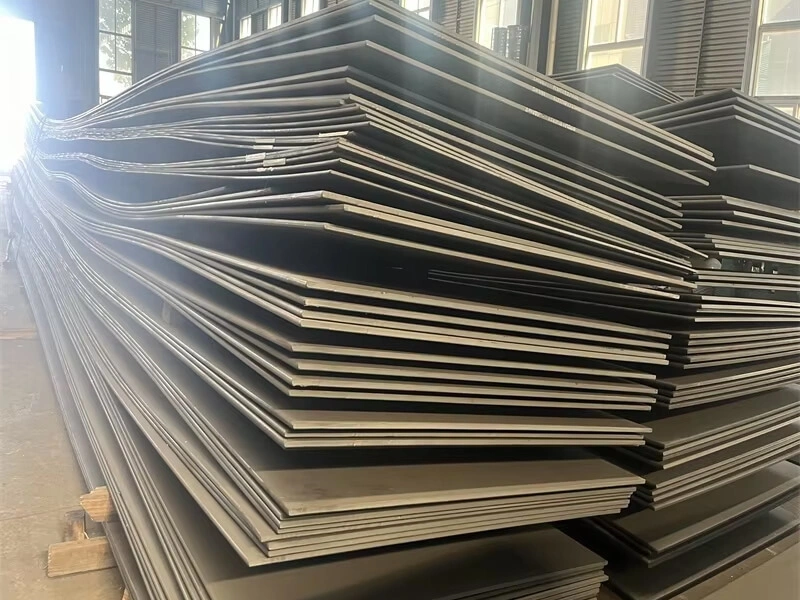
Project-based supply2 is a long-term agreement. The supplier reserves mill production for you. They deliver in batches as you need. Spot buying3 is one-time. You take whatever is left in stock.
Dive deeper Paragraph:
Let me explain this difference. Many buyers do not understand it. They think steel is steel. Just buy when you need it. That works for small repairs. It does not work for building a ship.
Spot buying explained
Spot buying means you call a supplier. You ask: “Do you have 100 tons of AH36 plate in stock?” If yes, you buy it. If no, you call another supplier. You take the price they give you. You take the thickness they have. You might get 12mm when you need 15mm. You make it work.
The problem with spot buying for marine engineering is simple. Shipbuilding needs many different sizes and grades. A single vessel uses steel plate from 6mm to 40mm thick4. It uses angle steel for stiffeners. It uses bulb flat steel for the bottom. No local stockist keeps all of that. They keep the fast-moving sizes. The rest you wait for.
Project-based supply explained
Project-based supply starts with a plan. You tell me your project schedule. You say: “I need 2000 tons over 6 months. Month one: 300 tons of 10mm plate. Month two: 400 tons of 15mm plate plus 50 tons of angle steel.” I go to the mill. I reserve production slots. I schedule the rolling mill to make your sizes.
Then I ship in batches. The first batch arrives when you start cutting steel. The second batch arrives when you finish the hull. No waiting. No gaps.
Here is a comparison table:
| Factor | Spot Buying | Project-Based Supply |
|---|---|---|
| Availability | Whatever is in stock | Reserved mill production |
| Price | Market price on that day | Fixed price for the project |
| Lead time | 1-2 weeks if in stock | Planned 4-6 weeks per batch |
| Size range | Limited to common sizes | Any size you specify |
| Quality consistency | Varies by batch | Same mill, same standard |
| Best for | Repairs, small jobs | New shipbuilding, offshore projects |
A real example from my work
I worked with a customer in Saudi Arabia. His name is Ahmed from Gulf Metal Solutions. He needed marine steel plate for a project. Before he found me, he bought spot from three different suppliers. One sent plates with surface rust. Another sent the wrong grade. He spent weeks chasing deliveries. His fabrication line stopped twice.
Then he switched to project-based supply with my company. We sat down. We planned the whole order. I reserved mill slots at a certified mill in China. We shipped in four batches over 5 months. Every batch arrived on time. Every plate passed SGS inspection. Ahmed told me: “Yichen is the first supplier who responded within two hours and kept that speed through the whole project.”
That is project-based supply. It is not just steel. It is reliability.
How Project-Based Supply Ensures On-Time Delivery for Shipbuilding and Offshore Projects?
leading paragraph:
Your shipyard has a delivery deadline. The client waits. Every day late costs you $10,000. Steel delays ruin everything.
snippet paragraph:
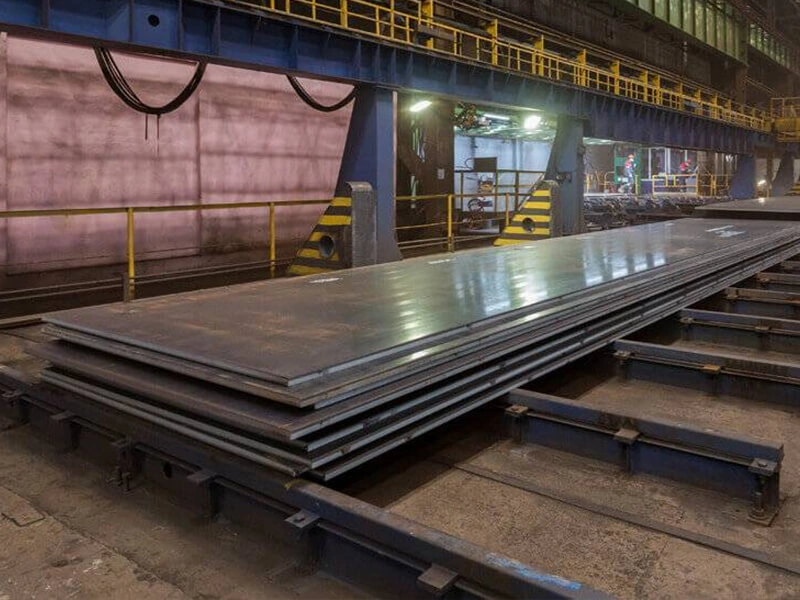
Project-based suppliers reserve mill production and shipping slots months ahead. They send steel in small batches that match your build speed. No waiting for mill re-rolls. No empty fabrication bays.
Dive deeper Paragraph:
On-time delivery is not luck. It is planning. I have seen too many marine projects fail because of steel delays1. The buyer orders 1000 tons from a spot supplier. The supplier says “4 weeks”. But after 4 weeks, only 200 tons arrive. The rest is “still at the mill”. The buyer waits another 4 weeks. The shipyard workers stand around. The client gets angry.
Why spot buying causes delays
Spot suppliers do not control the mill. They buy from traders. The traders buy from mills. Every hand adds time. Also, mills prioritize their own direct customers. A spot order is low priority. The mill will roll it when they have free time. That can take months.
How project-based supply fixes this
When you work with me on a project basis, I go to the mill directly. I have long-term cooperation with certified mills2 in China. I book rolling slots. That means the mill sets aside a specific time to produce your steel. For example, I tell the mill: “On March 15th, roll 300 tons of 10mm marine plate. On April 1st, roll 400 tons of 15mm plate.” The mill agrees. They put it in their schedule.
Then I book shipping. I work with freight forwarders who specialize in steel. I reserve container or bulk vessel space. I send your steel in batches. The first batch goes by sea freight. While it is on the water, the second batch is being rolled. The third batch is being scheduled. It is a continuous flow.
Batch delivery planning
| Batch | Month | Steel Type | Quantity | Shipping Method |
|---|---|---|---|---|
| 1 | Month 1 | 10mm marine plate | 300 tons | 20ft container x 6 |
| 2 | Month 2 | 15mm marine plate + L-shaped steel | 400 tons + 50 tons | Bulk vessel |
| 3 | Month 3 | 20mm plate + bulb flat steel | 350 tons + 80 tons | Bulk vessel |
| 4 | Month 4 | 25mm plate + marine angle steel | 300 tons + 40 tons | 40ft container x 5 |
What happens if a delay still occurs?
Sometimes the port is congested. Sometimes a typhoon stops shipping. A good project-based supplier has backup plans. I keep safety stock3 at my warehouse in Liaocheng, Shandong. If a mill batch is late, I pull from safety stock. I also work with two different mills. If one mill has a problem, the other can cover.
I also communicate. Every week, I send my customers a production update4. “Your steel is being rolled. It will finish on Friday. Loading on Monday.” No surprises. That is what Ahmed from Gulf Metal Solutions liked about us. He said we responded within two hours every time.
The cost of delay
Let me give you numbers. A medium shipyard spends $5,000 per day on labor and overhead. If steel is late by 10 days, that is $50,000 lost. And that is just direct cost. The client may charge a penalty. The reputation damage is worse. Project-based supply is cheaper than that risk.
I always tell my customers: pay a little more for project planning. It saves you a lot in delays.
Key Benefits for Marine Engineering: Quality Control, Traceability1, and Cost Stability?
leading paragraph:
You receive steel. It looks fine. But after welding, it cracks. The mill certificate2 is fake. Now you have a big problem.
snippet paragraph:
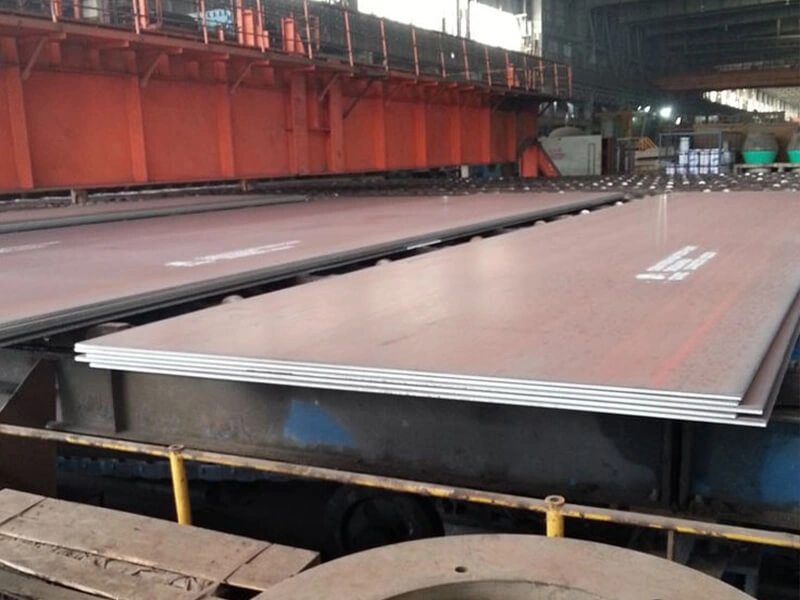
Project-based supply gives you full traceability from mill to site. Each plate has a heat number. You get real mill certificates. Quality is consistent. Prices are fixed. No surprises.
Dive deeper Paragraph:
Let me talk about three big benefits. These are the reasons marine engineers prefer project-based supply. I have seen it with my own eyes.
Quality control3
Marine steel is not ordinary steel. It must pass strict rules. Classification societies like DNV, ABS, BV, and LR set the standards. Your steel must have the right chemical composition4. It must pass impact tests5 at low temperatures. The surface must be free of cracks and laminations.
When you buy spot, you do not know where the steel came from. Maybe it was rejected by another buyer. Maybe it is from a small mill with poor quality control. I have seen steel that looked fine but failed ultrasonic testing. The buyer had to cut out whole sections of the hull. That cost a fortune.
With project-based supply, I source from certified mills only. I have worked with the same mills for years. I know their processes. Before I ship, I offer third-party inspection6. SGS or any inspector you choose can come to my warehouse. They check thickness, flatness, surface, and chemical composition. They take samples for lab testing. You get a report before the steel leaves China.
Traceability
Every piece of marine steel has a heat number. That number tells you the exact batch of molten steel. It tells you the date of production. It tells you the test results.
In spot buying, you often lose traceability. The supplier cuts plates and mixes them. The certificate does not match the steel. That is not allowed in marine engineering. The classification society will ask for traceability. If you cannot prove where the steel came from, they will reject it.
I keep traceability simple. Each plate has a painted heat number. I send you the mill certificate that matches that heat number. I also keep a copy in my office for 5 years. If you need to check something, just email me. I will find the record.
Cost stability7
Steel prices change every week. In spot buying, you pay the market price on the day you buy. If the price goes up 20% between your first order and your second order, you pay more. That kills your project budget.
In project-based supply, we fix the price at the beginning. I look at the market. I talk to the mill. I give you a price for the whole project. That price does not change, even if the market goes up. Of course, if the market drops a lot, I will not lower the price. But most marine projects prefer stability over gambling.
Benefit summary table
| Benefit | Spot Buying | Project-Based Supply |
|---|---|---|
| Quality consistency | Varies by supplier | Same mill, same standard |
| Traceability | Often lost or mixed | Full heat number tracking |
| Third-party inspection | Difficult to arrange | Offered on every order |
| Price | Market price at time of order | Fixed for project duration |
| Mill certificates | May be fake or mismatched | Original from certified mill |
My customer’s experience
Gulf Metal Solutions in Saudi Arabia had quality problems before. Their previous supplier sent marine plate with poor surface finish. The paint did not stick. They had to grind every plate. That added labor cost.
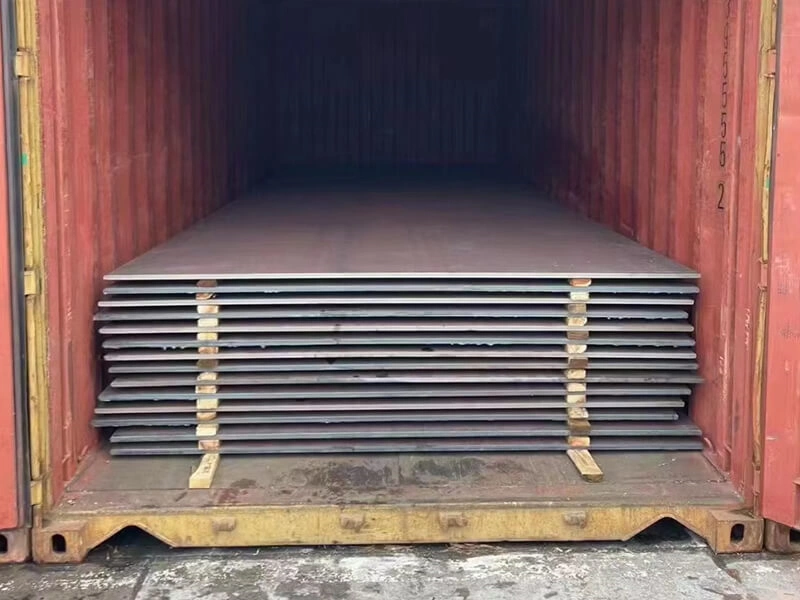
When they switched to us, we sent SGS inspection photos before shipment. The customer approved the surface. Then we shipped. The steel arrived in Dammam port. The customer checked it. They said the packaging was the best they had ever seen. The plates were stacked on wooden pallets. Each layer had plastic film. No rust. No damage.
That is what project-based supply delivers. It is not just steel. It is peace of mind.
How to Choose a Steel Supplier for Long-Term Marine Projects?
leading paragraph:
You talk to ten suppliers. All say “we are the best”. You do not know who to trust. One wrong choice costs you a year.
snippet paragraph:
Look for suppliers with mill cooperation1, third-party inspection2 support, English-speaking staff, and a track record3 in your country. Ask for references. Test with a small order4 first.
Dive deeper Paragraph:
Choosing a supplier is like choosing a partner. You will work together for months or years. I have seen good partnerships and bad ones. Let me help you pick the right one.
Step 1: Check mill cooperation
A good supplier does not just buy from traders. They work directly with mills. Ask them: “Which mills do you work with? Can you show me a mill authorization letter?” A supplier with direct mill access can reserve rolling slots. They can get you custom sizes. A trader cannot.
At Yichen (cnmarinesteel.com), I work with three certified mills in China. I have visited their factories. I know their quality. I can send you photos of the rolling line if you ask.
Step 2: Ask about third-party inspection
Any serious marine steel5 supplier should accept SGS, BV, or other inspection. If they say no, that is a red flag. Why would they refuse? Maybe their quality is bad. Maybe they do not have proper documentation.
I always offer SGS inspection6. The buyer pays the fee, but I arrange the inspector. The inspector checks everything. Then the buyer gets a report. If something is wrong, I fix it before shipping. That is how it should work.
Step 3: Test their communication7
This is a big one. Many Chinese suppliers have poor English. Or they take days to reply. In a marine project, you need fast answers. A delay in communication causes a delay in delivery.
Before you place a big order, send a test inquiry. Ask three questions. See how fast they reply. See if they understand your needs. At my company, I have a rule: reply within 2 hours during working days. My customer Ahmed said that was the first thing he noticed.
Step 4: Check experience in your country
Different countries have different import rules. Some require specific certificates. Some have port restrictions. A supplier who has shipped to your country before knows these things.
I have shipped to Saudi Arabia, Vietnam, Malaysia, Philippines, Thailand, and many others. I know the documents needed for each port. I know which shipping lines are reliable. If a supplier says “we ship everywhere”, ask for examples. Ask for a bill of lading copy.
Step 5: Start with a small order
Do not commit to 2000 tons on the first order. Start small. Order one container. Test the quality. Test the delivery time. Test the after-sales support. If everything is good, then scale up.
I welcome small test orders. Many of my big customers started with 50 tons. They saw the quality. Then they ordered 500 tons. Then 2000 tons. That is how trust is built.
Selection checklist
| Criteria | What to look for | Red flag |
|---|---|---|
| Mill access | Direct cooperation, mill authorization | Only traders, no mill name |
| Inspection | Accepts SGS/BV, provides reports | Refuses inspection |
| Communication | Reply within 24 hours, fluent English | Slow replies, language barrier |
| Country experience | Has shipped to your port before | No experience, asks you for everything |
| Small order | Accepts MOQ of 1 container or less | Requires huge minimum order |
My final advice
Do not choose the cheapest supplier. Marine steel is not a commodity. The cost of steel failure is much higher than the savings from a cheap price. Choose a supplier who communicates well, offers inspection, and has a track record. That supplier will save you money in the long run.
I am Zora Guo. You can reach me at sales@chinaexhaustfan.com. Visit my website at https://cnmarinesteel.com/. I am happy to answer your questions. I can send you a sample mill certificate. I can arrange a video call to show you our warehouse. Just ask.
Conclusion
Project-based steel supply gives you on-time delivery, stable quality, and fixed costs. It keeps your marine project moving. Choose the right partner.
-
Understanding mill cooperation is crucial for ensuring quality and reliability in your steel supply chain. ↩ ↩ ↩ ↩
-
Third-party inspections ensure quality and compliance, protecting your investment in marine projects. ↩ ↩ ↩ ↩
-
A solid track record indicates reliability and quality, essential for long-term partnerships. ↩ ↩ ↩ ↩
-
Starting small allows you to test quality and service before making larger commitments. ↩ ↩ ↩ ↩
-
Understanding marine steel sourcing can help you make informed decisions and avoid costly errors. ↩ ↩
-
SGS inspection is a trusted quality assurance method that can safeguard your project from defects. ↩ ↩
-
Effective communication is key to successful partnerships; learn how to assess this before committing. ↩ ↩