
For decades, ship frames were built with heavy, complex sections. This changed with the marine angle steel. Its simple L-shape solved many problems. Today, a ship’s skeleton relies on this profile. But why is this specific shape so dominant in modern shipbuilding?
Shipbuilders choose marine angle steel for strength frames because it offers an excellent strength-to-weight ratio, is easy to fabricate and install, and provides versatile connection points. Its L-shaped profile efficiently resists bending and buckling in multiple directions, making it the ideal, cost-effective choice for ship ribs, beams, and stiffeners.
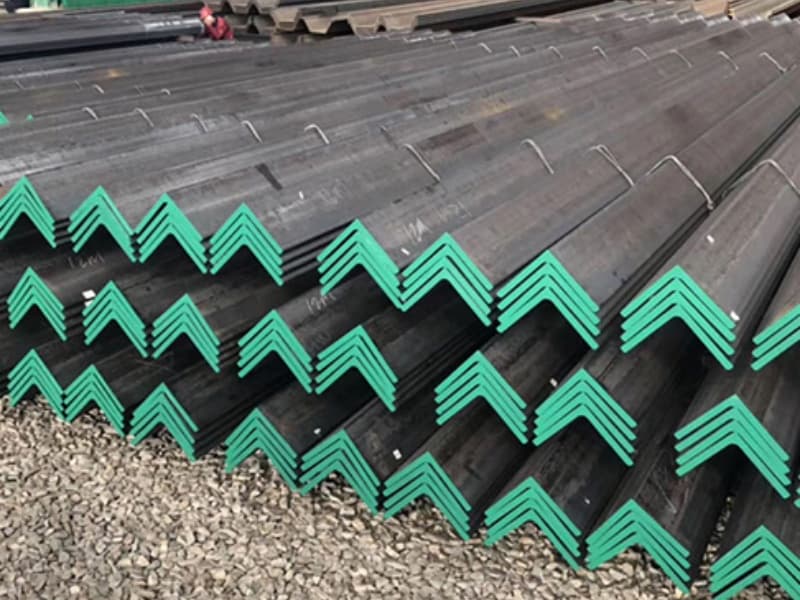
The answer goes deeper than just "it’s strong." The real reasons involve physics, economics, and practical shipyard work. I have supplied angle steel to shipyards from the Gulf of Mexico to the Middle East. I see the same reasons come up every time. In this article, I will break down the science and the real-world advantages. You will understand exactly why this unassuming piece of steel is the backbone of vessels worldwide. We will also look at the specific steel grades that make it work. This knowledge will help you make better material choices for your next project.
Which type of steel is most commonly used in shipbuilding due to its strength and durability?
Walk through any major shipyard. You will see piles of steel plates and long, L-shaped bars. The most common steel is not a single exotic alloy. It is a reliable, tough category designed for the sea’s punishment.
The most commonly used type of steel in shipbuilding for strength and durability is High Tensile Steel (HTS)1, specifically grades like AH36/DH36/EH362. These steels offer higher yield strength3 (355 MPa or more) than mild steel4, allowing for lighter, stronger structures that can withstand dynamic ocean loads and harsh environments.
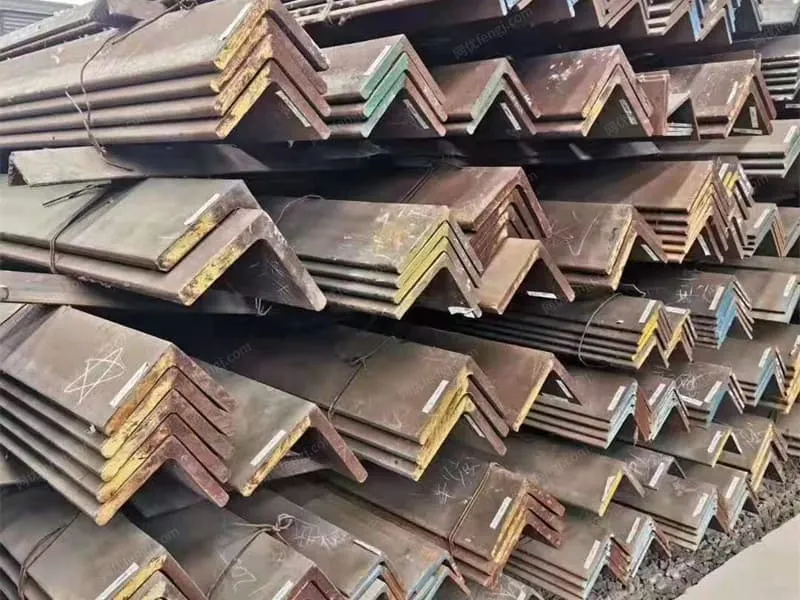
Understanding the "High Tensile Steel" Family for Ships
When people say "shipbuilding steel," they usually mean high tensile steel that meets classification society rules. It is not one steel, but a family. The choice depends on the ship’s size, service area, and the specific part being built.
The Problem with Ordinary Mild Steel
Mild steel (like ASTM A36) is strong, but it has limits for large, modern ships. Its yield strength3 is typically around 235 MPa. To build a large bulk carrier or container ship with mild steel4, you would need very thick, heavy plates and frames. This heavy weight would reduce the ship’s cargo capacity (deadweight) significantly. It would also use more fuel. The economics do not work.
How High Tensile Steel Solves the Weight Problem
High Tensile Steel (HTS)1 has a higher yield strength3. Common marine grades start at 355 MPa (like AH36). This means it can handle the same stress as mild steel4 but with a thinner, lighter section. For example, a frame made from AH36 steel can be up to 25% lighter than one made from A36 steel doing the same job. This weight saving translates directly into more cargo or better fuel efficiency. For ship owners, this is a crucial financial advantage.
The Alphabet of Toughness: A, D, E, and F Grades
Not all high tensile steel is the same. The letters indicate its toughness level, measured by Charpy Impact Tests5 at low temperatures.
- A Grade (e.g., AH36): This is the standard grade. It has good strength and is tested at 0°C (32°F). It is used for most parts of a ship in general service.
- D Grade (e.g., DH36): This steel offers improved toughness. It is tested at -20°C (-4°F). Shipbuilders use it for critical areas or for ships operating in colder waters.
- E Grade (e.g., EH36): This offers even higher toughness, tested at -40°C (-40°F). It is for extreme conditions, like Arctic routes or for highly stressed areas.
- F Grade (e.g., FH36): This is the highest grade, with testing at -60°C (-76°F). It is for specialized ice-breaking vessels6 or the most critical components.
Why This Matters for Marine Angle Steel
When you order marine angle steel7, you are almost always ordering one of these HTS grades. A frame made from AH36 angle is strong and cost-effective for a tanker. A bracket in the bow of an ice-class supply boat might need DH36 or EH36 angle to resist brittle fracture in impact. The supplier must provide the correct Mill Test Certificate8 proving the grade and the impact test results. This is what buyers like Gulf Metal Solutions always verify. They need to know the angle steel they distribute meets the exact project specifications, whether it’s for a warm-water port service vessel or a North Sea platform supply ship.
| Steel Grade Category | Common Example | Typical Yield Strength | Key Characteristic | Primary Use in Shipbuilding |
|---|---|---|---|---|
| Mild Steel | ASTM A36, S235 | ~235 MPa | Good weldability, lower cost, lower strength. | Small boats, non-critical inland waterway structures, some interior fittings. |
| High Tensile Steel (HTS)1 | AH36, DH36, EH36 | 355 MPa & above | Higher strength allows for weight reduction. Improved low-temperature toughness. | The standard for most ocean-going vessels. Used for hull framing, decks, bulkheads. |
| Special Grades | Arctic Grades (e.g., EH40), Corrosion-Resistant | Varies | Enhanced properties for specific extreme conditions like very low temperatures or chemical exposure. | Ice-going vessels, chemical tankers, specialized offshore units. |
What is the purpose of the steel angle?
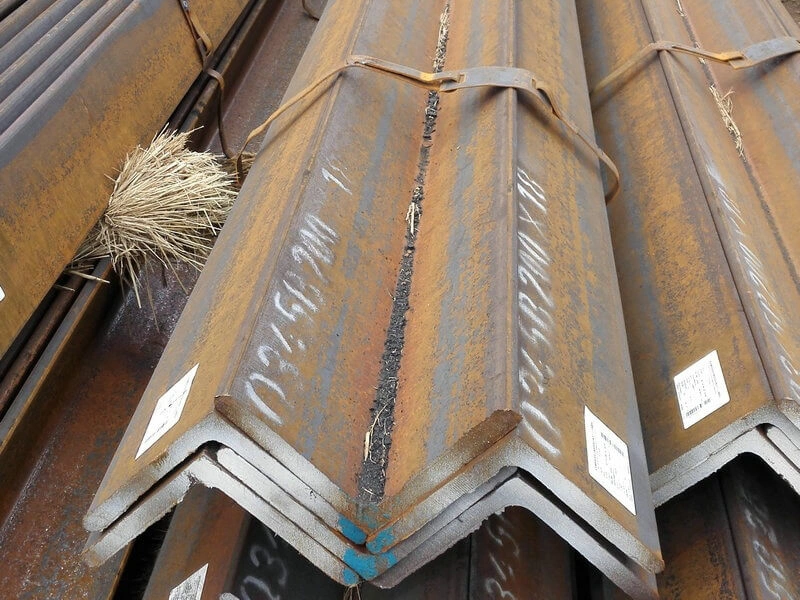
Look at a steel angle. It seems simple. But its simple shape is its superpower. In a ship’s complex skeleton, this L-shaped profile has one main job: to provide stiffening and structural integrity.
The purpose of a steel angle in shipbuilding is to act as a stiffener or frame. It reinforces flat steel plates (like the hull or deck) to prevent buckling and deformation under load. Angles transfer stress, provide attachment points for other components, and help maintain the ship’s shape against water pressure and cargo weight.
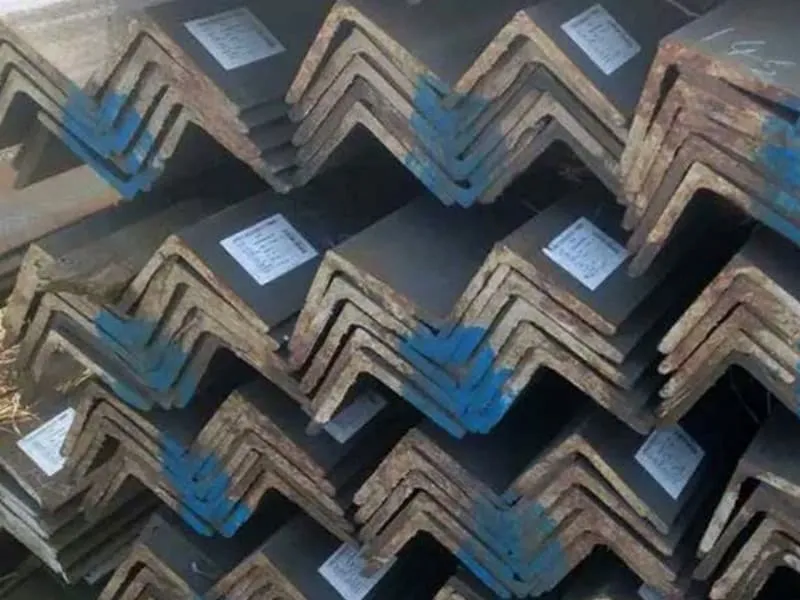
The Multi-Role Performer: More Than Just a Stiffener
Calling an angle bar just a "stiffener" is correct, but it understates its versatility. In practice, it serves several interconnected purposes that are vital for a ship’s life.
1. The Primary Role: Fighting Buckling
A large, flat steel plate is strong but flexible. When you push on it (like water pressure on the hull), it can buckle or bend inward. This is dangerous. By welding steel angles vertically onto the plate, you create "ribs." These ribs break the large, flat area into smaller, stronger panels. The angle’s shape gives it high resistance to bending along its length. It acts like a spine, holding the plate straight. This is why you see rows of angles forming the ship’s frame.
2. Creating a Structural Skeleton
Angles are the bones of the ship. They run longitudinally (fore and aft) and transversely (athwartships). Where they intersect, they are welded together. This creates a rigid grid structure. This grid distributes all the forces on the ship—wave slamming, engine vibration, cargo weight—throughout the entire hull. It prevents stress from concentrating in one spot.
3. The Connection Point
The two legs of the angle provide perfect surfaces for welding or bolting other parts. For example:
- Brackets: Smaller angles are often used as brackets to connect beams to frames or to support equipment.
- Deck Beams: Angles are frequently used as deck beams, supporting the deck plate. Other structures can then be bolted to the vertical leg of the angle beam.
- Mounting: Piping, electrical conduits, and interior panels can be secured to angle frames.
4. Contributing to Overall Strength (Section Modulus)
From an engineering point of view, the angle’s shape is efficient. Its material is distributed away from its neutral axis (the center of bending). This gives it a good "section modulus." A higher section modulus means it is better at resisting bending forces. For a given weight of steel, an L-shape offers more bending resistance than a simple flat bar. This efficiency is why it is chosen over other shapes for many framing applications.
A Real-World Example from Our Clients
One of our clients, a fabricator in Vietnam, builds modular sections for container ships. They order large quantities of marine angle bars in specific lengths. They use the angles primarily as transverse frames. These frames are welded to the inner side of the hull plate. They also weld longitudinal angles (called "stiffeners") between these frames. This creates the classic grid. They told me that the accuracy of the angle’s dimensions is critical. If the leg length or thickness is off, it makes their automated fitting and welding process much slower. This highlights how the angle’s purpose is not just structural; its precision directly impacts shipyard productivity and cost.
| Purpose of Steel Angle | How It Achieves This | Practical Example on a Ship |
|---|---|---|
| Prevent Plate Buckling | Acts as a rigid rib, increasing the plate’s resistance to bending and deformation. | Vertical frames welded to the side shell (hull) plates. |
| Create Structural Grid | Intersects with other angles/beams to form a load-distributing skeleton. | Transverse frames meeting longitudinal stiffeners in the double-bottom tank. |
| Provide Attachment Surfaces | Two perpendicular legs offer easy welding/bolting faces. | Brackets connecting deck beams to bulkheads; supports for machinery foundations. |
| Resist Bending Efficiently | Its L-shape places material effectively to maximize strength per unit weight. | Used as deck beams where strength is needed but weight must be controlled. |
What is the best steel for ship building?
Asking for the "best" steel is like asking for the best tool. The answer depends entirely on the job. For shipbuilding, the best steel is the one that perfectly balances strength, toughness, weldability, and cost for a specific vessel and its operating conditions.
There is no single "best" steel for all shipbuilding. The optimal choice is High Tensile Steel graded by classification societies (like ABS, LR, DNV). For most ocean-going vessels, grades like AH36 or DH36 offer the best balance of high strength, good toughness, excellent weldability, and cost-effectiveness, allowing for lighter, stronger, and more efficient ships.
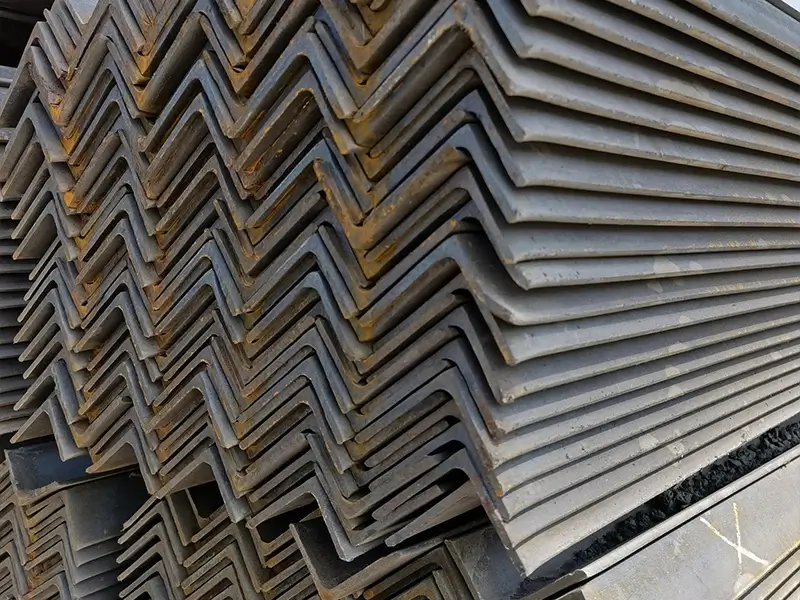
Evaluating "Best" Across Key Criteria
To determine the best steel, we must judge it against the non-negotiable requirements of a ship. A steel that is strong but unweldable is useless. A steel that is cheap but cracks in cold water is dangerous.
Criterion 1: Strength and Weight Efficiency
This is where High Tensile Steel (HTS) clearly wins over mild steel. As discussed, its higher yield strength (355, 390, or 420 MPa) allows for thinner structures. This reduces the ship’s steel weight, which increases cargo capacity (deadweight tonnage). For a commercial ship owner, more cargo means more revenue per voyage. Therefore, for large cargo vessels, HTS is objectively "better" than mild steel.
Criterion 2: Toughness and Fracture Resistance
A ship sails through storms and cold seas. The steel must not become brittle. The Charpy Impact Test is the key measure here. The best steel has the right toughness grade (A, D, E, F) for its environment. For a coastal ferry in Southeast Asia, AH36 may be sufficient. For an oil tanker operating in the North Atlantic, DH36 is a better, safer choice. The "best" steel has a documented toughness that matches or exceeds the operational demands.
Criterion 3: Weldability
A ship is essentially a giant welded structure. The steel must weld easily without pre-heat or special procedures (for most joints). It must also not form cracks in the weld or the heat-affected zone. Modern marine HTS grades are designed with this in mind. They have controlled levels of carbon and carbon equivalent (CE). A lower CE generally means better weldability. A steel with excellent strength but poor weldability would drive construction costs sky-high and create reliability risks.
Criterion 4: Cost and Availability
"Best" must include economic reality. EH36 is tougher than AH36, but it is also more expensive. Using EH36 for an entire hull of a ship trading in tropical waters would be an unnecessary cost. The best steel is the one that meets all technical requirements at the lowest reasonable cost. Furthermore, it must be available in the required quantities, sizes, and with proper certification. A theoretically perfect, obscure steel alloy that no mill produces in angle form is not the "best" for shipbuilding.
The Verdict: It’s a Balanced System
Therefore, the industry has converged on normalized High Tensile Steels like AH/DH/EH 36/40 as the "best" general-purpose shipbuilding materials. They are not exotic. They are a refined, standardized, and optimized product. They offer a proven, reliable package. When a buyer from the Philippines contacts me for a newbuild fishing vessel, we discuss their route, size, and class requirements. Based on that, we recommend AH36 grade angles and plates as the best fit. For a Romanian client building barges for the Danube, where thickness is less critical, we might suggest a standard S355 grade. The "best" is always defined by the project’s specific technical and commercial needs.
| Selection Criterion | What "Best" Means Here | How Common Marine HTS (e.g., AH36/DH36) Performs |
|---|---|---|
| Strength/Weight Ratio | High yield strength to allow thin, light sections. | Excellent. 355 MPa yield allows significant weight savings vs. mild steel. |
| Toughness | High impact energy absorption at service temperatures. | Very Good to Excellent. A/D/E grades cover most global sailing routes. |
| Weldability | Easy to weld without defects or complex procedures. | Excellent. Designed with controlled chemistry (CE) for shipyard welding. |
| Cost-Effectiveness | Optimal performance per unit cost. | Optimal. Provides the major benefits of HTS at a market-competitive price. |
| Availability & Certification | Readily available from certified mills with proper MTCs. | Excellent. It is the global standard, produced worldwide to class rules. |
What is the main advantage of using high tensile steel for ship building?
The main advantage is clear and drives almost every material decision in modern ship design. It is the reason shipbuilders moved away from mild steel for large vessels.
The main advantage of using high tensile steel (HTS) for shipbuilding is weight reduction. HTS’s higher strength allows for the use of thinner plates and smaller frame sections without sacrificing structural integrity. This directly increases the ship’s cargo carrying capacity (deadweight) and improves fuel efficiency, leading to significantly lower operating costs over the vessel’s life.
The Ripple Effect of Weight Savings
Weight reduction is not just a minor benefit. It is a fundamental economic advantage that influences the entire ship’s design and profitability.
The Direct Impact: More Deadweight Tonnage (DWT)
A ship’s weight is divided into two main parts: the lightship weight (the ship itself) and the deadweight (the cargo, fuel, water, and stores it can carry). The total displacement is fixed by the ship’s dimensions and hull shape. If you make the ship’s structure (lightship) lighter, you automatically have more capacity for paying cargo. For a bulk carrier, every ton of steel saved is potentially one more ton of iron ore or grain it can transport. This is pure revenue.
The Secondary Impact: Improved Fuel Efficiency
A lighter ship requires less power to move at the same speed. This reduces fuel consumption. Fuel is one of the largest operating costs for a ship. Over a 25-year lifespan, even a small percentage of fuel savings adds up to millions of dollars. Furthermore, with global regulations on carbon emissions (like the EEXI and CII), using HTS to build a more efficient ship is now also a compliance strategy.
The Design Impact: Larger Holds or Different Stability
The weight saved in the structure can be used in other ways. For container ships, it might allow for slightly taller holds or stronger deck stacks. For all ships, it improves stability margins. The saved weight gives naval architects more flexibility to optimize the design.
A Counterpoint: The Cost of HTS
The advantage comes with a higher material cost per ton. High tensile steel is more expensive than mild steel. This is the trade-off. However, the economic calculation almost always favors HTS for ships above a certain size. The extra cost of the steel is quickly paid back by the increased earning potential of the vessel. The break-even point is reached early in the ship’s life. Ship owners and shipyards perform these calculations carefully. They would not use HTS if the math did not work.
From the Supplier’s Perspective
We see this advantage play out in orders. When a shipyard is bidding on a new vessel, their technical department specifies the exact HTS grades. They have already calculated the required plate thicknesses and frame sizes. When they send us an inquiry for marine angle steel, they specify "AH36" or "DH36" not just for strength, but because their entire design and commercial model depends on the weight savings it provides. They cannot achieve the promised cargo capacity to the owner if they use heavier, mild steel angles. Our job is to deliver material that reliably meets that HTS specification, ensuring their weight calculations and strength assumptions are correct. This is why certification and consistent quality are so critical. An angle bar that does not meet the minimum yield strength is not just a quality failure; it is a potential economic and safety failure for the finished ship.
| Aspect of Advantage | How HTS Delivers This | Quantitative Example (Illustrative) |
|---|---|---|
| Increased Cargo Capacity | Reduces lightship weight, freeing up displacement for payload. | Saving 500 tons of structural weight can allow a bulk carrier to carry 500+ extra tons of cargo per voyage. |
| Lower Fuel Consumption | Lighter hull requires less propulsive power. | A 5% reduction in lightship weight can lead to 2-4% lower fuel use at cruising speed. |
| Enhanced Design Flexibility | Saved weight can be re-allocated to other features or improve stability. | Allows for stronger deck structures on container ships or extra ballast capacity. |
| Lifecycle Cost-Effectiveness | Higher upfront steel cost is offset by greater lifetime earnings and lower operating costs. | The premium for HTS is often recouped within the first few years of operation through increased revenue and fuel savings. |
Conclusion
Marine angle steel is the chosen frame material because its L-shape provides efficient strength, easy fabrication, and reliable performance. When made from the right high tensile steel grade, it delivers the vital advantage of weight reduction, making modern, efficient ships possible.
-
Explore this link to understand the advantages of HTS in shipbuilding, including its strength and weight benefits. ↩ ↩ ↩
-
Learn about the specific applications and characteristics of these steel grades crucial for shipbuilding. ↩
-
Discover the significance of yield strength in selecting materials for ship construction and performance. ↩ ↩ ↩
-
Understand why mild steel is less suitable for modern ships and the implications for design and efficiency. ↩ ↩ ↩
-
Find out how Charpy Impact Tests determine the toughness of steel, essential for safe shipbuilding. ↩
-
Discover the unique requirements for ice-breaking vessels and the specialized materials that ensure their performance. ↩
-
Explore the role of marine angle steel in ship construction and how it affects structural integrity. ↩
-
Learn about the significance of Mill Test Certificates in ensuring quality and compliance in shipbuilding materials. ↩