
Are you still designing with standard-grade steel? You might be wasting space, fuel, and profit. The global shift to high-strength steel is not just a trend; it’s a fundamental redesign of vessel economics.
Shipyards are shifting to high-strength marine steel plates to significantly reduce hull weight. This directly increases cargo capacity (deadweight), improves fuel efficiency, and enhances structural performance. Using grades like AH36/DH36 or AH40/DH40 allows for thinner, lighter sections without sacrificing strength, making ships more profitable and competitive.
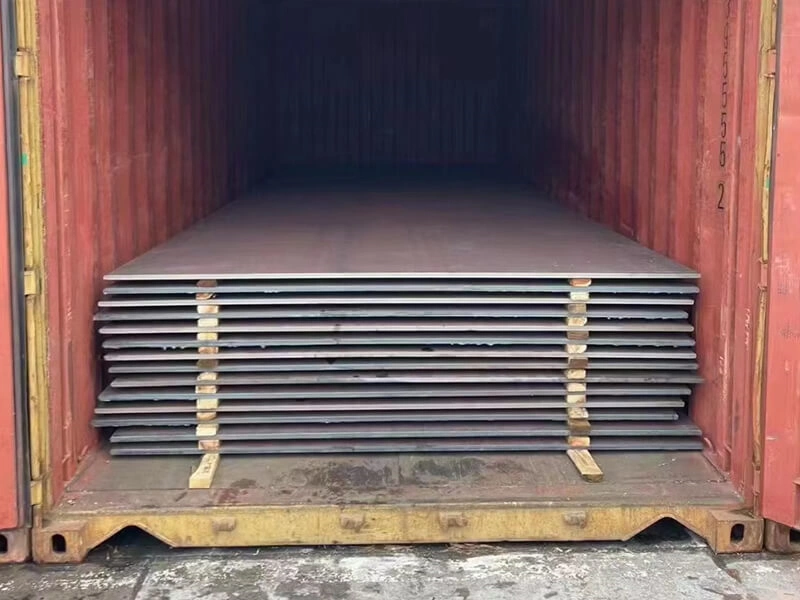
Every day, I speak with shipyard managers who face the same pressure: build more with less. The questions they ask about specific steel types reveal the knowledge gap between simply buying steel and strategically selecting materials. Let’s clear up common confusions about stainless, grades, and applications. This will show you why the move to high-strength steel is a smart business decision, not just a technical one.
Is 304 or 316 stainless steel1 marine grade?
You need corrosion-resistant steel for a railing or a tank. You hear "stainless steel is marine grade." This is a dangerous oversimplification. Choosing the wrong type can lead to rapid failure in a saltwater environment.
For marine applications, 316 stainless steel1 is generally considered "marine grade," while 304 is not. The key difference is Molybdenum2 (Mo). 316 contains 2-3% Mo, which dramatically increases its resistance to pitting3 and crevice corrosion4 in chloride-rich environments like seawater. 304 lacks Molybdenum2 and is prone to corrosion in sustained marine exposure.
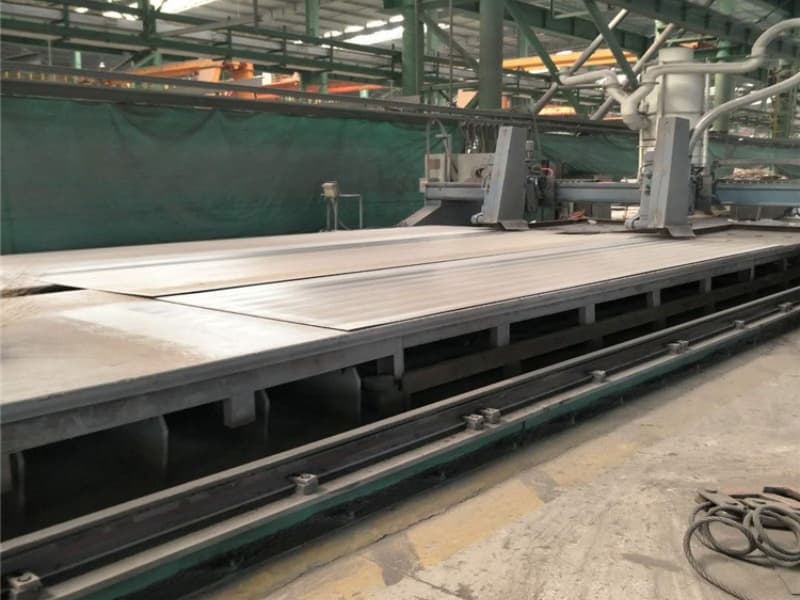
Demystifying Stainless Steel for Marine Use: It’s All About Molybdenum
The term "marine grade" is used loosely. For structural shipbuilding, it refers to high-strength, low-alloy (HSLA) steels like AH36. For corrosion-resistant applications, it refers to specific stainless steel alloys. Confusing these two worlds leads to costly mistakes.
Let’s break down why 316 is the minimum viable choice for most marine applications and why even it has limits.
The Chemistry of Resistance:
- 304 Stainless Steel (A2): Contains 18% Chromium (Cr) and 8% Nickel (Ni). Chromium forms a passive oxide layer that resists rust. This is fine for indoor or coastal architectural use but inadequate for continuous immersion or salt spray.
- 316 Stainless Steel (A4): Contains 16-18% Cr, 10-14% Ni, and 2-3% Molybdenum2 (Mo). Molybdenum2 is the game-changer. It strengthens the passive layer, making it much more resistant to attack from chloride ions, which are abundant in seawater.
Practical Applications and Limits:
Even 316 stainless is not a "fit-and-forget" solution for all marine parts. Its performance depends on the specific conditions:
- Good for: Deck fittings, railings, hardware, fasteners, and tanks for certain chemicals or freshwater. It performs well when regularly washed by rain or spray.
- Risk Areas: Stagnant seawater, underwater hull parts, or areas with poor oxygen flow (crevices). Here, 316 can still suffer from crevice corrosion4 or pitting3. For these extreme conditions, more advanced grades like 316L (low carbon, better weldability), 317L (higher Mo), or duplex stainless steels5 (e.g., 2205) are used.
High-Strength Steel vs. Stainless Steel: A Critical Distinction:
This is where the shift in shipyards becomes clear. They are not replacing structural hull plates with 316 stainless. That would be astronomically expensive. Instead, they are shifting from normal-strength hull steel (like Grade A, yield strength 235 MPa) to high-strength, low-alloy (HSLA) steel like AH36 (yield strength 355 MPa).
| Material | Typical Use on Vessels | Key Property | Cost Relative to Mild Steel | Why Shipyards Choose HSLA Over Stainless for Structure |
|---|---|---|---|---|
| Mild Steel (Grade A) | Older hulls, non-critical structures. | Low cost, easy to fabricate. | 1x (Baseline) | Being phased out for primary structure due to weight penalty. |
| High-Strength Steel (AH36/DH36) | Modern hulls, decks, bulkheads. | High strength-to-weight ratio. | ~1.1x – 1.3x | Allows lighter, stronger hulls. The core of the economic shift. |
| 316 Stainless Steel | Railings, tanks, decorative trim, some pumps. | Excellent corrosion resistance. | ~5x – 7x | Prohibitively expensive for large structures. Used selectively. |
| Duplex Stainless (e.g., 2205) | Chemical tankers, offshore harsh environment components. | High strength + superior corrosion resistance. | ~6x – 9x | Specialized use only, justified by cargo or extreme service. |
My insight comes from troubleshooting. A fabricator in Malaysia ordered 304 stainless plates for an enclosed seawater ballast tank lining, believing "stainless is stainless." Within months, they reported severe pitting3. We had to explain the need for at least 316L. This experience highlights a rule: in marine procurement, the generic name is never enough. You must specify the exact grade and understand its environmental limits. For the primary hull, the economic calculation is different. The extra 10-30% cost for AH36 over mild steel is paid back many times over through fuel savings across the vessel’s life. That’s the real shift.
What is the difference between AH and DH steel?
You see both AH361 and DH362 on a ship’s structural plan. They look almost the same, but a single letter difference dictates where on the vessel they can be used and determines the ship’s operational limits.
The difference between AH and DH steel is the guaranteed impact toughness temperature3. AH steel (e.g., AH361) is tested at 0°C, while DH steel (e.g., DH362) is tested at -20°C. The "D" indicates superior low-temperature toughness, making DH grades mandatory for hull structural members in ships operating in cold waters to prevent brittle fracture.
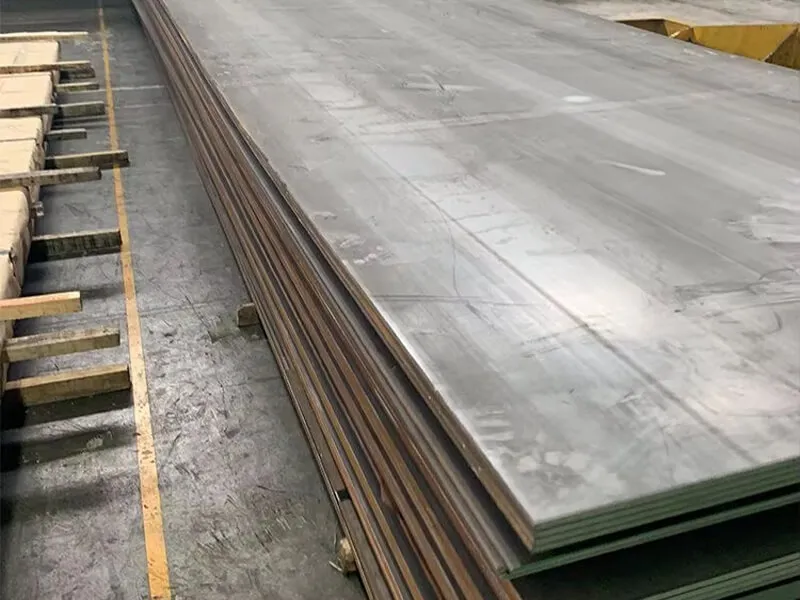
The Alphabet of Safety: How Temperature Grades Define Vessel Design
The "H" in AH and DH stands for "High tensile strength." Both have the same minimum yield strength (e.g., 355 MPa for "36" grades). The first letter—A or D—is a safety code for temperature. This is not a trivial detail; it is a central pillar of naval architecture that the high-strength shift depends on.
Understanding the Toughness Requirement:
Steel can behave differently at cold temperatures. At room temperature, it is ductile—it bends and deforms before breaking. At very low temperatures, some steels can become brittle, meaning they can crack suddenly with little warning under stress. For a ship hull in icy waters, this is catastrophic.
The Charpy V-Notch (CVN) Impact Test4 measures this property. A small, notched sample is struck by a pendulum at a specific temperature. The energy absorbed to break it is recorded.
- AH361: Must meet minimum impact energy values when tested at 0°C.
- DH362: Must meet the same (or higher) energy values when tested at -20°C.
Application on a Vessel:
The ship’s classification society rules (ABS, DNV, LR, etc.) define a "Rule Length" and designate critical structural regions5. These regions, typically the forward part of the hull and areas subject to high dynamic loads, require steel with adequate low-temperature toughness.
- A vessel operating only in tropical waters might use AH361 for most of the hull.
- A vessel designed for global trade or North Atlantic routes will have DH362 specified for all primary hull members in the forward regions and other critical areas.
- EH36 (tested at -40°C) and FH36 (tested at -60°C) are used for Arctic-class vessels and icebreakers.
Why This Matters for the High-Strength Shift:
The move to high-strength steel6 isn’t just about switching from "A" to "H." It’s about applying the correct temperature grade7 within the high-strength family. A shipyard building a new generation of efficient container ships for global trade isn’t just using AH361; they are primarily using DH362. This ensures the weight-saving benefits of high-strength steel6 are matched with the safety required for worldwide operation.
Here is how grades are allocated on a typical large container ship:
| Structural Region | Typical Grade Requirement | Reason | Impact on Supply |
|---|---|---|---|
| Bottom Shell & Inner Bottom (Forward 0.4L) | DH362 | High dynamic wave impact loads; cold seawater. | Must be sourced from mills capable of consistent DH-grade production. |
| Side Shell (Forward Region) | DH362 | Slamming loads from waves. | |
| Deck (Midship) | AH361 or DH362 | Lower dynamic loads; may be colder but dry. | Allows for some mixing, but DH is increasingly standard for simplicity. |
| Internal Bulkheads (Non-critical) | AH32 or AH361 | Static loads, protected environment. | Can use slightly lower grade or standard AH to optimize cost. |
| Superstructure | AH32 or AH361 | Lower strength requirement, weight saving high up is beneficial. |
From our position in the supply chain8, we see a clear trend: the demand for DH-grade material is rising faster than for AH. Shipyards want the safety margin and operational flexibility. This puts pressure on suppliers. Not all mills can consistently produce DH362 with perfect certification. We have to work closely with our partner mills to reserve capacity for these higher-value, technically demanding grades. For a shipyard, choosing a supplier means verifying they can reliably deliver not just "H36," but the correct DH36 with valid -20°C impact test reports for the critical blocks. This technical capability is a key part of the value in a modern steel partnership.
Is 316 SS suitable for seawater?
You plan to use 316 stainless for a component in constant seawater contact. It’s marketed as marine-grade, but will it last? The answer is not a simple yes or no; it depends on the service conditions you define.
316 stainless steel1 is suitable for many seawater applications2 but with important limitations. It performs well in flowing, aerated seawater (like for pipes, pump shafts) where its passive layer can regenerate. However, in stagnant, low-oxygen, or high-temperature seawater (e.g., under deposits, in crevices, or heat exchanger tubes), it is susceptible to localized pitting3 and crevice corrosion4, which can lead to failure.
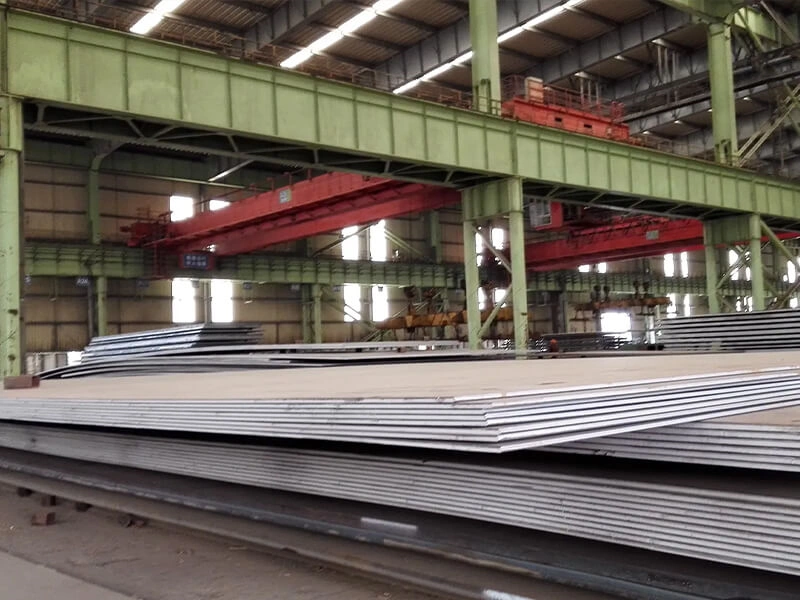
Navigating the Corrosion Map: Where 316 Succeeds and Where It Fails
Labeling 316 as "suitable" or "unsuitable" for seawater is misleading. A better approach is to map its corrosion behavior against specific in-service parameters. This understanding prevents premature failure and guides the selection of even more advanced materials when needed.
The Conditions for Success (Where 316 Works):
- Flowing, Aerated Seawater: Movement brings fresh, oxygenated water, which helps maintain the protective chromium oxide layer. Examples: propeller shafts (with proper cathodic protection5), seawater intake pipes, overboard discharge lines.
- Intermittent Exposure: Components that are regularly washed by rain or spray and can dry out. Examples: deck fittings, railings, hardware.
- Low-Temperature Service: Corrosion rates generally increase with temperature. 316 is more reliable in cold seawater than in warm tropical waters.
The Conditions of Risk (Where 316 Can Fail):
- Crevice Corrosion: This is the Achilles’ heel. Any tight gap (under a gasket, washer, or marine growth) creates a stagnant, oxygen-depleted zone. Chloride ions concentrate here, break down the passive layer, and cause intense localized attack. This is a common failure point.
- Stagnant or Slow-Moving Water: In ballast tanks, especially during long empty periods, or in pipes with low flow, corrosion risk increases.
- Elevated Temperature: In heat exchangers or engine cooling systems using seawater, temperatures above about 25-30°C significantly accelerate pitting risk.
- Galvanic Corrosion: If 316 is electrically connected to a less noble metal (like carbon steel or aluminum) in seawater, it can accelerate the corrosion of the other metal, and itself can be affected.
The Shift to High-Strength Steel in Context:
This detailed discussion about 316’s limits highlights why shipyards are not using stainless for hulls. The hull is a massive structure with countless welds (potential crevices), areas of stagnant flow, and exposure to varying temperatures. Protecting it with 316 would be technically problematic and economically impossible. Instead, the industry uses a different strategy for the hull:
- High-Strength, Low-Alloy Steel (AH/DH): For the primary structure. This provides the strength and toughness.
- Protective Coatings + Cathodic Protection: A multi-layer paint system and sacrificial anodes (or impressed current systems) protect the carbon steel hull from corrosion. This is a cost-effective, proven system for large areas.
The shift to high-strength steel6 makes this protective system even more efficient because there is less surface area to protect (thinner plates).
| Application Scenario in Seawater | Suitability of 316 Stainless | Alternative/Better Material | Connection to Hull Material Strategy |
|---|---|---|---|
| Fastener for Deck Hardware | Good (if sized correctly, crevices minimized). | 316L, or 2205 Duplex for critical fasteners. | The deck itself is high-strength steel6, painted. Fasteners are a small, specialized item. |
| Seawater Cooling Pipe | Fair for cold, flowing water. Risky for warm, slow flows. | CuNi 90/10, 6Mo super austenitic (e.g., 254 SMO), Titanium. | Piping is a system; the hull is another. High-strength steel choice doesn’t change pipe material science. |
| Ballast Tank Interior | Poor (stagnant water, crevices at welds). | Specialized epoxy coatings7 on AH/DH steel. Coatings are the primary defense. | The tank is made from thinner, lighter AH/DH plates, then coated. This is the core economic and technical solution. |
| Large Hull Plate | Extremely Poor (cost-prohibitive, welding challenges, risk of crevice corrosion4 at seams). | AH36/DH36 steel with coatings + cathodic protection5. | This is the definitive answer. High-strength steel is the optimized material for this vast application. |
My insight is practical. A ship repair yard in the Middle East constantly replaced 316 bolts on carbon steel structures. They were suffering from galvanic corrosion8. We advised them to either use insulating washers or switch to a more compatible fastener material. This small change saved them recurring costs. It also illustrates a principle: material selection is a system-wide decision. The hull’s shift to high-strength steel6 is the biggest material decision, but it must be complemented by correct material choices for all attached components. Understanding the precise limits of "marine-grade" materials like 316 is essential to support that primary structural shift effectively.
What is high-strength steel for submarines1?
Submarines operate in the most demanding environment: immense pressure, corrosion, and the need for stealth. The steel they use represents the pinnacle of marine metallurgy, and its development drives innovation for surface ships too.
High-strength steel for submarines is a specialized, ultra-high-strength, low-alloy steel with exceptional toughness and weldability2, designed to withstand extreme hydrostatic pressure at depth. Grades like HY-80, HY-100, and modern HSLA-80/100 have yield strength3s of 80,000 or 100,000 psi (550-690 MPa), far exceeding commercial shipbuilding4 grades, and undergo rigorous processing and testing to ensure integrity in a single-hull pressure vessel.
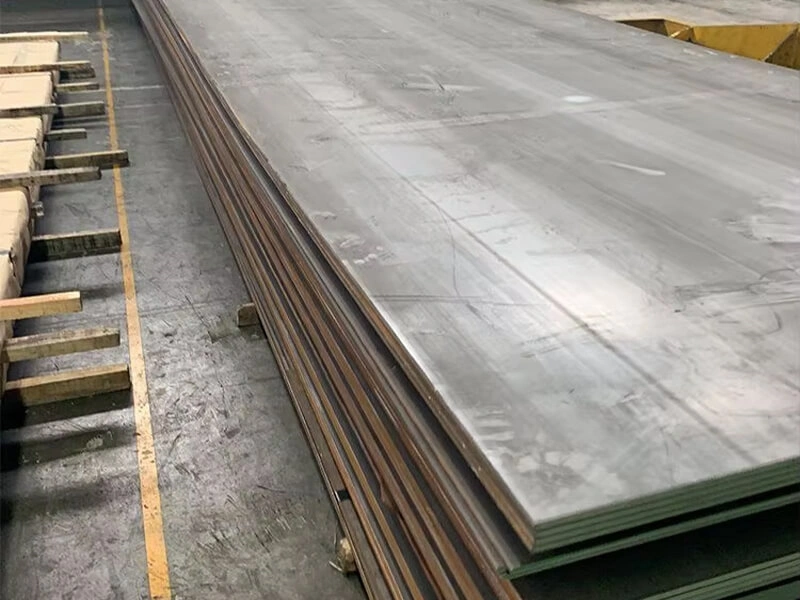
The Apex of Marine Steel: Where Military Demands Influence Commercial Shipping
Submarine steel is in a different league from commercial AH36/DH36. However, the technological advances and quality control philosophies developed for submarines filter down and influence the entire marine steel industry, including the commercial shift to high-strength plates5.
Why Submarines Need Such Extreme Steel:
A submarine’s pressure hull is a perfect cylinder that must resist crushing external pressure. The critical depth is directly related to the steel’s yield strength3 and the hull’s diameter and thickness. Higher strength allows for either a greater operating depth with the same thickness or a thinner, lighter hull for the same depth. Weight is critical for buoyancy and performance.
Key Characteristics of Submarine Steel:
- Ultra-High Strength with High Toughness: This is the ultimate challenge. Increasing strength often reduces toughness (makes the steel more brittle). Submarine grades like HY-100 achieve a yield strength3 of 690 MPa while maintaining exceptional fracture toughness6 at low temperatures. This is achieved through precise chemistry and advanced Quenched & Tempered (Q&T) heat treatment7.
- Superb Weldability: The entire hull is welded. The steel must be weldable without pre- or post-heat treatment over a wide range of conditions, and the weld metal must match the base metal’s properties. This demands very low carbon content and careful balancing of alloying elements.
- Extreme Quality Control: Every single plate is subjected to non-destructive testing8 (ultrasonic, radiographic) for internal defects. Chemical and mechanical properties are tested with a frequency far beyond commercial standards.
The Connection to Commercial Shipbuilding:
Commercial shipyards are not building with HY-100. The cost and processing are prohibitive. But the principles are influential:
- Demand for Consistency: The "zero-defect" mentality of military supply is becoming more expected in high-end commercial projects. Buyers demand full traceability and perfect certification.
- Advancement in TMCP: Modern commercial high-strength steels (AH40, AH47) use TMCP technology to achieve higher strengths without the expensive Q&T process. TMCP was developed from fundamental research that also benefits military applications.
- Focus on Weldability: The drive for easier, more reliable welding in commercial HSLA steels mirrors the submarine requirement. It leads to steels with lower carbon equivalents (CE), reducing cracking risk and speeding up construction.
Comparison: Submarine vs. Commercial High-Strength Steel:
| Attribute | Submarine Steel (e.g., HY-100 / HSLA-100) | Commercial High-Strength Steel (e.g., AH40 / FH40) | Trend Influence |
|---|---|---|---|
| Yield Strength | 690 MPa (100 ksi) minimum. | 390 – 460 MPa (AH40 / AH47). | Commercial grades are getting stronger, closing the gap for specialized vessels like icebreakers. |
| Primary Process | Quenched & Tempered (Q&T) heat treatment7. | Thermo-Mechanical Controlled Process (TMCP)9. | TMCP is a cost-effective way to boost commercial steel performance, inspired by the need for property control. |
| Key Property | Extreme fracture toughness6 at depth (high pressure). | Good toughness at low air/water temperatures. | The focus on guaranteed low-temperature toughness (DH, EH, FH grades) is a direct parallel to the submarine need. |
| Quality Assurance | 100% ultrasonic testing of every plate; rigorous lot testing. | Sample testing from each heat; MTC provided. | Commercial buyers increasingly request additional UT inspection for critical applications. |
| Cost Driver | National security, low volume, extreme processing. | Market competition, high volume, optimized processing. | The technology trickles down, making advanced properties more affordable for commercial use. |
Working with mills that also serve specialized sectors gives us a perspective. The same focus on process control that makes a good DH36 plate is a smaller-scale version of what’s needed for military grades. When a commercial shipyard asks us for EH36 (for -40°C) with extra-thick plates for an ice-class vessel, the technical dialogue is closer to the submarine world. We have to ensure the mill’s cooling process is precisely calibrated. This shows that the shift in commercial shipbuilding4 isn’t just to any high-strength steel, but to higher grades with more guaranteed properties (moving from AH32 to AH36 to AH40, and from A to D/E/F temperature grades). It’s a move up the technological ladder, following the path paved by the most demanding applications like submarine construction.
Conclusion
The shift to high-strength marine steel plates is a calculated strategic move. It leverages advanced metallurgy to build lighter, stronger, and more efficient vessels, directly translating to increased profitability and compliance with modern economic and environmental demands.
-
Explore the advantages of high-strength steel in submarine construction, ensuring safety and performance under extreme conditions. ↩ ↩ ↩ ↩ ↩ ↩ ↩ ↩ ↩ ↩ ↩ ↩
-
Weldability is vital for submarine hull integrity; learn how it influences construction and safety. ↩ ↩ ↩ ↩ ↩ ↩ ↩ ↩ ↩ ↩ ↩ ↩ ↩ ↩ ↩
-
Understanding yield strength is crucial for submarine design, impacting depth capabilities and hull integrity. ↩ ↩ ↩ ↩ ↩ ↩ ↩ ↩
-
Discover how innovations in submarine steel technology are shaping advancements in commercial shipbuilding. ↩ ↩ ↩ ↩ ↩ ↩ ↩
-
High-strength plates are essential in various industries; explore their applications and benefits. ↩ ↩ ↩ ↩ ↩
-
Fracture toughness is critical for submarine safety; learn how it prevents catastrophic failures. ↩ ↩ ↩ ↩ ↩ ↩ ↩
-
Discover how Q&T heat treatment enhances steel properties, crucial for submarine durability and performance. ↩ ↩ ↩ ↩
-
Non-destructive testing ensures the integrity of steel; learn about its importance in submarine construction. ↩ ↩ ↩
-
TMCP is a game-changer in steel production; learn how it improves strength and reduces costs. ↩