
Your shipbuilding project stops. The steel plate did not arrive. Or it arrived and failed inspection.
Vet suppliers by their production capacity and delivery records. Ask for mill certificates and past shipment proof. Then check their on‑time delivery rate.
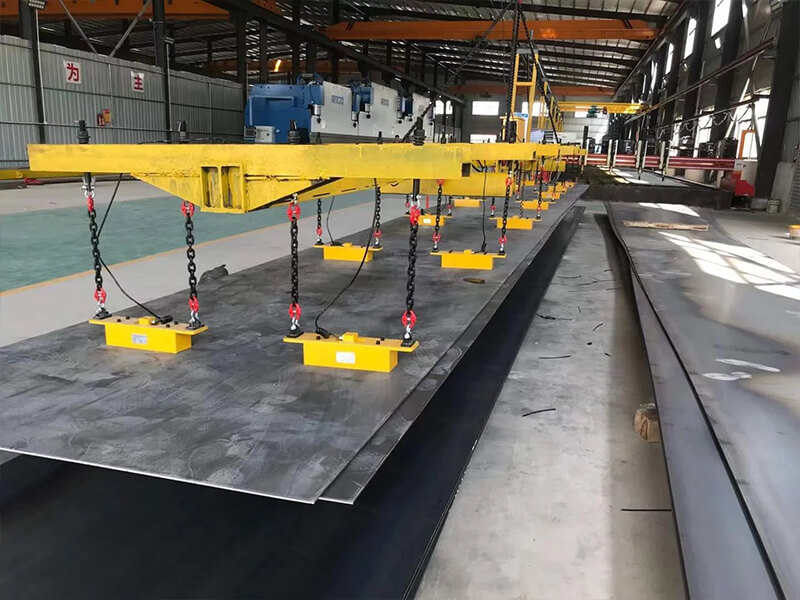
You might think all suppliers are the same. I have seen too many buyers learn the hard way. Let me walk you through four ways to keep your project on track.
How Do You Vet Suppliers for Reliable Production Capacity and On‑Time Delivery Track Records?
You ask a supplier for 500 tons of marine steel plate. They say “no problem.” Then you wait. And wait. No steel comes.
Ask for mill cooperation proof and past bills of lading. Then call their previous clients. A good supplier shows you their production schedule and delivery records openly.
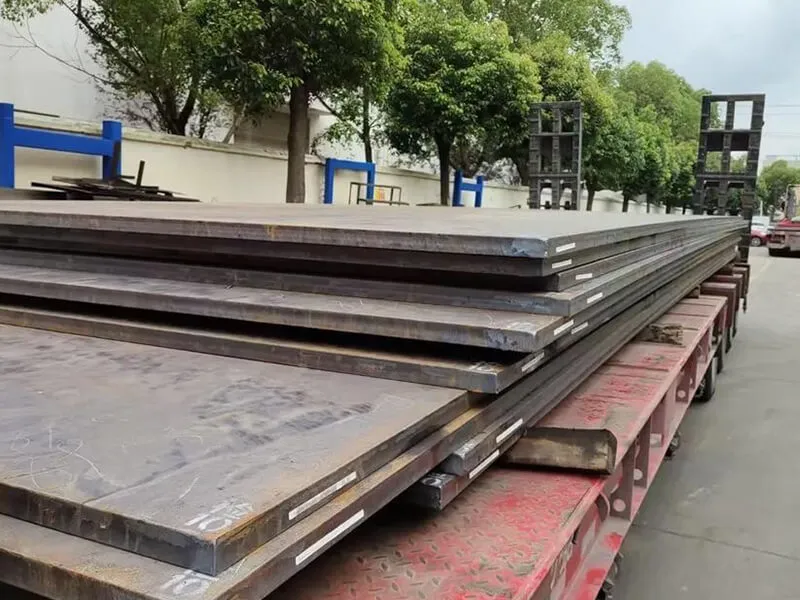
What Should You Look for in a Supplier’s Capacity?
Many buyers only check the price. That is a mistake. I learned this from a client in Pakistan. He chose the cheapest supplier for his bulk carrier project. That supplier did not own any mill relationship. They were just a trading desk. So when the order came, the supplier had to find a mill. That search took three weeks. Then the mill said “we are fully booked for two months.” The buyer lost 11 weeks total.
So here is what I recommend you check. First, ask the supplier for the name of the mill they work with. Then ask for a copy of the mill’s production license or ISO certificate. Second, ask for three past bills of lading. These show the actual shipment dates. Compare the bill of lading date with the order confirmation date. That gap tells you the real lead time.
Third, ask for client references. A serious supplier gives you two or three past clients you can call. I give my clients the phone numbers of our customers in Vietnam and Saudi Arabia. They can ask anything about our delivery speed.
How Do You Verify the On‑Time Delivery Record?
A supplier can say “we are always on time.” But you need proof. Here is a simple table with the documents you should ask for:
| Document | What it shows | Red flag |
|---|---|---|
| Mill certificate (MTC) | Steel origin and heat number | No mill name or generic certificate |
| Bill of lading | Actual shipment date | Date is much later than promised |
| Packing list with weight | Quantity shipped | Numbers do not match the invoice |
| Past client reference calls | Real delivery experience | Supplier hesitates to give contacts |
I also suggest you check the supplier’s production status. Do they own a mill? Or do they just buy from others? In our case, we work with certified mills in Liaocheng. We do not own the mills. But we have long‑term contracts with them. That means we get fixed production slots every month. So we can promise a delivery date with confidence.
Another thing: ask about their stock. A good integrated supplier keeps safety stock of common sizes. For example, we keep marine steel plate sizes like 2.4m x 12m in our warehouse. That stock protects you against mill delays. If the mill runs late, we pull from stock. Your project does not stop.
So when you vet a supplier, do not just listen to their sales pitch. Ask for proof. Check the documents. Call their past clients. That extra hour of work can save you months of delay.
What Pre‑Shipment Quality Inspections and Documentation Checks Prevent Costly Rejections?
You receive 300 tons of steel plate. The surface has deep rust pits. The thickness is wrong. The mill certificate does not match. Your project stops again.
Arrange a third-party inspection before shipment. Check the surface
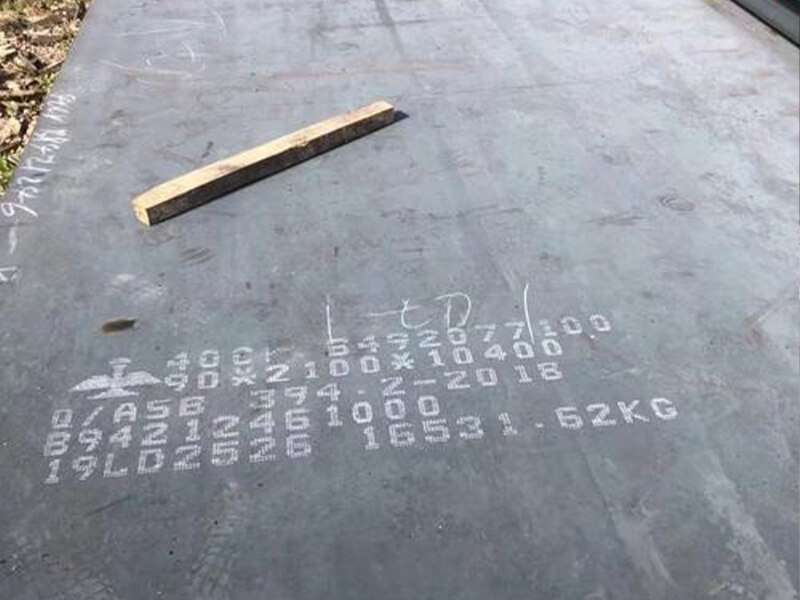
What Are the Most Common Quality Failures?
I have seen three main problems. First, surface defects. Rust, scaling, or laminations. Some suppliers ship plates with deep pitting. That steel is not usable for shipbuilding. You need clean, corrosion‑resistant material. Second, dimensional errors. The thickness is 0.5mm less than ordered. Or the width is off by 2cm. That small difference becomes a big problem when you try to fit the plates into your block assembly.
Third, composition mismatch. The mill certificate says “Grade A shipbuilding steel.” But the actual steel has lower manganese or carbon. That affects weldability and strength. An SGS inspection on your site can catch this. But by then, the steel is already shipped. Returning it is expensive and slow.
How Do You Set Up a Reliable Pre‑Shipment Inspection?
Here is a simple checklist. I use it for every order we ship. You can ask your supplier to follow the same steps.
| Inspection step | What to check | Pass/fail criteria |
|---|---|---|
| Visual surface | Rust, pits, laminations | No deep pitting. Light surface rust allowed if not flaking. |
| Dimension measurement | Thickness, width, length | Must match order within ISO 7452 / ABS or Lloyd’s tolerance. |
| Heat number verification | MTC vs stamped steel | Every piece must show the same heat number as the certificate. |
| Chemical composition | Carbon, manganese, silicon, etc. | Must meet grade standard (e.g., DH36, AH32). |
| Mechanical test (if needed) | Yield, tensile, elongation | Per project specification. |
You do not need to do all tests yourself. Hire a third party like SGS. They come to the supplier’s warehouse or mill. They take samples. They issue a report. The cost is small compared to a rejected shipment.
I remember a client from Thailand. He ordered 200 tons of marine angle steel from another supplier. No pre‑shipment inspection. When the steel arrived, half of it had wrong dimensions. The thickness was off by 0.8mm. His welders could not use it. He had to order new steel urgently. That cost him two months and $15,000 in extra freight.
After that, he started working with us. We now send him photos and videos of every inspection. We also share the SGS report before loading. He has not had a single rejection in two years.
What Documents Must You Check Before Loading?
Documents are as important as the steel itself. Make sure these three documents match:
- Mill Test Certificate (MTC): Shows heat number, grade, composition, and mechanical properties.
- Packing list: Shows the heat number for each bundle or piece.
- Commercial invoice: Shows the same lot numbers and weights.
If the heat number on the packing list is different from the MTC, reject the shipment. Do not let it leave the supplier’s warehouse. Fix the paperwork first. Or better, ask the supplier to re‑inspect and re‑label.
How Can Phased Ordering, Safety Stock, and Buffer Lead Times Mitigate Supply Disruptions?
You order all 1,000 tons at once. The mill has a breakdown. Now your whole project waits for one delivery.
Order in phases. Keep safety stock at your supplier’s warehouse. Add a 2‑week buffer to every lead time promise. Then you have room to absorb small delays.
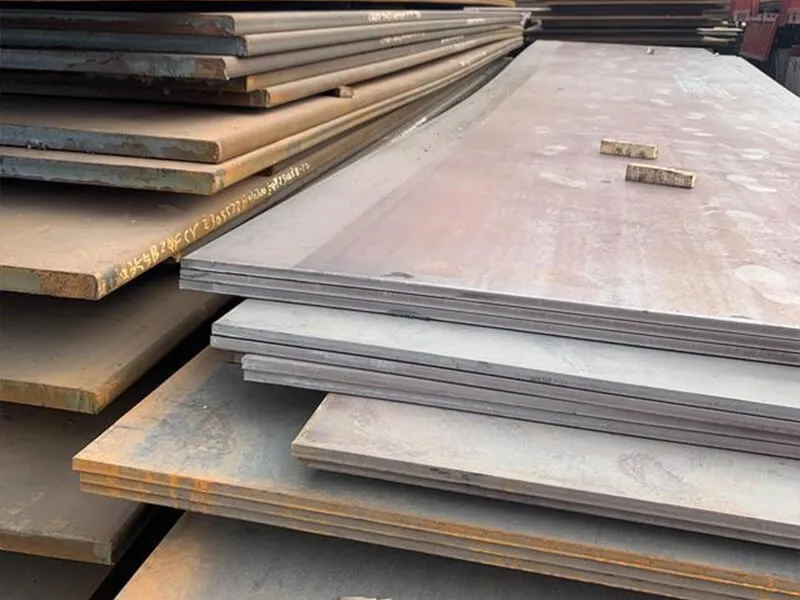
Why Does One Big Order Create Risk?
Many buyers think one large order saves money. They get a lower price per ton. But I have seen the hidden risks. First, if the mill has a problem, like a roll change or a power outage, the whole order gets delayed. You cannot ask for half the order to come earlier because the mill rolls everything in one run.
Second, your own project schedule never goes exactly as planned. Maybe the shipyard slows down because of labor issues. Then you have 500 tons of steel sitting on your yard. You pay for storage. You also pay interest on the money you spent early.
Third, if the steel has a quality problem, the whole batch is bad. You cannot just replace a small part. You need to reorder everything.
How Do Phased Orders Work in Real Life?
Here is a comparison between a single big order and a phased order with safety stock.
| Factor | Single big order | Phased order + safety stock |
|---|---|---|
| Price per ton | Lower | Slightly higher (2‑5%) |
| Risk of full delay | High | Low – only one phase delayed |
| Storage cost at your site | High | Low – steel arrives as needed |
| Ability to change quantity | Very hard | Easy – adjust next phases |
| Supplier’s safety stock | None | Supplier holds buffer for you |
I suggest you split your total quantity into three or four phases. For example, if you need 1,000 tons for a 6‑month project, order 250 tons every 6 weeks. But ask your supplier to keep an extra 100 tons as safety stock. That safety stock sits in their warehouse. You do not pay for it until you need it. But it is reserved for you.
We do this for our clients in Qatar and Malaysia. They tell us their monthly consumption rate. We keep two weeks of extra stock at our Liaocheng warehouse. When their project speeds up, they call us. We release the safety stock immediately. No need to wait for mill production.
What Is a Buffer Lead Time and Why Do You Need It?
Your supplier promises 8 weeks. You plan your construction for week 9. That is too tight. Add a 2‑week buffer. That means you tell your site team the steel will arrive in week 11. Then if the supplier is late by one week, you are still safe. If the supplier is on time, you use the extra two weeks for other tasks.
I learned this from a client in Romania. He never added buffers. Every delay hit his production line directly. After two painful delays, he started adding 3 weeks to every supplier promise. Now his projects run smoothly. He told me, “A buffer is not waste. It is insurance.”
So remember: phase your orders, keep safety stock, and add buffer lead times. These three tools together protect you from most supply disruptions.
Why Is Real‑Time Communication and an Early Warning System Critical for Adjusting Construction Schedules?
Your supplier says “steel will ship next week.” Then silence. Two weeks later, you find out the mill had a problem. Your schedule is already broken.
Set up a weekly update call. Ask your supplier to send a production report every Friday. If there is a delay, you get the news early. Then you can adjust your construction plan.
What Does “Early Warning” Actually Mean?
Early warning means you know about a delay before it hurts you. For example, the mill tells your supplier “we are running two days behind.” Your supplier tells you that on day one. Then you can tell your shipyard to focus on other blocks for two days. No lost time.
But if your supplier waits until the end of the week to tell you, those two days become five days. Then you lose a whole week of production.
I have seen the opposite too. A good supplier sends an early warning even for good news. “We finished rolling early. Your steel can ship five days ahead.” That gives you a chance to speed up your site preparation.
How Do You Set Up a Simple Communication System?
You do not need expensive software. Here is a basic system that works.
| Communication method | Frequency | What to cover |
|---|---|---|
| Weekly email report | Every Friday | Current production status, estimated ship date, any issues |
| Short video or photo | Every milestone | Mill rolling, inspection, packing, loading |
| Instant messaging (WhatsApp/WeChat) | As needed | Quick questions, urgent updates |
| Monthly call | Once a month | Review overall project progress and next phases |
I personally use WhatsApp with many of my clients. For example, our client Gulf Metal Solutions in Saudi Arabia sends me a message every Monday. They ask “status of order #234?” I reply within two hours with a photo of the steel or a screenshot of the mill schedule. That quick reply gives them confidence.
Before they found us, their previous supplier took three to five days to answer a simple status question. That made planning impossible. Now they get real‑time updates. They told me that the speed of communication alone saved them two weeks of idle time on their last project.
Why Can’t You Just Rely on a Tracking Number?
A tracking number tells you the steel is in transit. It does not tell you about problems before they happen. For example, if a truck breaks down, the tracking number shows “delay.” But you find out only after the delay has happened.
An early warning system tells you before the truck even leaves. The supplier calls you and says “the truck is late. We will book another truck tomorrow. Your steel will arrive two days later than planned.” Then you adjust your schedule immediately.
I also recommend you ask your supplier for a production Gantt chart. A simple chart with five steps: mill rolling, inspection, cutting/packing, truck to port, and vessel loading. Your supplier updates the chart every week. You can see which step is running behind. Then you know exactly where to push.
This level of communication takes effort from both sides. But it is worth it. I have seen projects finish on time because the buyer and supplier talked honestly every week. No secrets. No surprises.
Conclusion
Vet your supplier. Inspect before shipment. Phase orders. Add buffers. Communicate weekly. These five steps stop steel delays.